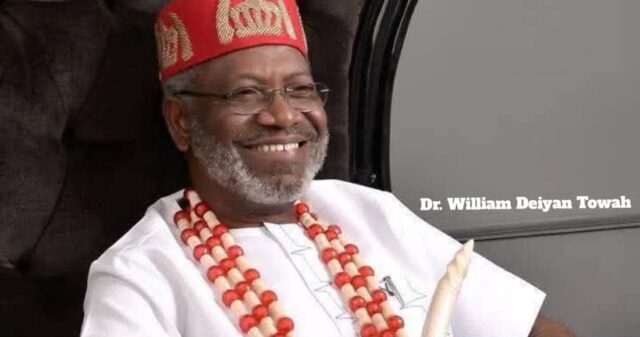
By Chief Dr. William Deah Deiyan Towah
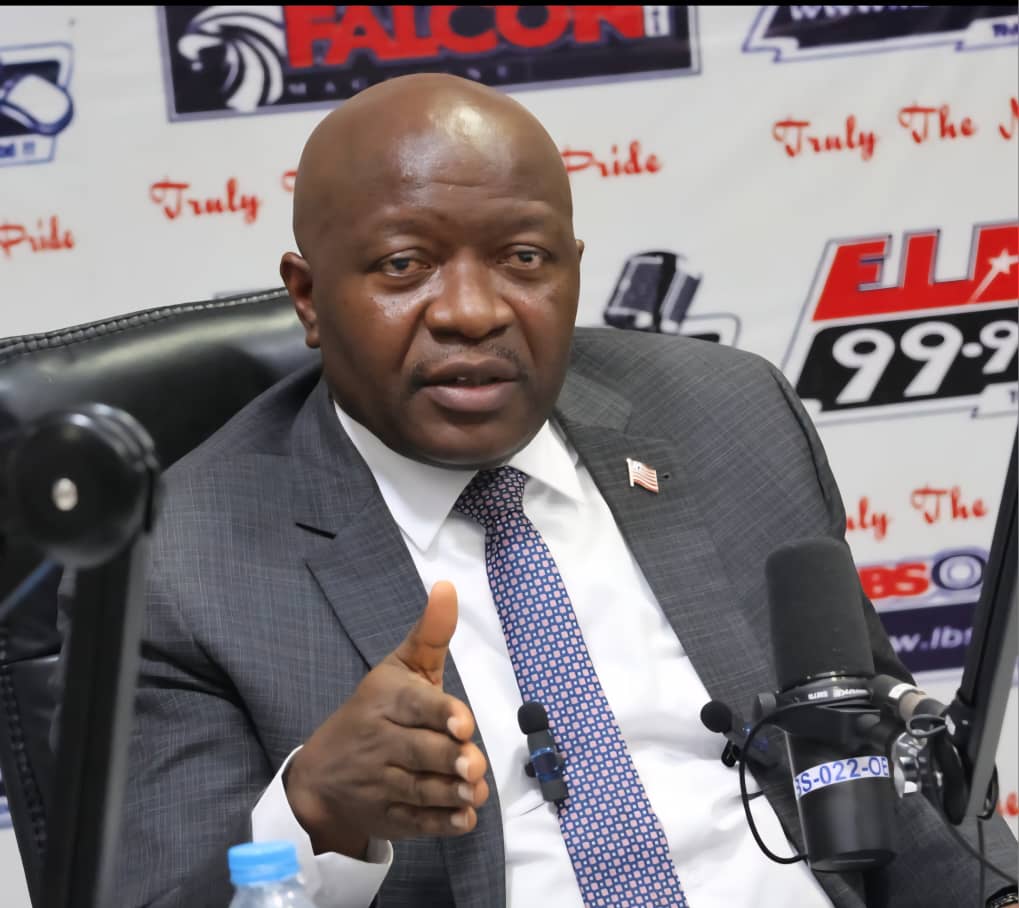
In a country where public accountability is often more rhetoric than reality, the recent interview by Finance Minister Mr. Augustine Kpehe Ngafuan on State Radio (99.9 FM) was a breath of fresh air. His candid, data-driven, and no-nonsense approach came at a critical moment — when public trust is shaky, and citizen frustration is mounting.
What stood out was not just what the Minister said, but how he said it: with transparency, responsibility, and a focus on solutions.
𝐅𝐚𝐜𝐢𝐧𝐠 𝐭𝐡𝐞 $𝟐.𝟖 𝐌𝐢𝐥𝐥𝐢𝐨𝐧 𝐐𝐮𝐞𝐬𝐭𝐢𝐨𝐧
One of the most pressing issues he addressed was the $2.8 million in undocumented disbursements — a matter that, in past administrations, might have been buried under bureaucracy or dismissed without consequence. Instead, the Minister took a different route. He acknowledged that much of the expenditure predated his tenure and pointed to the broken archival systems within the Ministry of Finance as a major obstacle to documentation. But he didn’t stop there. He proposed concrete reforms to modernize recordkeeping and increase transparency within the Ministry — reforms that could break the cycle of financial mismanagement that has long plagued Liberia.
I fully agree with the Minister’s call for the Liberia Anti-Corruption Commission (LACC) to step in and investigate what actually happened with the public funds. This is the kind of accountability we need — not just words, but actions that include holding those culpable to account, regardless of their political affiliation or past positions. Liberia cannot afford to continue down a path where public funds disappear without consequences.
This is what accountability with action looks like. Not just acknowledging that a problem exists, but being willing to tackle it head-on — openly, urgently, and responsibly.
𝐑𝐞𝐟𝐫𝐚𝐦𝐢𝐧𝐠 𝐭𝐡𝐞 𝐂𝐨𝐧𝐯𝐞𝐫𝐬𝐚𝐭𝐢𝐨𝐧 𝐀𝐫𝐨𝐮𝐧𝐝 𝐄𝐝𝐮𝐜𝐚𝐭𝐢𝐨𝐧
The Minister also confronted the growing public concern over funding for the University of Liberia. Contrary to speculation, he revealed that 99% of the L$37 million allocated for the university in FY2024 has already been disbursed — mostly to cover staff salaries.
Yes, the lion’s share is spent on payroll, leaving limited resources for operations and infrastructure. But the facts matter. If we are to have serious conversations about improving education, they must begin with accurate data — not hearsay. The Finance Ministry has fulfilled its fiscal responsibility; it is now up to the university’s leadership and relevant oversight bodies to ensure the funds are used effectively. With more than 60% of Liberia’s population under the age of 25, investing in education is not just strategic — it’s a national imperative.
𝐏𝐫𝐨𝐠𝐫𝐞𝐬𝐬 𝐢𝐧 𝐄𝐜𝐨𝐧𝐨𝐦𝐢𝐜 𝐅𝐮𝐧𝐝𝐚𝐦𝐞𝐧𝐭𝐚𝐥𝐬
While critics may be quick to dismiss government achievements, the economic indicators shared by Mr. Ngafuan suggest measured but meaningful progress:
Fuel and rice prices remain stable — a major relief for ordinary families.
Over 28,000 civil servants are receiving regular salaries — a sign of basic government functionality.
Inflation has fallen to just above 7% — commendable in today’s volatile global economy. $16 million has been allocated toward debt servicing — a clear step toward fiscal discipline. Infrastructure improvements, particularly in roads and ports, are increasing market access and reducing transport costs. These are not flashy accomplishments, but they represent the quiet, necessary work of building a stable economy. We must remember that Liberia is still emerging from the deep scars of conflict. Progress will not come overnight. But with consistency, discipline, and transparency — as Mr. Ngafuan is demonstrating — we are laying the groundwork for long-term development.
𝐒𝐞𝐭𝐭𝐢𝐧𝐠 𝐚 𝐍𝐞𝐰 𝐒𝐭𝐚𝐧𝐝𝐚𝐫𝐝 𝐟𝐨𝐫 𝐆𝐨𝐯𝐞𝐫𝐧𝐚𝐧𝐜𝐞
Let’s be realistic, one radio interview does not reform an entire government. But in a country where too many public officials retreat into silence or spin when faced with hard questions, this kind of open, data-driven engagement sets an important precedent. Accountability must become the norm, not the exception. Culture doesn’t change through speeches alone — it changes when leaders, one by one, begin to act differently. Mr. Ngafuan showed up. He answered tough questions. He offered facts. He acknowledged past failures — and proposed future solutions. That’s a standard other public officials should emulate if we are serious about rebuilding trust in our institutions.
𝐓𝐡𝐞 𝐌𝐂𝐂 𝐂𝐨𝐦𝐩𝐚𝐜𝐭
Liberia’s renewed eligibility for the Millennium Challenge Corporation (MCC) Compact is a welcome opportunity. But as the Minister rightly noted, it is also a test — a test of whether this administration, and this generation of Liberian leadership, can manage large-scale international aid transparently and effectively. With the U.S. delegation from the MCC expected this month, Liberia must prepare not just to receive funds — but to deliver results. Success here could restore global confidence in Liberia’s governance capacity.
𝐓𝐡𝐞 𝐀𝐑𝐑𝐄𝐒𝐓 𝐀𝐠𝐞𝐧𝐝𝐚
Mr. Ngafuan reaffirmed the government’s commitment to the ARREST Agenda — Agriculture, Roads, Rule of Law, Education, Sanitation, and Tourism. These are areas where Liberians have long felt the absence of impactful leadership.
The shift must now be from lofty policy documents to actual, visible impact in communities. That means sustained funding, robust oversight, and meaningful citizen engagement.
𝐀 𝐅𝐢𝐧𝐚𝐥 𝐖𝐨𝐫𝐝
Mr. Ngafuan’s radio appearance did not solve all of Liberia’s governance problems. But it did something we see far too little of — it modeled what responsible public leadership should look like. In a system where many public figures are quick to hide behind vagueness and deflection, it was refreshing to hear one speak clearly, own the issues, and commit to reforms. It’s time our national politics matured — becoming less about personality, and more about performance; less about self-preservation, and more about public service. If we are to build a better Liberia, accountability must be more than a slogan. It must be the standard — enforced through strong institutions like the LACC and driven by leaders who are not afraid to face the truth. The Minister has shown a path forward. It is now up to other public servants, and indeed the Liberian people, to demand that this becomes the new normal. Because only when accountability is the rule — not the exception — will Liberia finally move toward the future it deserves.
𝑪𝒉𝒊𝒆𝒇 𝑾𝒊𝒍𝒍𝒊𝒂𝒎 𝑫𝒆𝒂𝒉 𝑫𝒆𝒊𝒚𝒂𝒏 𝑻𝒐𝒘𝒂𝒉, 𝑷𝒉𝑫, 𝒊𝒔 𝒂 𝑻𝒓𝒂𝒅𝒊𝒕𝒊𝒐𝒏𝒂𝒍 𝑳𝒆𝒂𝒅𝒆𝒓 𝒂𝒏𝒅 𝒄𝒐𝒎𝒎𝒆𝒏𝒕𝒂𝒕𝒐𝒓 𝒐𝒏 𝒈𝒐𝒗𝒆𝒓𝒏𝒂𝒏𝒄𝒆, 𝒏𝒂𝒕𝒊𝒐𝒏𝒂𝒍 𝒅𝒆𝒗𝒆𝒍𝒐𝒑𝒎𝒆𝒏𝒕, 𝒂𝒏𝒅 𝒑𝒖𝒃𝒍𝒊𝒄 𝒑𝒐𝒍𝒊𝒄𝒚