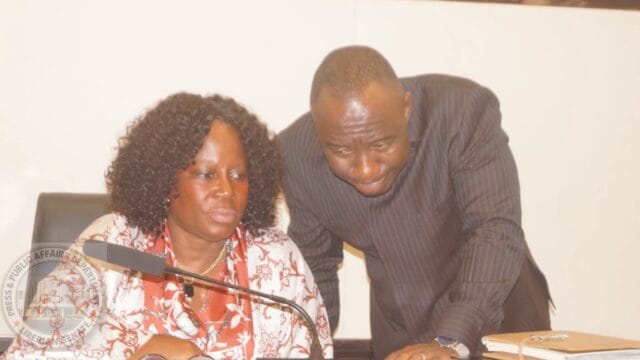
During Tuesday, 3rd Day Sitting of the Senate Plenary, Senators have begun providing important briefings and updates on national developments following their recess.
The Chauir on Senate Public Works Committee, Grand Kru County Senator Prof. Albert T. Chie, informed Plenary that the much-discussed yellow machines intended for national development projects will be arriving shortly in the Country.
According to Senator Chie, the equipment is being shipped into Liberia by both land and sea, and he assured his colleagues that by March, 2026 all of the machines will be in Liberia.
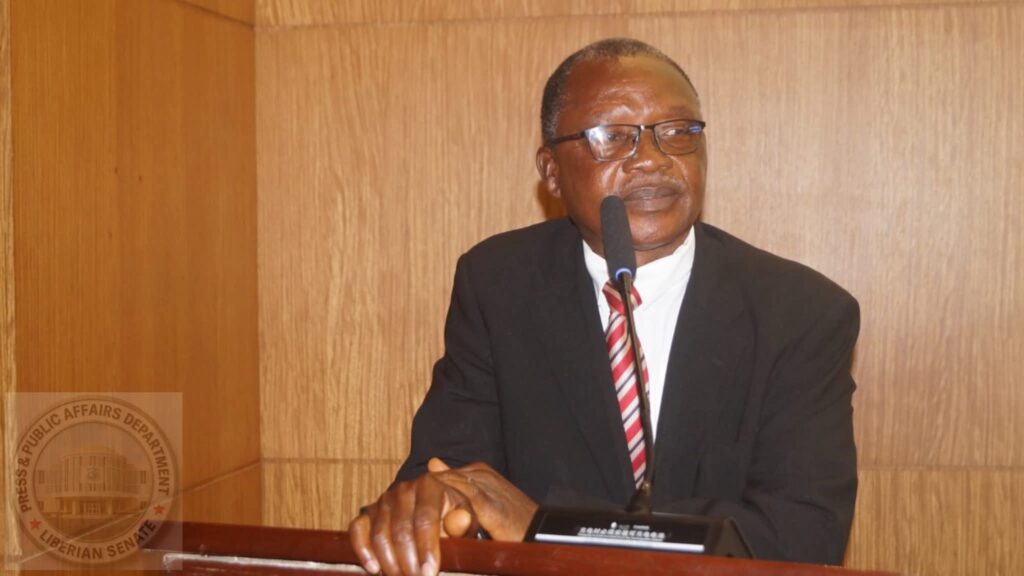
Senator Chie further that road construction works are ongoing in the Western Region, noting that the process is being properly coordinated to ensure efficiency and effectiveness.
In addition, he announced that the Zoning Law of Liberia was successfully passed by the Senate prior to the Senate’s last and final recess, and is now awaiting concurrence from the House of Representatives to complete the legislative process.
Meanwhile, still on the briefings and updates, Grand Gedeh County Senator Thomas Yaya Nimely briefed the Plenary on a growing national concern relative to national security.
Senator Nimely reported that there are numerous security checkpoints across the country, which he said are causing embarrassment and unnecessary hardship to citizens, particularly affecting their freedom of movement.
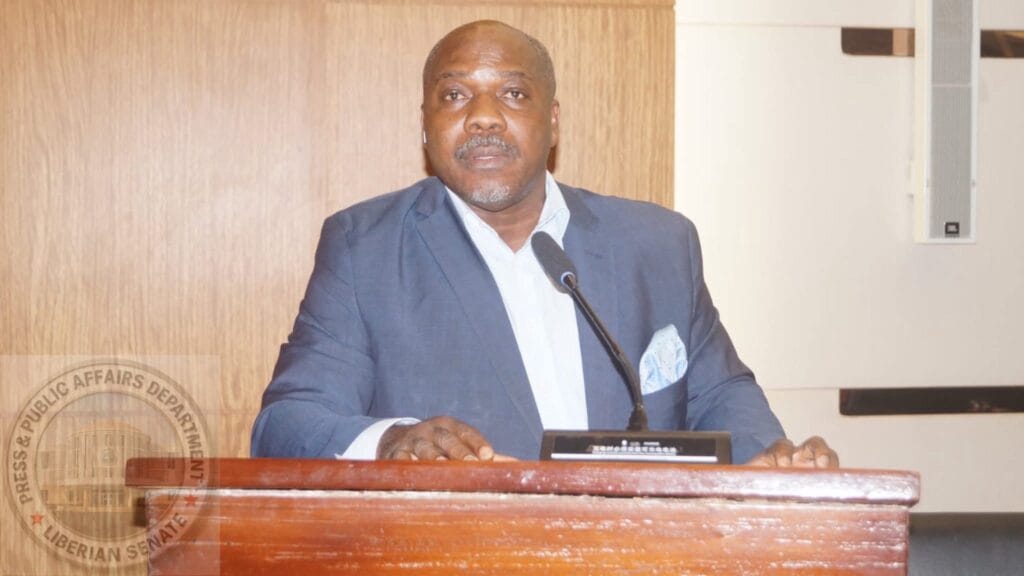
He therefore called on relevant authorities to review the situation in order to ease the burden on the public while maintaining national security.
At the same time, River Gee County Senator Jonathan Boy-charles Sogbie, has informed Plenary that there are plenty of unfinished and abandoned projects across the country, disclosing that there are more of such in River Gee County.
Senator Sogbie expressed deep concern that several of these projects were initiated under the Liberia Agency for Community Empowerment (LACE), but were left incomplete, thereby denying local communities the intended benefits of development interventions.
He emphasized that the abandonment of these projects has negatively impacted livelihoods and slowed development at the county and district levels. According to him, communities that had high expectations from these initiatives are now left disappointed, while public confidence in government-led development programs continues to erode.
Additionally, Senator Sogbie disclosed that salary irregularities within the public sector remained a serious challenge.
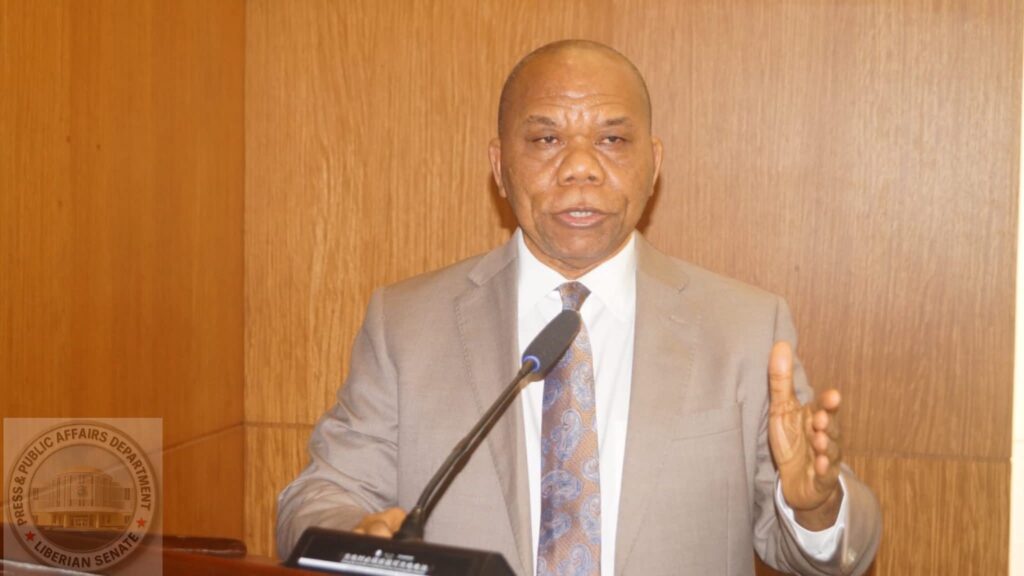
He informed Plenary that some local government officials, including District Commissioners, are earning less than Eighty United States dollars (US$80.00) per month, a situation he described as unacceptable and demoralizing.
He stressed that such low compensation undermines productivity, encourages corruption, and weakens effective service delivery at the grassroots level.
The River Gee Lawmaker called on the relevant authorities to urgently review and regularize salaries of local government officials to reflect fairness and dignity in public service.
Meanwhile, Margibi County Senator Atty. J. Emmanuel Nuquay, also addressed Plenary on pressing human resource challenges within the health and education sectors.
On a similar platform, Margibi County Senator Attn. J. Emmanuel Nuquay acknowledged that a significant number of healthcare providers and educators across the country are currently serving as volunteers, despite carrying out full-time responsibilities essential to national development.
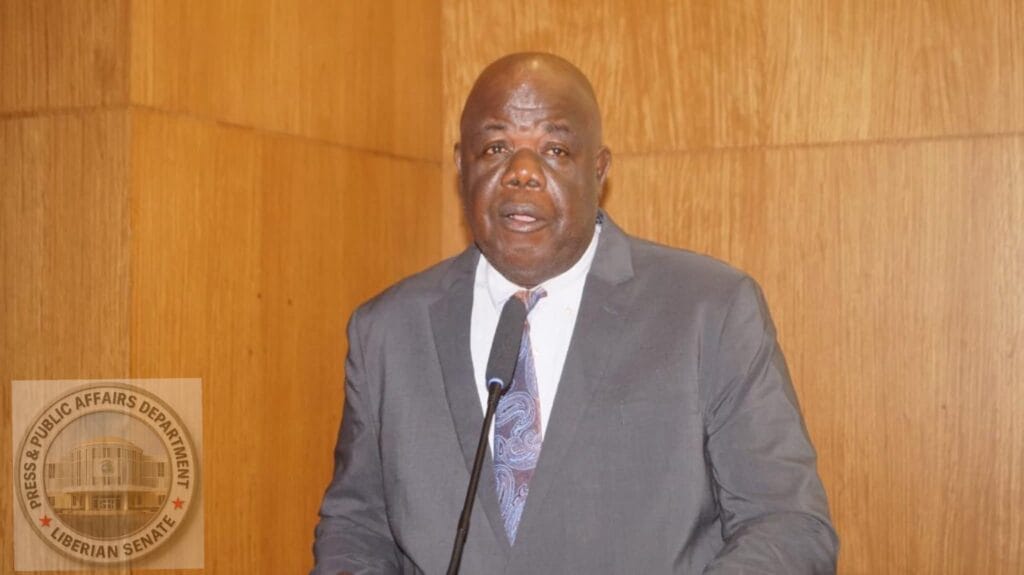
The Senator asserted that the continued dependence on volunteer workers in these critical sectors poses a serious risk to service delivery, sustainability, and morale. According to Senator Nuquay, many qualified professionals are working without formal employment status, regular salaries, or job security, which has contributed to high attrition rates and reduced efficiency, especially in District # 5 Margibi County.
Senator Nuquay furthered emphasized that the government’s employment system remains overly centralized, noting that the employment list is not decentralized.
He explained that many workers at the local level are not officially employed or captured on the government’s payroll, despite actively rendering services.
He strongly asserted that decentralization of the government’s employment list is paramount to addressing these challenges to ensure transparency, recommending equitable employment opportunities across the country.