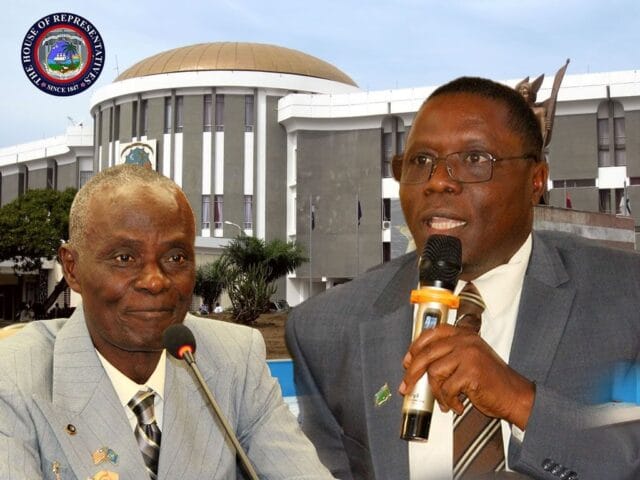
MONROVIA – The Joint Committee on Judiciary and Internal Affairs of the House of Representatives holds a public hearing on proposed amendments to the Local Government Act (LGA) of 2018 on Wednesday, July 16, 2025, beginning at 11:00 AM.
The hearing will take place in the First Floor Conference Room of the House of Representatives, Capitol Building, a House of Representatives post on its official Facebook says.
The proposed amendments, submitted by Rep. Jeremiah Sokan, were formally referred to the Joint Committee for review and recommendation to plenary.
The hearing is expected to feature active participation from key government stakeholders, including representatives from the Ministry of Internal Affairs and the Liberia Law Reform Commission, who will provide expert inputs and insights on the proposed revisions.
The Joint Committee on Judiciary and Internal Affairs is chaired by Rep. Johnson S.N. Williams.
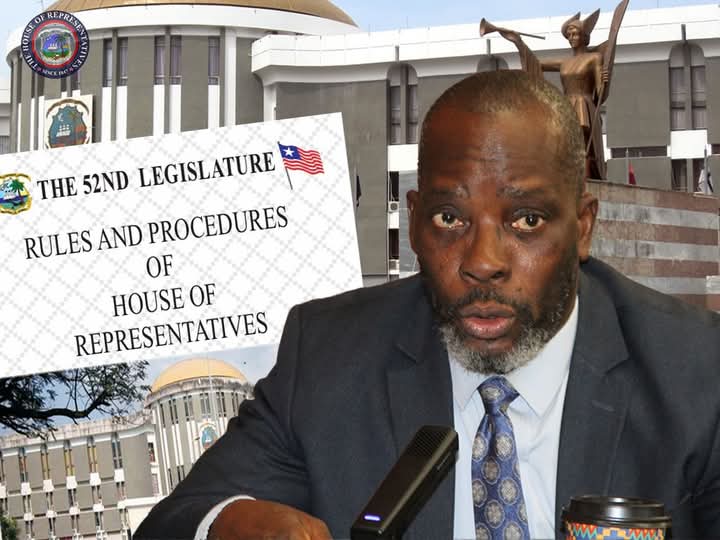
Members of the media, civil society organizations, and the general public are encouraged to attend and participate in this important legislative engagement, which seeks to enhance local governance and accountability through possible reforms to the existing law.
This initiative forms part of the Legislature’s ongoing commitment to transparency, stakeholder participation, and strengthening Liberia’s democratic and decentralization framework.
To Amend the Local Gov’t Act Is Selfish and Dangerously Deceptive
By The Liberian Post – June 20, 2025
It can be recalled in June of this year, The Liberian Post in its Editorial cautioned the House of Representatives and well-meaning lawmakers to reject Grand Gedeh County Rep. Jeremiah Sokan’s proposed legislation that seeks to repeal Sections 2.2(e) and 2.2(f) of the LGA. These key provisions empower County Councils to approve their respective annual budgets and development plans. However, Rep. Sokan’s amendment proposes shifting this authority to County Legislative Caucuses—essentially centralizing decision-making powers back in the hands of national lawmakers, to this, The Liberian Post urged lawmakers in June of this year to reject the proposed legislation in the interest of the people because it is selfish and dangerously deceptive and not in the interest of the people of Liberia.
Enacted in 2018, the Local Government Act was celebrated as one of Liberia’s most progressive postwar governance reforms. It marked a decisive step toward participatory democracy by empowering County Councils—locally elected and representative bodies—to lead their own development processes.
The Act decentralized power from the capital, Monrovia, to the counties, allowing communities to directly influence the formulation and implementation of their budgets and development priorities. However, Integrity Watch Liberia (IWL) in a counter-statement views the current repeal effort as a betrayal of that vision.
The central concern raised by Integrity Watch Liberia is the erosion of accountability and transparency when legislative actors assume dual roles—both creating laws and directly executing or overseeing their implementation. According to IWL, this blurs the necessary separation of powers, compromises objectivity, and leaves governance vulnerable to manipulation.

In its official position in June 2025, through its Executive Director Mr. Harold Aiddo outlined a three-point call to action: Reject the Amendment – IWL urges the Liberian Legislature, particularly the House of Representatives, to reject the proposed changes in full. Mobilize Resistance – The organization calls on citizens, traditional leaders, civil society, and international development partners to publicly resist what it describes as a dangerous legislative overreach. Defend Local Governance – IWL reminds lawmakers that weakening the autonomy of County Councils violates democratic principles and undermines the essential doctrine of the separation of powers.
The broader implications of the proposed repeal are significant. Liberia is still grappling with uneven development, weak institutional trust, and chronic service delivery challenges. Critics argue that rather than solving these issues, re-centralizing power risks intensifying them by reducing local accountability and amplifying the influence of political elites.
Reverting to a centralized model, they caution, could hinder innovation, mute local voices, and increase susceptibility to corruption through unchecked legislative interference in county-level projects.
In that light, The Liberian Post in its June 20, 2025, Editorial concurred with IWL’s warning which resonates with a growing consensus among governance experts that progress in Liberia hinges on strengthening, not dismantling, local democratic structures. As the debate intensifies, the nation is faced with a critical choice: whether to uphold its commitment to participatory, locally driven governance or backslide into centralized political control.
According to political pundits, the amendment proposal has become a litmus test for the maturity of Liberia’s democratic institutions and the willingness of its lawmakers to prioritize national interest over political expediency. With firm resolve, IWL concluded in June: “We stand firm. We stand united. And we want to say: Hands off the Local Government Act!”
Pundits says as the joint House’s Committee on Judiciary and Internal Affairs holds hearing on Wednesday, July 16, 2025, the response of the Legislature—and that of Liberian citizens—may well shape the trajectory of democratic governance in the country for years to come. The political pundits add, “the proposed changes can be described as a deliberate effort to recentralize authority, politicize local development, and erode the very foundation of decentralization in Liberia.”
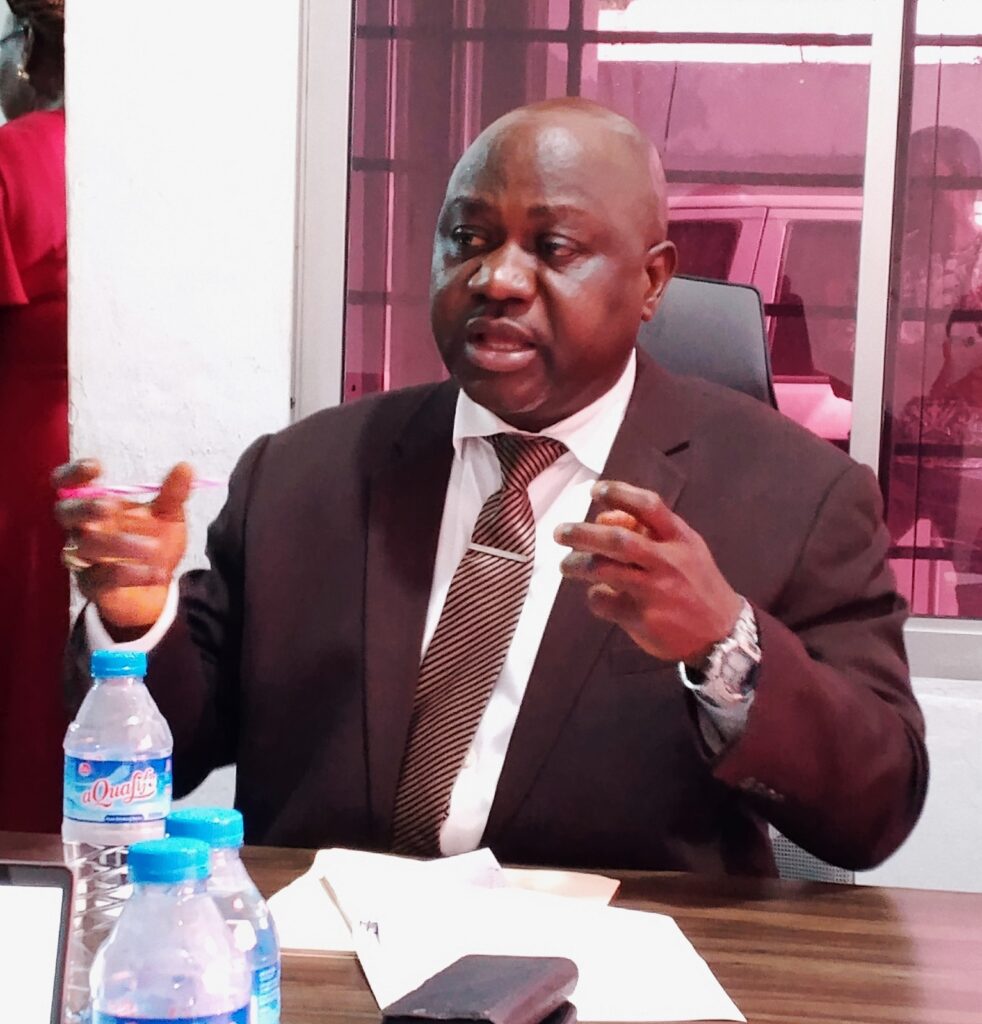
At the same time, some Liberians spoken via pop vox say, to amend certain portion of the LGA of 2018 is selfish and dangerously deceptive on the part of the proponent of the proposed legislation. The Liberians have emphasized to ensure that the voice of the local populace is neither undermined nor silenced by legislative changes that favor central authority over decentralization. This bill is not just an issue of legislative procedure; it’s about the rights Liberians at the county levels to have a say in how their resources are managed and how their communities develop.
Meanwhile, the Law Reform Commission (LRC) has been invited by the House’s Joint Committee on Judiciary and Internal Affairs to give its expert opinion during the public hearing on the Amendments to the Local Government Act (LGA).
The Law Reform Commission (LRC) was established by an Act of the Legislature of Liberia in 2011. It was organized to keep the laws of Liberia and ensure the systematic development and reform, including unification and codification of the laws.
The Law Reform Commission is headed by Cllr. Boakai N. Kanneh, Chairman; and assisted by Cllr. Felecia V. Coleman, Vice Chair and Cllr. Ruth Jappah, Commissioner.
The LRC’s Administration/Secretariat is headed by Cllr. Ramses T. Kumbuyah who serves as Executive Director. The Commission also comprises of astute lawyers and other weighty professionals who serve in other departments, including Human Resources, Finance, Human Rights & Gender, Codification, Research, Information & Communication, Procurement & Logistics, among others.
In keeping with its vision, the LRC envisions a Liberia where modern, responsive, accessible laws prevail. In regard to its mission, the LRC is dedicated to keeping the laws of Liberia under review, ensuring systematic development and reforming of the laws, and ensuring that the laws are fair, simple, accessible, and responsive to the needs of the Liberian people.
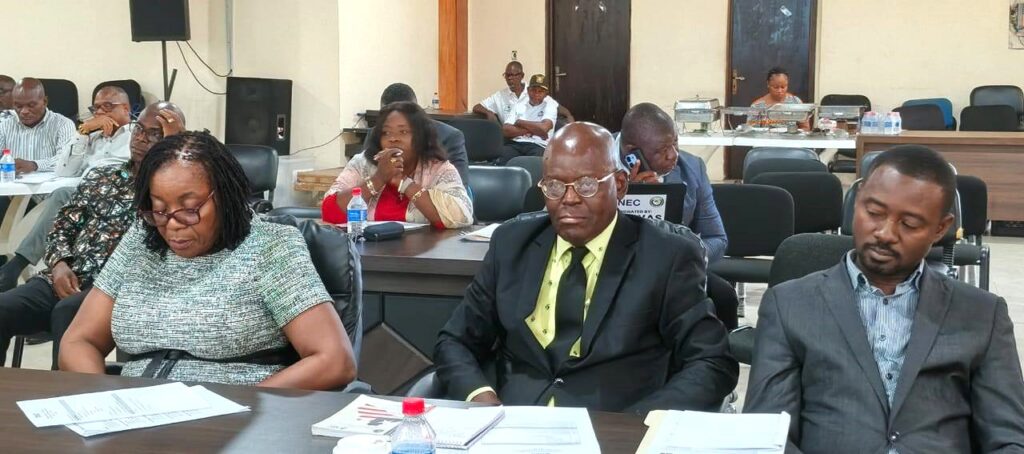
Key services provided by the LRC in keeping with is mandate include Legal Advice, Review of existing laws, Drafting of Bills/Propose Amendments, Review and advise on international instruments (Treaties and Conventions), Review and amendment of regulations and mandates of MACs and Codification of statutes and opinions of the Supreme Court of Liberia.
In regard to its core values, the Law Reform Commission is committed to integrity, transparency, accountability, professionalism, inclusivity and rule of law.
Concerning quality services for better Liberia, the LRC commits to: Legal Research and Analysis; Law Reform Proposals; Public consultations and stakeholder engagement; Drafting and reviewing legislation; Dialogues and Seminars and Policy Advocacy.