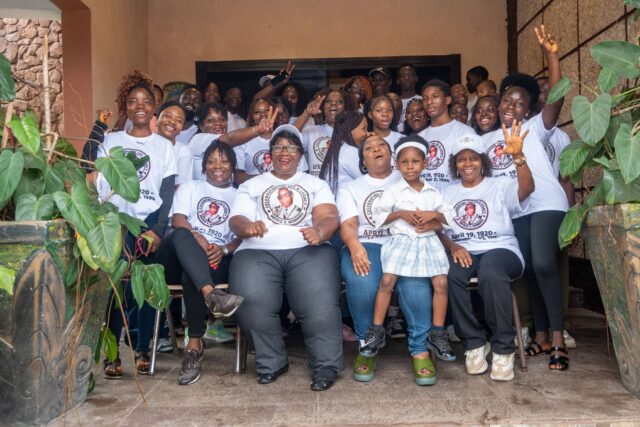
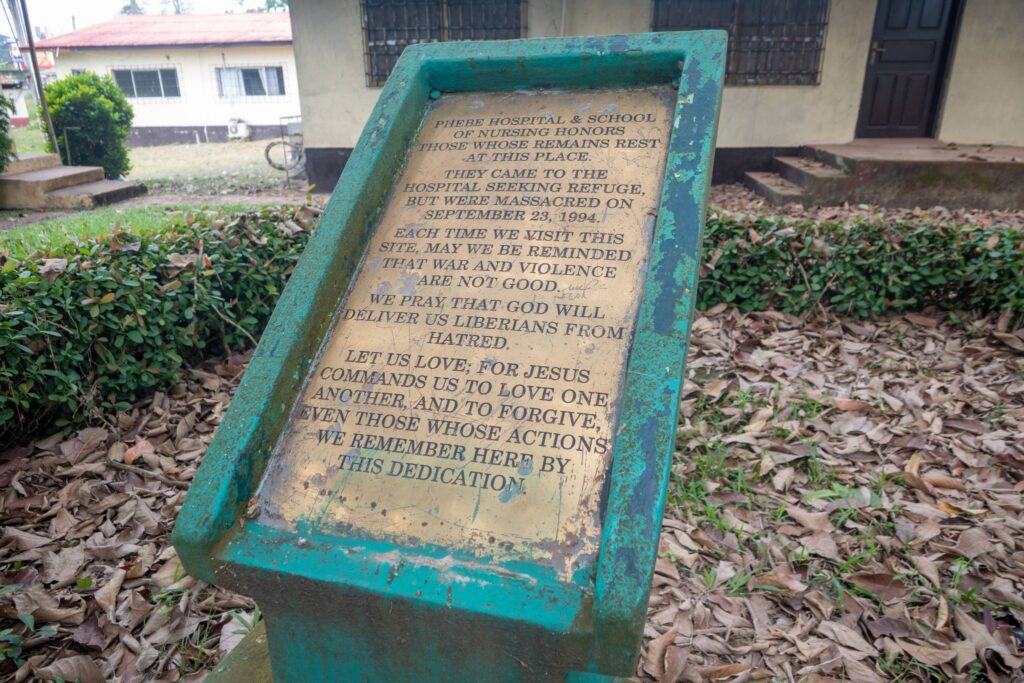
PBEHE HOSPITAL, Bong County — Former Vice President Jewel Howard Taylor has paid an emotional tribute to her late father, Dr. Moses Y. Howard, while calling on Liberia to formally acknowledge the Phebe Hospital massacre as part of the country’s civil war history.
Speaking during a family memorial visit to the Phebe Hospital compound recently, Taylor reflected on the painful circumstances surrounding her father’s death in September 1994, when he and several other doctors and civilians were killed during the height of Liberia’s civil conflict.
“As you are aware, my father is buried here,” Taylor said. “He was killed on this Phebe compound in September 1994—him, many other doctors, and many other people.”
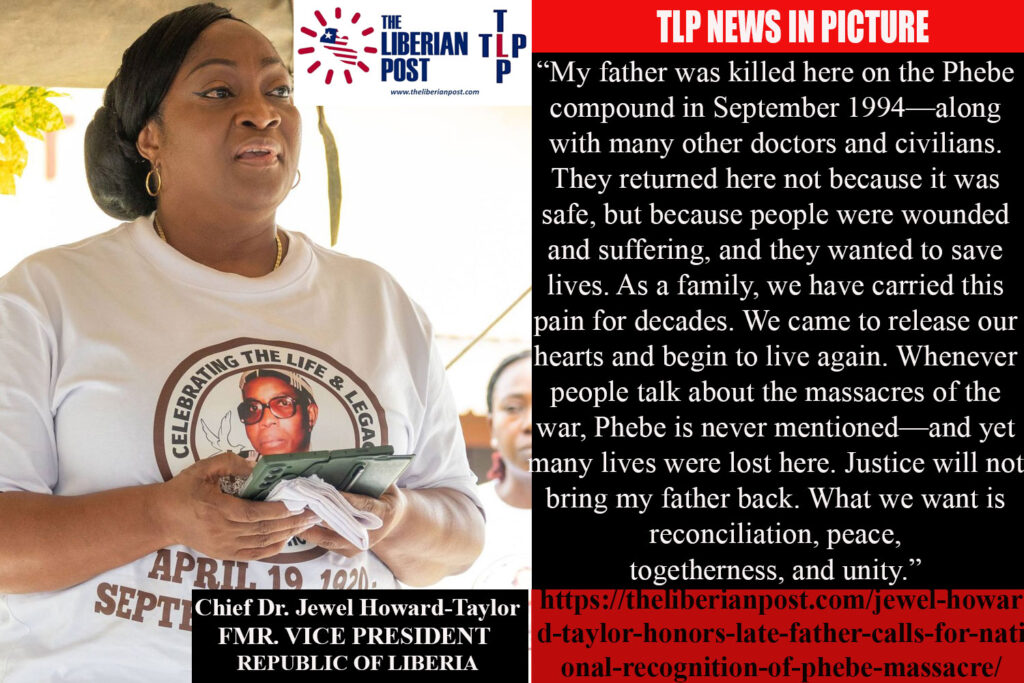
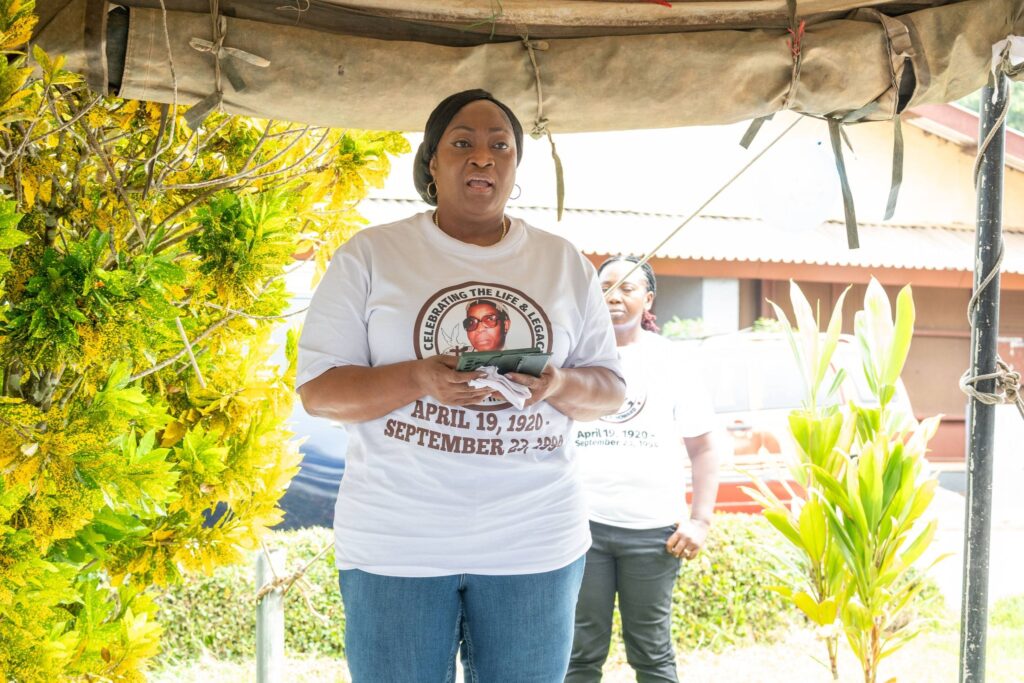
The visit marked the first time in decades that much of Dr. Howard’s immediate and extended family—including siblings, nieces, grandchildren, and great-grandchildren—had gathered at the site of his burial. Taylor said the family felt compelled to come together to formally remember their father and bring closure to a chapter that had remained unresolved for more than 30 years.
“We decided that we’ll come and do a memorial because we have not yet laid this to rest as a family,” she said. “We wanted to release our hearts and begin to live again.”
Remembering a Forgotten Tragedy
Beyond her personal loss, Taylor used the occasion to highlight what she described as the systematic neglect of the Phebe massacre in national remembrance efforts. While other massacre sites are routinely referenced during memorials of the civil war, she noted that Phebe—where many trained medical professionals were killed—rarely receives public acknowledgment.
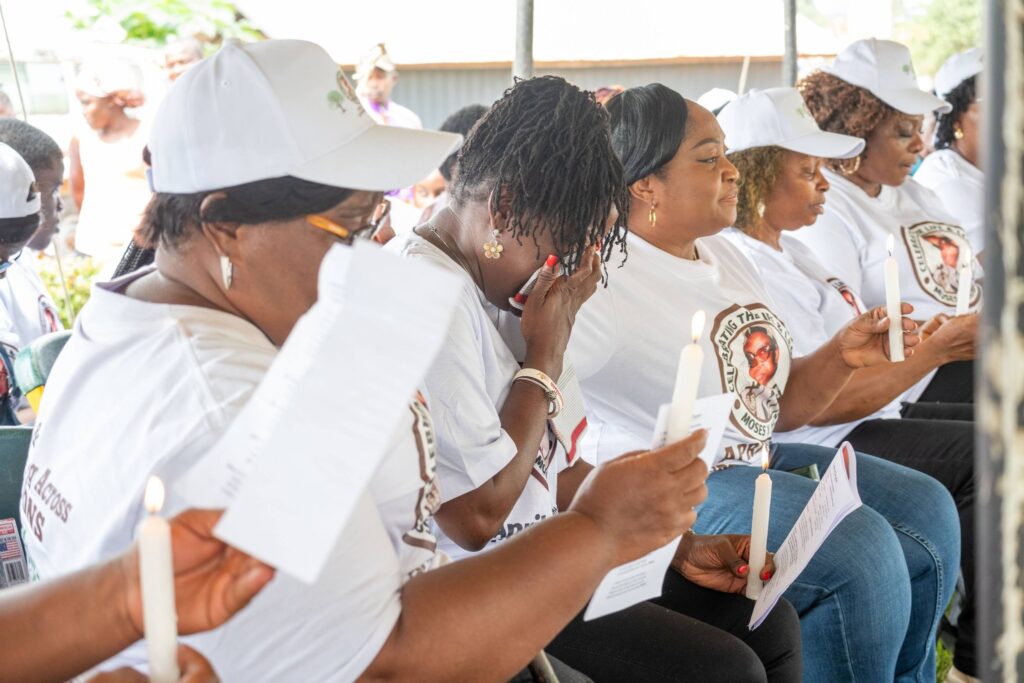
“Whenever you hear about the massacres that took place across the country, Phebe is never mentioned,” Taylor said. “And there were many people killed here, especially doctors. In those days, it was hard to find medical doctors.”
She recounted how the bodies of those killed remained on the hospital grounds for nearly three months before being buried, as conflict and instability prevented immediate intervention. Taylor expressed gratitude to the Lutheran Church and Phebe Hospital leadership for allowing the victims to be laid to rest on the compound.
“We are grateful that they are where we can come and see them,” she said. “There are families who never even knew where their loved ones ended up.”
A Legacy of Service
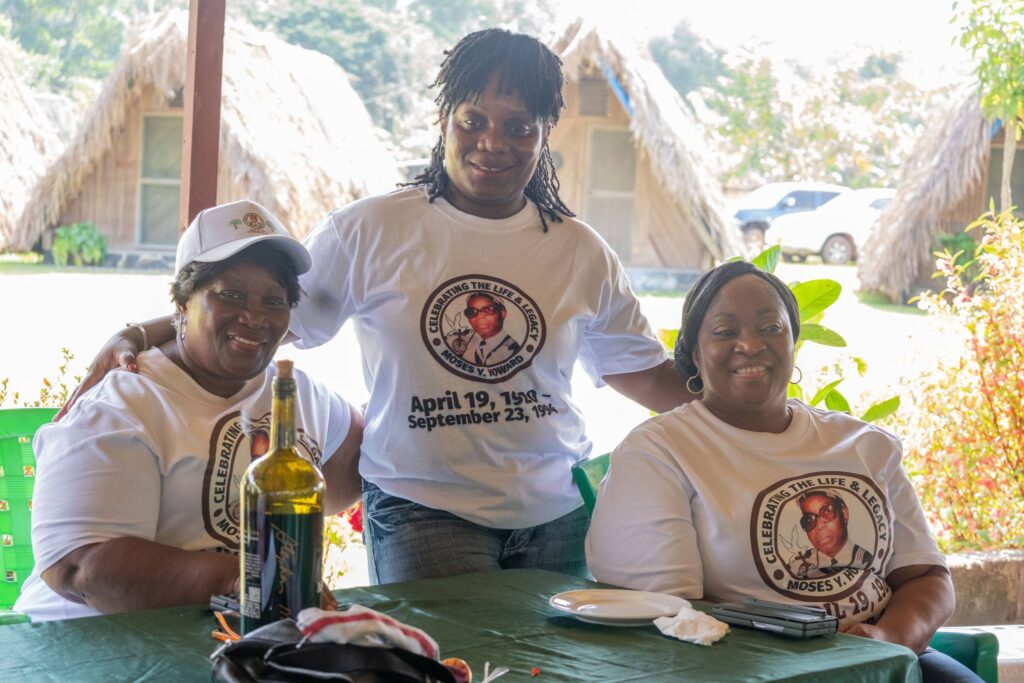
Taylor described her father as one of the pioneering medical professionals at Phebe Hospital. Trained in the United States as an anesthesiologist through the Lutheran Church, Dr. Howard returned to Liberia in the 1960s to serve at Curran Memorial Hospital in Zorzor before becoming one of the first doctors at Phebe when it opened.
During the civil war, she said, her parents returned to Phebe not for safety, but to serve.
“They came back here because people were wounded, displaced, and suffering,” she said. “They wanted to contribute their talent to save lives.”
Forgiveness Over Vengeance
Despite the violence that claimed her father’s life, Taylor said she does not seek revenge or legal retribution. Instead, she called for reconciliation, unity, and peace.
“Justice will not bring my father back,” she said. “What we want is reconciliation, peace, togetherness, and unity.”
She warned that Liberia must never return to war, stressing that every family in the country suffered losses during the conflict.
“War is not an answer,” Taylor said. “Let us talk, let us dialogue, let us find a way to unite.”
Giving Back to the Living
As part of the memorial, Taylor disclosed that the family has donated medical supplies to health facilities in Bong and Lofa counties and plans to conduct medical missions in Zorzor and Yella in the coming days. The initiative, led by her niece—a medical doctor based in the United States—will include free medical services and surgical support, particularly in communities connected to Dr. Howard’s life and work.
“We didn’t want to just talk about the dead,” Taylor said. “We also wanted to talk about the living.”
As Liberia continues to grapple with how to remember its past, Taylor said acknowledging all massacre sites—including Phebe—is essential for national healing. “This is part of our history,” she said. “It cannot be left aside.”