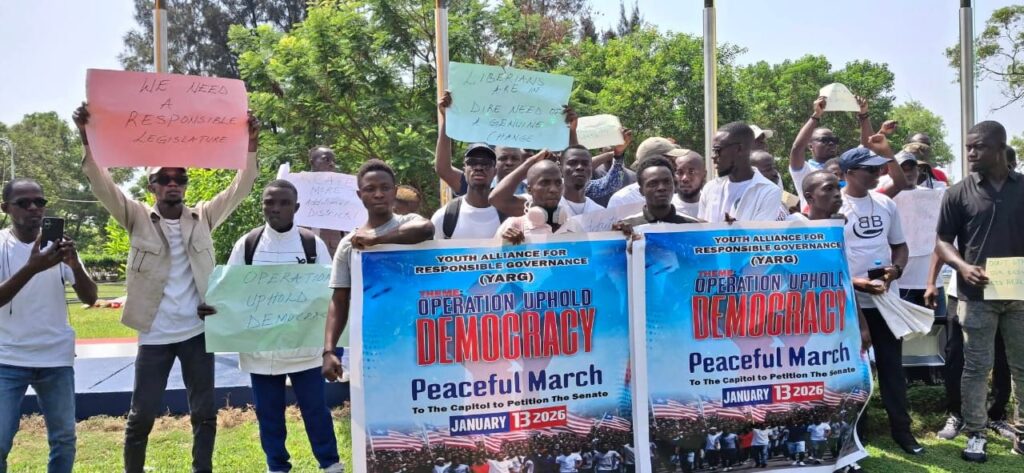
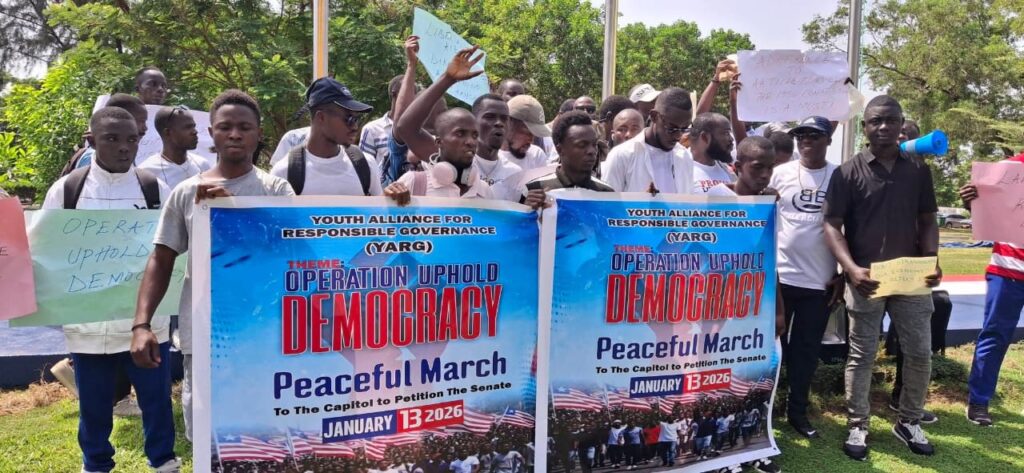
MONROVIA — The Youth Alliance for Responsible Governance has petitioned the Liberian Senate, calling on lawmakers to reject a recently passed House of Representatives bill that would reapportion 14 electoral districts.
The group argues that the bill is unconstitutional and is urging the Legislature to instead pursue a national referendum to update the constitutional threshold used for determining electoral districts.
The petition was presented to Nimba County Senator Samuel G. Kogar by David Chea on behalf of the Alliance. In the document, the youth group raised three main concerns about the House’s action.
First, the Alliance alleged that the House of Representatives violated Article 80(e) of the 1986 Liberian Constitution by, in its view, “usurping the functions of the Electoral Commission” in undertaking electoral district reapportionment.
Second, the group contended that Article 34(a)—which the House reportedly cited in support of its action—does not apply to the process of electoral district reapportionment and is therefore irrelevant to the matter.
Third, the Alliance said the current electoral district threshold set in Article 80(d) is outdated, arguing that significant population growth has rendered the existing standard inadequate for ensuring fair representation.
On the basis of these claims, the Youth Alliance for Responsible Governance asked the Senate to “nix and nullify” the proposed legislation, citing what it described as procedural inconsistencies and a breach of constitutional requirements.
The group also called for a national referendum to repeal the existing threshold criteria in Article 80(d) and replace it with a new standard of 50,000 constituents per electoral district.
Senator Kogar, upon receiving the petition, thanked the group for its engagement in national governance and said he would forward the document to Senate leadership for consideration.
“I will forward it to the leadership of the Liberian Senate for discussion in the best interest of the Liberian people,” Kogar said.
The petition adds to the growing national debate over electoral representation, the proper constitutional process for reapportionment, and how Liberia should adjust its electoral framework in response to changing population patterns.