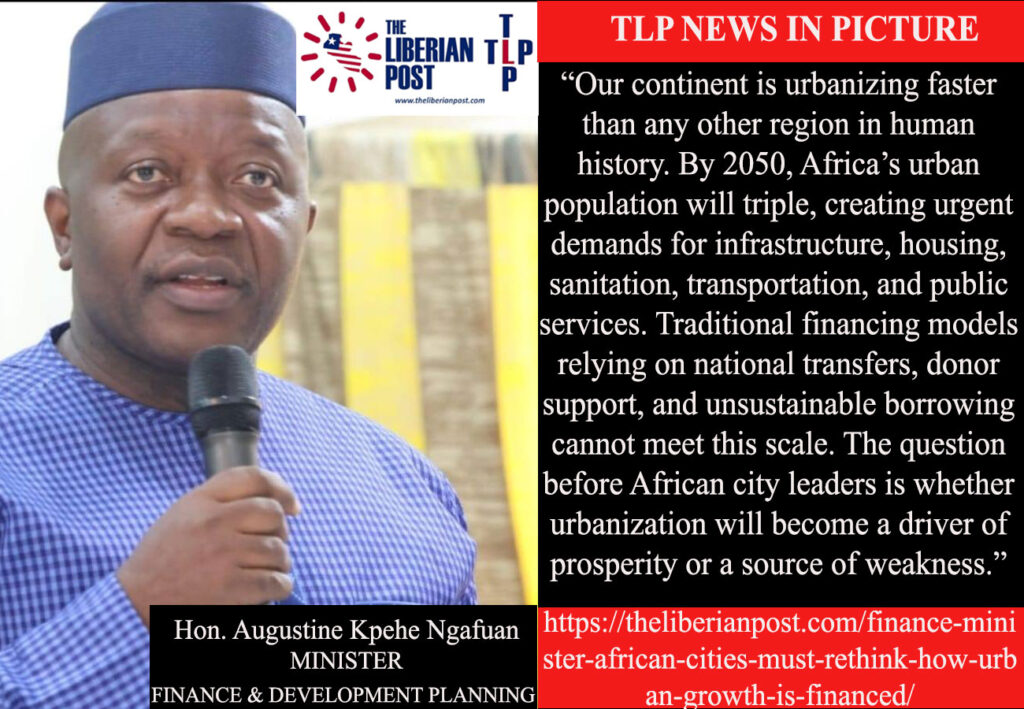
MONROVIA — Liberia’s Minister of Finance and Development Planning, Augustine Kpehe Ngafuan, says African cities must fundamentally rethink how urban growth is financed if they are to meet the demands of rapidly expanding populations.
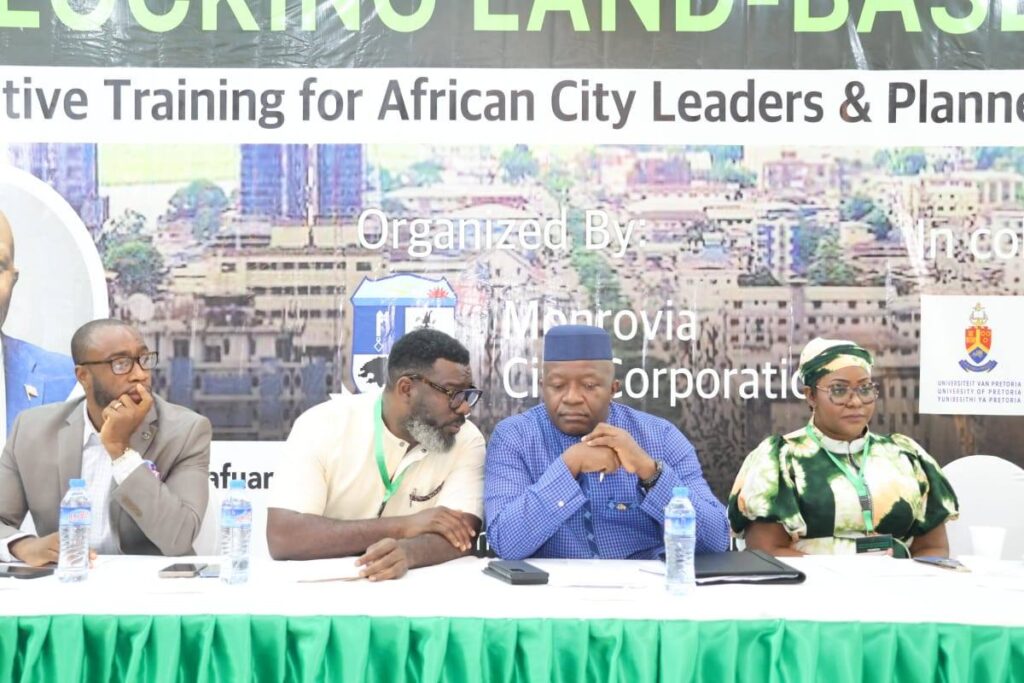
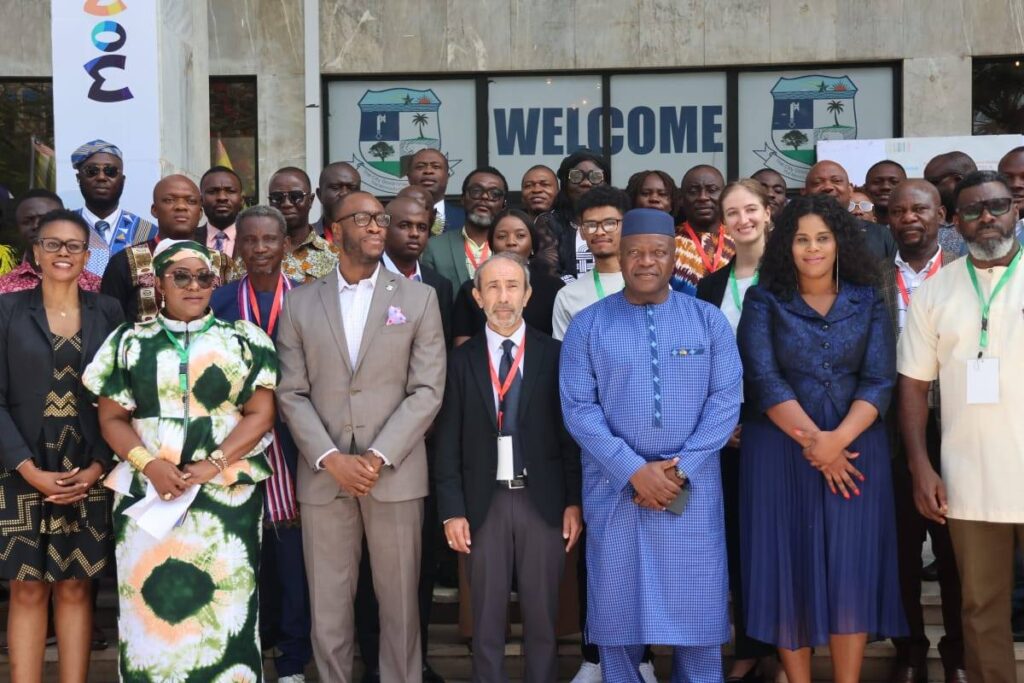
Ngafuan made the remarks Monday, March 9, while officially launching a five-day executive training program on land-based revenue for African city leaders and planners in Monrovia.
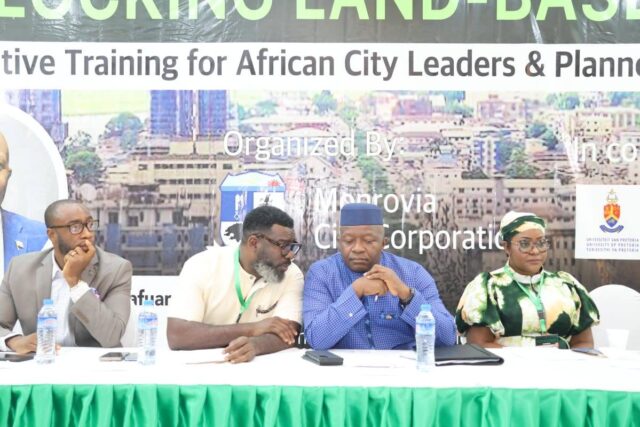
The training, hosted by the Monrovia City Corporation in partnership with the Lincoln Institute of Land Policy and the University of Pretoria Public Policy Hub, brings together municipal officials and policy experts from several African countries to explore new strategies for financing urban development.
According to Ngafuan, Africa is currently experiencing one of the fastest rates of urbanization in the world, creating enormous pressure on cities to provide housing, infrastructure, and public services.
“Our continent is urbanizing faster than any other region in human history,” he said. “By 2050, Africa’s urban population will triple.”
The Minister warned that the traditional model of financing city development—relying heavily on national government transfers, donor funding, and borrowing—cannot sustain the scale of urban expansion taking place across the continent.
“National governments face fiscal constraints, donor priorities shift, and borrowing has limits,” Ngafuan said. “The question before African city leaders is therefore stark: will urbanization become a driver of prosperity or weakness?”
Ngafuan said one of the most promising solutions lies in strengthening land-based revenue systems.
“Land is one of the most valuable resources cities possess, yet it remains largely underleveraged across our continent,” he said.
He explained that mechanisms such as property taxation, land value capture, development charges, and strategic management of public land can generate significant revenue for municipalities.
“When public investments such as roads, drainage, and zoning increase land values, a portion of that gain should return to the public to finance further growth,” Ngafuan said.
The Minister acknowledged that implementing such systems across Africa faces several structural challenges, including weak administrative capacity, outdated valuation rules, incomplete property records, and political resistance.
“Administrative weaknesses, incomplete property identification, and outdated valuation rules undermine effective revenue collection,” he noted.
However, Ngafuan emphasized that these challenges are not insurmountable.
“These constraints are not destiny,” he said. “They are obstacles that can be overcome through deliberate reforms.”
The Finance Minister pointed to Liberia’s own efforts to modernize its property tax system as evidence that progress is possible.
He revealed that more than 20,000 properties have already been registered into the tax system through the Real Estate Tax Expansion Project implemented by the Liberia Revenue Authority.
“This demonstrates that capacity can be built even in post-conflict settings where political will meets technical support,” Ngafuan said.
Monrovia Mayor John Charuk-Siafa echoed the minister’s call for reforms, stressing that sustainable city development requires reliable municipal revenue.
“Cities require reliable and sustainable revenue streams in order to build infrastructure, manage waste, improve sanitation, and create a safe and vibrant urban environment,” he said.
Charuk-Siafa said land represents one of the most valuable assets available to cities but remains underutilized in many African municipalities.
“Land is the single largest collective asset belonging to the people of our cities,” he said. “We must harness it effectively to support sustainable urban transformation.”
The Mayor said the training program in Monrovia offers city leaders an opportunity to learn practical tools that can help strengthen municipal finance systems across the continent.
“This week provides a platform for collaboration and peer learning among African cities,” he added.
Follow The Liberian Post on Facebook and X (formerly twitter).