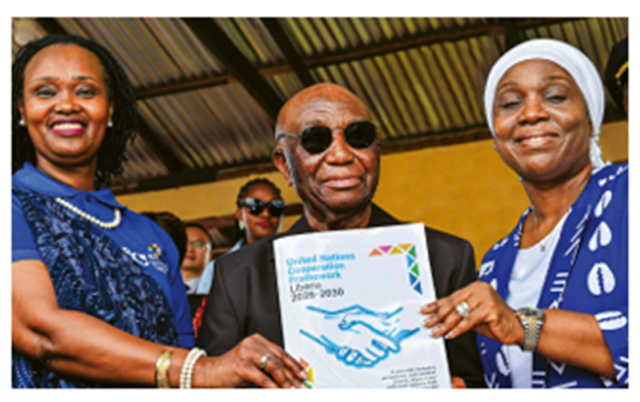
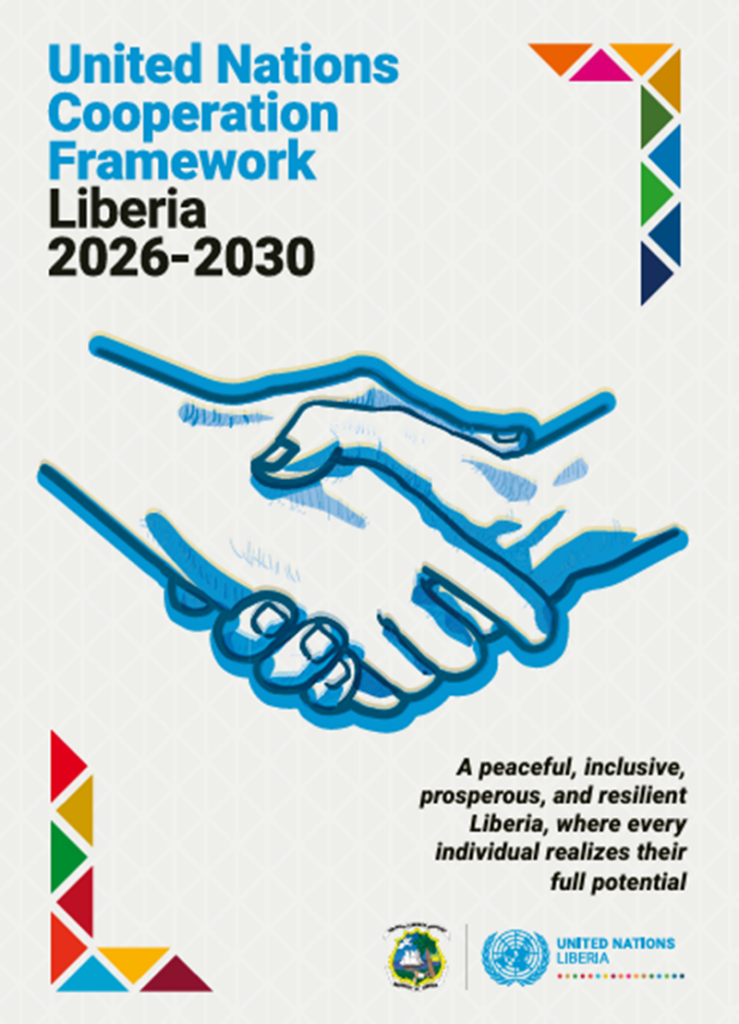
MONROVIA — The Government of Liberia and the United Nations have formalized a far-reaching development partnership under the United Nations Cooperation Framework (UNCF) 2026–2030, a strategic roadmap designed to accelerate inclusive growth, strengthen governance, and unlock the country’s human and economic potential over the next five years.
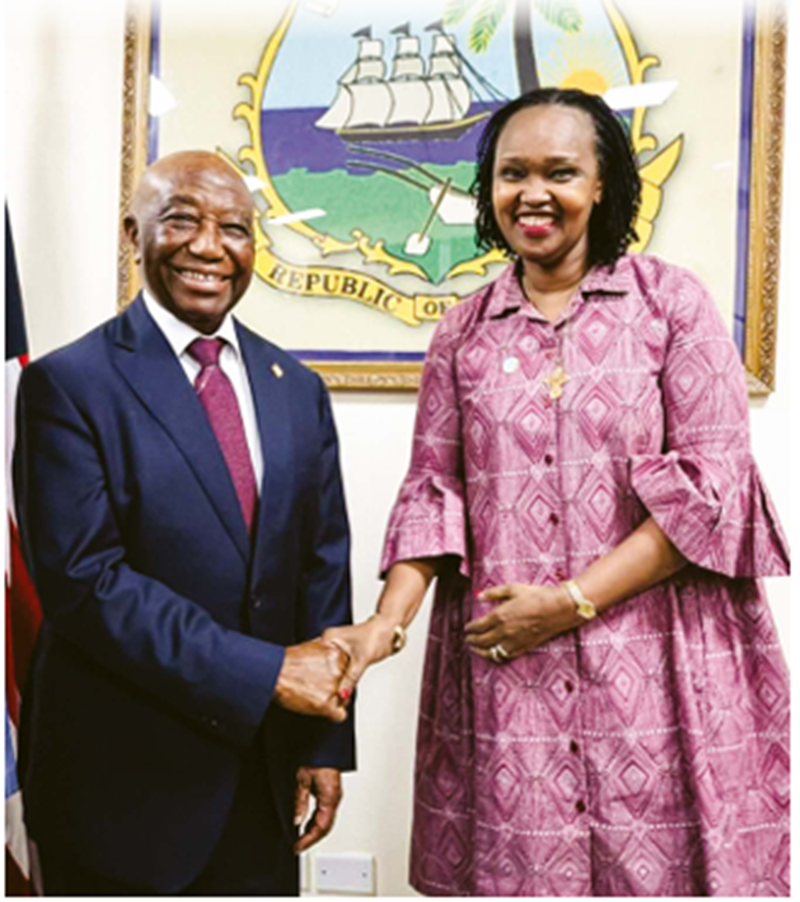
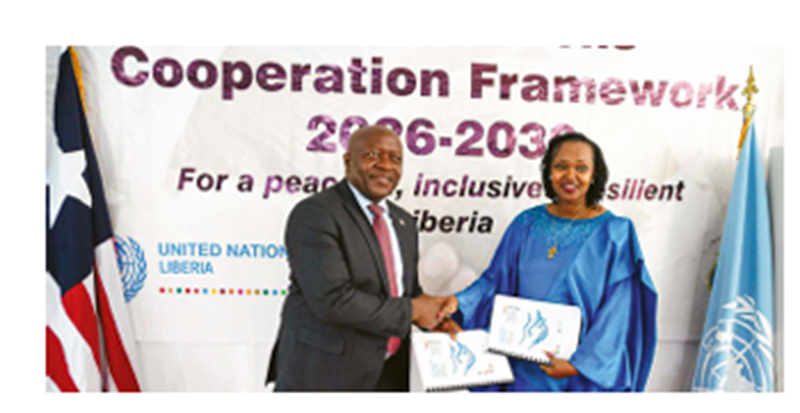
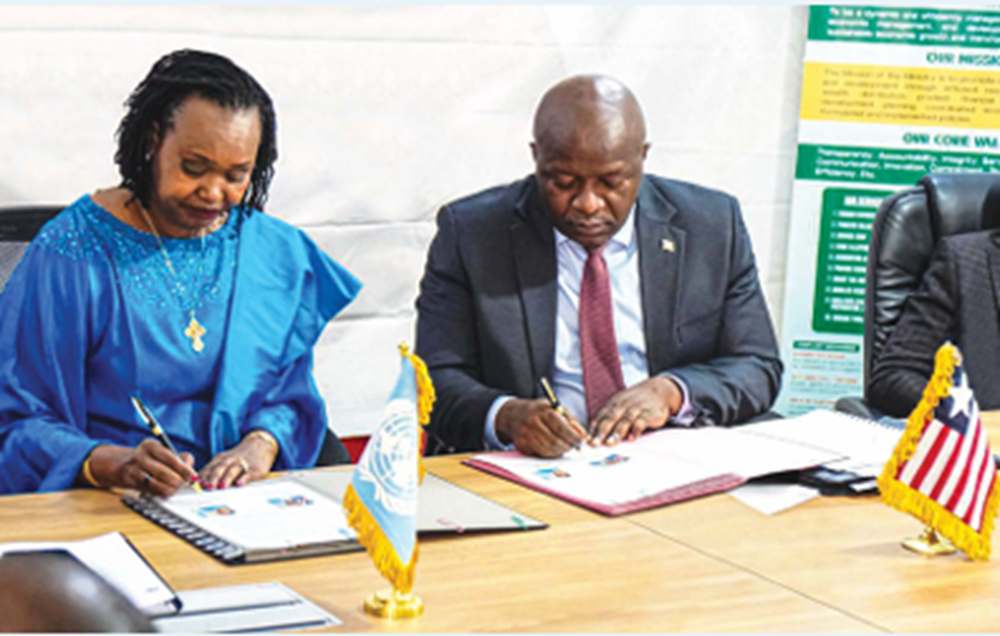
The framework, jointly endorsed by Liberia’s Minister of Finance and Development Planning, Augustine Kpehe Ngafuan, and UN Resident Coordinator Christine N. Umutoni, signals what both sides describe as a “renewed and transformative partnership” anchored in people-centered development and national ownership.
“This Cooperation Framework reflects a collective aspiration to consolidate peace, strengthen institutions, and unlock Liberia’s human and economic potential—especially for the most vulnerable,” the joint statement emphasized.
A Strategic Partnership Aligned with Liberia’s National Vision
The UNCF 2026–2030 is fully aligned with Liberia’s Vision 2030 and the government’s ARREST Agenda for Inclusive Development (2025–2029), while also integrating global and regional commitments such as the Sustainable Development Goals (SDGs), the African Union’s Agenda 2063, and ECOWAS Vision 2050.
At its core, the framework establishes the United Nations as a central development partner supporting Liberia’s national priorities through coordinated, system-wide interventions.
“The UNCF is the principal strategic framework guiding the United Nations System’s collective support to the Government of Liberia,” the document states, underscoring its role as the primary instrument for development planning and accountability.
Three Pillars to Drive Transformation
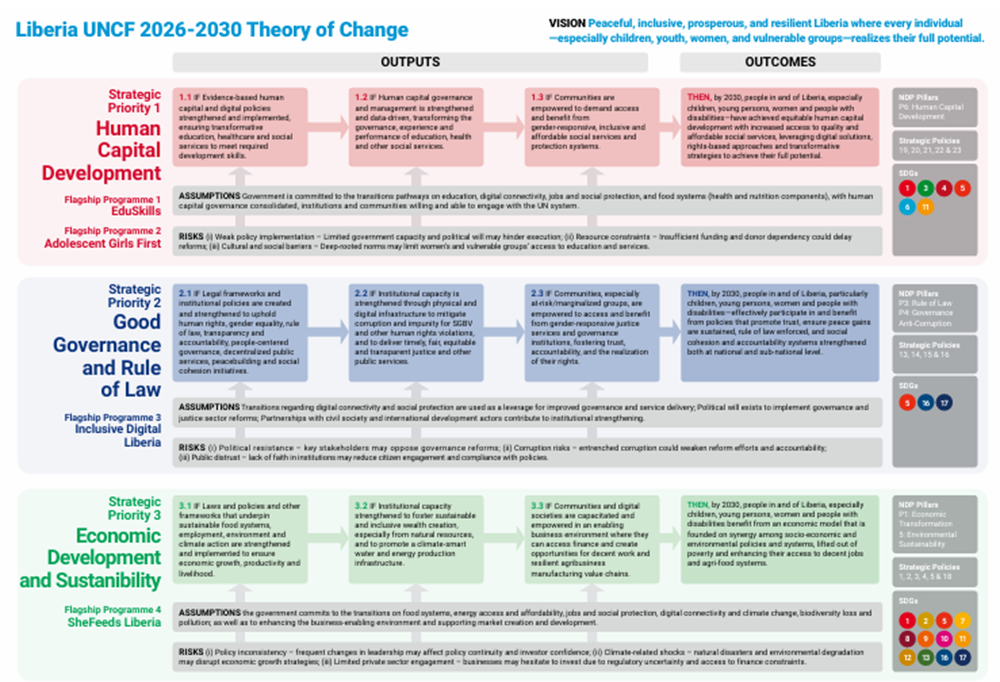
The partnership is structured around three mutually reinforcing strategic priorities:
- Human Capital Development – expanding access to quality education, healthcare, social protection, and protection from gender-based violence.
- Good Governance and Rule of Law – strengthening institutions, promoting transparency, and enhancing access to justice.
- Economic Development and Sustainability – driving job creation, climate resilience, sustainable agriculture, and inclusive economic growth.
These pillars are designed to address Liberia’s persistent structural challenges, including poverty, inequality, youth unemployment, and limited access to essential services, while leveraging its youthful population and natural resource base.
Financing a $874.5 Million Development Agenda
Implementation of the framework is estimated at US$874.5 million, reflecting the scale of ambition and the breadth of interventions planned across sectors.
To bridge financing gaps, the partnership introduces innovative mechanisms such as:
- Blended finance and public-private partnerships
- Climate and impact investment
- Diaspora and social bonds
- Strengthened domestic resource mobilization
“The Framework serves as a platform for coordinated financing… leveraging innovative partnerships with international financial institutions and the private sector,” the report notes.
Focus on Youth, Inclusion, and Resilience
With over 75 percent of Liberia’s population under the age of 35, the framework places strong emphasis on youth empowerment, skills development, and job creation. It also prioritizes women, children, persons with disabilities, and marginalized communities under the principle of “leaving no one behind.”
Key flagship programs include:
- Learning and skills development for jobs
- Adolescent girls’ health and wellbeing
- Digital governance and service delivery
- Climate-smart agriculture and food systems
These initiatives are expected to deliver tangible improvements in livelihoods, governance, and resilience at both national and community levels.
Strengthening Governance and Accountability
The framework places significant emphasis on institutional reform, anti-corruption efforts, and justice sector strengthening—areas seen as critical to sustaining Liberia’s democratic gains.
“Justice is only realized when institutions are strong, accountable, and accessible to all,” the framework underscores, linking governance reforms directly to economic growth and social cohesion.
It also introduces a robust governance structure, including a joint UN-Government steering committee, coordinated implementation mechanisms, and enhanced monitoring and evaluation systems.
A Partnership for the Final Push to 2030
As Liberia enters the final stretch toward achieving the SDGs, the UNCF 2026–2030 is positioned as a decisive instrument to accelerate progress through integrated, whole-of-government and whole-of-society approaches.
Despite notable gains in peace and democratic stability, the framework acknowledges ongoing challenges such as poverty, climate vulnerability, and reliance on external aid—factors that underscore the urgency of coordinated action.
“This is a critical moment for Liberia… The success of this partnership will depend on sustained collaboration, innovation, and accountability,” the document emphasizes.
Outlook
With its comprehensive scope and strong emphasis on partnership, the UNCF 2026–2030 marks a significant evolution in Liberia–UN relations—shifting from fragmented interventions to a unified, results-driven development model.
If effectively implemented, the framework could serve as a cornerstone for Liberia’s transition toward a peaceful, inclusive, prosperous, and resilient society, ensuring that development gains are both sustainable and broadly shared.
Follow The Liberian Post on Facebook and X (formerly twitter)