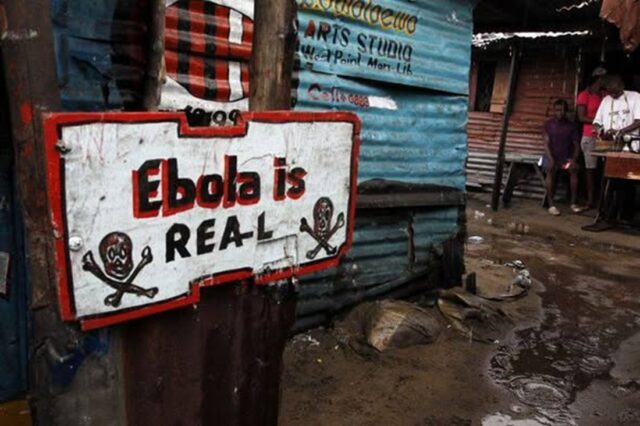
MONROVIA – The Ministry of Health has placed Liberia’s health system on heightened alert following reports of a new Ebola Virus Disease (EVD) outbreak in the eastern Democratic Republic of Congo, while assuring the public that no confirmed Ebola case has been recorded in Liberia.
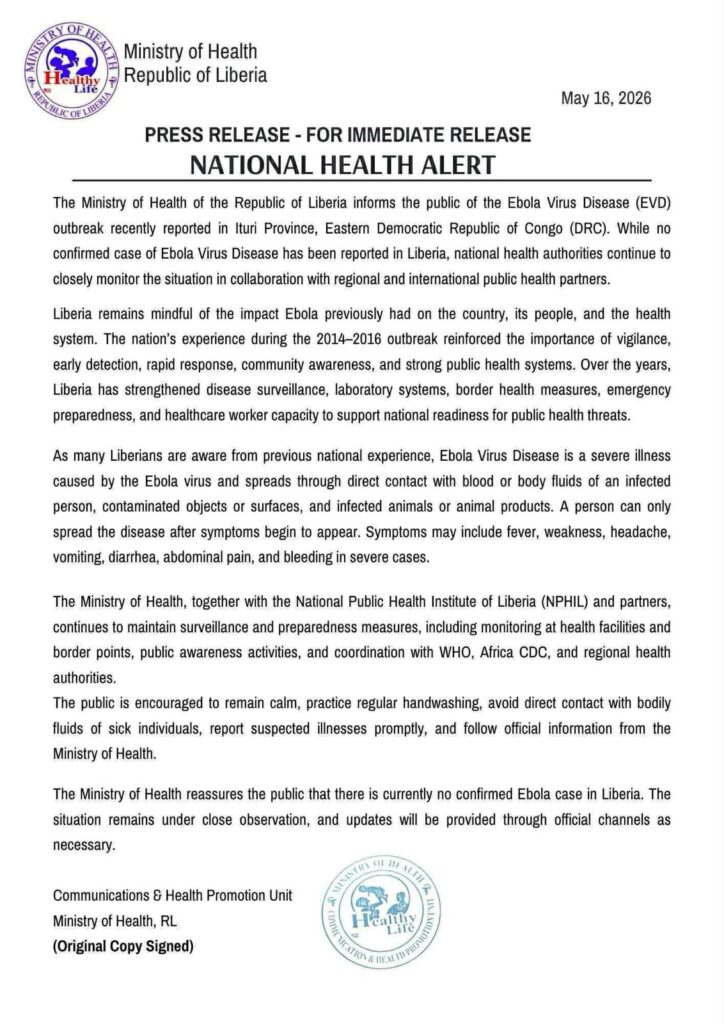
In a National Health Alert issued Saturday, May 16, 2026, the Ministry disclosed that the outbreak was recently reported in Ituri Province in eastern DR Congo and said Liberian health authorities are closely monitoring developments in collaboration with regional and international partners.
“While no confirmed case of Ebola Virus Disease has been reported in Liberia, national health authorities continue to closely monitor the situation in collaboration with regional and international public health partners,” the Ministry stated.
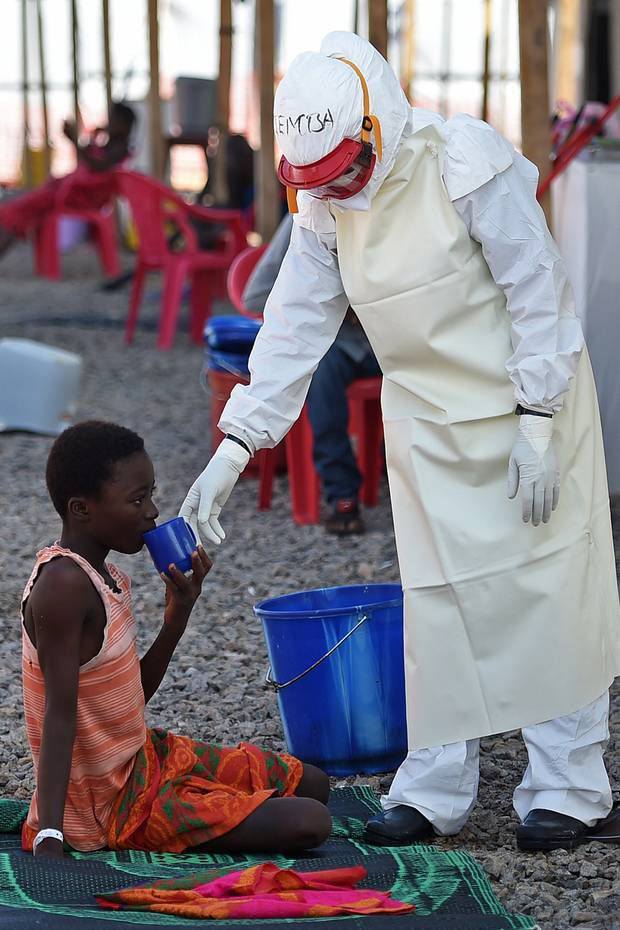
The Ministry’s statement comes amid growing international concern over the rapidly developing outbreak in eastern Congo, where health authorities say dozens of people have already died and hundreds of suspected cases are under investigation.
New Outbreak Raises Regional Concerns
International health agencies confirmed this week that the latest outbreak is centered in Ituri Province, particularly in the Mongwalu and Rwampara health zones, with suspected spread into Bunia, the provincial capital.
According to the Africa Centres for Disease Control and Prevention, the outbreak has already resulted in significant deaths and suspected infections, prompting emergency regional coordination efforts.
Health experts say the outbreak is especially concerning because preliminary laboratory results indicate the virus may involve the Bundibugyo strain of Ebola, for which no fully approved vaccine currently exists.
The outbreak has additionally raised fears of cross-border transmission because Ituri Province borders Uganda and South Sudan, regions characterized by heavy population movement and fragile healthcare systems.
Uganda has already reported at least one imported Ebola-related death connected to the outbreak in Congo.
Liberia Still Haunted by 2014–2016 Ebola Crisis
Liberia’s latest alert revives painful memories of the devastating 2014–2016 Ebola epidemic that ravaged the Mano River Union basin, including Liberia, Sierra Leone, and Guinea.
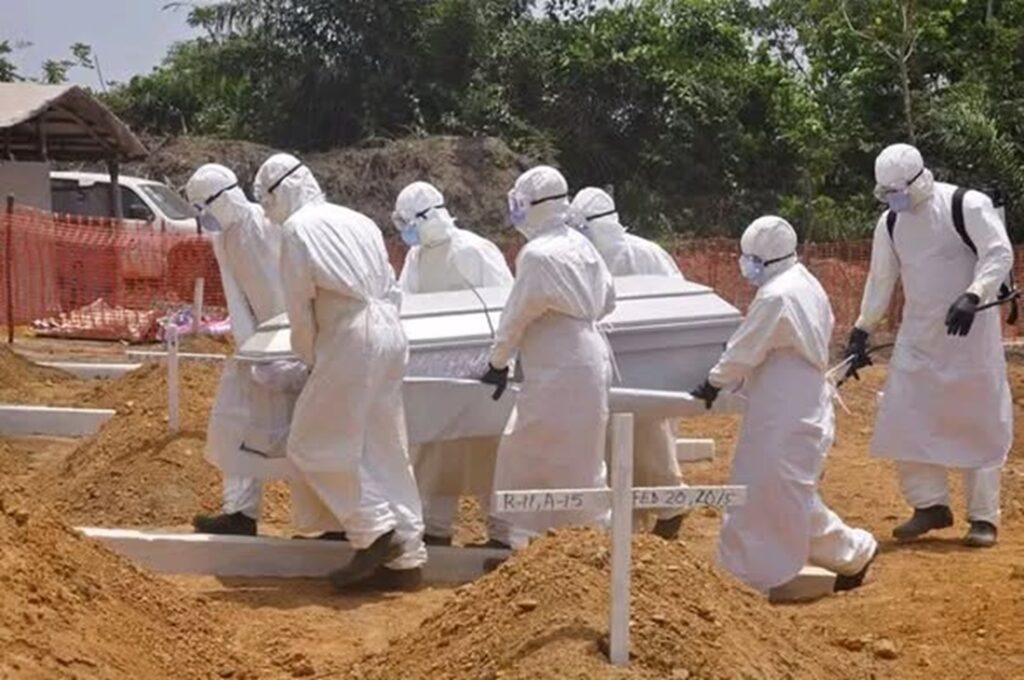
That outbreak became the deadliest Ebola epidemic in recorded history, killing more than 11,000 people across West Africa and overwhelming fragile healthcare systems throughout the region.
Liberia alone recorded more than 4,800 deaths during the epidemic, making it one of the worst-hit countries.
Entire communities were devastated as hospitals collapsed under pressure, healthcare workers died in large numbers, schools shut down, businesses closed, and national economies suffered severe setbacks.
The crisis also exposed major weaknesses in public health infrastructure across the Mano River Union basin while simultaneously strengthening regional disease surveillance and emergency response systems.
Government Emphasizes Preparedness
In its latest advisory, the Ministry of Health stressed that Liberia has significantly improved its disease surveillance and emergency preparedness capacity since the West African Ebola crisis.
“The nation’s experience during the 2014–2016 outbreak reinforced the importance of vigilance, early detection, rapid response, community awareness, and strong public health systems,” the Ministry noted.
According to the Ministry, Liberia has since strengthened laboratory systems, border surveillance, emergency preparedness mechanisms, healthcare worker training, and disease monitoring systems to better respond to future outbreaks.
The Ministry said it is currently coordinating with the National Public Health Institute of Liberia, the World Health Organization, Africa CDC, and other regional health bodies to maintain surveillance and preparedness nationwide.
Authorities disclosed that monitoring efforts are ongoing at healthcare facilities, border entry points, and surrounding communities.
Public Urged to Remain Calm
Health authorities are urging Liberians not to panic while remaining vigilant and adhering to preventive measures.
The Ministry encouraged regular handwashing, early reporting of suspected illnesses, and avoiding direct contact with bodily fluids of sick individuals.
“As many Liberians are aware from previous national experience, Ebola Virus Disease is a severe illness caused by the Ebola virus and spreads through direct contact with blood or body fluids of an infected person, contaminated objects or surfaces, and infected animals or animal products,” the advisory explained.
Symptoms of Ebola may include fever, weakness, headache, vomiting, diarrhea, abdominal pain, and bleeding in severe cases.
Officials also emphasized that Ebola can only be spread after symptoms begin appearing.
“The public is encouraged to remain calm, practice regular handwashing, avoid direct contact with bodily fluids of sick individuals, report suspected illnesses promptly, and follow official information from the Ministry of Health,” the statement urged.
Mano River Region Remains Vulnerable
Public health experts warn that the Mano River Union region remains vulnerable to infectious disease outbreaks because of porous borders, heavy regional migration, limited healthcare resources in some rural communities, and cross-border trade movements.
During the 2014–2016 epidemic, the virus spread rapidly between Guinea, Liberia, and Sierra Leone partly because of frequent cross-border movement among communities with deep social and economic ties.
Since then, regional governments have invested heavily in strengthening cross-border disease surveillance and emergency coordination.
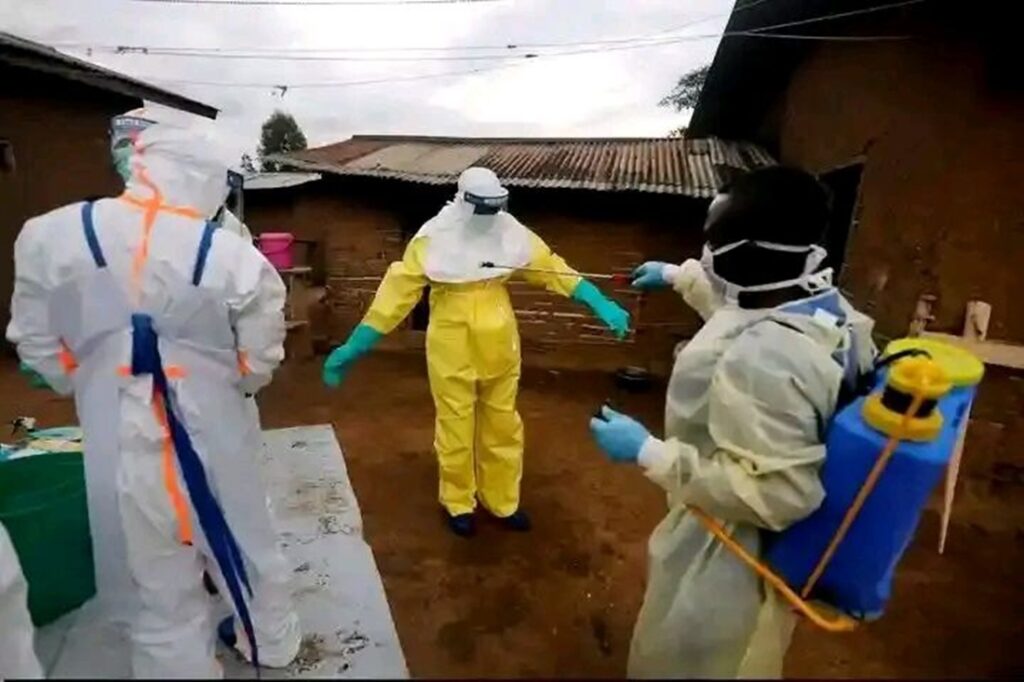
The current outbreak in Congo is already prompting renewed regional coordination among African health authorities and international partners.
Liberia Says Situation Under ‘Close Observation’
Despite the growing international concern, Liberian authorities continue to emphasize that no Ebola case has been detected in the country.
“The Ministry of Health reassures the public that there is currently no confirmed Ebola case in Liberia,” the statement stressed.
“The situation remains under close observation, and updates will be provided through official channels as necessary.”
Health officials say Liberia’s early alert strategy is intended to prevent complacency and ensure rapid preparedness in the event of any regional spread.
Follow The Liberian Post on Facebook and X (formerly twitter)