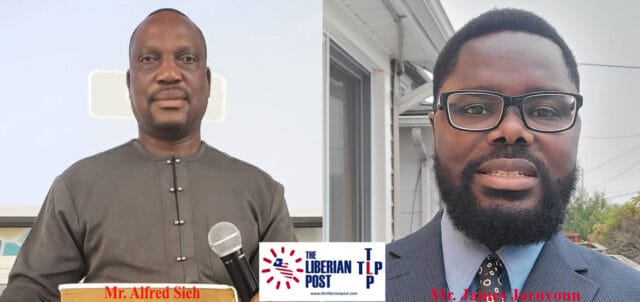
MONROVIA, Liberia — Two Liberian diaspora advocates, James Jornyoun and Alfred Sieh, are urging lawmakers to reconsider a proposed Diaspora Development Fund Act, arguing that a mandatory fee on remittances sent to Liberia could amount to what they describe as “taxation without representation.”
The proposal, which has generated debate among Liberians at home and abroad, seeks to establish a development fund supported through contributions tied to remittance transfers. Supporters say the measure would create a sustainable source of financing for national development initiatives and help harness the economic strength of Liberia’s global diaspora.
However, Jornyoun and Sieh contend that while the goal of promoting development is laudable, any mandatory charge on diaspora Liberians must be accompanied by stronger guarantees of accountability, transparency, and political inclusion.
“We appreciate the intention to promote national development through collective diaspora support,” the two advocates said in a statement. “But any additional structured contribution must be built on broad trust, transparent governance, strong legal safeguards, and meaningful public participation.”

At the center of their concerns is a reported provision that would require remittance senders to pay a fixed US$1 fee on transfers to Liberia. The pair argues that regardless of whether the charge is labeled a “development contribution” or a “fund contribution,” its compulsory nature raises important constitutional and democratic questions.
According to the advocates, the debate is not primarily about the amount of money involved, but rather about whether Liberians living abroad should be required to make mandatory financial contributions to a government-backed initiative while lacking full opportunities to participate in Liberia’s political process.
“The issue is less about terminology and more about legality, trust, accountability, and public consent,” they stated.
Jornyoun and Sieh note that many Liberians in the diaspora already provide substantial financial support to relatives, communities, schools, health facilities, and development projects across the country. They argue that any additional contribution should be voluntary rather than compulsory.
“A voluntary model would inspire more confidence and unity than a compulsory mechanism,” they said. “If the initiative is to succeed, it must not only be well-intentioned, but also broadly trusted by those expected to support it.”
The advocates further argue that the proposal revives a longstanding democratic principle commonly associated with the phrase “taxation without representation.” Drawing parallels to historical struggles over political consent and public taxation, they maintain that governments should not impose mandatory financial obligations on citizens who lack meaningful representation in the decision-making process.
As part of their response, Jornyoun and Sieh are calling for broader political reforms aimed at strengthening diaspora engagement in national governance. Among their proposals are the establishment of direct representation for Liberians living abroad, expanded out-of-country voting rights, and mechanisms to ensure that diaspora communities have a formal voice in legislative and policy discussions.

They argue that such reforms would strengthen democratic participation, deepen ties between Liberia and its overseas citizens, encourage greater investment from the diaspora, and improve transparency and accountability in government.
The debate comes as Liberia continues to explore ways to leverage the economic contributions of its diaspora community, which sends millions of dollars annually to support families and local development efforts. While supporters of the proposed fund view it as an innovative financing mechanism, critics insist that any mandatory contribution must first address concerns about representation, oversight, and public trust.
As discussions over the bill continue, the views expressed by Jornyoun and Sieh are likely to add momentum to a broader national conversation about the rights, responsibilities, and political role of Liberians living abroad.
Meanwhile, both men have called for the establishment of a Diaspora Liberian Economic Free Zone for direct investment purposes.
Follow The Liberian Post on Facebook and X (formerly twitter)