-Participants Gain Practical Knowledge in Campaigning, Financial Management, and Democratic Governance
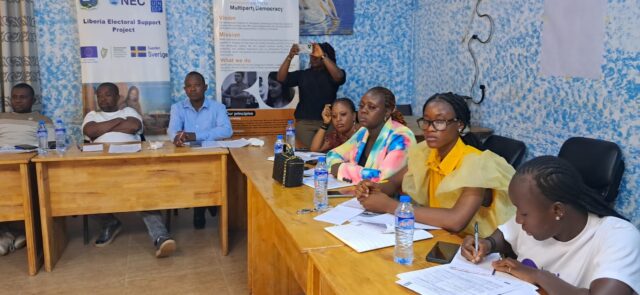
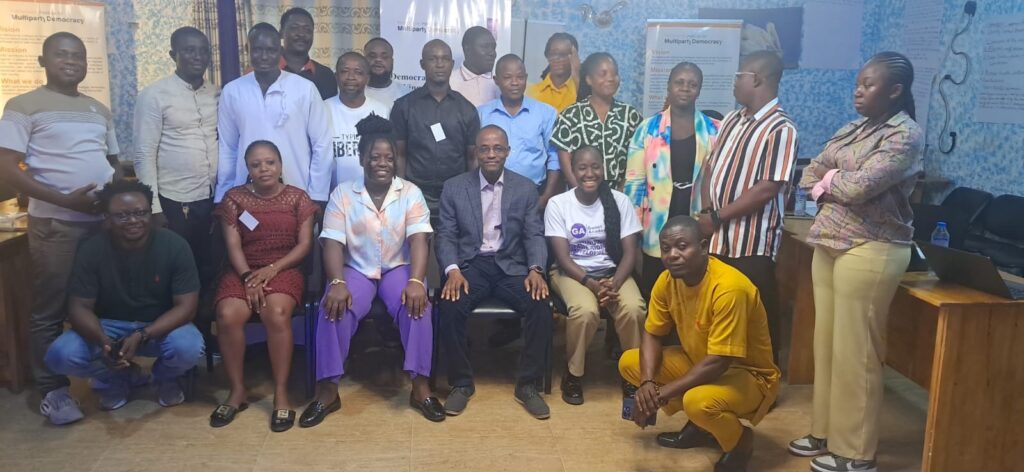
BUCHANAN, Grand Bassa County – The second phase of the Liberia Democracy School for Youth Wings of Political Parties continued on Wednesday, May 27, 2026, in Buchanan, bringing together 26 young political leaders from across the country to strengthen their knowledge of democratic participation, political campaigning, campaign finance, and leadership.
The initiative is being implemented by the Netherlands Institute for Multiparty Democracy (NIMD) under the Liberia Electoral Support Project (LESP), which is managed by the United Nations Development Programme (UNDP) and supported by the European Union, IrishAid, and the Government of Sweden.
The five-day training programme, running from May 25–29, is providing representatives from 13 political parties with practical leadership skills, democratic values, and tools to promote constructive political engagement and peaceful participation in Liberia’s democratic processes.
The programme seeks to foster issue-based politics, strengthen inter-party dialogue, and equip emerging political leaders with the knowledge and skills necessary to contribute positively to Liberia’s governance and political development.
Focus on Campaign Finance and Political Accountability
Wednesday’s sessions focused on political campaign strategies, the political party code of conduct, campaign finance, and financial literacy.
Facilitators stressed the importance of responsible political messaging, transparency, accountability, and strategic engagement as critical pillars for strengthening Liberia’s democratic culture.
Leading a session on Campaign Finance and Financial Literacy, Dr. Aagon Tingba, UNDP Political Party and Campaign Finance Specialist for the Liberia Electoral Support Project, underscored the need for sound financial management practices within political parties.
According to Dr. Tingba, transparency and institutional discipline are essential for building public confidence and ensuring the sustainability of political organizations.
“Political parties should hire trained accountants or bookkeepers as treasurers,” he advised.
He emphasized that strengthening financial literacy among young political leaders is vital for promoting responsible political participation and improving internal governance structures within political parties.
Strategic Communication Key to Successful Campaigns
Presenting on Political Campaigns and the Code of Conduct, Harold Aidoo, Executive Director of Integrity Watch Liberia, highlighted the importance of strategic communication in modern political engagement.
“In applying the principles of campaigning, knowing your target audience and crafting your message is key,” Aidoo told participants.
He encouraged aspiring political leaders to focus on issue-based campaigning, ethical communication, and constructive engagement with voters.
Participants Share Impact of Training
Several participants used the opportunity to reflect on how previous Democracy School sessions have positively influenced their political engagement and advocacy efforts within their respective parties.
Mustapha Kelvin Passawe of the Citizens Movement for Change (CMC) said the knowledge gained from the first phase of the programme in Bong County empowered him to advocate for greater youth inclusion within his party’s leadership structure.
“Following the first phase of NIMD training in Bong, I returned to my party advocating for young people to be included in executive positions,” Passawe explained.
“Today, my party is experiencing a shift in the inclusion of young people within its National Executive Committee. This happened because of the advocacy and knowledge I gained from the Democracy School.”
Similarly, Emmanuel J. S. Tamba of the Liberia Restoration Party (LRP) credited the programme with strengthening participants’ confidence and capacity to engage meaningfully within their political organizations.
“The Democracy School has built our confidence,” Tamba said.
“Some of us felt we could not challenge the views of our political leaders, but with the lessons taught at the Democracy School, we are returning to our parties with a changed mindset.”
Broadening Understanding of Democratic Governance
Beyond campaign-related topics, participants also explored critical issues affecting democratic governance and electoral participation in Liberia.
Training modules covered Liberia’s electoral system, electoral justice mechanisms, political alliances and coalitions, political dialogue, conflict prevention and resolution, decentralization frameworks, and youth inclusion in governance processes.
Facilitators emphasized the importance of peaceful political engagement, consensus-building, and constructive collaboration among political actors in preserving democratic stability and national cohesion.
Supporting Inclusive Governance
The Democracy School forms part of broader efforts to strengthen democratic governance and increase youth participation in Liberia’s political processes.
By combining theoretical learning with practical application, the programme encourages collaboration among young leaders from different political parties while promoting mutual understanding and democratic values.
The Liberia Electoral Support Project continues to support national institutions and democratic processes aimed at fostering inclusive, transparent, and accountable governance. The project is implemented by UNDP in partnership with UN Women and the Netherlands Institute for Multiparty Democracy (NIMD), with financial support from the European Union, Ireland, and Sweden.
As the training progresses, organizers remain optimistic that the initiative will help cultivate a new generation of political leaders committed to democratic principles, peaceful participation, and national development.
Follow The Liberian Post on Facebook and X (formerly twitter).