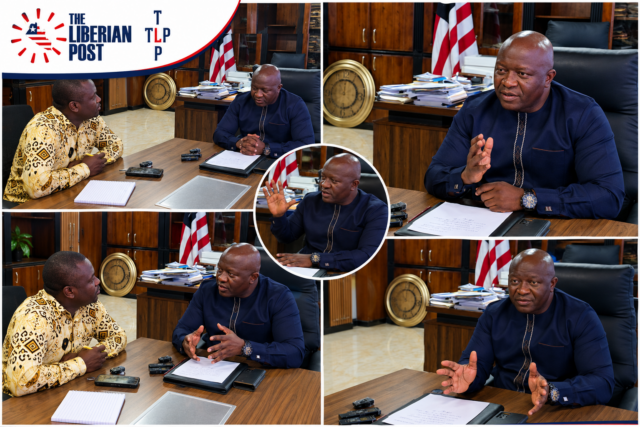
–Finance Minister Says Boakai Administration Is Translating Financing into Roads, Electricity and Tangible Projects, Insisting That Implementation—not Paperwork—Is the True Measure of Government Performance
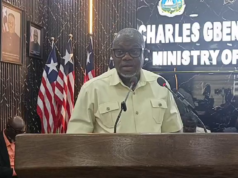
MONROVIA, Liberia – Finance and Development Planning Minister Augustine Kpehe Ngafuan has defended the development record of President Joseph Nyuma Boakai’s administration, declaring that the government’s focus is not merely on signing financing agreements but on ensuring that projects are implemented and produce measurable benefits for Liberians.
In an exclusive interview with the Ministry of Finance and Development Planning’s (MFDP) communications team, Ngafuan said the true test of government performance lies in roads built, electricity delivered, hospitals improved and livelihoods transformed—not in the number of agreements signed or ceremonial handshakes captured in photographs.
“Signing an agreement is one thing. What the people need is implementation,” Ngafuan asserted.
“You could sign an agreement, and the agreement could grow dust on the shelf. Signing an agreement is one thing. Good. It makes you feel good. The journalists will come and take pictures. You shake hands, you smile. But after that, what happens? Our people don’t care about who signed. They want to know how many kilometers of roads were actually built.”
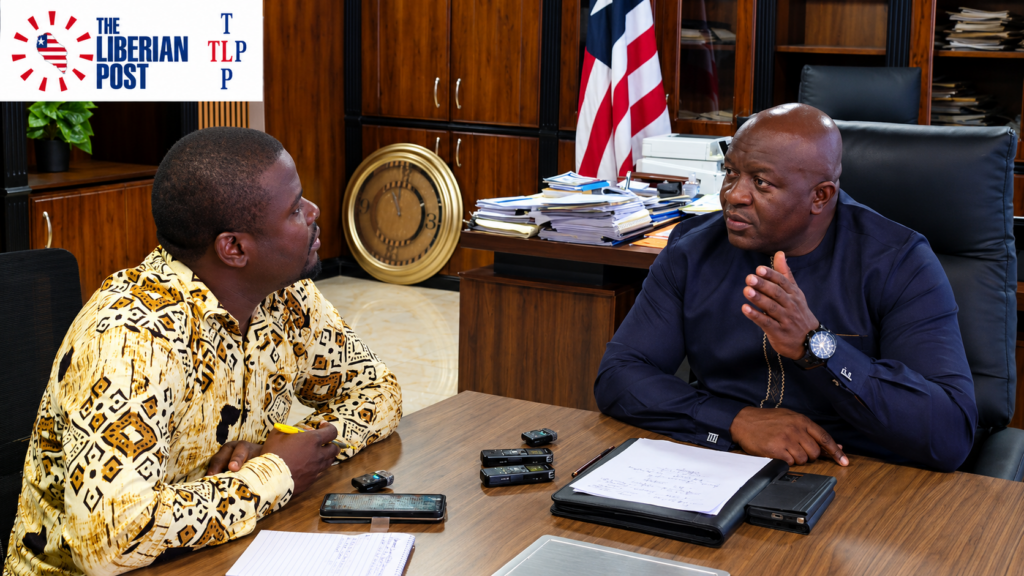
The Finance Minister’s remarks come amid growing public debate over infrastructure financing, following claims by former officials that many of Liberia’s current road and energy projects had already been negotiated before the Boakai administration took office.
Rather than engaging in political exchanges, Ngafuan maintained that development should never be reduced to a contest over who deserves credit.
“The road from Monrovia to Harper is not for any regime. It was not for the Ellen Johnson Sirleaf administration. It was not for the George Weah administration. It is not for the Boakai administration. It belongs to the Liberian people,” he said. “Governments will come and go, but these roads remain the people’s roads.”
Development Beyond Signatures
Ngafuan argued that one of the biggest misconceptions surrounding infrastructure development is the belief that signing financing agreements automatically translates into completed projects.
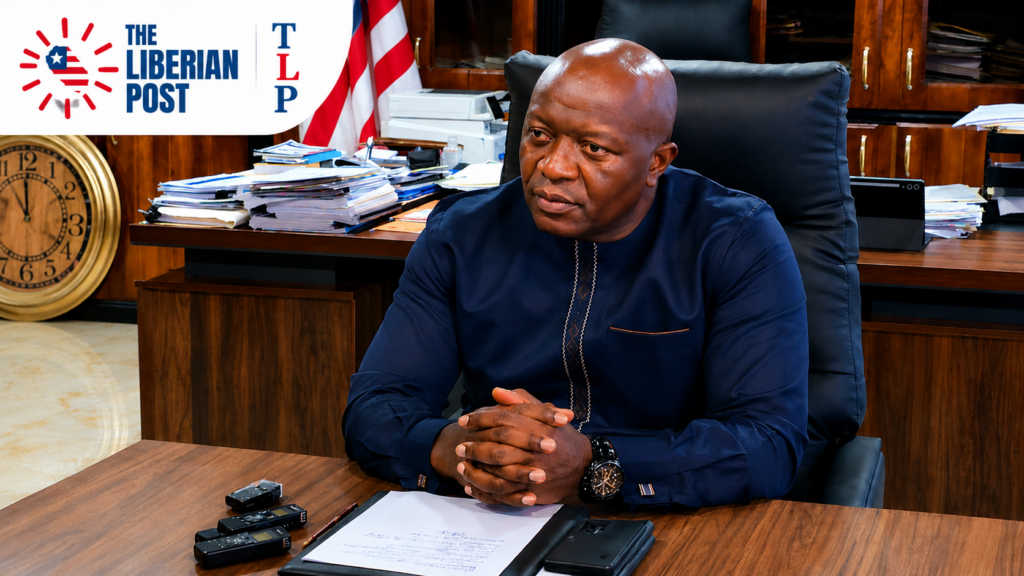
He explained that after agreements are signed, governments must still satisfy numerous conditions before funds can be disbursed. These include legislative ratification, financing Resettlement Action Plans (RAPs), meeting debt service obligations, maintaining donor confidence, and ensuring transparent project management. Failure to fulfill these conditions, he warned, can stall projects indefinitely.
According to the Minister, the Boakai administration inherited several projects that had slowed because contractors were unpaid, debt obligations had accumulated, and governments had not met financing conditions required by international partners.
He said the administration moved quickly to restore Liberia’s credibility with lenders by settling outstanding obligations, budgeting for debt service, and restarting disbursements.
“Our credibility with the partners has gone up,” he noted. “The movement you now see is because we are meeting all the effectiveness conditions and maintaining our credibility.”
Major Push on Roads
Ngafuan highlighted significant progress on the long-awaited Banga–Mendikorma–Voinjama highway corridor, describing it as one of several priority infrastructure projects currently receiving financing.
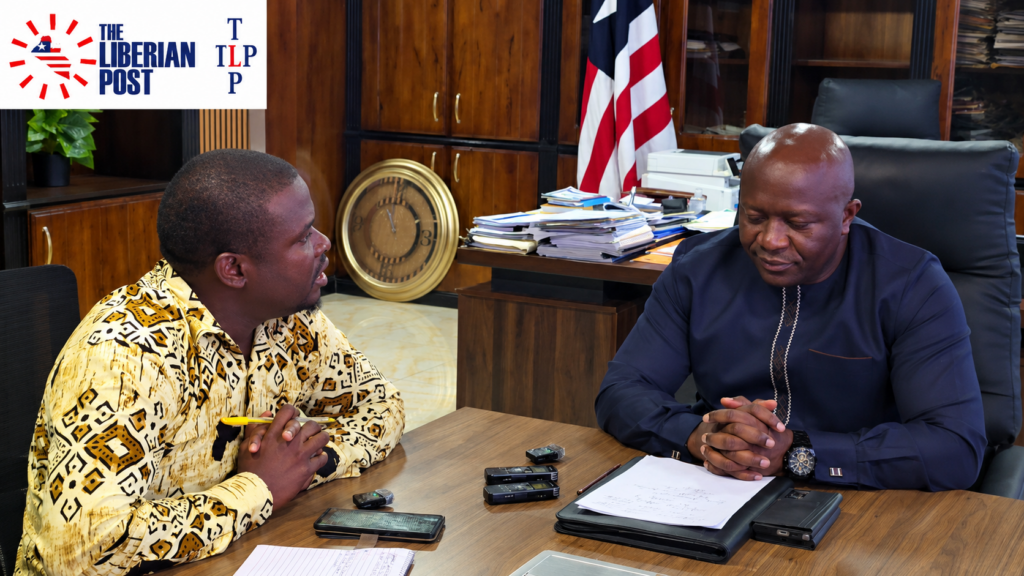
He disclosed that while attending the 50th anniversary celebration of the OPEC Fund for International Development in Vienna, Austria, he signed a new US$30 million financing agreement with BADEA for the Salayea-to-Konya section of the road. The agreement complements an earlier US$30 million commitment from OPEC and an additional US$12.8 million package expected from the Kuwait Fund for Arab Economic Development.
He expressed confidence that all financing agreements would be ratified before the Legislature adjourns for its mid-year recess, allowing procurement to move forward without delay.
Ngafuan also assured residents of Lofa County that every section of the strategic highway remains a priority for government.
“We are leaving no county behind,” he declared. “President Boakai is President for every county, every tribe and every community. We are not discriminating in development.”
Beyond roads, he revealed that financing has also been secured for hospitals and border connectivity projects in Lofa County, including support for health facilities and the paving of the road linking Zorzor to Yela on the Guinean border.
Energy at the Center of Growth
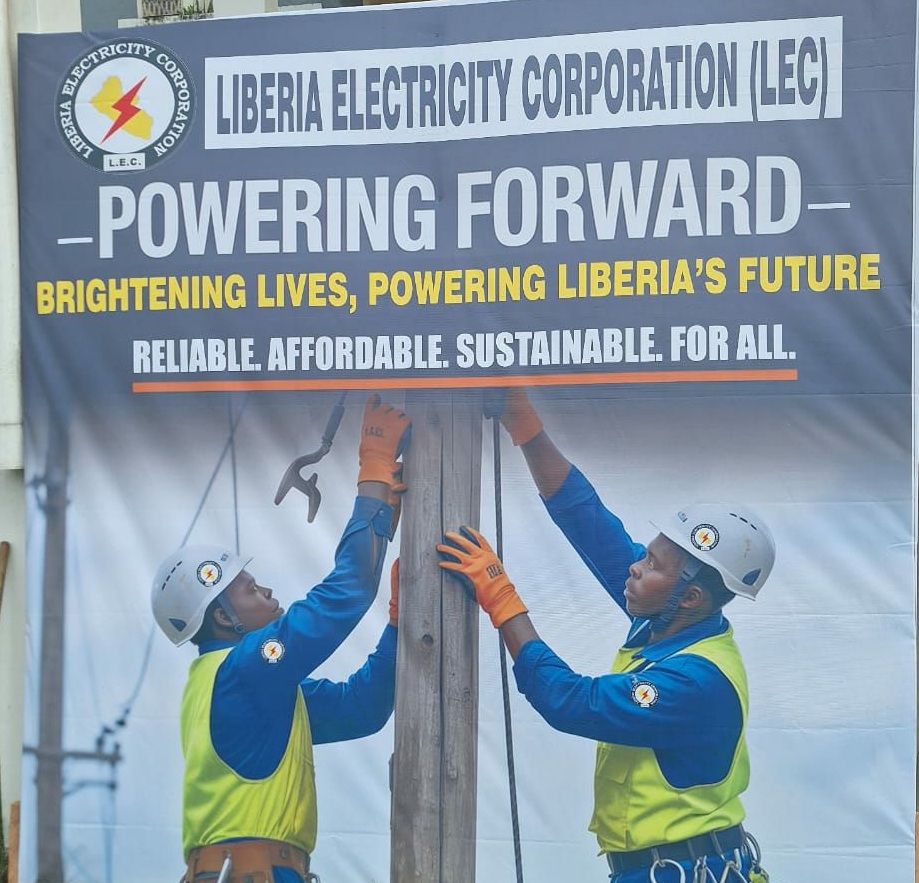
The Finance Minister described electricity as one of Liberia’s greatest development priorities, arguing that sustainable economic growth depends on expanding reliable power generation and distribution.
“Everybody says the private sector is the engine of growth,” Ngafuan observed. “I say electricity is the engine of the private sector.”
He disclosed that since the Boakai administration assumed office, government has signed approximately US$194 million worth of financing agreements for the energy sector, including a recent US$57 million World Bank-supported project to expand Mount Coffee’s solar capacity through battery storage.
According to him, government also allocated US$50 million from additional budgetary resources specifically for energy investments, while another US$50 million was earmarked for road infrastructure.
He added that Liberia’s anticipated second Millennium Challenge Corporation (MCC) Compact is expected to focus primarily on strengthening the country’s energy sector.
A Government Under Pressure to Deliver
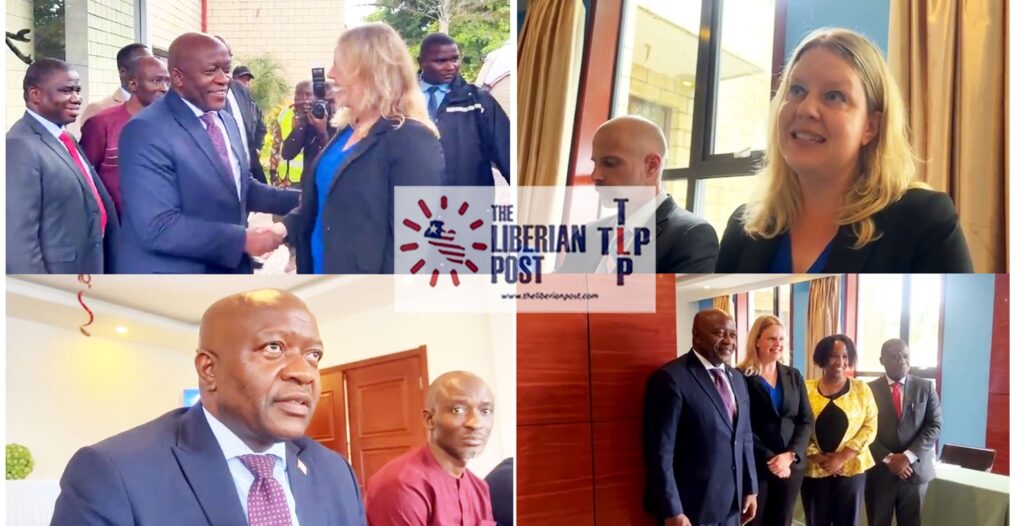
Throughout the interview, Ngafuan repeatedly emphasized that President Boakai expects ministers to move quickly on implementation.
He likened the administration’s pace to a sprint rather than a marathon, insisting that Liberians expect tangible improvements rather than promises.
“President Boakai wants us to sprint,” he said. “We will sprint.”
“The Liberian people feel this government can deliver more. We cannot be satisfied with average performance. We must continue shooting for excellence.”
The Minister also pointed to improvements at the John F. Kennedy Medical Center and the government’s support for rural women entrepreneurs as examples of reforms already producing visible results. He argued that these seemingly modest successes represent “little lights” that, taken together, will illuminate development across Liberia.
Ending the interview, Ngafuan reiterated what he described as the philosophy guiding both his ministry and the Boakai administration.
“Our job,” he concluded, “is to do our job.”
For more breaking news, in-depth analysis, exclusive interviews, and special reports from Liberia and across Africa, visit www.theliberianpost.com. Follow The Liberian Post on Facebook (https://web.facebook.com/profile.php?id=61576017166570) and X, formerly Twitter (https://x.com/LiberianPost).