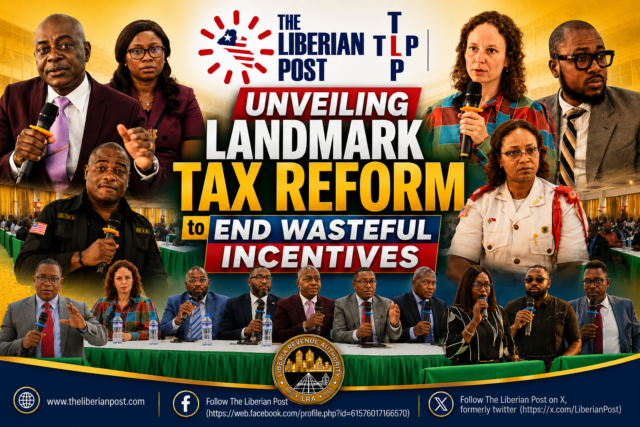
–Government Launches Tax Expenditure Management Act as Officials Say New Law Will Boost Transparency, Strengthen Investor Confidence, and Ensure Every Tax Waiver Delivers Measurable Economic Benefits
MONROVIA – In one of the most significant public finance reforms undertaken in recent years, the Government of Liberia has officially launched the Tax Expenditure Management Act of 2025, introducing a comprehensive legal framework designed to regulate tax incentives, eliminate unnecessary revenue leakages, strengthen fiscal discipline, and improve transparency in the management of billions of Liberian dollars in foregone government revenue.
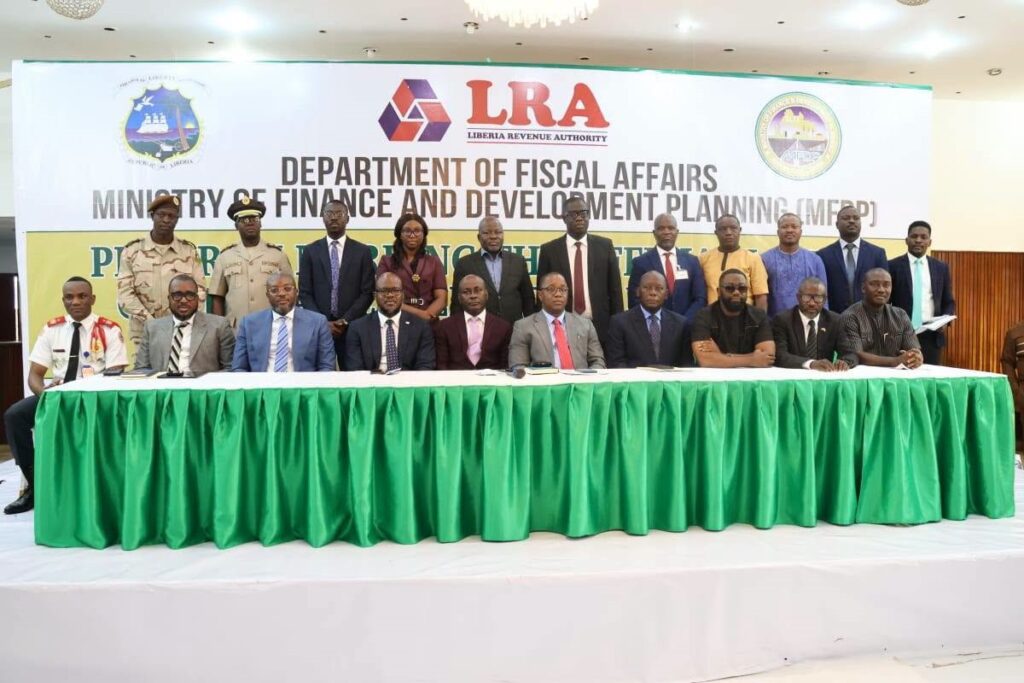
The landmark legislation, officially unveiled Tuesday during a high-level ceremony at Monrovia City Hall, is being hailed by government officials, lawmakers, development partners, and fiscal governance experts as a transformative reform that could fundamentally reshape how Liberia grants, administers, monitors, and reports tax exemptions, duty waivers, deductions, and other fiscal incentives.
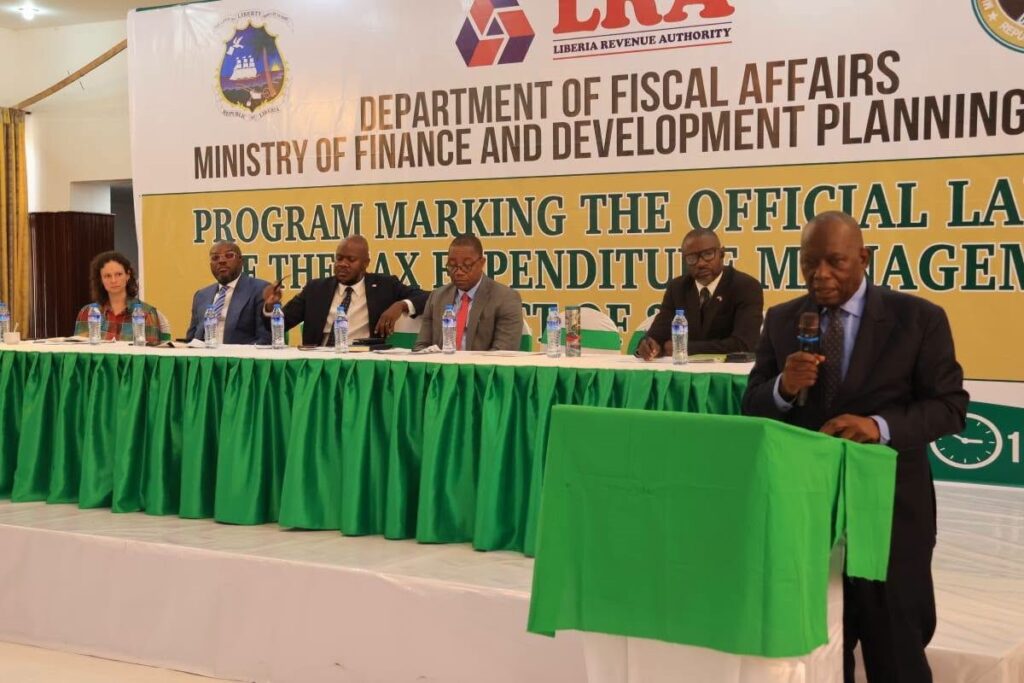
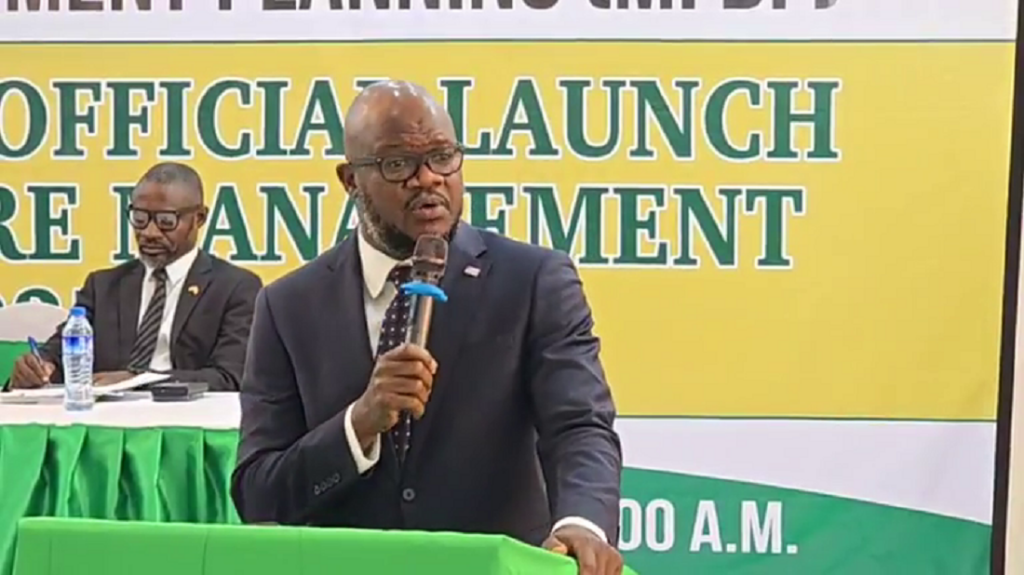
Speaking on behalf of Finance and Development Planning Minister Augustine Kpehe Ngafuan, Deputy Minister for Fiscal Affairs and Acting Minister Anthony G. Myers described the launch as “not just another law,” but a historic milestone in Liberia’s quest to modernize its tax system and strengthen domestic resource mobilization.
“It is a celebration of the latest in a series of policy reforms that reflect the Government’s determination to modernize Liberia’s tax system, strengthen public financial management, and ensure that every tax incentive granted advances our national development priorities while safeguarding the public purse,” Myers declared.
He said the Act establishes, for the first time in Liberia’s history, a single legal framework governing the application, approval, registration, administration, monitoring, evaluation, and reporting of tax expenditures across every sector of the economy.
The Acting Finance Minister emphasized that while tax incentives remain important tools for attracting investment and stimulating economic growth, every exemption granted represents public revenue deliberately forgone by government and therefore must be subjected to the same scrutiny and accountability as any other public expenditure.
“These tax expenditures are public resources,” Myers stressed. “They deserve the same level of transparency, oversight, accountability, and evaluation as every other public expenditure.”
Closing Long-Standing Loopholes
For decades, Liberia’s tax incentive regime has been governed through a patchwork of concession agreements, executive orders, provisions of the Liberia Revenue Code, international treaties, donor agreements, and sector-specific legislation.

According to government officials, that fragmented approach created inconsistencies in implementation, weak oversight, and limited public visibility into the true fiscal cost of tax incentives.
The new legislation seeks to eliminate those weaknesses by creating a standardized system that brings every tax incentive under one regulatory umbrella.
The law establishes clear procedures for requesting, approving, administering, renewing, suspending, and revoking tax incentives while creating uniform reporting obligations for beneficiaries.
Officials say this will significantly improve predictability for investors while giving government stronger oversight over incentives granted to businesses, concessionaires, charitable organizations, diplomatic missions, and other eligible entities.

Liberia Losing Hundreds of Millions
One of the most revealing moments during the launch came when officials disclosed the enormous fiscal cost of tax incentives over recent years.
According to figures presented by the Liberia Revenue Authority (LRA), Liberia forfeited approximately:
- US$94.4 million in 2018;
- US$81.2 million in 2019;
- US$94.1 million in 2020;
- US$145.8 million in 2021; and
- US$240.3 million in 2024 through various tax expenditures.
Officials said cumulative tax expenditures over recent years have approached US$1 billion, underscoring the urgency of strengthening oversight and ensuring that incentives generate tangible economic returns.
The figures include tax holidays, customs exemptions, reduced tax rates, concession-related incentives, executive orders, and other preferential tax treatments.

New Register to Track Every Incentive
A centerpiece of the reform is the establishment of Liberia’s first-ever Tax Expenditure Register, a centralized database that will record every tax incentive granted under Liberian law.
The register will identify beneficiaries, specify the legal basis for each incentive, estimate the value of revenue foregone, record expiration dates, and track whether recipients fulfill their investment commitments.
Government officials said the database will eventually be accessible to the public, allowing citizens, researchers, development partners, and oversight institutions to monitor the country’s tax expenditure regime more effectively.
In addition, the Ministry of Finance will now publish an Annual Tax Expenditure Report, providing Parliament and the public with comprehensive assessments of the fiscal cost and effectiveness of incentives granted by government.

Sunset Clauses End Perpetual Incentives
Another major innovation introduced under the law is the elimination of perpetual tax incentives.
Going forward, every new incentive must include a clearly defined sunset clause, ensuring that exemptions expire after a specified period unless renewed following a comprehensive review.
Before any new incentive is approved, applicants must also undergo a Fiscal Impact Assessment demonstrating the projected economic benefits—including employment creation, investment, production expansion, technology transfer, and other measurable contributions—to justify the revenue government will forego.
Beneficiaries will also be required to submit periodic performance reports and maintain records for at least seven years to facilitate compliance audits by the Liberia Revenue Authority.
Strong Penalties for Abuse
Officials warned that misuse of tax incentives will attract severe consequences.
The legislation empowers the Minister of Finance to suspend or revoke tax incentive certificates where abuse is detected, subject to due process.
Businesses or institutions found improperly transferring certificates, misrepresenting activities, or violating reporting requirements may be required to repay unpaid taxes along with penalties and interest, while serious violations could result in criminal prosecution.
European Union Pledges Continued Support
The reform received strong endorsement from Liberia’s international development partners.

Representing the European Union, Solène Coma described the legislation as an important milestone that aligns with Liberia’s Public Financial Management Strategy and Domestic Resource Mobilization Strategy.
She said enhanced transparency surrounding tax incentives would not only increase domestic revenue but also strengthen investor confidence by providing greater certainty within Liberia’s fiscal environment.
Coma also announced that the European Union has signed a €7 million technical assistance programme to support continued public financial management reforms involving the Ministry of Finance, Liberia Revenue Authority, General Auditing Commission, Internal Audit Agency, and other integrity institutions.
Auditor General Welcomes Reform
Auditor General P. Garswa Jackson Sr. praised the initiative, emphasizing that effective compliance begins with public understanding rather than enforcement alone.
“You cannot follow a law you do not know, and you cannot implement a policy you do not understand,” Jackson observed, stressing that awareness campaigns such as the launch are essential to strengthening transparency and accountability across government.
Legislature Backs Greater Oversight
Speaking on behalf of the Liberian Senate, Senator Nya D. Twayen, Jr. welcomed the legislation, describing it as a major step toward improving oversight of concession agreements and tax incentives.
He noted that some concession companies continue benefiting from incentives long after transitioning from investment to production, depriving government of much-needed revenue.
The Senator pledged that the Legislature would intensify oversight to ensure companies benefiting from tax incentives fully comply with their obligations while supporting additional economic reforms, including the proposed Export Proceeds Repatriation Act, which seeks to require proceeds from Liberia’s exports to pass through the country’s banking system to improve liquidity and stabilize the foreign exchange market.
Supporting the ARREST Agenda
The Ministry of Finance said the Tax Expenditure Management Act forms an integral part of President Joseph Nyuma Boakai’s ARREST Agenda for Inclusive Development (AAID) by strengthening fiscal governance, improving domestic revenue mobilization, and creating a more transparent investment climate.
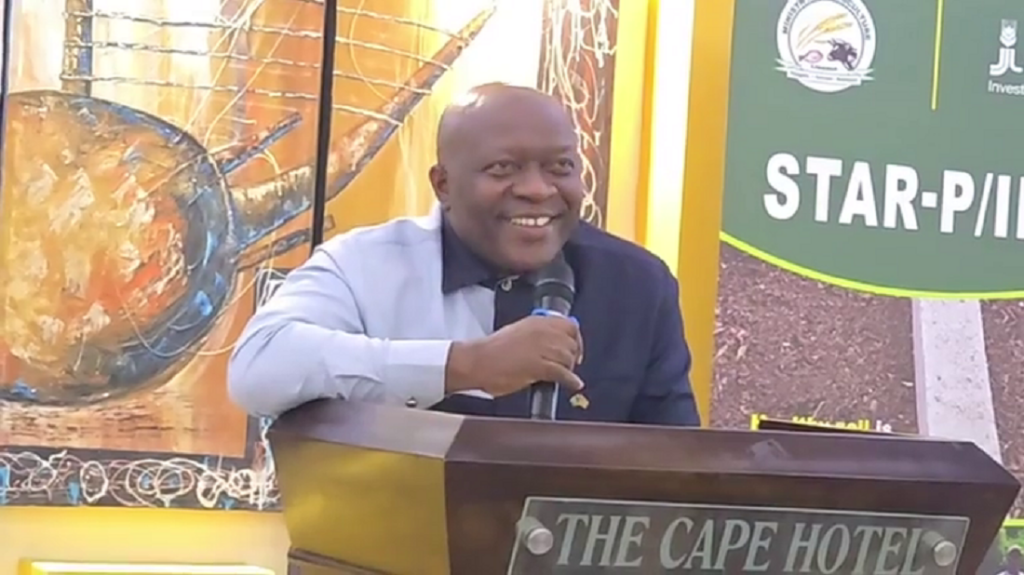
According to Acting Minister Myers, the law demonstrates government’s determination to ensure that every tax incentive contributes meaningfully to national development while safeguarding scarce public resources.
He commended President Boakai and the National Legislature for enacting what he described as one of Liberia’s most consequential fiscal governance reforms in recent years.
The launch attracted representatives from the Liberia Revenue Authority, National Investment Commission, General Auditing Commission, ministries and government agencies, members of the Legislature, development partners, civil society organizations, private sector institutions, and diplomatic missions, reflecting broad national support for the reform initiative.
As Liberia seeks to finance ambitious infrastructure, education, healthcare, agriculture, and industrialization programs under the ARREST Agenda, government believes the new law will ensure that tax incentives become strategic investments in national development rather than unchecked fiscal costs.
If implemented effectively, officials say, the Tax Expenditure Management Act could significantly improve transparency, enhance investor confidence, strengthen public financial management, and help preserve hundreds of millions of dollars in public revenue that can be redirected toward improving the lives of Liberians.
For breaking news, in-depth analysis, and exclusive reports from Liberia and around the world, follow The Liberian Post on Facebook (https://web.facebook.com/profile.php?id=61576017166570) and X, formerly Twitter (https://x.com/LiberianPost).