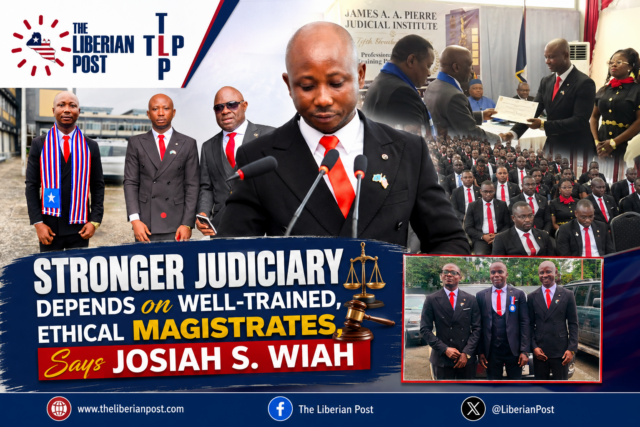
–Josiah S. Wiah Says Stronger Judiciary Depends on Well-Trained, Ethical Magistrates; Appeals for Continued Government Support and Expanded Legal Education Opportunities
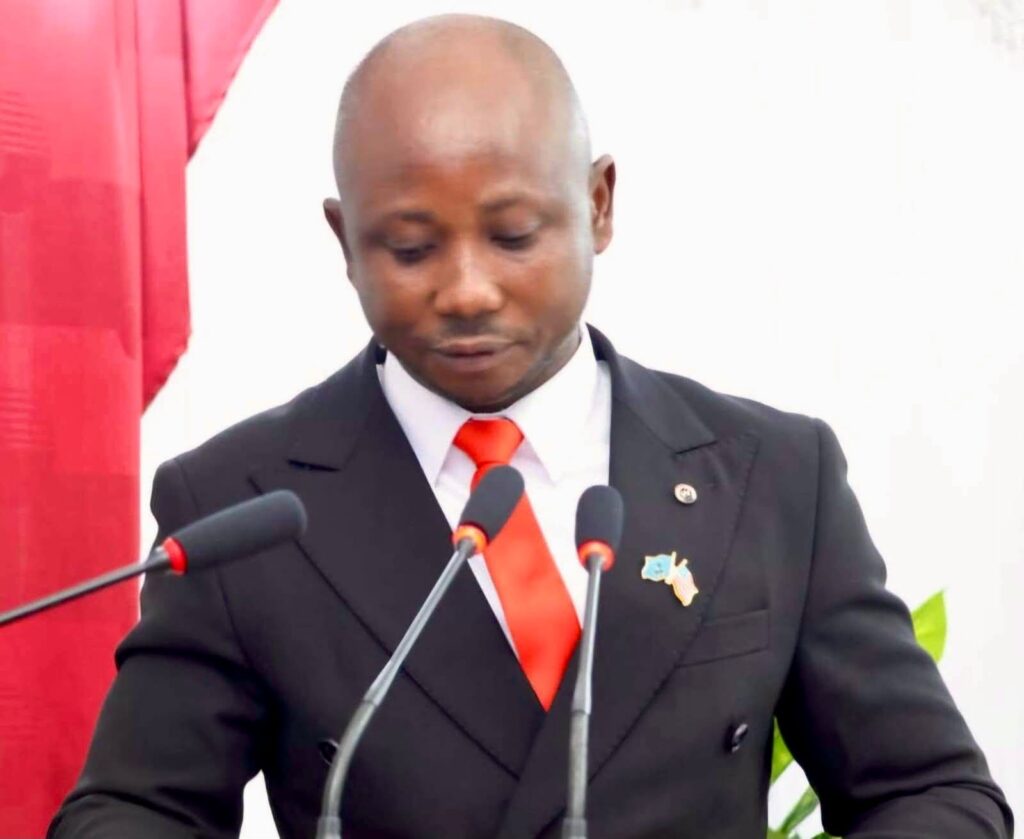
MONROVIA – The valedictorian of the James A. A. Pierre Judicial Institute’s Professional Magistrates Training Program (PMTP) Cycle V, Mr. Josiah S. Wiah, has called for sustained government investment in judicial education and sweeping reforms to Liberia’s legal training system, arguing that a stronger judiciary can only be built on the foundation of competent, ethical and continuously trained judicial officers.
Delivering an inspiring valedictory address during the graduation of 64 newly trained magistrates at the Temple of Justice on Capitol Hill on Friday, Wiah urged the Government of Liberia to institutionalize funding for professional judicial education while appealing to the country’s two law schools to create a special admission pathway for qualified graduates of the Judicial Institute.
His address complemented the day’s broader message delivered by Chief Justice Yamie Quiqui Gbeisay, Sr. and keynote speaker Finance and Development Planning Minister Augustine Kpehe Ngafuan, both of whom emphasized integrity, discipline and government commitment to strengthening Liberia’s justice sector.
Call for Greater Investment in Judicial Education
Describing the Professional Magistrates Training Program as one of Liberia’s most rigorous legal training initiatives, Wiah said the country must continue investing in the professional development of magistrates if it hopes to improve access to justice and strengthen public confidence in the courts.
“The Professional Magistrates Training Program is not merely an academic exercise; it is a strategic investment in the Rule of Law and in national development,” he declared, noting that many magisterial courts across Liberia remain understaffed because of shortages of trained judicial officers.
He urged the Government to continue financing the program through the national budget, arguing that expanding the number of professionally trained magistrates would improve access to justice in rural communities while promoting peace, national security and public confidence in the Judiciary.
According to Wiah, investing in judicial officers is ultimately an investment in Liberia’s democratic institutions.
Appeals for Law School Reform
One of the most notable proposals in Wiah’s address was his appeal to the leadership of the Louis Arthur Grimes School of Law and the Liberia School of Law to establish a special admission pathway for graduates of the Judicial Institute.
He argued that the year-long Professional Magistrates Training Program provides participants with extensive instruction in substantive law, criminal and civil procedure, judicial ethics, legal writing, courtroom management, judgment writing, gender justice, child justice, human rights law, alternative dispute resolution, probation and practical adjudication.
Given the depth of that training, Wiah proposed that qualified graduates be considered for admission to law school without having to sit the traditional entrance examination, provided they satisfy all other academic and institutional requirements.
“Such recognition would not lower standards; rather, it would acknowledge the quality and rigor of the Judicial Institute’s training while encouraging more judicial officers to pursue legal education and strengthen the capacity of our justice system,” he said.
From War Survivor to Valedictorian
Wiah’s speech was also a deeply personal reflection on perseverance.
He recounted being born in Gbartala, Bong County, during Liberia’s civil conflict before his family fled to Jedepo Cheboken in Sinoe County, where there were no schools, hospitals or functioning institutions.
His mother, despite never completing high school herself, became the family’s first teacher.
“There were no schools, no hospitals, no law and order… She became our first teacher throughout the war years, who taught us to read and write at home,” he recalled.
Wiah credited his mother with instilling discipline, honesty, humility and integrity—values he said shaped both his personal life and professional journey.
He also thanked the Government of Liberia for sponsoring his education from primary school through university and later funding his professional training at the Judicial Institute.
“It took a great nation like Liberia to help me realize my dreams and fulfill my mother’s lifelong prayer,” he said.
A Pledge to Serve with Integrity
Speaking on behalf of the graduating class, Wiah pledged that the newly commissioned magistrates would uphold the highest ethical standards and reject corruption in every form.
“We shall reject corruption in all its forms, and shall not compromise justice for personal gain, political influence, financial inducement, or social pressure,” he assured the Supreme Court.
He emphasized that justice must never be influenced by wealth, politics, ethnicity, religion or personal relationships.
“Justice must never be reserved for the rich while denied to the poor,” he declared.
Recognizing that magistrates often represent citizens’ first encounter with Liberia’s justice system, Wiah said public confidence in the Judiciary would depend largely on the conduct, fairness and integrity of those serving in magistrates’ courts across the country.
Chief Justice: ‘You Are the Human Face of the Judiciary’
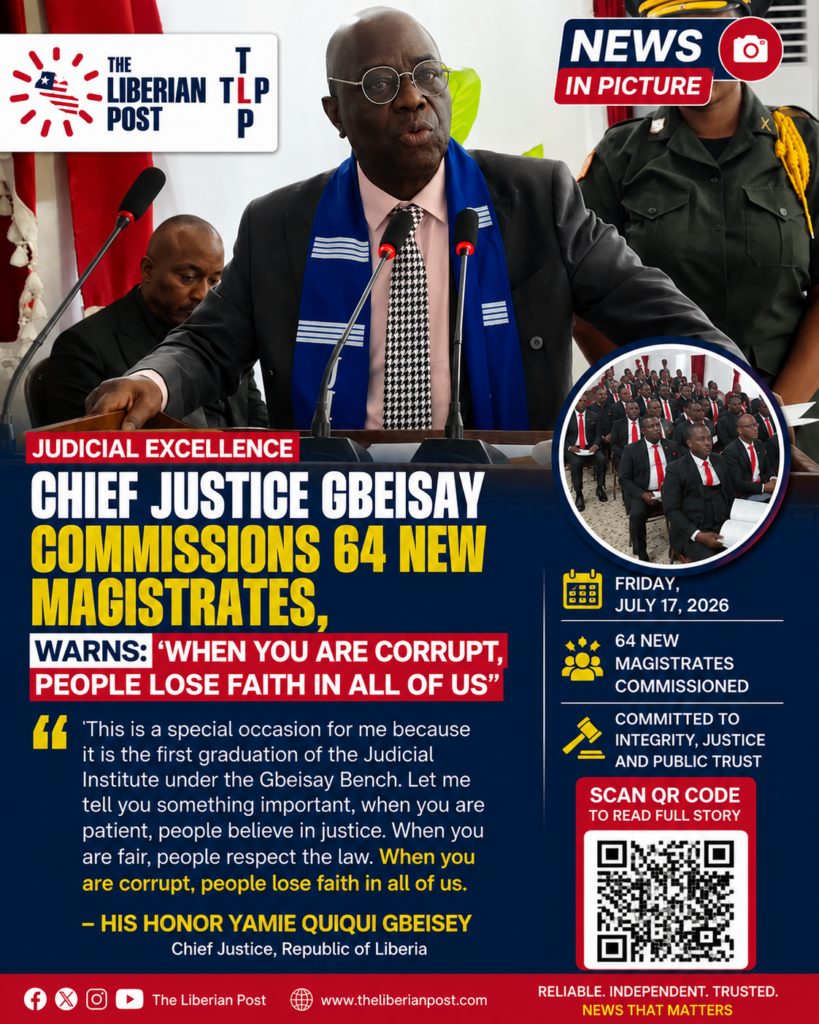
The valedictorian’s message echoed the challenge delivered earlier by Chief Justice Yamie Quiqui Gbeisay, Sr., who reminded the graduates that magistrates are the Judiciary’s frontline representatives.
“You are the human face of the entire Judiciary,” the Chief Justice said.
“When you are patient, people believe in justice. When you are fair, people respect the law. When you are corrupt, people lose faith in all of us.”
Chief Justice Gbeisay urged the graduates to know the law, protect the dignity of the courts and guard their integrity, warning that external pressure would come from politicians, family members and influential individuals but insisting that “the law is your only mask.”
He further praised the Boakai administration for financing more than 90 percent of the Professional Magistrates Training Program—the first time the Liberian government has shouldered such a significant share of the program’s cost—and disclosed that the newly commissioned magistrates would immediately be placed on the government payroll.
Government Pledges Continued Support
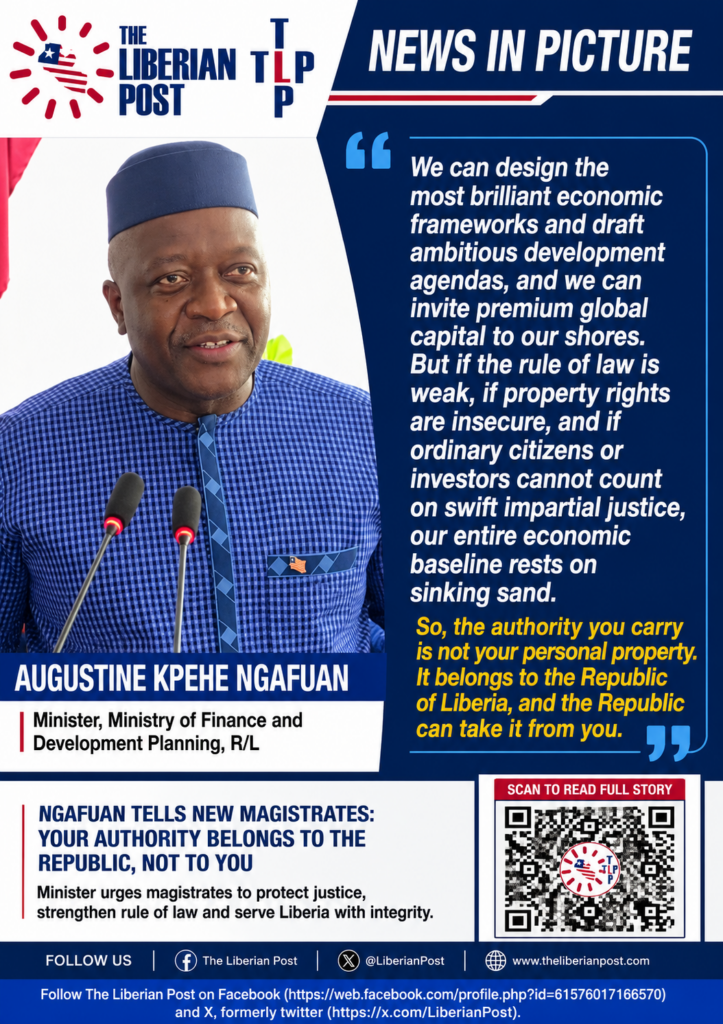
Delivering the keynote address, Finance Minister Augustine Kpehe Ngafuan described the graduation as a milestone in Liberia’s pursuit of judicial independence and institutional reform.
He said the Judiciary remains “the final anchor of public trust,” arguing that sustainable economic development is impossible without a strong rule of law.
“We can design the most brilliant economic frameworks… but if the rule of law is weak… our entire economic baseline rests on sinking sand,” Ngafuan observed.
The Finance Minister revealed that the Judiciary’s national budget has increased from US$18.5 million in 2023 to US$33.3 million in 2026, representing an 80 percent increase over three years.
He also highlighted government investments in court construction, judicial digitization, logistics, improved remuneration for judicial officers and nationwide expansion of access to justice.
Addressing the graduates directly, Ngafuan reminded them that judicial authority belongs to the Liberian people rather than to individual officeholders.
“The authority you carry is not your personal property. It belongs to the Republic of Liberia,” he said, urging the new magistrates to reject corruption and exercise their authority with humility, discipline and unwavering integrity.
A Shared Vision for Liberia’s Justice System
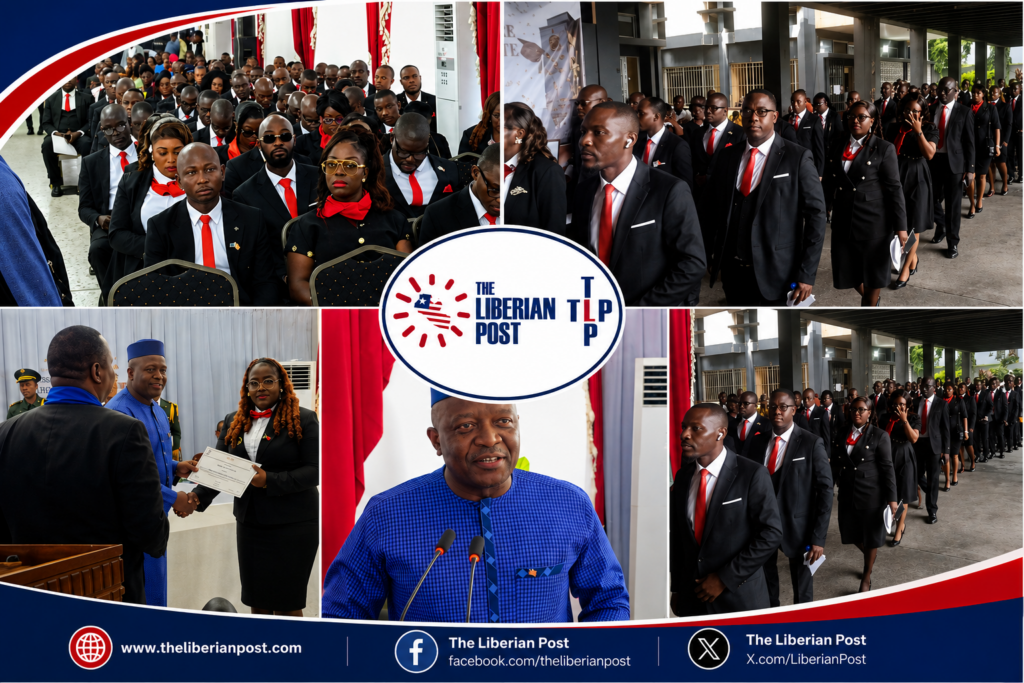
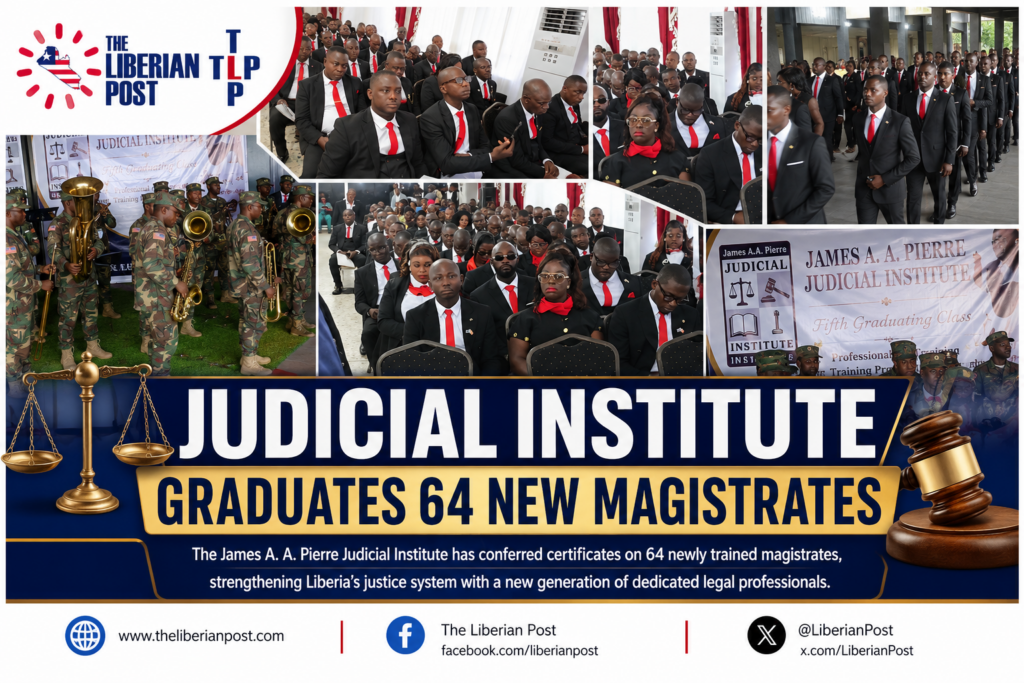
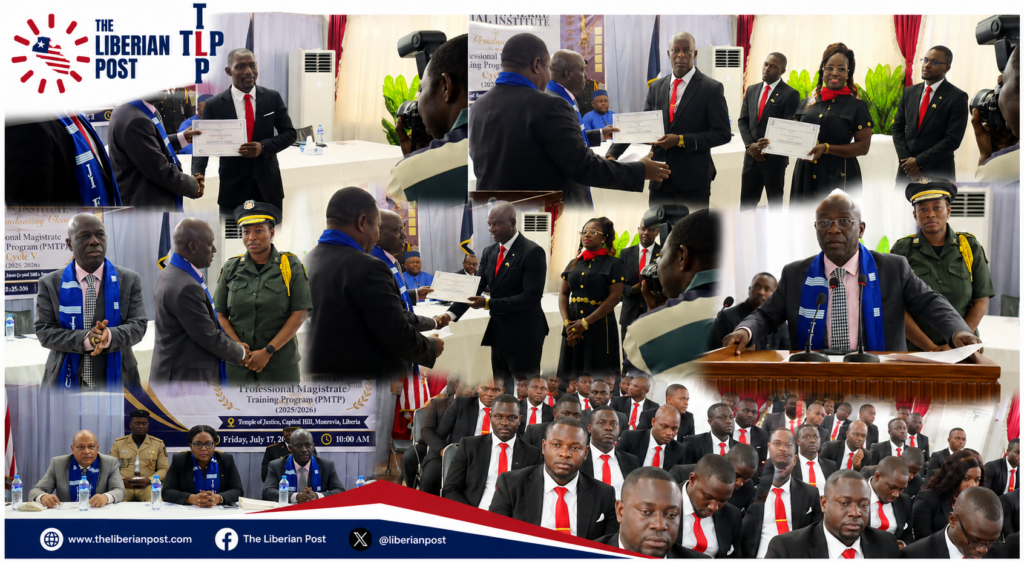
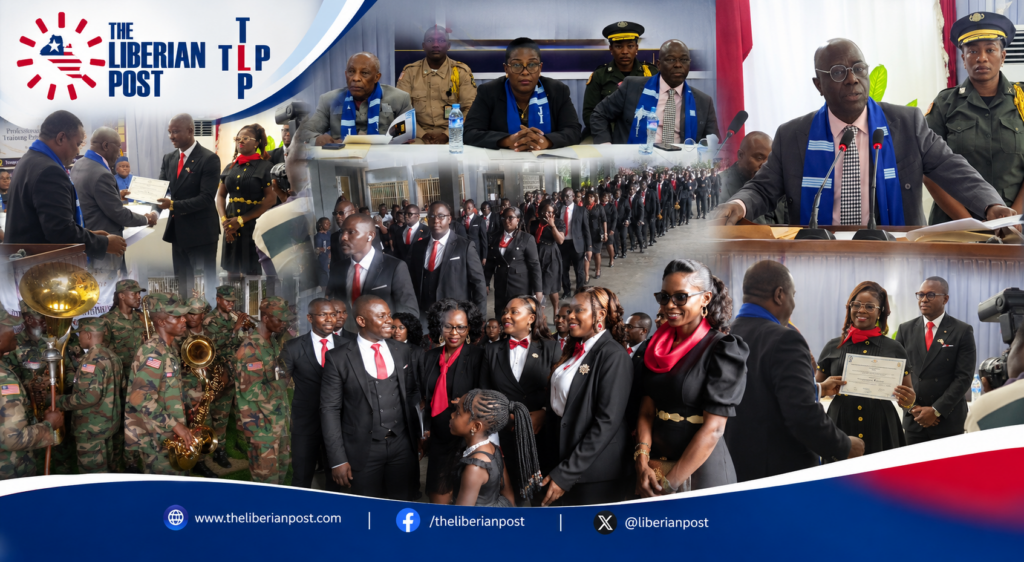
The graduation ceremony brought together Chief Justice Gbeisay, Associate Justices of the Supreme Court, senior government officials, members of the Judiciary, legal practitioners, development partners, diplomats and families of the graduates to celebrate the successful completion of the year-long Professional Magistrates Training Program.
Together, the speeches delivered by Wiah, Chief Justice Gbeisay and Minister Ngafuan presented a unified vision for Liberia’s justice sector—one centered on ethical leadership, professional excellence, sustained government investment and expanded opportunities for legal education.
As the 64 newly commissioned magistrates prepare to take up assignments across Liberia, Wiah reminded his classmates that their greatest achievement would not be their certificates, but the legacy they leave behind.
“History will not remember us merely because we graduated from this program. It will remember us for the lives we touch, the justice we uphold, and the legacy we leave behind.”
For breaking news, in-depth analysis, and exclusive reports from Liberia and around the world, follow The Liberian Post on Facebook (https://web.facebook.com/profile.php?id=61576017166570) and X, formerly Twitter (https://x.com/LiberianPost).