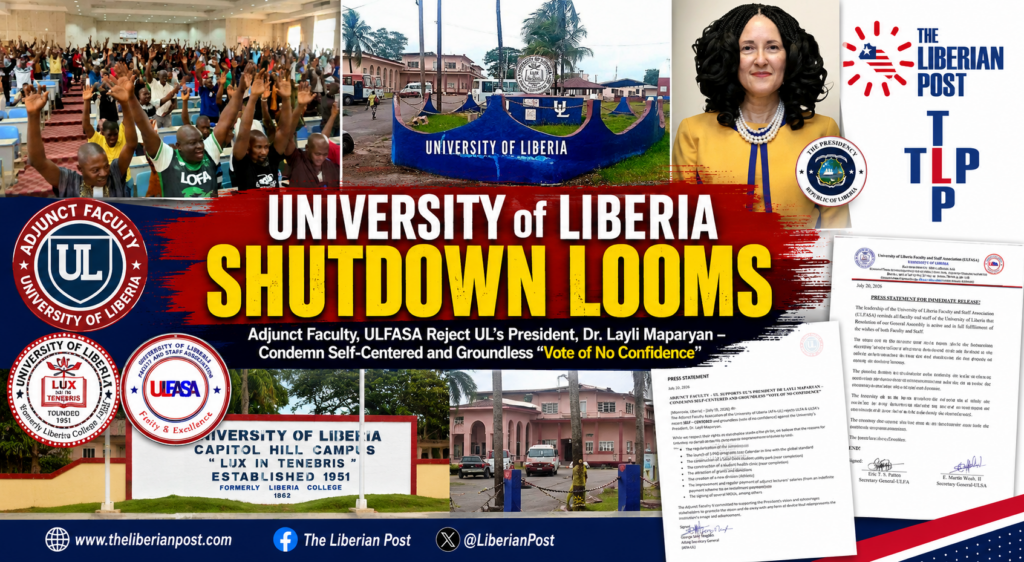
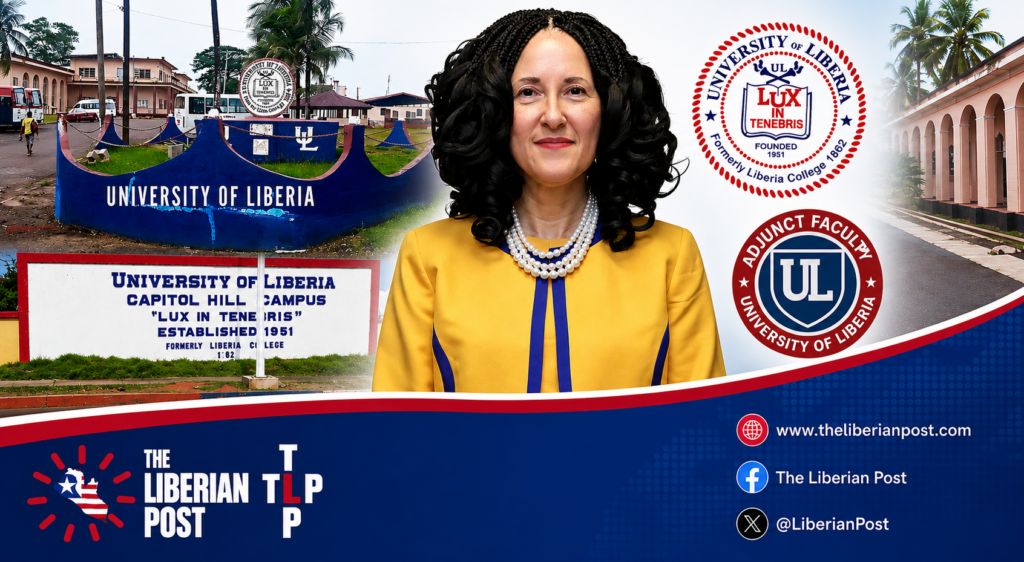
THE UNIVERSITY OF Liberia stands at one of the most consequential moments in its recent history. What began as a dispute over employee welfare, governance, and institutional conditions has now evolved into a defining test of leadership, trust, and the University’s ability to resolve its internal differences without sacrificing its academic mission.
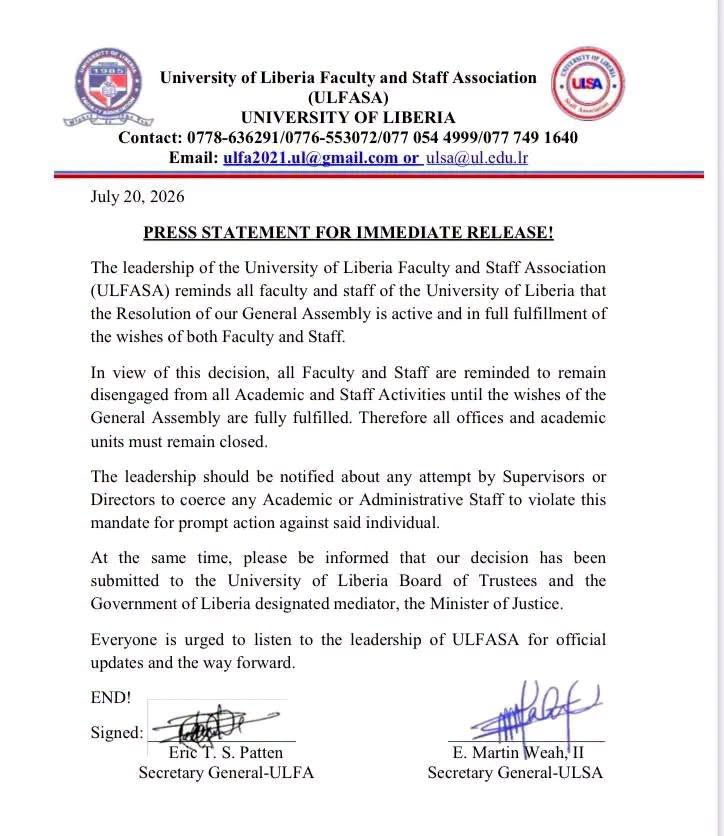
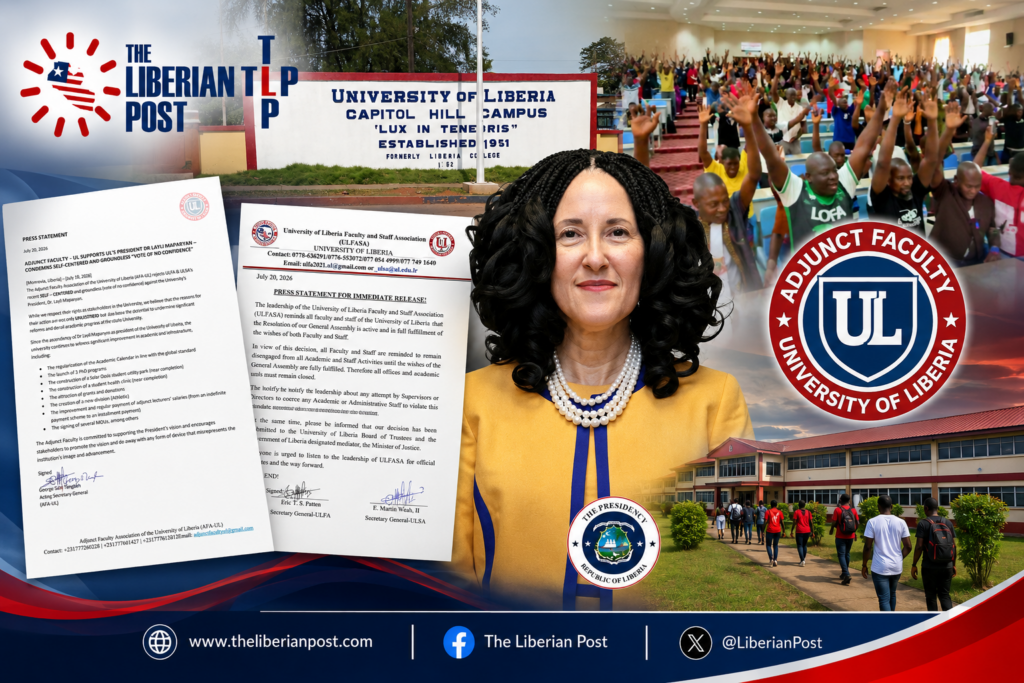
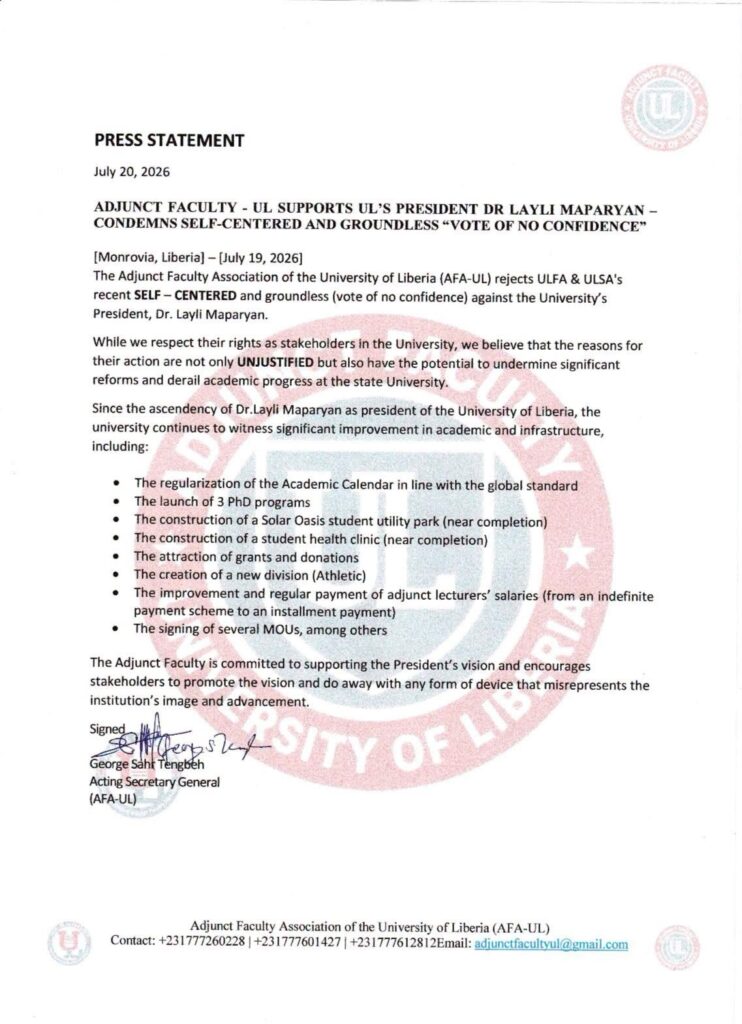
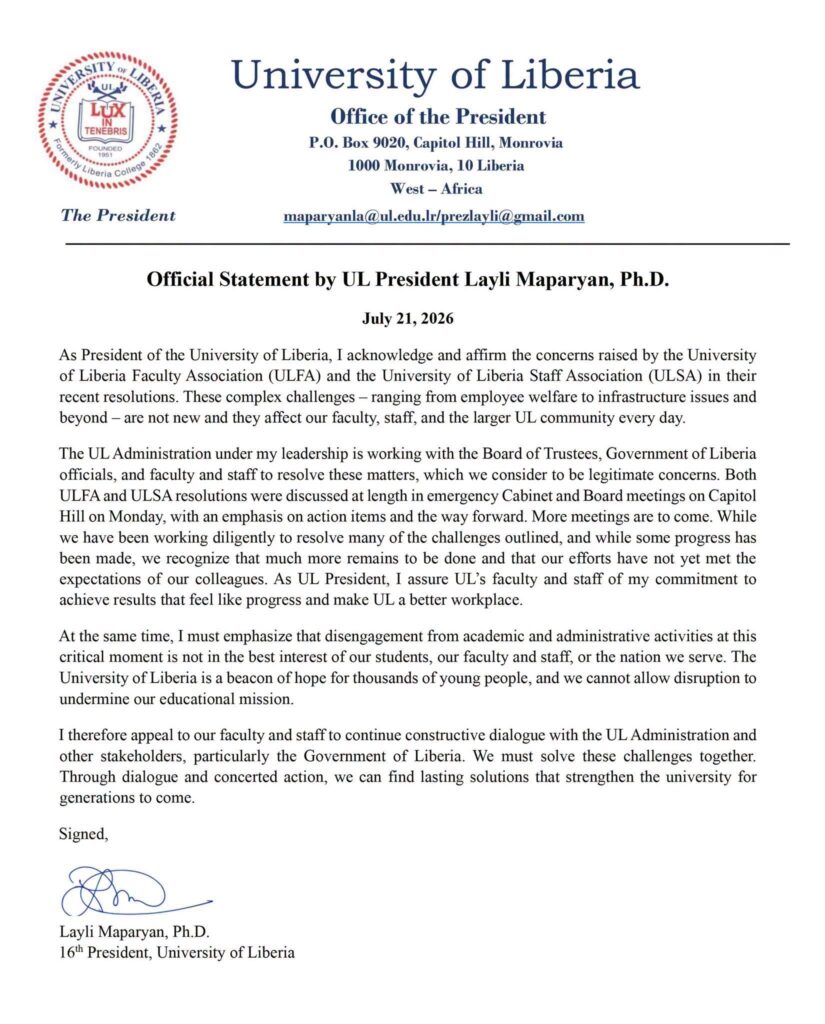
RECENT DEVELOPMENTS HAVE added an important dimension to the unfolding crisis. In a public statement, University President Dr. Layli Maparyan acknowledged the concerns raised by the University of Liberia Faculty Association (ULFA) and the University of Liberia Staff Association (ULSA), describing them as “legitimate concerns.” She further disclosed that her administration has already engaged the University’s Board of Trustees and senior officials of the Government of Liberia in an effort to find lasting solutions.
THAT ACKNOWLEDGMENT MATTERS. It demonstrates that the administration is no longer dismissing the grievances as isolated complaints or resistance to reform. Instead, it recognizes that the issues confronting faculty and staff are real and deserve attention.
BUT ACKNOWLEDGMENT ALONE is only the beginning. The University community now expects visible progress. Faculty and staff have waited patiently for improvements in employee welfare, infrastructure, and institutional governance. Recognizing the existence of these challenges is an important first step, but meaningful leadership requires converting words into measurable action.
A Shared Recognition of the Problem
ONE OF THE encouraging aspects of Dr. Maparyan’s statement is that it narrows the distance between the administration and those protesting.
UNTIL NOW, THE public discourse often suggested that the administration and faculty organizations were speaking past one another. The latest statement changes that dynamic.
THE PRESIDENT HERSELF admits that the challenges “are not new,” affect the entire University community, and that despite some progress, “much more remains to be done.”
THAT IS AN important admission because it validates what faculty and staff have been saying for months.
IT ALSO CREATES an opportunity.
WHEN BOTH MANAGEMENT and employees agree that problems exist, the conversation should naturally shift from whether there is a crisis to how best to solve it.
THAT OPPORTUNITY MUST not be wasted.
Students Must Not Become Victims
LOST AMID THE competing statements and organizational resolutions are the people the University exists to serve.
THE STUDENTS.
THOUSANDS OF YOUNG Liberians did not enroll at the University of Liberia to become casualties of institutional conflict.
EVERY CANCELLED LECTURE delays learning.
EVERY POSTPONED EXAMINATION creates uncertainty.
EVERY DAY ADMINISTRATIVE offices remain partially or fully disrupted places another burden on students and their families.
LIBERIA CANNOT AFFORD to have its premier public university defined more by labor disputes than by academic excellence.
Leadership Is Measured During Difficult Times
DR. MAPARYAN IS correct when she says disengagement from academic and administrative activities is not in the best interest of students or the nation.
SHE IS EQUALLY right in appealing for dialogue instead of prolonged confrontation.
HOWEVER, LEADERSHIP DURING a crisis requires more than appeals.
IT REQUIRES BUILDING confidence that dialogue will produce measurable results.
FACULTY AND STAFF must see timelines.
THEY MUST SEE implementation.
THEY MUST SEE commitments translated into action.
TRUST IS NOT rebuilt through statements alone; it is rebuilt through consistent delivery.
AT THE SAME time, faculty and staff organizations also have responsibilities that cannot be ignored.
INDUSTRIAL ACTION IS a legitimate tool in labor relations, but it should remain a means of advancing solutions rather than becoming an end in itself.
THE OBJECTIVE SHOULD be institutional improvement—not institutional paralysis.
The Board of Trustees Must Lead
DR. MAPARYAN REVEALED that emergency meetings involving the Board of Trustees and Government officials have already taken place.
THAT IS ENCOURAGING.
BUT MEETINGS ALONE will not resolve the crisis.
THE BOARD OF Trustees must now demonstrate why it exists.
ITS RESPONSIBILITY EXTENDS beyond observing events or issuing occasional statements. It must actively facilitate negotiations, demand accountability from every stakeholder, monitor implementation of agreed actions, and ensure that the University emerges stronger than it entered this crisis.
THE CREDIBILITY OF the Board will ultimately be measured not by the number of meetings it convenes but by the quality and durability of the solutions it helps achieve.
Government’s Role Must Inspire Confidence
THE GOVERNMENT OF Liberia also has an important responsibility.
AS THE PRINCIPAL supporter of the country’s flagship public university, government involvement is both necessary and expected.
HOWEVER, THAT INVOLVEMENT must remain one of facilitation rather than domination.
ITS ROLE SHOULD be to encourage dialogue, mobilize resources where necessary, and help preserve the continuity of higher education—not to create the perception that institutional decisions are driven by political interests.
THE UNIVERSITY OF Liberia must retain the institutional independence necessary for sound academic governance while benefiting from the government’s support in resolving longstanding structural challenges.
This Is Not About Winning
PERHAPS THE MOST significant message emerging from the President’s statement is that everyone recognizes the seriousness of the moment.
FACULTY AND STAFF say the challenges are real.
THE PRESIDENT NOW publicly agrees.
THAT SHARED RECOGNITION should mark the beginning—not the end—of meaningful reform.
THIS SHOULD NEVER become a contest over whether President Maparyan survives politically.
NOR SHOULD IT become an attempt to weaken the legitimate voice of faculty and staff.
THE UNIVERSITY OF Liberia is bigger than any one administration, any one union, or any one individual.
ITS FUTURE DEPENDS on the willingness of all parties to place institutional interests above personal or organizational pride.
The Moment Demands Action
LIBERIA’S OLDEST AND largest public university cannot afford prolonged uncertainty.
THE COUNTRY NEEDS doctors, engineers, lawyers, educators, economists, scientists, public administrators, and innovators.
THOSE PROFESSIONALS ARE being trained today at the University of Liberia.
EVERY DAY CONSUMED by conflict delays the nation’s development.
DR. MAPARYAN HAS taken an important step by acknowledging the legitimacy of faculty and staff concerns and reaffirming her commitment to dialogue. The faculty and staff associations, in turn, have an opportunity to engage constructively in a process that delivers meaningful and measurable reforms.
THE BOARD OF Trustees must lead with courage.
THE GOVERNMENT MUST facilitate with fairness.
FACULTY AND STAFF must negotiate with good faith.
AND THE ADMINISTRATION must govern with transparency and urgency.
THE UNIVERSITY OF Liberia has reached a defining moment. Whether this crisis becomes a turning point toward institutional renewal or another chapter in a history of recurring disputes will depend not on the statements issued, but on the actions taken in the days ahead.
FOR THE SAKE of Liberia’s students, its higher education system, and the nation’s future, this must be remembered as the moment when dialogue prevailed over division, and reform triumphed over confrontation.
THE NATION IS watching. More importantly, so are the thousands of students whose futures depend on what happens next. Their education—and Liberia’s future—must remain the priority above every other consideration.
For breaking news, in-depth analysis, and exclusive reports from Liberia and around the world, follow The Liberian Post on Facebook (https://web.facebook.com/profile.php?id=61576017166570) and X, formerly Twitter (https://x.com/LiberianPost).