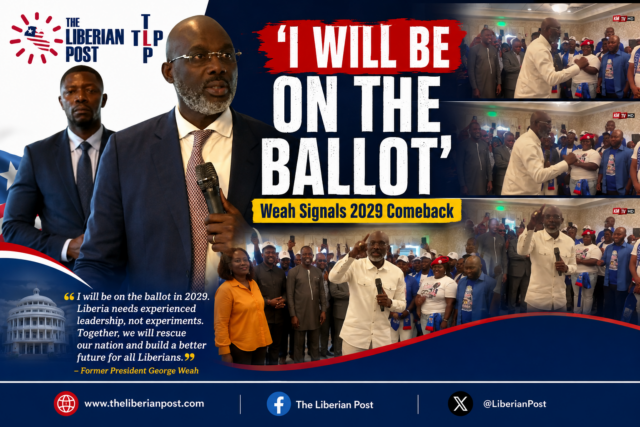
-Former President Uses Diaspora Gathering to Declare Political Intentions, Attack Boakai Administration and Rally Supporters Ahead of Next Presidential Race
MONROVIA, Liberia – Former President George Manneh Weah has issued his clearest political declaration since leaving office, telling supporters in the United States that he intends to contest Liberia’s 2029 presidential election, while accusing the Unity Party-led administration of failing to improve the lives of ordinary Liberians.
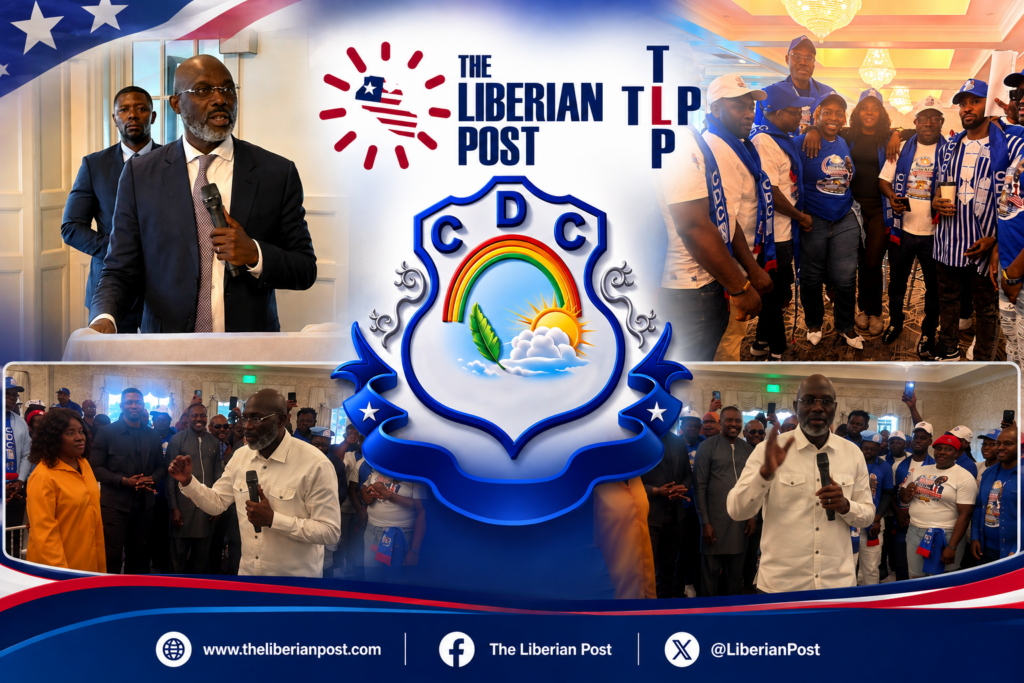
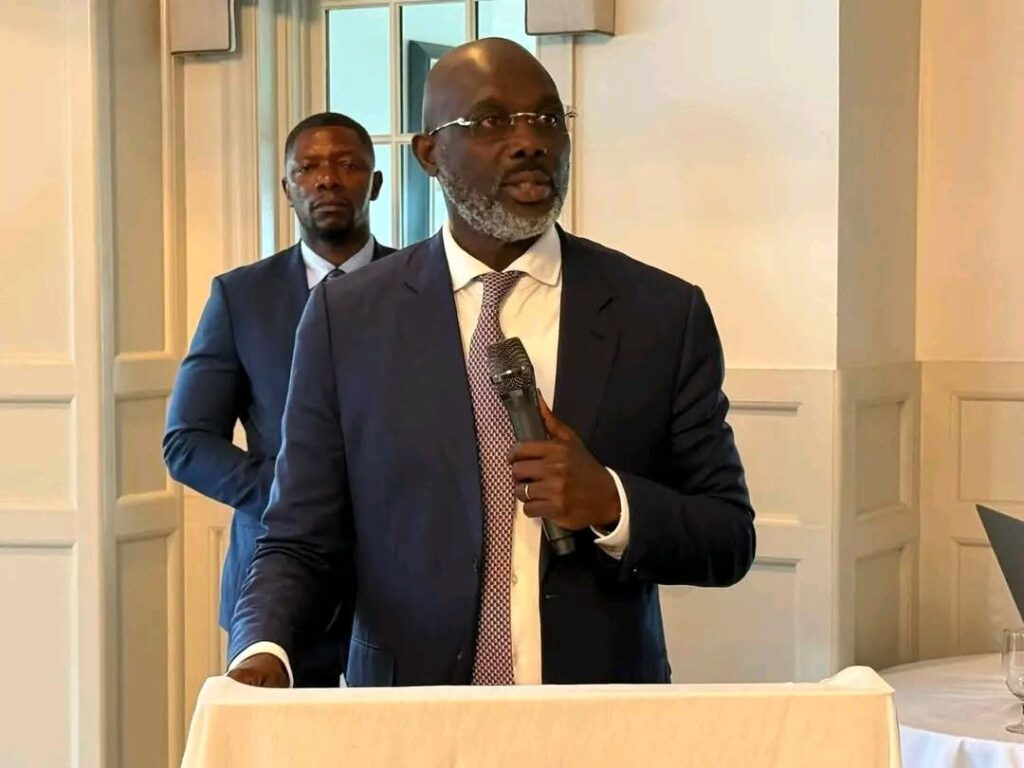
The remarks, delivered during a gathering with members of the Coalition for Democratic Change (CDC) and Liberians in the United States, are widely being interpreted as the unofficial launch of Weah’s campaign to return to the Executive Mansion six years after narrowly losing the 2023 presidential runoff to President Joseph Nyuma Boakai.
Videos and accounts from the gathering circulated widely across Liberian social media platforms, with supporters celebrating the former President’s declaration that he would once again seek the country’s highest office. Reports from Liberian media and diaspora sources indicate Weah used the event to reassure CDC loyalists that he remains committed to leading the opposition into the next electoral cycle.
‘I Will Be on the Ballot’
According to accounts of his address, Weah left little doubt about his political ambitions.
Rather than remaining noncommittal, as he has largely done since leaving office in January 2024, the former President reportedly declared that he would be a candidate in 2029, sending one of the strongest signals yet that he intends to mount a comeback.
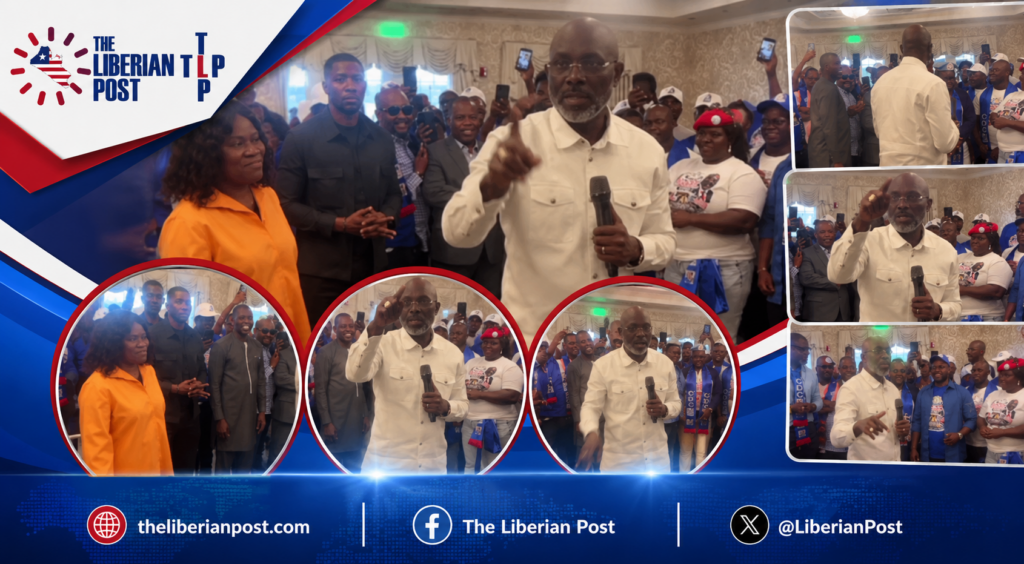
For many within the CDC, the statement effectively ends months of speculation over whether Weah would seek another mandate or eventually hand the party’s standard to another figure.
Instead, his message suggested continuity of leadership and reaffirmed his central position within Liberia’s largest opposition movement.
From Defeat to Political Reorganization
Since conceding defeat in the 2023 elections, Weah has maintained a relatively measured public profile, occasionally commenting on national affairs while allowing the CDC to reorganize itself after its loss of executive power.
The former ruling coalition has spent much of the past two years rebuilding its structures, mobilizing supporters, and criticizing the Boakai administration over issues ranging from the economy and unemployment to governance and public accountability.
The U.S. gathering therefore represented more than an ordinary diaspora event.
Political observers see it as an opportunity for Weah to reconnect with one of the CDC’s most important support bases outside Liberia while energizing supporters years before the formal campaign season begins.
Diaspora as a Political Launchpad
Choosing the United States for such an important political message is significant.
The Liberian diaspora has historically played an influential role in elections through financial contributions, political mobilization, advocacy, and campaign organization.
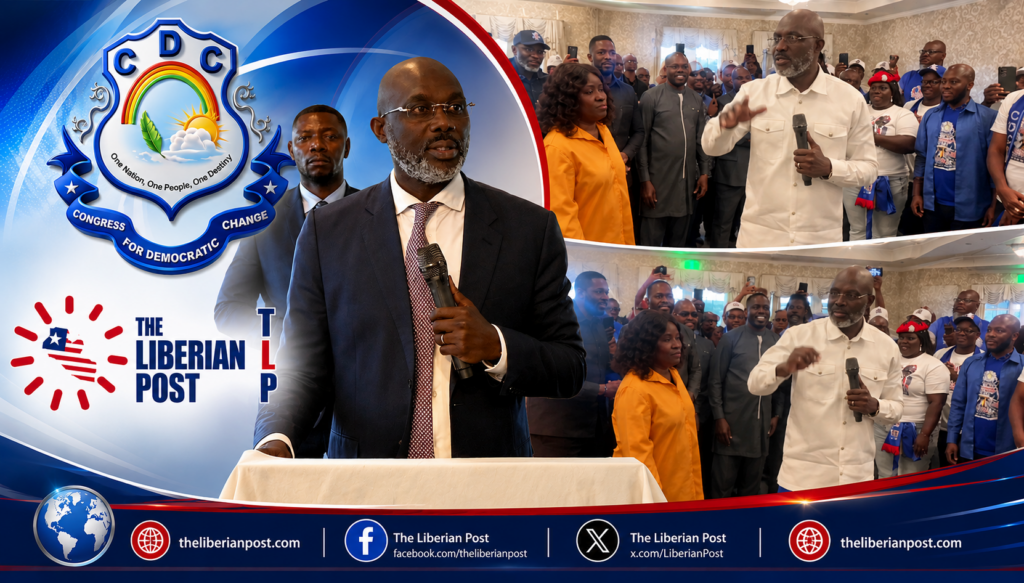
By addressing supporters abroad, Weah appeared to recognize that rebuilding a nationwide campaign begins with consolidating the party’s core base, including Liberians living overseas who remain deeply engaged in the country’s politics.
The event also demonstrated that despite no longer occupying the presidency, Weah continues to command substantial attention among CDC loyalists abroad.
Sharp Criticism of the Boakai Government
During his address, Weah criticized the current administration, arguing that many Liberians have yet to experience the improvements promised during the 2023 campaign.
The former President suggested that the country’s economic hardships, rising cost of living, and public dissatisfaction demonstrate that the Unity Party government has struggled to meet public expectations.
Those criticisms mirror the CDC’s broader opposition messaging over recent months, as party officials have increasingly challenged the administration’s performance on governance, employment, infrastructure, and economic management.
The Boakai administration, meanwhile, has argued that it inherited significant economic and institutional challenges and has pointed to progress in infrastructure, domestic revenue mobilization, macroeconomic stability, foreign investment, and Liberia’s election to a non-permanent seat on the United Nations Security Council as evidence that its policies are beginning to produce results.
A Changed Political Landscape
Should Weah ultimately become the CDC’s presidential candidate, the 2029 election could evolve into a rematch between two familiar political rivals.
However, Liberia’s political environment is markedly different from that of 2023.
The Unity Party now governs, meaning it will seek re-election based on its record in office rather than campaign promises.
Conversely, the CDC enters the next electoral cycle from the opposition benches, where it has greater freedom to criticize government policies while avoiding responsibility for current national challenges.
Political analysts note that both camps will likely spend the next three years attempting to shape public opinion before the official campaign period begins.
More Than a Personal Declaration
Beyond announcing his own intentions, Weah’s remarks carried broader implications for the CDC.
By publicly embracing another presidential bid, he effectively reaffirmed his leadership of the opposition coalition at a time when questions had emerged about the party’s long-term direction following its electoral defeat.
His statement may also discourage premature succession debates within the CDC by signaling that the party’s principal political figure remains firmly in command.
Whether that strengthens party unity or delays leadership renewal is likely to become a subject of internal political discussion over the coming years.
Political Stakes Already Rising
Although Liberia’s next presidential election remains several years away, Weah’s declaration suggests that the political contest has effectively begun.
The remarks come as political parties intensify grassroots activities, reorganize local structures, and position themselves for future electoral competition.
For President Boakai and the Unity Party, Weah’s comments serve as an early reminder that the opposition is preparing for a sustained political campaign.
For the CDC faithful, however, the declaration appears intended to inspire confidence that the party believes it has unfinished business—and that its standard bearer intends to lead that effort personally.
Whether Weah’s early political positioning ultimately translates into electoral success will depend not only on his popularity but also on the Boakai administration’s performance over the remainder of its term, the state of Liberia’s economy, and the ability of both camps to persuade voters ahead of 2029.
For breaking news, in-depth analysis, and exclusive reports from Liberia and around the world, follow The Liberian Post on Facebook (https://web.facebook.com/profile.php?id=61576017166570) and X, formerly Twitter (https://x.com/LiberianPost).