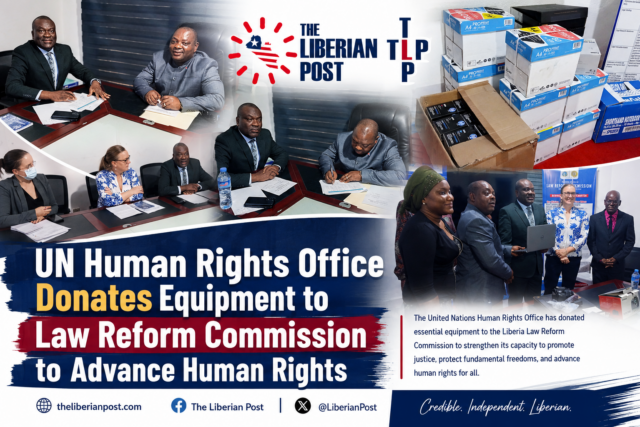
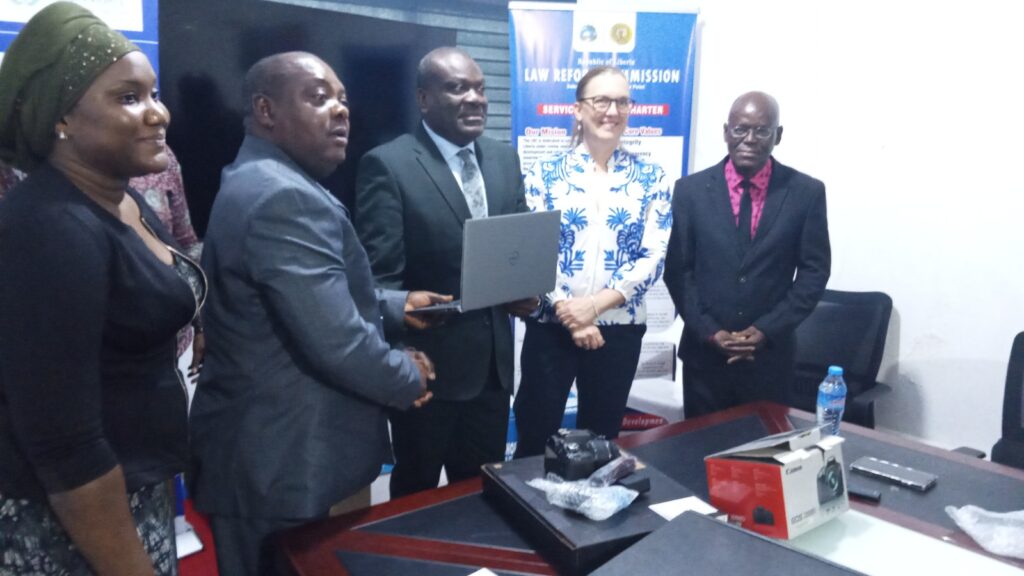
MONROVIA, Liberia – The Office of the United Nations High Commissioner for Human Rights (UN-OHCHR) in Liberia has donated a range of essential equipment to the Law Reform Commission (LRC) to strengthen the Commission’s role in advancing human rights, anti-corruption efforts and Liberia’s ongoing transitional justice process.
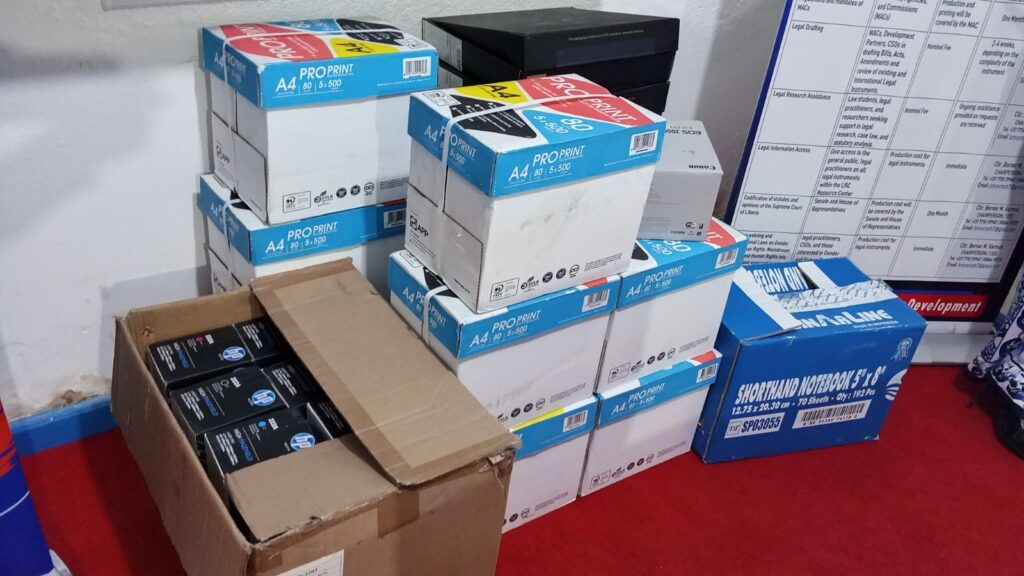
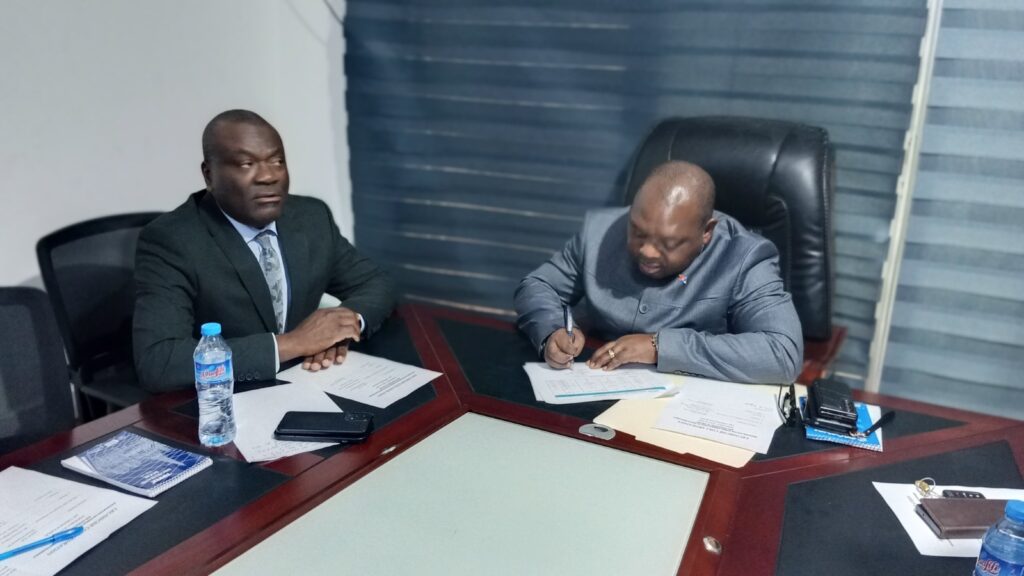
The donation, presented on Wednesday, July 29, 2026, included laptops, printers, a state-of-the-art camera and office stationery. The equipment was formally handed over to the Chairman and Chief Executive Officer of the Law Reform Commission, Cllr. Bornor M. Varmah, as part of UN-OHCHR’s continued support to key national institutions working to promote accountability, justice and reconciliation.
The assistance is intended to enhance the LRC’s capacity to contribute to Liberia’s transitional justice agenda, particularly as the country moves toward establishing the War and Economic Crimes Court (WECC) and the proposed National Anti-Corruption Court (NACC).
Supporting Victim-Centered Justice
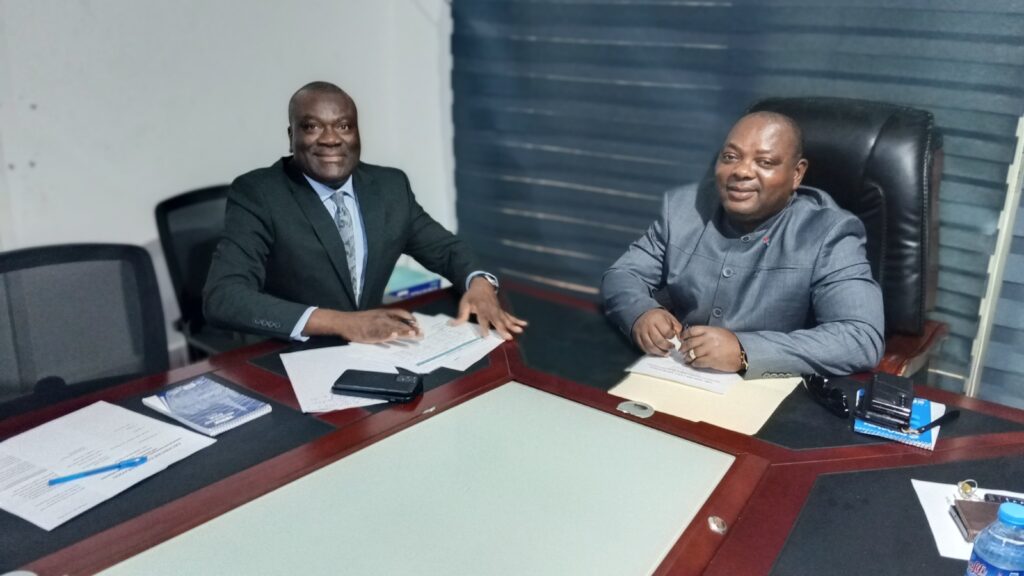
Speaking during the handover ceremony, Christian Mukosa, UN-OHCHR Representative in Liberia, reaffirmed the organization’s commitment to supporting national institutions in implementing victim-centered judicial and non-judicial transitional justice mechanisms.
“OHCHR remains committed to strengthening the capacity of national institutions to ensure that the War and Economic Crimes Court (WECC) and the National Anti-Corruption Court (NACC), planned to become operational soon, are inclusive, credible and responsive to the needs of victims,” Mukosa said.
“By equipping the Law Reform Commission with these resources, we are reinforcing national efforts to advance the adoption of legal frameworks for the WECC and NACC that are grounded in human rights principles and centered on the interests of victims.”
Mukosa stressed that sustained collaboration with national stakeholders remains essential to ensuring that Liberia’s transitional justice institutions are built on strong legal and human rights foundations.
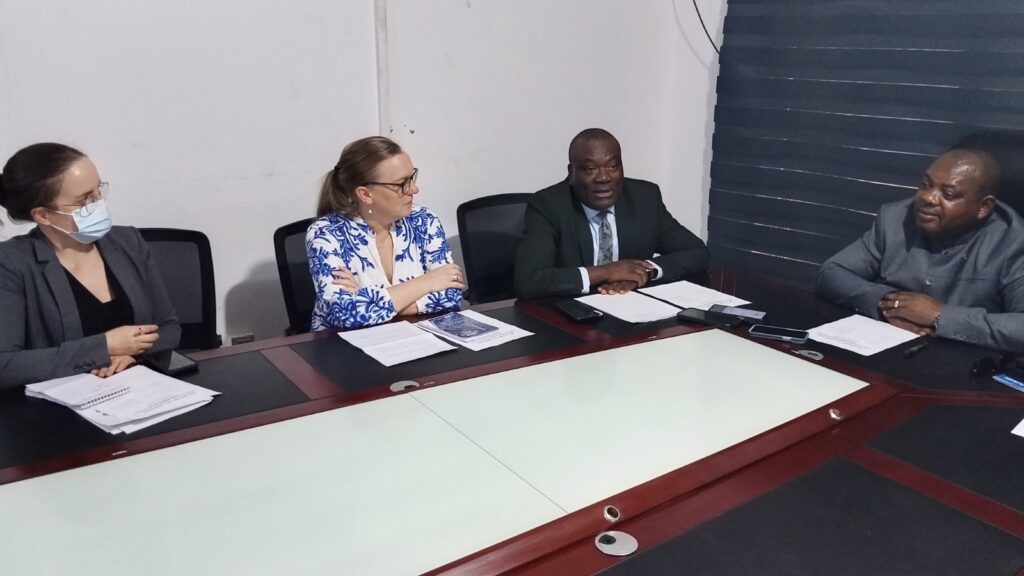
He noted that initiatives surrounding the WECC, the NACC and other accountability mechanisms must be guided by internationally recognized legal standards if they are to achieve lasting justice and public confidence.
Preparing Liberia’s Legal Framework
As legislation establishing the WECC and NACC advances through the National Legislature, the Law Reform Commission plans to undertake a comprehensive review of Liberia’s legal framework governing judicial responses to past gross human rights violations and corruption-related offenses.
The review will assess existing laws against international legal norms and best practices to ensure that future accountability institutions are supported by a modern, coherent and rights-based legal framework.
Established by an Act of the Liberian Legislature in 2011, the Law Reform Commission is mandated to keep the country’s laws under continuous review while promoting systematic legal development, reform, codification and harmonization.
Sweden Reaffirms Support
The Embassy of Sweden, a longstanding partner in Liberia’s governance and justice sector reforms, also reaffirmed its commitment to supporting the country’s transitional justice agenda.
The Embassy emphasized that strengthening the institutional capacity of the Law Reform Commission is critical to ensuring that future accountability mechanisms are rooted in sound legal principles consistent with international human rights standards.
Since January 2025, Sweden has provided financial support to UN-OHCHR to strengthen the capacity of key national institutions involved in transitional justice, including:
- The Office for the Establishment of the War and Economic Crimes Court for Liberia (OWECC-L);
- The Independent National Commission on Human Rights (INCHR);
- The Liberia Anti-Corruption Commission (LACC);
- Civil society organizations;
- Academic institutions; and
- The media.
The support aims to foster a coordinated, inclusive and comprehensive transitional justice process throughout Liberia.
LRC Commits to Strengthening Rule of Law
Receiving the equipment on behalf of the Commission, Cllr. Bornor M. Varmah thanked UN-OHCHR and the Government of Sweden for their continued partnership and investment in Liberia’s justice sector.
He said the Commission remains committed to fulfilling its statutory responsibility of reviewing and reforming Liberia’s laws to ensure they adequately address emerging national realities, including the establishment of the WECC and the NACC.
“The Commission will continue to work with the Office for the Establishment of the War and Economic Crimes Court and other transitional justice actors to strengthen the rule of law at every level and ensure that the rights and dignity of every individual are protected,” Varmah said.
The LRC Chairman also acknowledged UN-OHCHR’s longstanding support to the Commission, recalling that the organization previously assisted in establishing the Commission’s Gender and Human Rights Desk by providing both technical and material assistance.
He expressed optimism that the strong collaboration between the two institutions would continue as Liberia advances its broader justice reform agenda.
Strengthening the Fight Against Impunity
UN-OHCHR said the donation forms part of a broader effort to ensure that Liberia’s future justice institutions are established in accordance with international legal standards and best practices.
As part of the initiative, UN-OHCHR is also partnering with the Law Reform Commission to recruit a national legal consultant who will support a comprehensive review of Liberia’s legal framework governing corruption-related offenses.
The review is expected to help shape the legal foundation for the proposed National Anti-Corruption Court and strengthen Liberia’s efforts to combat impunity through a credible, rights-based and victim-centered justice system.
If established, both the War and Economic Crimes Court and the National Anti-Corruption Court are expected to play central roles in addressing past human rights violations and corruption while reinforcing accountability and the rule of law in Liberia.
For breaking news, in-depth analysis, and exclusive reports from Liberia and around the world, follow The Liberian Post on Facebook (https://web.facebook.com/profile.php?id=61576017166570) and X, formerly Twitter (https://x.com/LiberianPost).