–LDEA Officer-in-Charge Says Recusal Is Necessary to Protect Investigation’s Independence and Public Confidence as Allegations Surface Over Vehicle Allegedly Linked to Drug Case Suspect
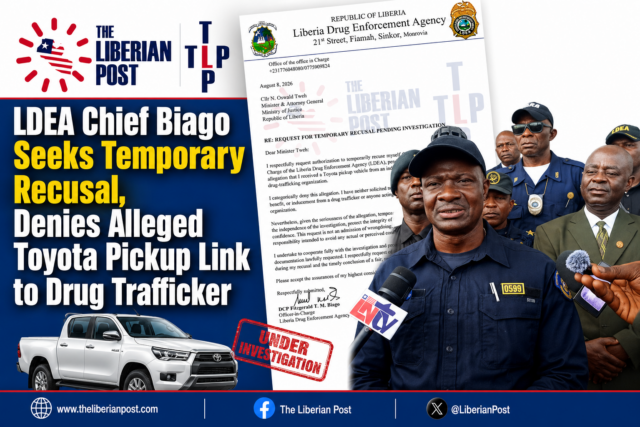
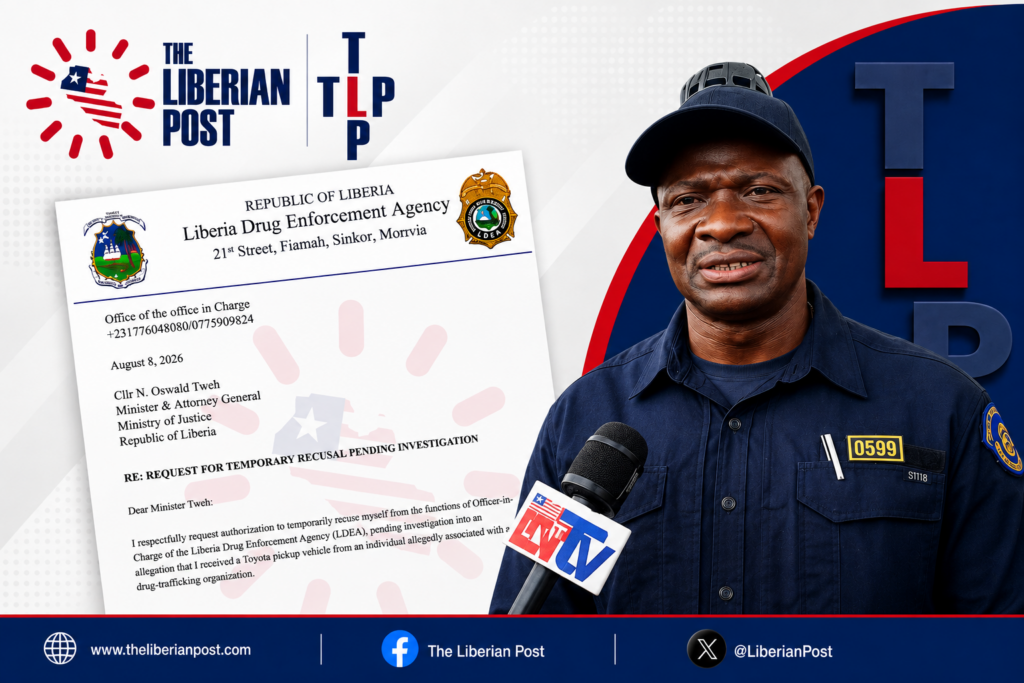
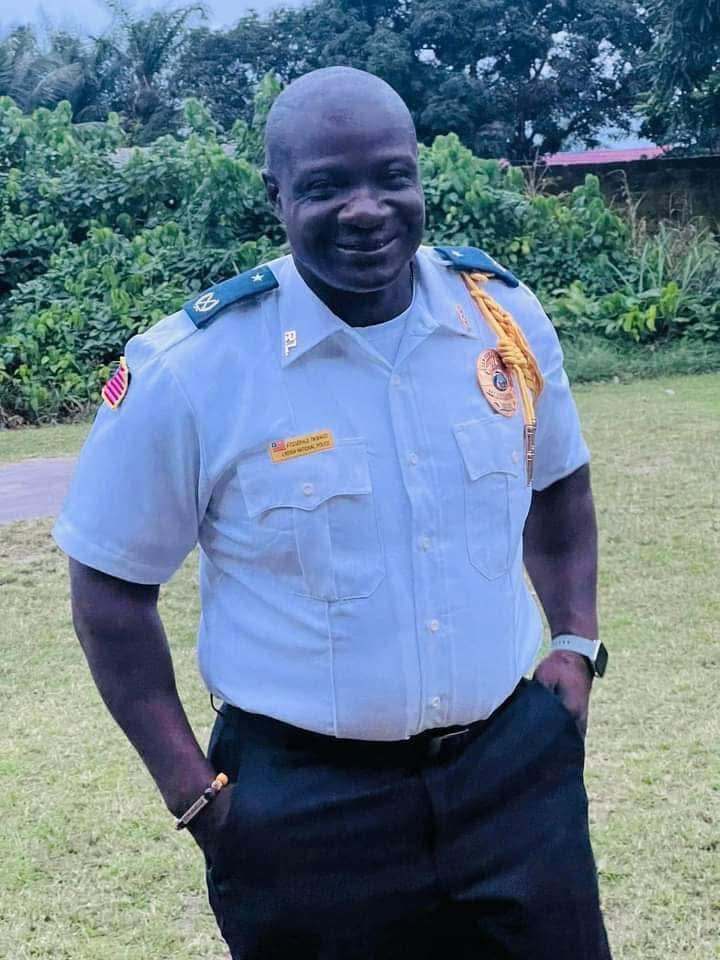
MONROVIA, Liberia — August 8, 2026: The Officer-in-Charge of the Liberia Drug Enforcement Agency (LDEA), DCP Fitzgerald T. M. Biago, has formally requested to temporarily recuse himself from his official functions pending an investigation into an allegation that he received a Toyota pickup from an individual allegedly associated with a drug-trafficking organization.
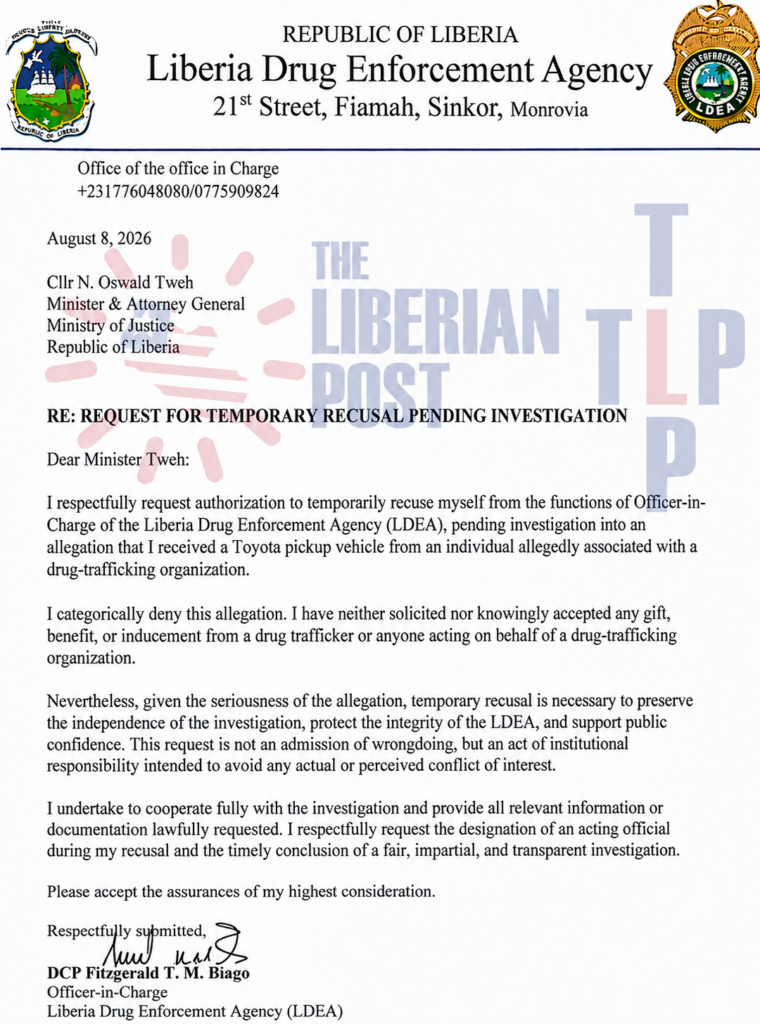
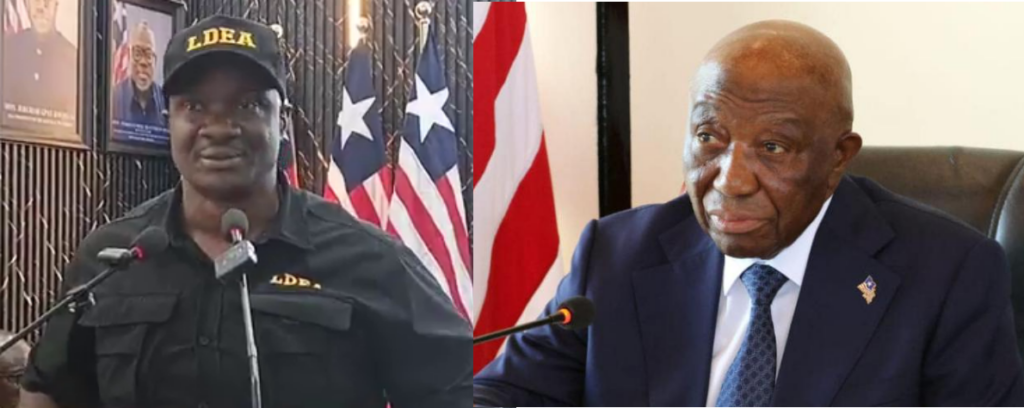
In a letter dated August 8, 2026, addressed to Justice Minister and Attorney General Cllr. N. Oswald Tweh, Biago categorically denied the allegation but said he believes temporarily stepping aside is necessary to protect the credibility and independence of the investigation.
Biago’s request comes as allegations concerning a Toyota pickup allegedly used by him have gained traction across Liberian social media and news platforms amid the government’s widening investigation into a massive cocaine trafficking network.
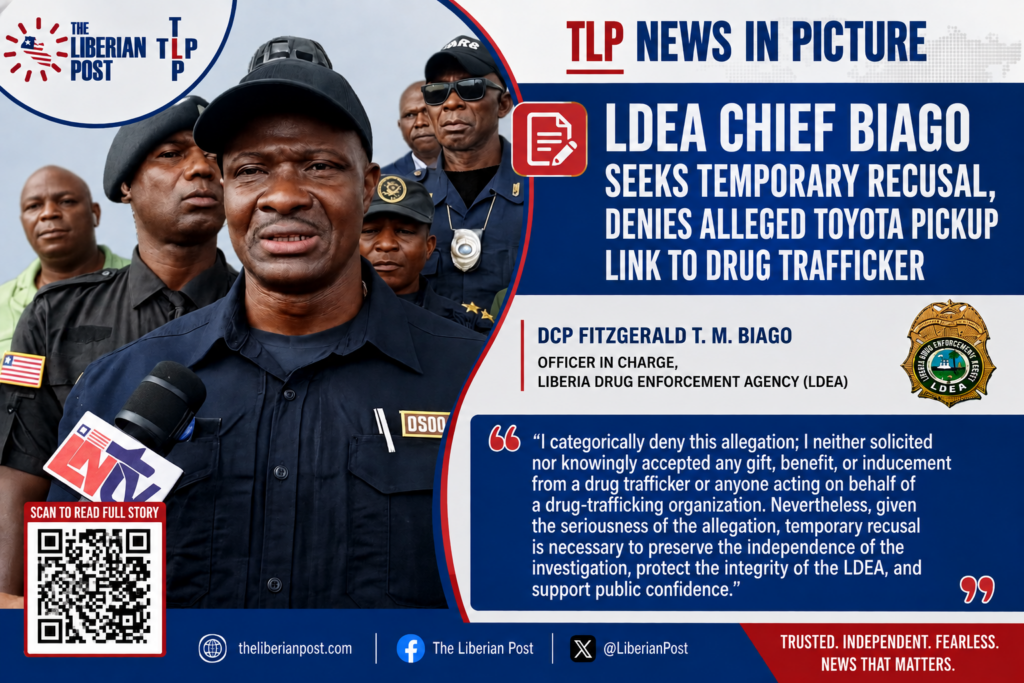
“I categorically deny this allegation,” Biago wrote, adding that he had “neither solicited nor knowingly accepted any gift, benefit, or inducement from a drug trafficker or anyone acting on behalf of a drug-trafficking organization.”
Biago Requests Acting Official During Investigation
Rather than remain in charge of the agency while the allegation is investigated, Biago asked the Justice Ministry to authorize his temporary recusal and designate an acting official to oversee the LDEA during the period.
He stressed that the request should not be interpreted as an admission of wrongdoing.
“Nevertheless, given the seriousness of the allegation, temporary recusal is necessary to preserve the independence of the investigation, protect the integrity of the LDEA, and support public confidence,” Biago said.
He described the move as an act of institutional responsibility intended to prevent an actual or perceived conflict of interest.
Biago also pledged to cooperate fully with investigators and provide any relevant information or documentation lawfully requested.
He asked for a “fair, impartial, and transparent investigation” and its timely conclusion.
Allegations Focus on Toyota Pickup
The allegation centers on a Toyota pickup that critics and commentators have linked to George Wha Harris, also known as “Leroy Harris,” a businessman who has been charged in connection with Liberia’s broader narcotics investigation.
The allegation has circulated widely through social media, including posts and videos attributed to activist Martin K. N. Kollie, who has claimed that a grey Toyota Hilux being used by Biago was registered to Harris. Social media posts also alleged that the vehicle was provided to Biago as a gift.
The claims have not been established in court, and Biago’s letter specifically denies knowingly accepting any gift or benefit from a drug trafficker or anyone acting on behalf of a drug-trafficking organization.
Other reports have amplified the allegations, with one publication claiming that vehicle registration information linked a Toyota pickup to Harris. Those claims remain disputed and require independent verification.
The LDEA has also publicly pushed back against the allegations, with the agency rejecting claims that its Officer-in-Charge received a vehicle from an alleged drug trafficker. FrontPage Africa reported the agency’s denial on August 7, while also reporting that Biago welcomed an independent probe into the matter.
Why the Allegation Matters
The controversy comes at a particularly sensitive moment for Liberia’s anti-narcotics campaign.
The LDEA is at the center of an unprecedented investigation involving multiple cocaine seizures, alleged international trafficking networks and accusations that individuals within Liberia’s security institutions may have facilitated or otherwise become connected to the movement of narcotics.
The broader investigation has already resulted in arrests, dismissals, suspensions and criminal charges involving officials from security and other government institutions.
Among those facing prosecution is former Liberia National Police Highway Patrol Commander Wadell W. Kwabo, who was dismissed following findings by the Joint National Security Investigative Task Force. He has been accused of using official police resources to facilitate the movement of cocaine in the US$317 million case—allegations he is challenging in court.
The investigation has therefore heightened scrutiny of the institutions responsible for combating drug trafficking.
Biago Previously Defended Investigative Secrecy
The latest controversy also places Biago’s own earlier public statements about the cocaine investigation under renewed scrutiny.
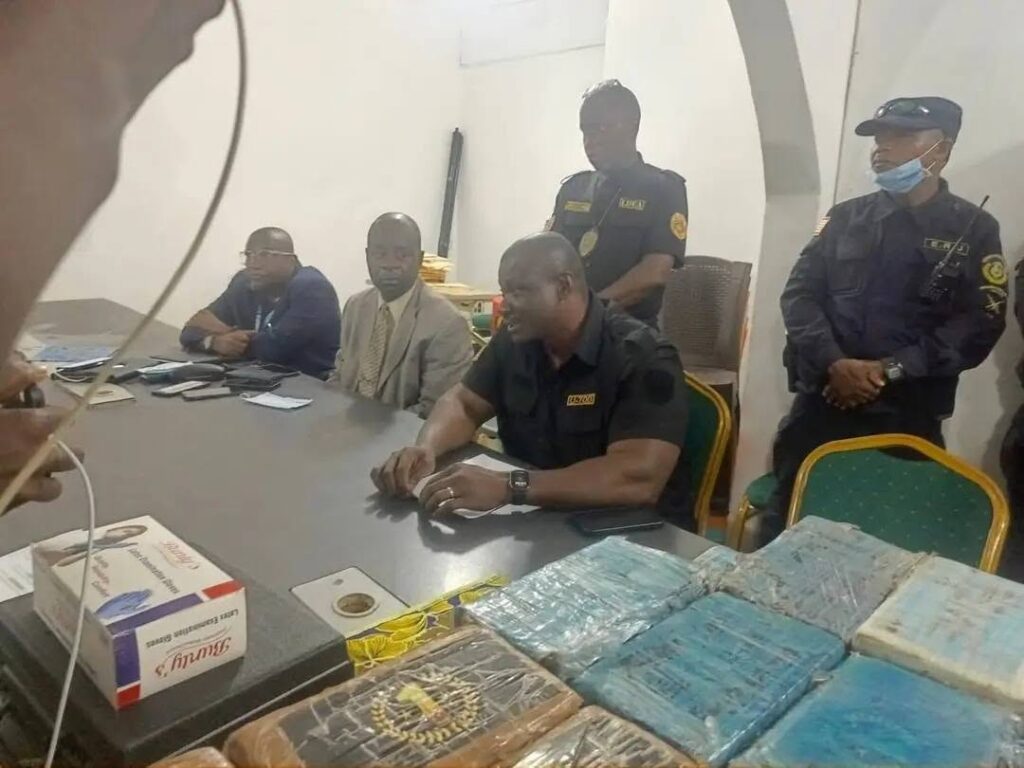
Following the seizure of approximately 237.6 kilograms of cocaine at Roberts International Airport in June, Biago defended the LDEA’s decision not to immediately disclose the identities of suspects and other sensitive information.
He argued that the case involved a sophisticated transnational trafficking operation and that prematurely releasing information could alert suspects, compromise evidence or undermine efforts to dismantle the wider network.
The LDEA subsequently maintained that the investigation was focused not merely on the seized shipment but on identifying the broader network behind it.
That approach initially generated criticism from sections of civil society and the public, with calls for greater transparency. At the same time, other commentators defended the agency’s decision to protect sensitive investigative information until investigators were ready to disclose it.
A History of Controversy Around Biago
The LDEA chief has previously been the subject of misinformation and public controversy during the cocaine investigation.
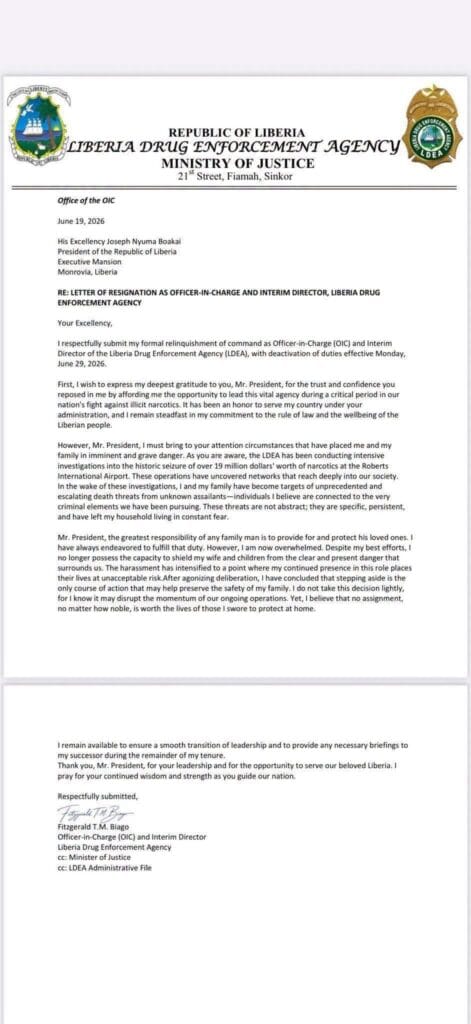
In June, a purported resignation letter bearing the LDEA’s letterhead and allegedly signed by Biago circulated widely on social media.
The LDEA subsequently rejected that document as fake, describing it as part of what the agency characterized as a misinformation campaign intended to undermine its leadership and distract from the ongoing narcotics investigation.
The current controversy is materially different, however, because Biago’s latest letter is an actual document addressed to the Justice Minister in which he directly acknowledges the allegation and requests an independent investigation.
Recusal Could Put Investigation to Test
Biago’s decision to request temporary recusal could now shift the focus from the allegations themselves to the process through which they will be investigated.
If approved, his temporary removal from the operational leadership of the LDEA would allow investigators to examine the allegation without Biago directly supervising the institution responsible for combating the very criminal network with which he is alleged to have a connection.
It could also provide an opportunity for the government to demonstrate that its repeated commitment to an evidence-based, “no sacred cows” approach applies equally to senior security officials.
President Joseph Nyuma Boakai, Sr. has repeatedly said that anyone found to have participated in or facilitated drug trafficking will face the law regardless of status or position.
The Executive Mansion said as recently as this week that the President remains committed to pursuing individuals connected to the narcotics trade and that Liberia will not be allowed to become a transit hub for illegal drugs.
Investigation Now Carries Institutional Stakes
The question surrounding the Toyota pickup is therefore larger than the ownership or use of one vehicle.
It now represents another test of the credibility of Liberia’s anti-drug institutions at a time when the country is attempting to dismantle what authorities describe as an extensive transnational trafficking network.
An independent investigation could establish whether the allegations against Biago are unfounded, whether the vehicle’s ownership and use were legitimate, or whether further questions require examination.
For Biago, the requested recusal allows him to maintain his denial while removing himself from the direct administration of the agency during the inquiry.
For the government, the handling of the investigation will be closely watched as a measure of whether its commitment to evidence-based investigations extends to those occupying senior positions within the security establishment.
For now, no court or competent investigative authority has established that Biago received a vehicle from a drug trafficker or knowingly accepted any benefit connected to narcotics trafficking.
His letter instead calls for the allegation to be independently investigated—and for the facts to determine the outcome.
For breaking news, in-depth analysis, and exclusive reports from Liberia and around the world, follow The Liberian Post on Facebook (https://web.facebook.com/profile.php?id=61576017166570) and X, formerly Twitter (https://x.com/LiberianPost).