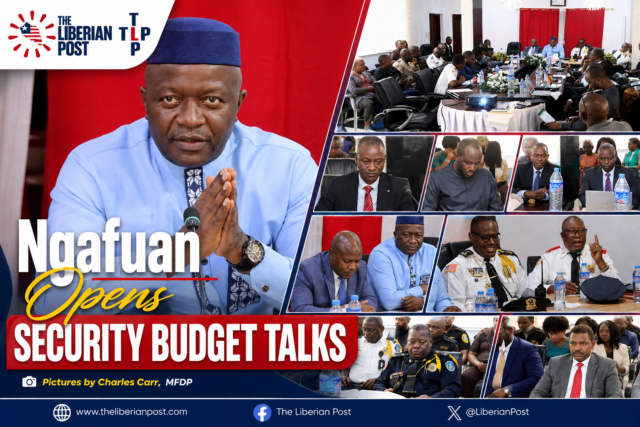
–Finance Minister Pledges Deeper Review of Security Sector Needs as Justice, Police, LDEA, Fire Service and Witness Protection Officials Press for More Timely Support Ahead of 2027 Budget
MONROVIA — Finance and Development Planning Minister Augustine Kpehe Ngafuan has opened a direct budget dialogue with Liberia’s security sector, promising a deeper examination of the institutions’ financial and operational needs as the government prepares the 2027 National Budget.
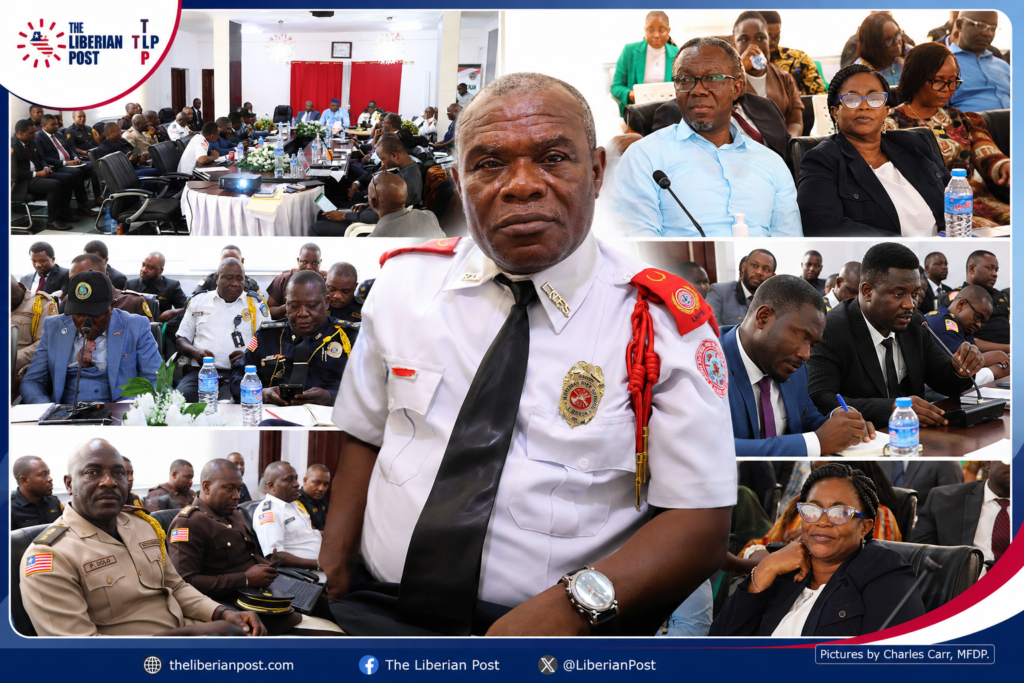
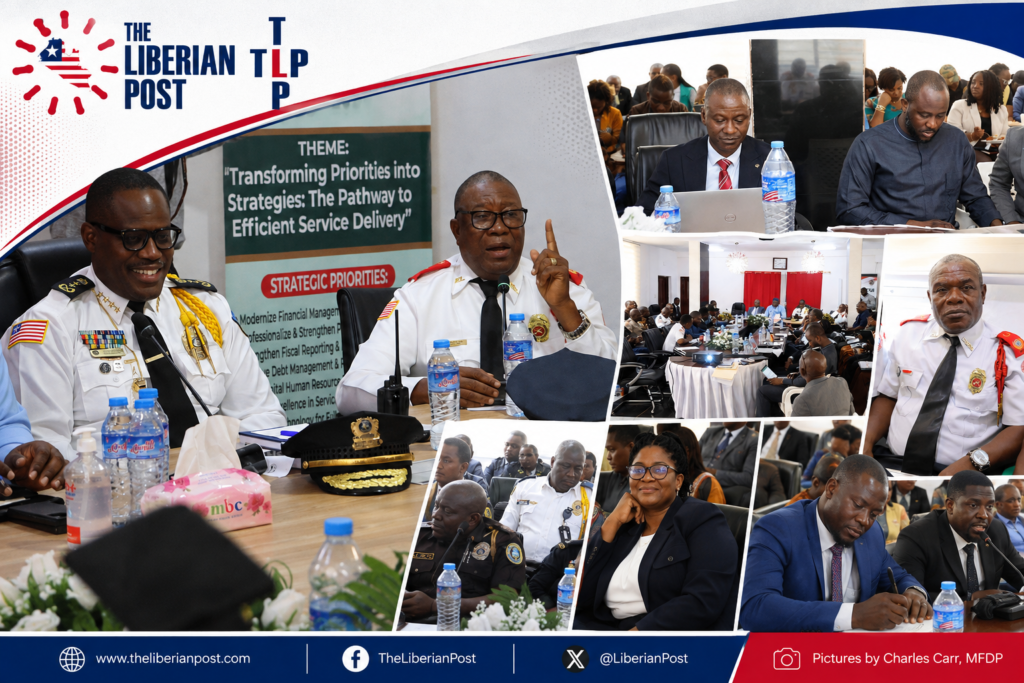
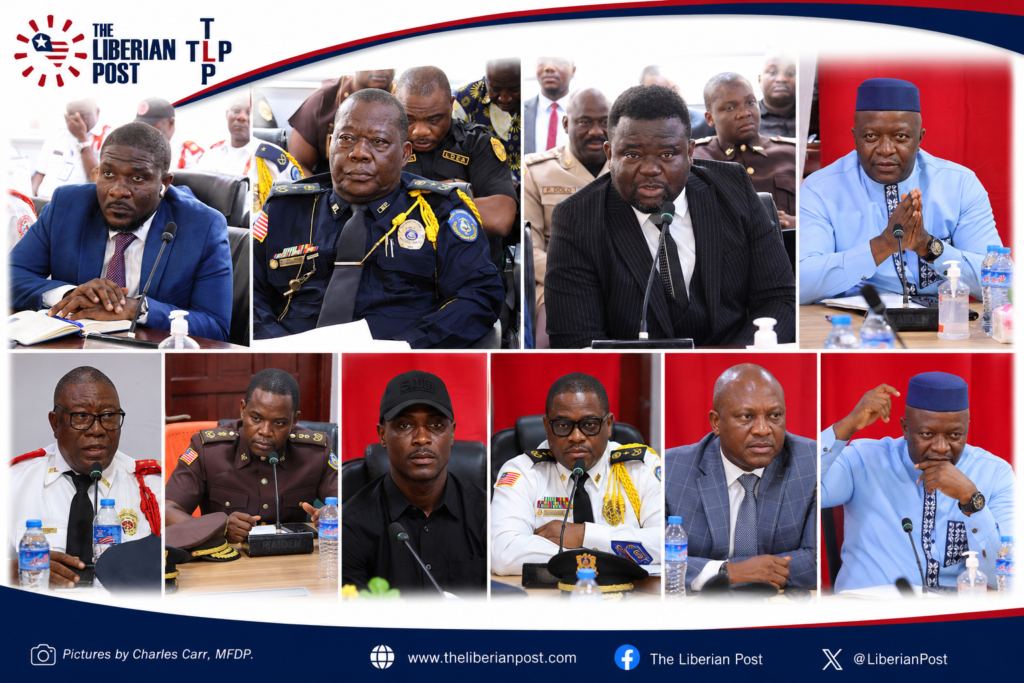
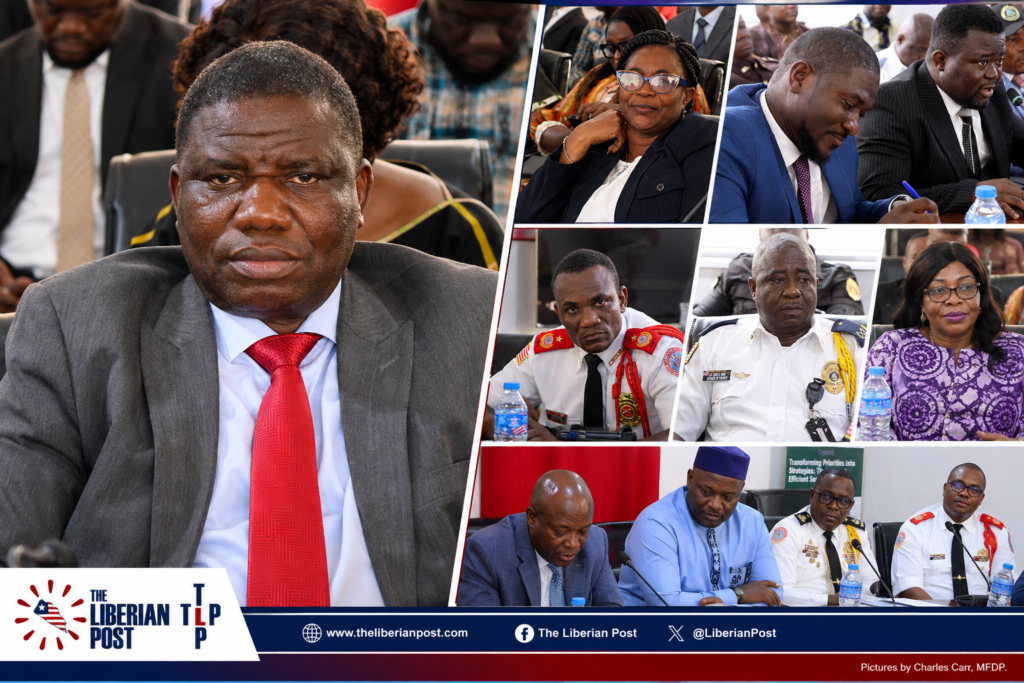
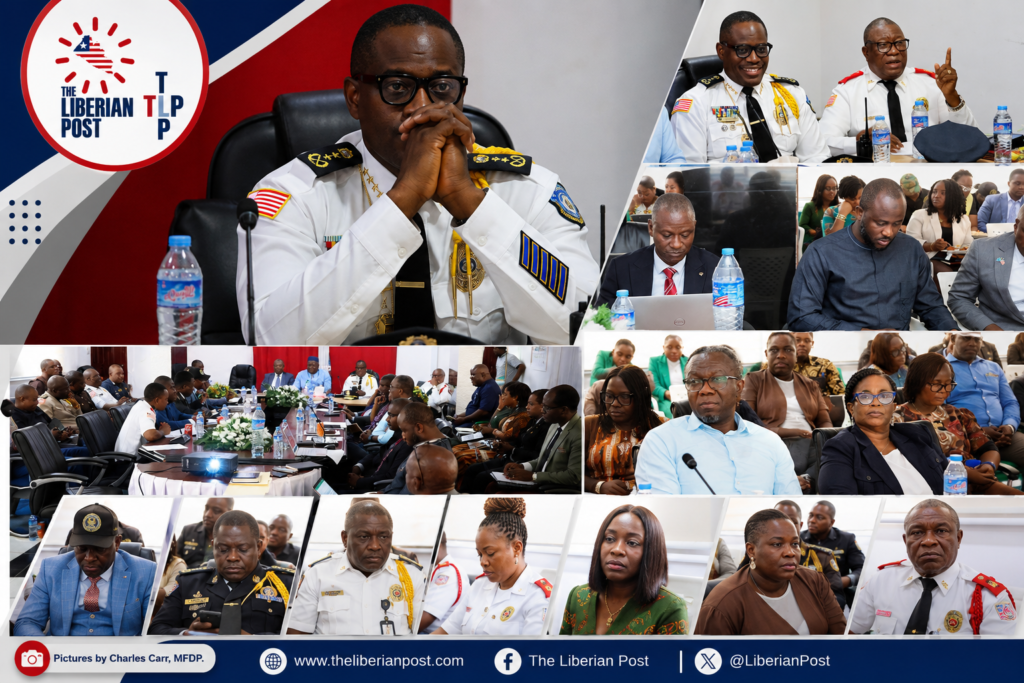
The engagement brought together senior representatives from the Ministry of Justice, Liberia National Police (LNP), Liberia Drug Enforcement Agency (LDEA), Liberia National Fire Service (LNFS) and Witness Protection Agency, among other security institutions, for what Ngafuan described as the first stage of a broader “deep dive” into the sector.
The discussions focused on current resource flows, budget execution, operational gaps and the priorities that security institutions want reflected in the next national budget.
Ngafuan said MFDP wanted the security sector to move beyond simply presenting funding requests and instead have a substantive conversation about what institutions are trying to achieve, what resources they require and how those resources can produce measurable results.
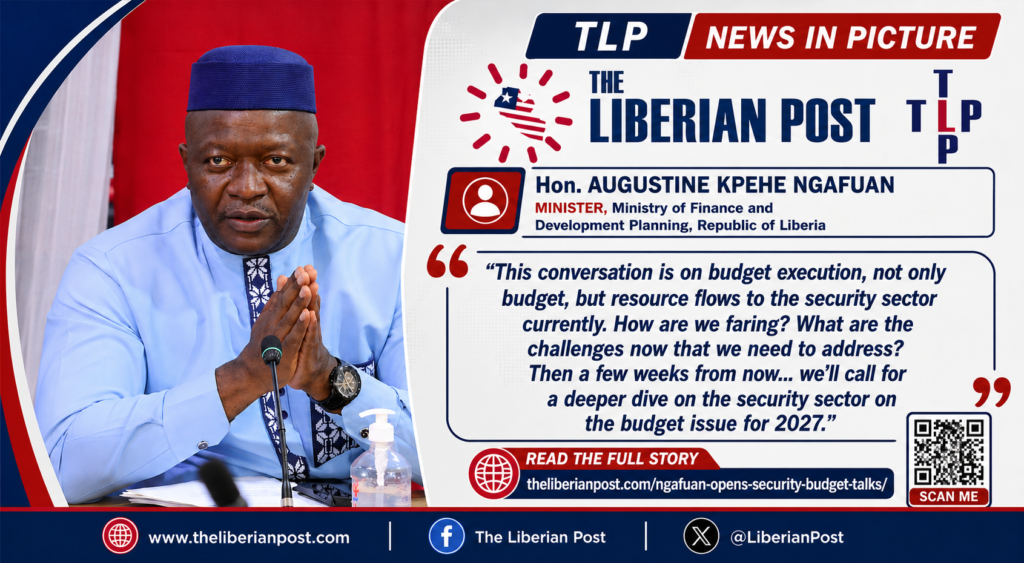
Ngafuan Opens the “Deep Dive”
Welcoming the security officials, Ngafuan commended them for their role in protecting Liberia and maintaining the peace necessary for economic development.
He said the initial engagement was intended to establish a clear picture of how the sector is currently performing under existing allocations.
“This conversation is on budget execution, not only budget, but resource flows to the security sector currently. How are we faring? What are the challenges now that we need to address?” Ngafuan said.
The Finance Minister said MFDP would synthesize the concerns raised before convening a more detailed discussion specifically on the sector’s 2027 budget requirements.
“Then a few weeks from now… we’ll call for a deeper dive on the security sector on the budget issue for 2027,” he said.
Ngafuan said the budget preparation process had already begun and that MFDP was conducting early engagements with key sectors to understand their present challenges before the formal budget is finalized.
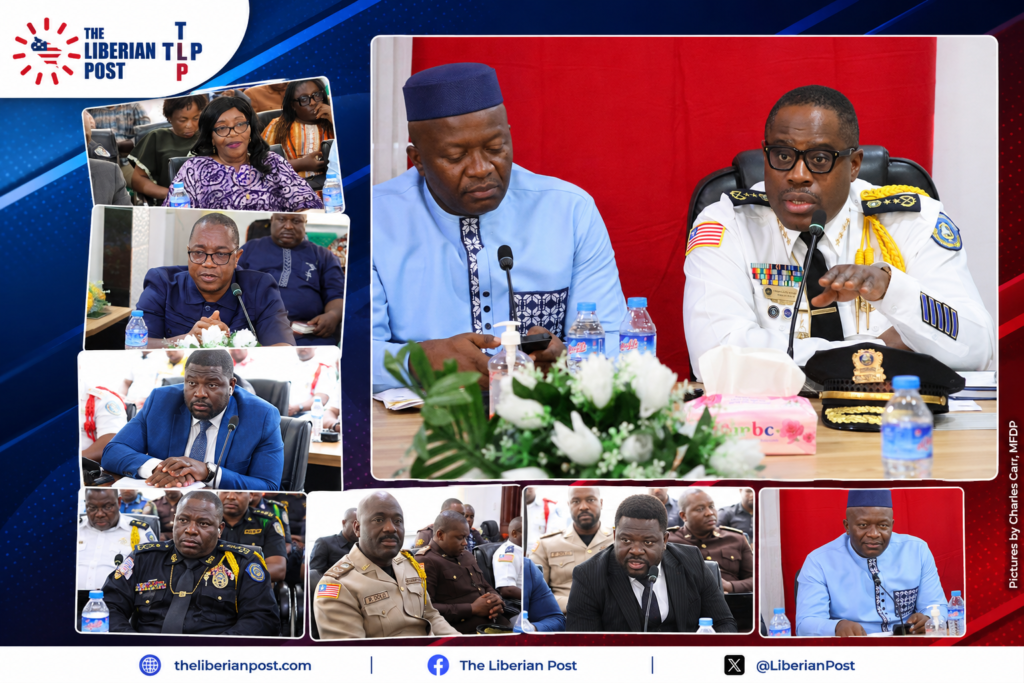
Justice Warns Against Funding Delays
Representing the Ministry of Justice, Cllr. Charles Karmoh stressed that peace and stability remain fundamental to Liberia’s development.
He warned that without security and stability, economic development could quickly be undermined by displacement and renewed instability.
“If there is no peace and stability, no one will be around here. It will be displaced people or refugees,” Karmoh said.
He also highlighted the continued fight against illicit drugs and other threats confronting Liberia.
Karmoh said the challenge is compounded by limited resources, including situations in which those engaged in criminal activities have more financial resources than the institutions pursuing them.
“The lack of resources or the provision of aid in a timely manner matters heavily for the nature of work we undertake to do,” he said.
He welcomed the MFDP initiative and called for the engagement to be sustained so that the government and security institutions can work together to identify practical solutions rather than merely catalogue their problems.
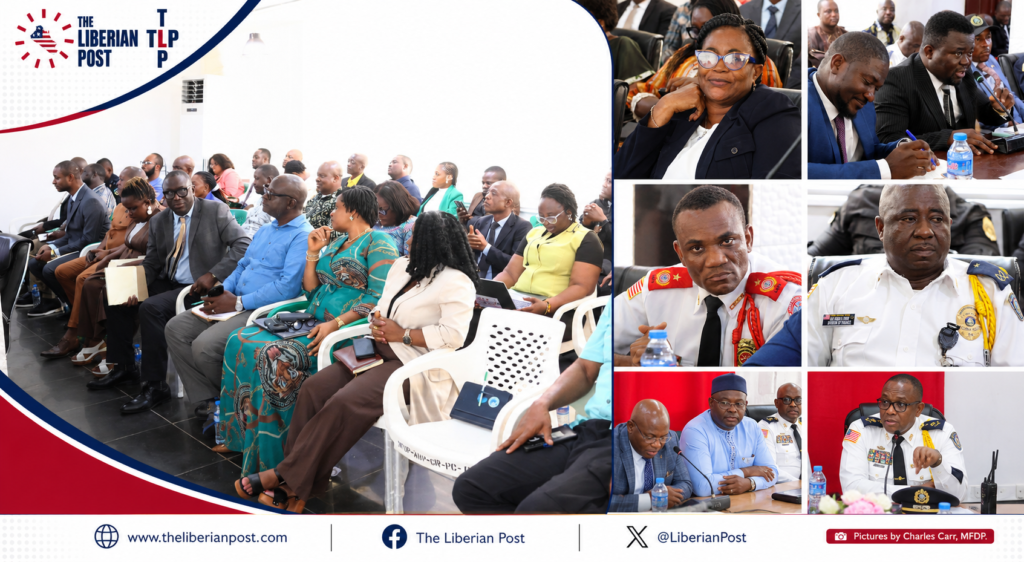
Police Wants Funding Tied to Results
Gregory O.W. Coleman, Inspector General of the Liberia National Police, thanked MFDP for what he described as improving support to the police.
Coleman said the police received less support in 2025 but saw improvement in 2026, although the allocation remains below what the institution needs to fully perform its mandate.
“2025, it was a little less. 2026, it got even better and maybe not near what we require to be able to perform our work in terms of the money allotted to us,” Coleman said.
But Coleman urged the security sector to approach the budget process differently—by identifying concrete goals and attaching specific resource requirements to them.
He said security institutions should align their requests with Liberia’s national security strategy and their individual strategic plans.
“Let’s go to what we’re hoping to achieve. Let’s look at what we can reasonably do this year, put numbers around it and see how we can get properly supported, that we can help to make this country safer.”
The police chief’s proposal effectively puts results-based budgeting at the center of the security sector’s funding discussion.
LDEA Flags Capacity, Logistics Gaps
The Liberia Drug Enforcement Agency, represented by its Controller, Christopher C. Tokpah, Jr., used the engagement to highlight broader capacity challenges within Liberia’s security architecture.
Tokpah said Liberia must become more deliberate about investing in security and peacebuilding, particularly as the regional security environment becomes increasingly complex.
He identified capacity, logistical and technical gaps, along with poor motivation within the sector, as significant challenges.
“There are capacity gaps. There are logistical gaps. There are technical gaps,” Tokpah said.
He also warned about the advancement of transnational crime, saying the evolving nature of security threats requires greater and more sustained government support.
Tokpah welcomed the MFDP initiative, saying such discussions provide an opportunity to put the sector’s actual needs before policymakers and jointly determine how those needs can be addressed.
Fire Service Seeks Decentralization
G. Warsuwah Barvoul, Sr., Director of the Liberia National Fire Service, also pressed MFDP for greater attention to the Fire Service.
Barvoul said the institution had experienced varying levels of support over recent years and expressed concern about its position going into the next budget cycle.
“All of us in the room, let us know that fire is a danger. If you don’t have a proper fire service in this country, all of us are at risk,” Barvoul said.
The Fire Service Director identified decentralization as a major priority, saying the institution needs MFDP’s support to extend its operational reach and improve emergency response across Liberia.
Barvoul also thanked Ngafuan and MFDP for previous interventions, including an earlier engagement involving Deputy Finance Minister Dehpue Y. Zuo, and said the Fire Service would provide greater detail on its requirements during the deeper budget discussions.
Witness Protection Agency Raises Budget Challenge
The meeting also highlighted the financial difficulties facing newly established government institutions.
Atty. Teklo Maxwell Grigsby, II, Director of the Witness Protection Agency, said President Joseph Nyuma Boakai appointed two officials to the autonomous agency in 2026, but the institution encountered difficulties securing a separate budget because of its new status.
Grigsby said the agency approached the Attorney General for confirmation of its establishment to facilitate budgetary consideration.
He explained that MFDP subsequently treated the Witness Protection Agency as a department of the Ministry of Justice for budget purposes, which he acknowledged was justified from an audit perspective.
Ngafuan, however, made clear that the initial portion of the meeting was intended for goodwill remarks and that the agencies would have adequate time during the formal session to present their detailed budget concerns.
“We will be giving all the time to bring out the issues,” Ngafuan said.
Ziankahn: Security Sector Must Close Its Gaps
Major General Daniel D. Ziankahn, Jr. (Ret.) also welcomed the engagement, saying the discussion could help address gaps within Liberia’s security community.
Ziankahn said the engagement came at the beginning of his tenure in a new office and that he was still familiarizing himself with the range of issues confronting the security sector.
“I hope this discussion will help us to solve some of our accountability gaps as a security community,” Ziankahn said.
He said he would rely on the sector’s technical officials as the government works through the various challenges.
A Budget Conversation With Bigger Stakes
The MFDP engagement comes at a critical point in Liberia’s fiscal calendar, with the government already working toward the submission of the 2027 national budget.
Ngafuan’s approach appears aimed at making the security-sector budget process more deliberate: first understand the institutions’ current financial and operational position, identify the gaps, then determine what can realistically be financed.
For the security agencies, the issues raised were wide-ranging—from timely funding and logistics to technical capacity, personnel motivation, fire-service decentralization, drug enforcement and the growing sophistication of transnational crime.
For MFDP, the challenge will be to balance those demands against Liberia’s broader fiscal constraints while ensuring that money allocated to national security produces tangible results.
The engagement also underscored the direct connection between security and economic development. As Karmoh put it, without peace and stability, the development process itself is at risk.
The coming deeper budget session will therefore be significant. It is expected to move the conversation from broad concerns to specific institutional priorities and, ultimately, determine which of those priorities can be translated into concrete allocations in Liberia’s 2027 National Budget.
For breaking news, in-depth analysis, and exclusive reports from Liberia and around the world, follow The Liberian Post on Facebook (https://web.facebook.com/profile.php?id=61576017166570) and X, formerly Twitter (https://x.com/LiberianPost).