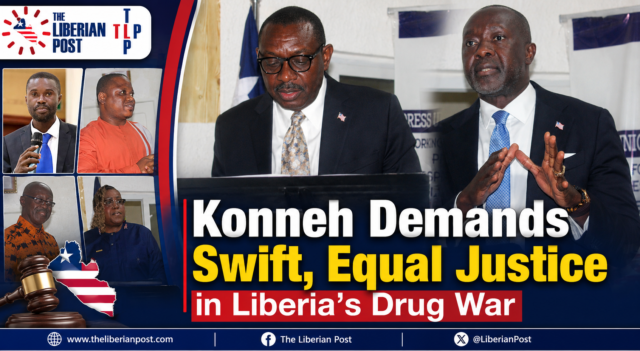
–Senator Calls for 90-Day Prosecutions, Independent Scrutiny and Stronger Security Institutions as Experts Clash With Justice Minister Over Investigation
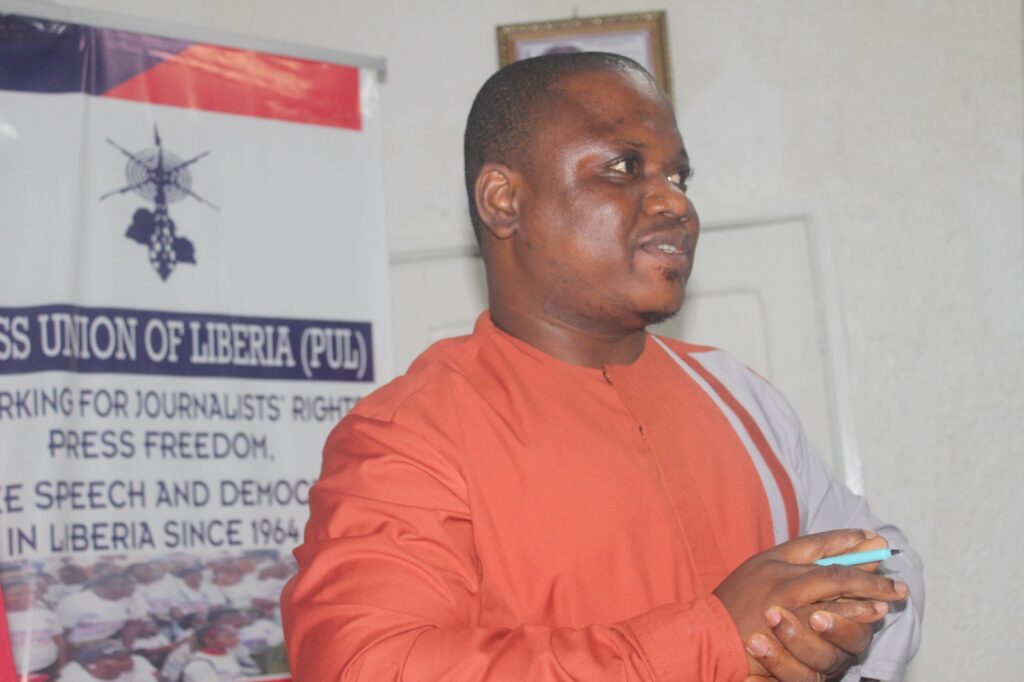
MONROVIA, LIBERIA — Gbarpolu County Senator Amara M. Konneh has called for swift, equal and transparent justice in Liberia’s intensifying fight against illicit drugs, warning that suspending officials and destroying seized narcotics will mean little if authorities fail to secure convictions in court.
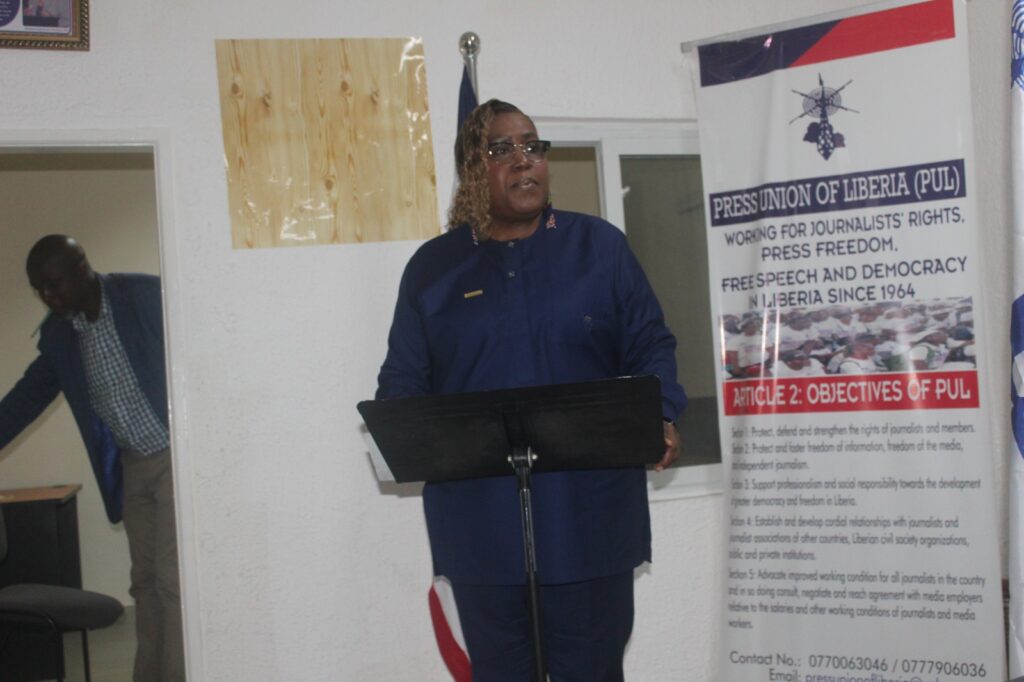
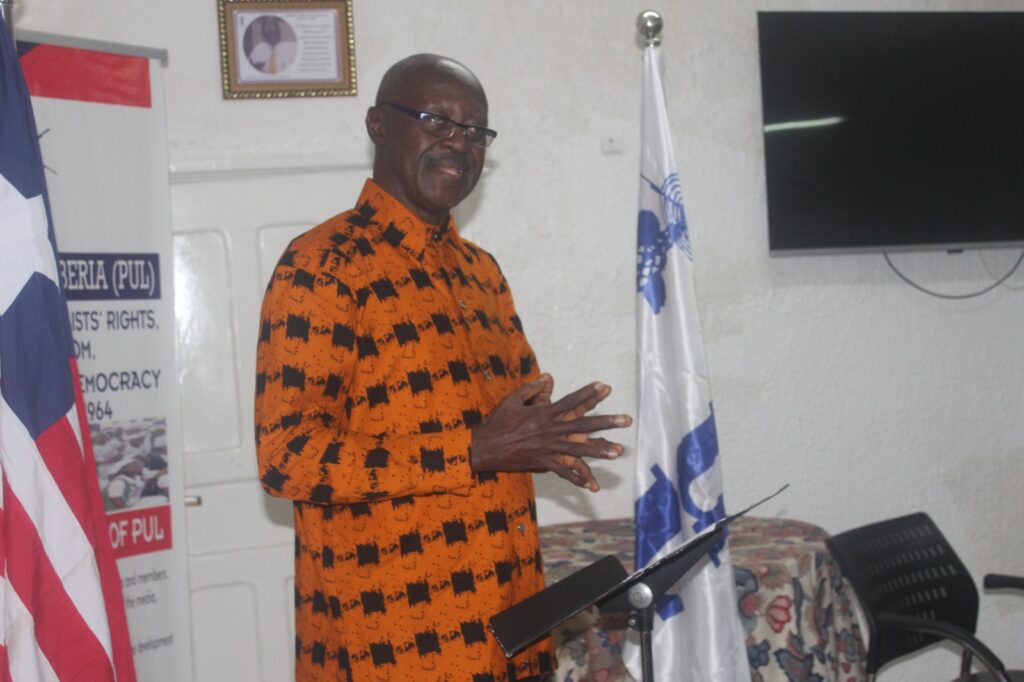
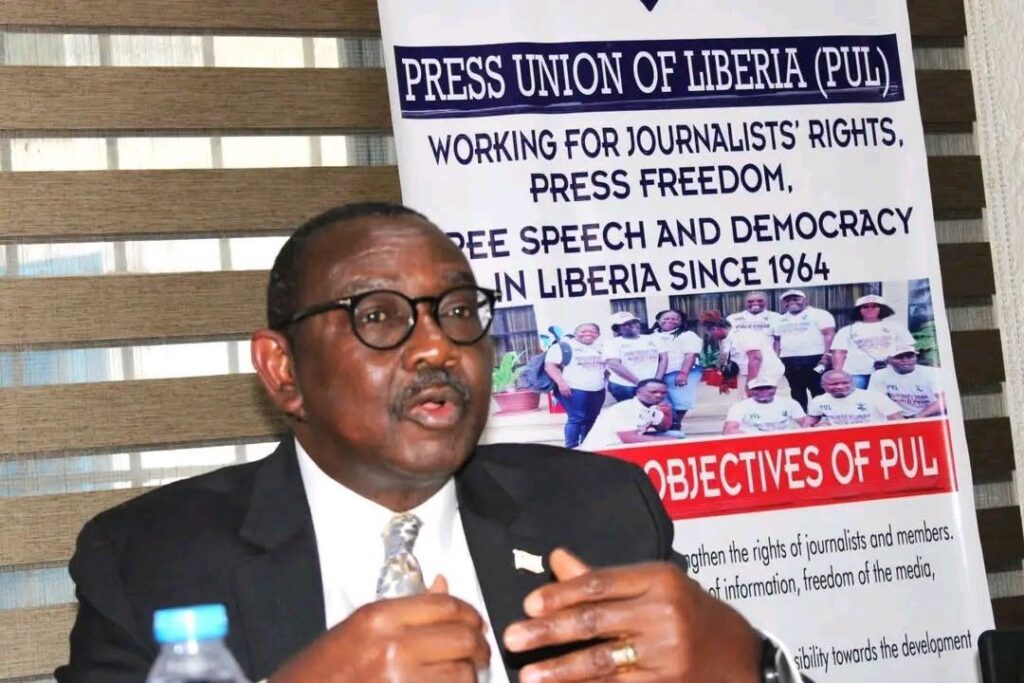
Konneh made the call Wednesday during the relaunch of the Edward Wilmot Blyden Intellectual Discourse, organized by the Press Union of Liberia (PUL), where he joined Justice Minister and Attorney General Cllr. N. Oswald Tweh, Liberia National Bar Association President Cllr. F. Juah Lawson, CENTAL Executive Director Anderson Miamen and veteran journalist Aaron Kollie in a high-level discussion on drug trafficking, institutional accountability and the rule of law.
The Senator commended President Joseph Nyuma Boakai for his administration’s response to the drug crisis, the Liberian Senate for its oversight, and the Joint Security Task Force for major narcotics seizures and arrests.
But Konneh cautioned that the government’s most difficult task is now ahead: turning seizures and arrests into successful prosecutions.
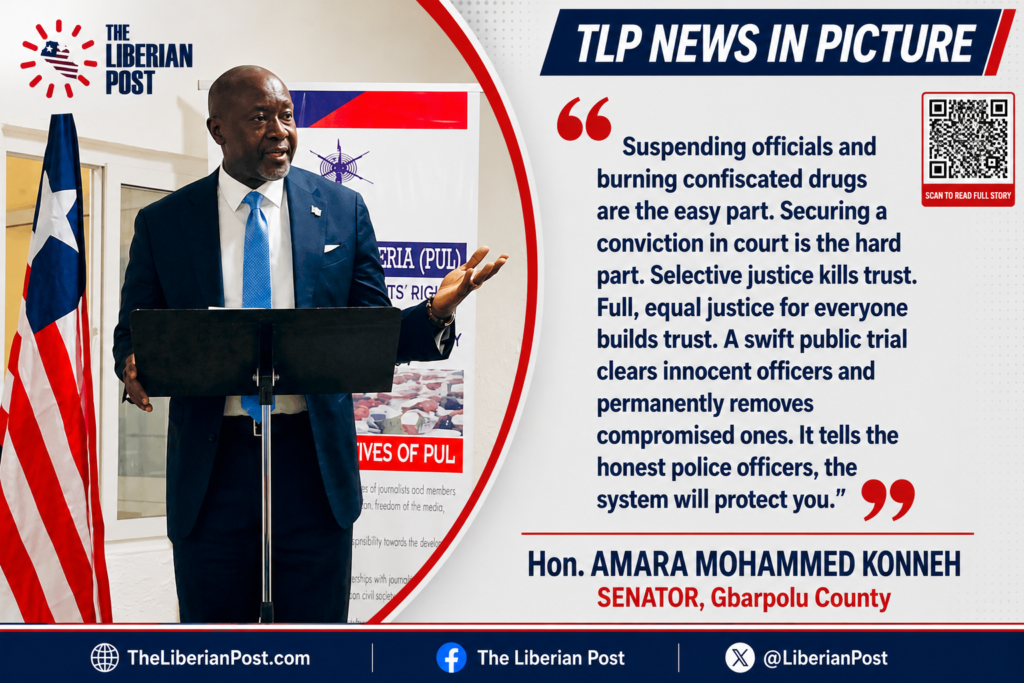
“Suspending officials and burning confiscated drugs are the easy part. Securing a conviction in court is the hard part,” Konneh said.
His remarks came against the backdrop of Liberia’s largest-ever reported narcotics seizure and an ongoing investigation that has generated intense public debate over alleged drug trafficking, corruption and the involvement of individuals connected to state security institutions.
“Selective Justice Kills Trust”
Konneh warned that failure to prosecute all persons credibly linked to the investigation could undermine public confidence in the government’s anti-drug campaign.
“Selective justice kills trust. Full, equal justice for everyone builds trust,” he said.
He challenged the Justice Ministry to apply the same legal standard to every person implicated in the investigation, regardless of whether the individual is a uniformed security officer, government official or private citizen.
The Senator proposed that prosecutions be pursued within 90 days, arguing that a swift and public trial would either clear innocent officials or permanently remove those found to have compromised their positions.
“A swift public trial clears innocent officers and permanently removes compromised ones. It tells the honest police officers, the system will protect you,” Konneh said.
He also urged the government to either charge suspended officials where sufficient evidence exists or reinstate those against whom no evidence can be established.
Senator Calls for Stronger Drug-Fighting Institutions
Konneh said Liberia cannot expect poorly compensated and inadequately equipped security personnel to withstand the financial incentives offered by international drug networks.
“We cannot ask LDEA agents earning $150 to resist a cartel offering $50,000. That’s not accountability, that’s temptation,” he said.
He proposed increased direct budgetary support for the Liberia Drug Enforcement Agency (LDEA), establishment of a forensic drug laboratory, hazard pay and insurance for members of the Joint Security Task Force, and creation of a Special Drug Court with protected judges capable of handling drug cases expeditiously.
He said he would work with his colleagues in the Senate to advance those measures, stressing that adequate funding for security institutions is a legislative responsibility.
Konneh also called for seized drug-related assets and funds to be used, where legally permissible, to support rehabilitation facilities in counties affected by drug abuse.
Procurement Questions Could Affect Drug Case
The Gbarpolu senator also raised concerns over reports circulating about the procurement and use of police vehicles, including allegations involving vehicles purchased from Minnesota, luxury SUVs and vehicles allegedly registered to private individuals but being used by security officials.
He emphasized that the allegations may ultimately prove false but argued that perceptions surrounding public procurement could damage confidence in the broader drug investigation.
Konneh called for the publication of procurement and asset documentation, including PPCC approvals, GSA asset-registration records, MFDP payment vouchers and LRA duty-waiver documentation, where applicable.
His argument, he said, was not intended to undermine the security agencies but to protect the credibility of the investigation.
If the vehicles were legitimately acquired as government assets, he argued, transparent documentation could help exonerate the police and prevent defense lawyers from exploiting procurement irregularities during future trials.
Experts Push Independent Investigation
Konneh’s call for stronger accountability coincided with broader demands from several panelists for an independent mechanism to examine the drug-trafficking investigation.
A PUL statement issued after the forum said Konneh, CENTAL’s Anderson Miamen and veteran journalist Aaron Kollie argued that an independent panel could help address concerns about the credibility and independence of the ongoing investigations.
Miamen called for institutional reforms, greater resources and more transparent recruitment and vetting within security institutions, including reform of the law governing the LDEA.
Kollie, meanwhile, argued that Liberia’s response must address the underlying social consequences of drug abuse, including rehabilitation and prevention, rather than focusing exclusively on arrests and seizures.
Justice Minister Rejects Immediate Independent Panel
Justice Minister Tweh took a different position on the timing of an independent investigation.
While he said the government does not oppose an independent panel in principle, he argued that the current investigation must continue, pointing to the involvement of international partners, including the U.S. Drug Enforcement Administration, Homeland Security and the FBI.
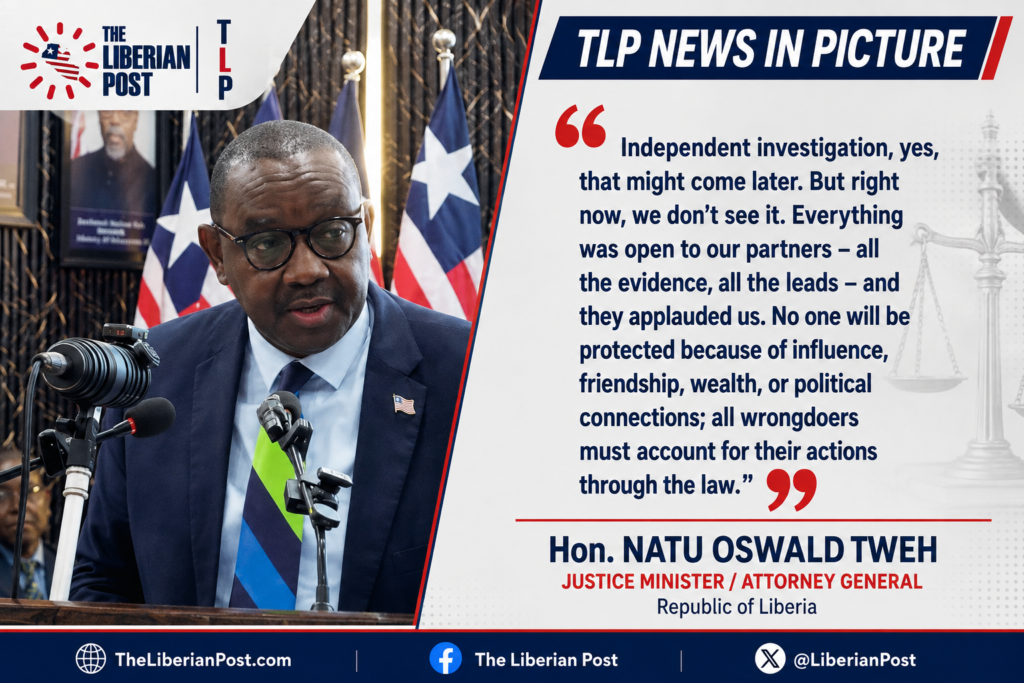
“Independent investigation, yes, that might come later. But right now, we don’t see it. Everything was open to our partners – all the evidence, all the leads – and they applauded us,” Tweh said.
Tweh also defended the government’s record of narcotics seizures and arrests, while acknowledging that every major seizure exposes potential weaknesses in the systems through which drugs move.
According to his remarks, the LDEA seized more than 400 kilograms of illegal narcotics and arrested more than 200 suspects during the first quarter of 2026. In June, approximately 237 kilograms of cocaine were intercepted at Roberts International Airport, followed by the discovery of nearly four tons of cocaine in Duazon, described as the largest narcotics seizure in Liberia’s history.
Tweh said more than US$336 million worth of the seized product was destroyed publicly in Margibi County at the end of July.
“Make the Investigators More Credible Than the Suspect”
For Konneh, the ultimate test of the campaign will not be the quantity of cocaine seized but whether Liberia can produce credible evidence, secure convictions and establish a system capable of surviving changes in political leadership.
“Make the investigators more credible than the suspect,” he urged.
He also stressed that the Senate must continue exercising oversight, noting that the Attorney General had briefed the Senate’s Defense, Security and Intelligence Committee and committed to providing regular briefings.
Konneh said those briefings would allow lawmakers to remain informed while supporting the investigation without relying solely on public information.
Drug War Must Be Bigger Than Politics
The Senator disclosed a deeply personal reason for his position, revealing that three of his nephews have been victims of drug abuse and that one died shortly before the forum.
He said the tragedy has reinforced his belief that Liberia’s drug problem must be treated as a national crisis rather than a political contest.
“The drug fight is not political for me,” Konneh said, before describing the loss of his nephew and the pain experienced by families across Liberia.
He argued that the country must simultaneously pursue traffickers, strengthen institutions, improve evidence handling and invest in rehabilitation and prevention.
The Justice Minister similarly maintained that the government’s objective is to follow evidence wherever it leads while protecting due process.
“No one will be protected because of influence, friendship, wealth, or political connections; all wrongdoers must account for their actions through the law,” Tweh said.
He added that no individual should be convicted merely because their name is circulating in the media or on social media.
The renewed Blyden Forum therefore produced a striking area of agreement among the panelists: Liberia’s drug crisis requires stronger institutions, better-resourced security agencies, credible investigations and accountability.
The disagreement is over how that accountability should be achieved—and, particularly, whether an independent investigation should be established now or after the current process is completed.
The PUL said the relaunch of the Blyden Intellectual Discourse is intended to promote informed public debate, transparency and accountability on issues of national importance. PUL President Julius Kanubah praised the panelists for providing factual analysis that could contribute to reforms in Liberia’s fight against illicit drugs.
For Konneh, however, the immediate challenge is clear: Liberia must ensure that its unprecedented drug seizures translate into credible prosecutions, convictions where warranted, institutional reform and greater protection for communities and young people.
“If we do that, the President wins, the Task Force wins, and Liberia wins. All of us win!”
For breaking news, in-depth analysis, and exclusive reports from Liberia and around the world, follow The Liberian Post on Facebook (https://web.facebook.com/profile.php?id=61576017166570) and X, formerly twitter (https://x.com/LiberianPost).