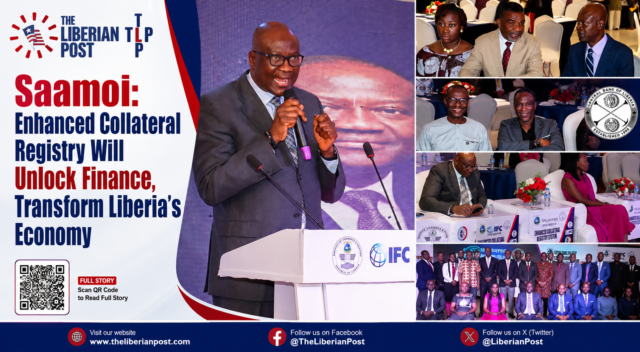
–CBL Governor Says New Digital System Can Turn Productive Assets Into Credit, Expand Lending and Strengthen Confidence in Liberia’s Financial Sector
MONROVIA — Central Bank of Liberia (CBL) Executive Governor Henry Fallah Saamoi has described the newly launched Enhanced Collateral Registry System (ECRS) as a major economic reform capable of unlocking financing for Liberian businesses, strengthening secured lending and expanding opportunities for entrepreneurs who have historically struggled to access formal credit.
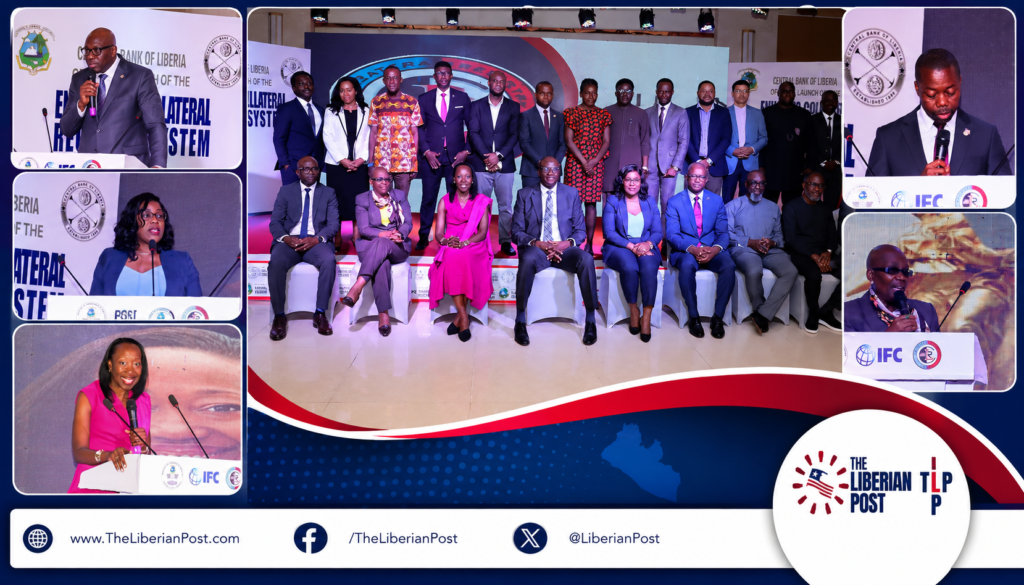
Speaking Thursday at the official launch of the system at the Ellen Johnson Sirleaf Ministerial Complex in Monrovia, Saamoi said the reform was designed to address one of Liberia’s persistent financial-sector problems: the inability of many businesses to convert productive assets into usable collateral for loans.
The launch was held under the theme “Strengthening Secured Lending and Responsible Borrowing.”
Saamoi said the challenge is particularly severe for micro, small and medium-sized enterprises (MSMEs), many of which possess land, equipment, contracts and other productive assets but cannot access financing because lenders have traditionally relied on limited forms of collateral.
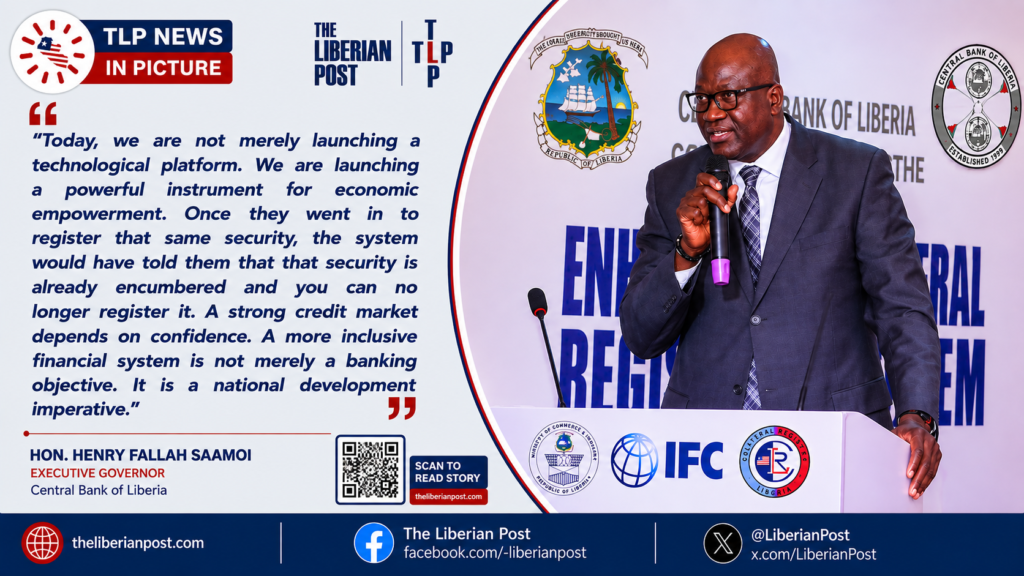
“Today, we are not merely launching a technological platform. We are launching a powerful instrument for economic empowerment,” Saamoi declared.
He said the new system represents a reform intended to “unlock capital, expand opportunity, and strengthen the foundations of inclusive economic growth in Liberia.”
A Banker’s Personal Experience
Saamoi illustrated the importance of the new registry by recounting a case from his more than 25 years in Liberia’s commercial banking sector.
He said that while serving as managing director of a commercial bank, one borrower used an original property title as collateral to obtain financing from his institution. The borrower subsequently reported the original title as missing and obtained a certified replacement document.
According to Saamoi, the borrower then connived with an insider from his bank and obtained the original copy that had been filed with his bank and the it was replaced with the “certified copy” and that borrower went and used the original document again to secure another loan from a second bank using the same property.
Both institutions eventually faced difficulties after the borrower defaulted.
Saamoi said that had a comprehensive collateral registry existed at the time, the second bank would have been alerted that the property was already encumbered.
“Once they went in to register that same security, the system would have told them that that security is already encumbered and you can no longer register it,” he explained.
For Saamoi, that experience demonstrates why the ECRS is not simply an information-technology project but an important safeguard for Liberia’s financial system.
He said the registry can help prevent multiple lenders from unknowingly accepting the same asset as collateral, reducing lending risks and improving confidence between banks and borrowers.
From Collateral to Credit
The Enhanced Collateral Registry builds on Liberia’s original collateral-registration framework, which was operationalized in 2014 with support from the International Finance Corporation (IFC) and the World Bank Group.
The upgraded platform now allows both movable and immovable property to be registered through a unified, publicly searchable digital system available around the clock. Financial institutions can electronically register, amend, assign, discharge and search security interests.
Saamoi said the system also introduces stronger interoperability with other national databases, including the National Identification Registry, Liberia Land Authority, Liberia Business Registry and vehicle-registration systems.
That interoperability, he said, should make it easier to verify ownership, identity and existing encumbrances while reducing information gaps and transaction risks.
“A strong credit market depends on confidence,” Saamoi said, stressing the need for confidence that ownership can be verified, security interests properly recorded, and lending transactions conducted within a transparent and predictable framework.
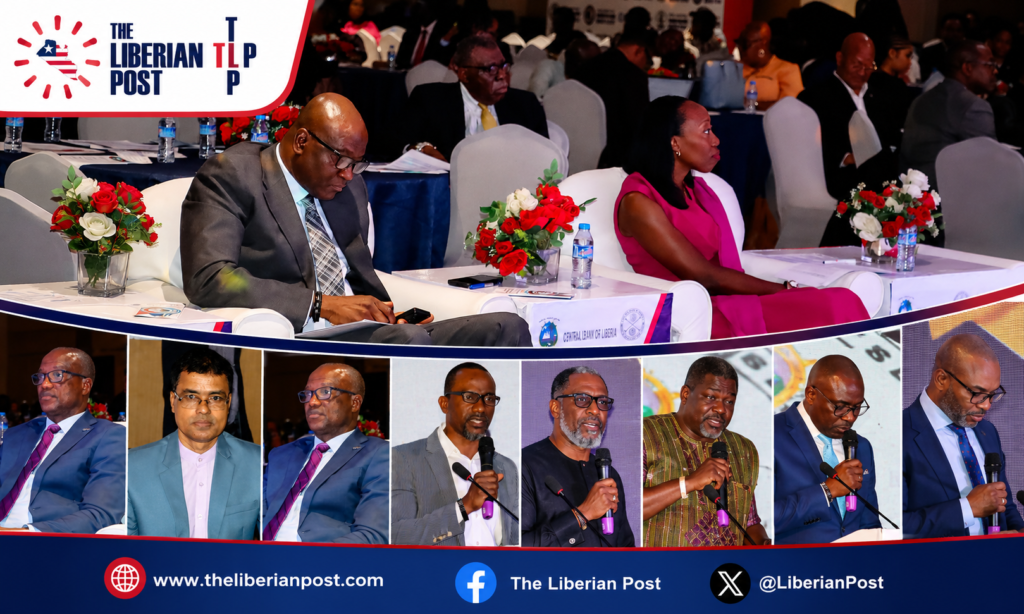
Financial Inclusion at the Center
The CBL Governor said the reform is particularly important for small businesses, women-owned enterprises, young entrepreneurs, farmers and rural producers who may own productive assets but remain excluded from conventional lending.
“A more inclusive financial system is not merely a banking objective. It is a national development imperative,” Saamoi said.
He linked access to finance directly to economic growth, arguing that when entrepreneurs gain financing, businesses expand; when businesses expand, jobs are created; and when jobs are created, families and communities prosper.
He pointed to results from the Liberia Investment, Finance and Trade (LIFT) Project as evidence of the potential impact of improved access to credit.
As of the second quarter of 2026, a US$6 million line of credit had been fully deployed through seven participating financial institutions, enabling 358 MSMEs to access financing, with some receiving loans of up to US$100,000.
Women-owned businesses accounted for 64 percent of loan disbursements, while 130 of the 358 beneficiary enterprises were located outside Montserrado County, including businesses in Bomi, Bong, Grand Bassa, Grand Kru, Grand Gedeh, Lofa, Margibi and Nimba counties.
Saamoi said the figures demonstrate that the problem facing Liberian entrepreneurs is not a lack of ambition or determination.
“The truth that says Liberian entrepreneurs do not lack ambition. The truth that says Liberian entrepreneurs do not lack innovation. And the truth that says Liberian entrepreneurs do not lack determination. Too often, they simply lack access.”
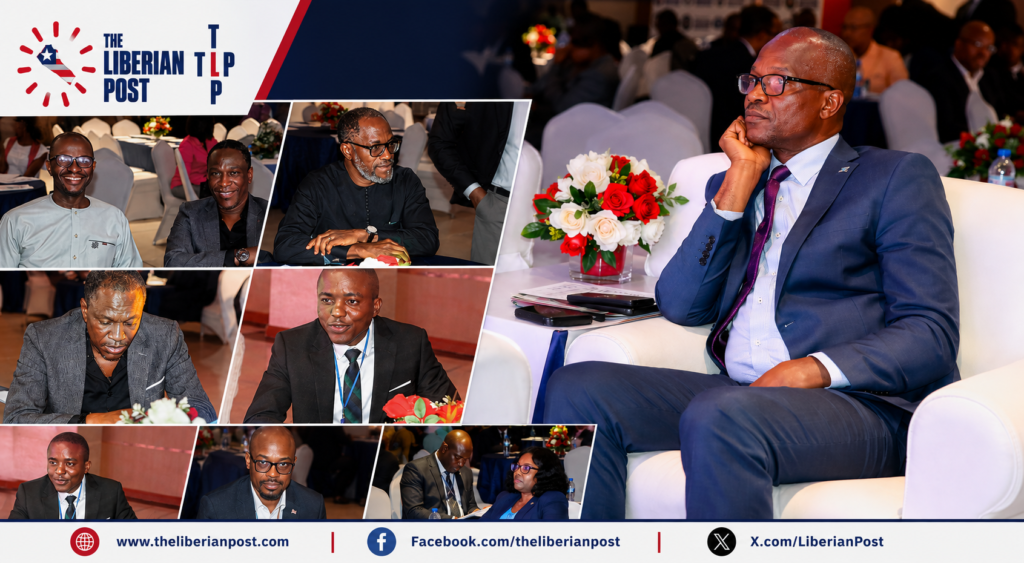
Part of Wider Financial Modernization
Saamoi stressed that the ECRS is one component of a broader effort by the Central Bank to modernize and digitize Liberia’s financial architecture.
He said the CBL is simultaneously working on reforms involving the national electronic payment ecosystem, digital financial services, credit infrastructure and regulatory technology.
The Bank is also modernizing Liberia’s Credit Reference System under the LIFT Project. The system is expected to provide real-time credit information, improve data quality, strengthen risk assessment and enable lenders to make more informed decisions.
Saamoi said the combination of better collateral information and improved credit histories should substantially strengthen Liberia’s lending environment.
“Digitalization is not technology for its own sake. It is about reducing costs, increasing access, improving efficiency, and expanding opportunity.”
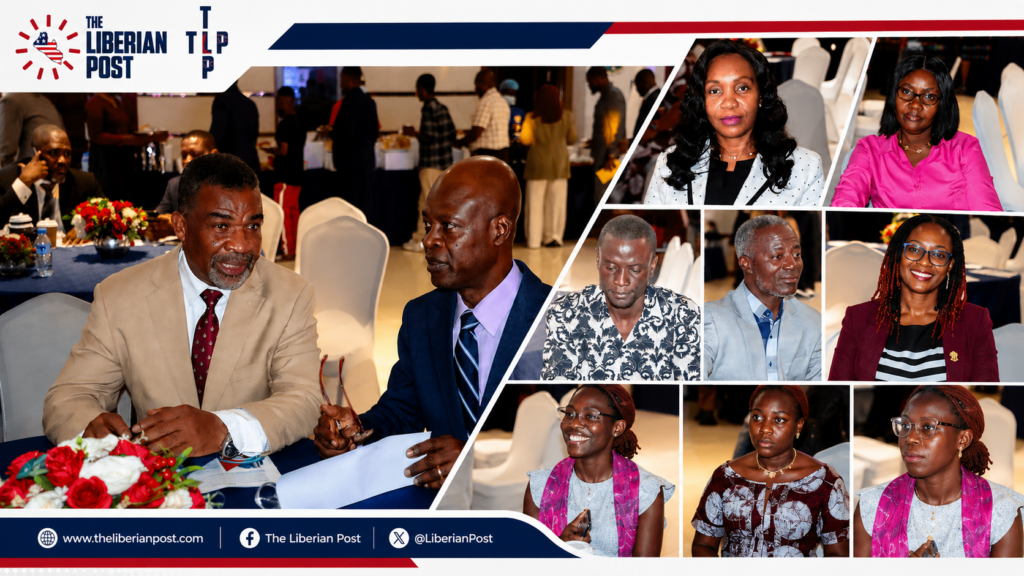
Saamoi: The Technology Is Not the Measure of Success
Despite celebrating the launch, Saamoi warned that the platform itself should not be considered the final achievement.
He called on financial institutions to actively use the system to responsibly expand lending and urged businesses to formalize their operations and take advantage of the opportunities created by the reform.
“The real value of this platform will not be measured by the technology itself. Its true value will be measured by the businesses it helps grow, the investments it supports, the jobs it creates and the lives it transforms.”
Saamoi said the ultimate test will come years from now—not from whether Liberia remembers the software or its technical specifications, but from whether businesses expanded because financing became more accessible.

“Years from now, no one will remember the software we launched. No one will remember the technical specifications of the platform. What they will remember are the businesses that expanded because financing became accessible.”
He ultimately declared the Enhanced Collateral Registry System officially launched and open for business pursuant to CBL Regulation No. CBL/RSD/001/2026.
Saamoi said the new system should become a lasting institutional reform capable of turning productive assets into economic opportunity for Liberians.
“Today, we launch an enhanced system. Tomorrow, we unlock finance. Finance unlocks enterprise. Enterprise unlocks jobs. And jobs unlock hope.”
For more business, economic and financial-sector news, follow The Liberian Post on Facebook (https://web.facebook.com/profile.php?id=61576017166570) and X, formerly twitter (https://x.com/LiberianPost).