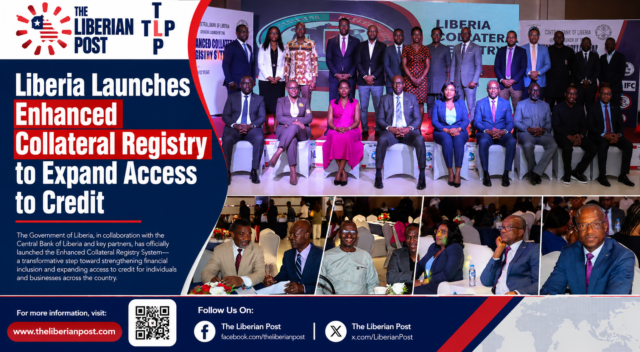
–CBL, World Bank, IFC, Judiciary and Private Sector Back Digital Reform Designed to Make Lending More Secure, Transparent and Accessible
MONROVIA — Liberia has officially launched an Enhanced Collateral Registry System designed to make secured lending more transparent, reduce risks for financial institutions and expand access to credit for businesses, farmers, entrepreneurs and other borrowers across the country.
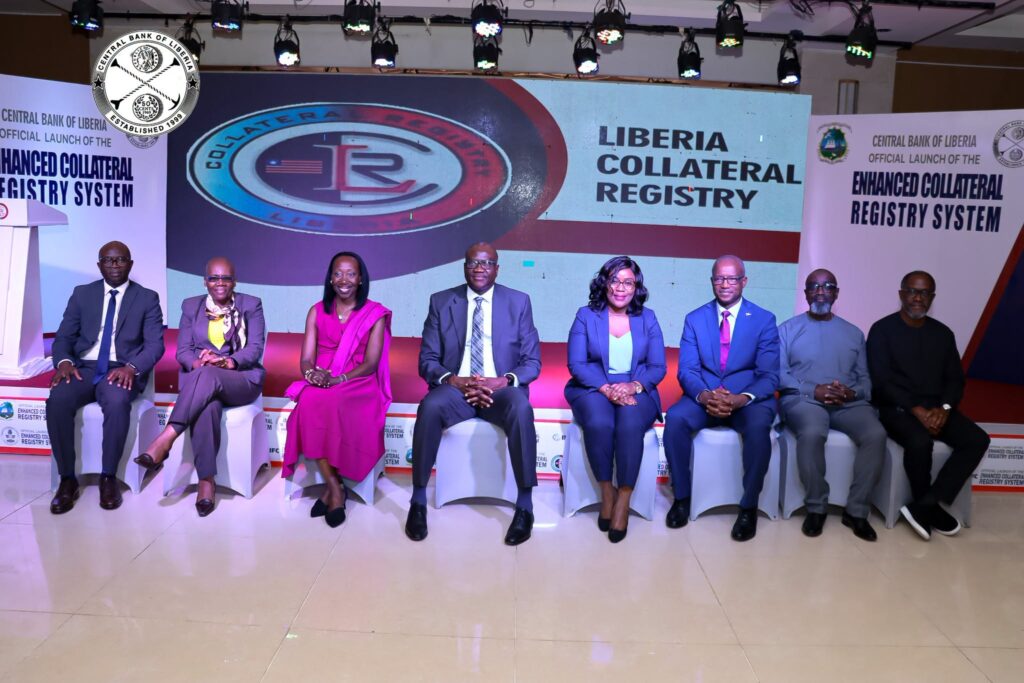
The new system, launched Thursday, August 27, at the Ellen Johnson Sirleaf Ministerial Complex in Monrovia under the theme “Strengthening Secured Lending and Responsible Borrowing,” represents the latest phase of Liberia’s efforts to modernize its financial infrastructure and address longstanding barriers to formal credit.
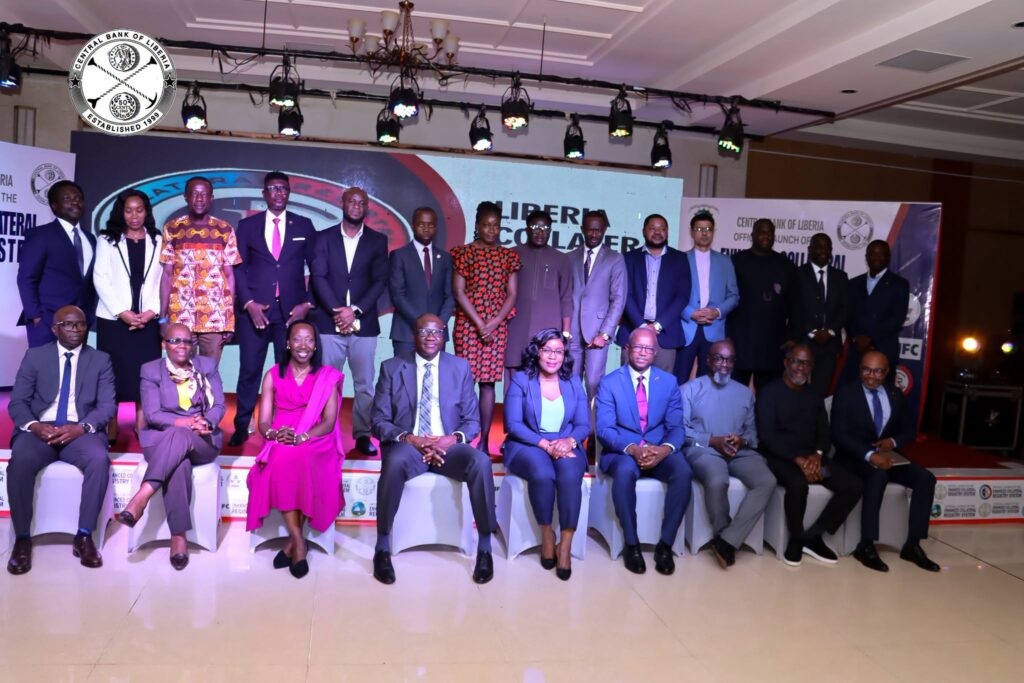
The reform brings together the Central Bank of Liberia, Government of Liberia, World Bank Group, International Finance Corporation (IFC), judiciary, financial institutions and other public and private-sector stakeholders.
At the heart of the new system is an expanded ability to register security interests over both movable and immovable property, creating a unified digital platform through which lenders can register, amend, assign, discharge and search collateral.
The system is publicly searchable and designed to operate 24 hours a day, seven days a week.
From Movable Assets to a Broader Collateral System
Liberia’s original collateral registry was operationalized in 2014, enabling movable assets to be used as security for credit facilities.
The enhanced system expands that framework and introduces stronger operational controls, broader collateral coverage, improved accessibility, cloud-based infrastructure and greater integration with government databases.
The reform was developed to help address a persistent problem in Liberia’s financial sector: many entrepreneurs have productive assets but cannot easily use those assets to secure formal financing.
The new framework is intended to enable lenders to verify whether an asset is already encumbered before accepting it as collateral, thereby reducing the possibility of competing claims over the same property.
World Bank: System Can Bridge Liberia’s Financing Gap
World Bank Country Manager Georgia Wallen welcomed the launch on behalf of the World Bank Group, describing it as an important breakthrough for Liberian businesses and entrepreneurs.
Wallen said access to finance remains one of the biggest challenges confronting Liberian businesses, particularly those unable to provide land or buildings traditionally demanded as collateral.
“The Enhanced Collateral Registry System helps to bridge this gap. It will give lenders greater confidence to accept a wider range of assets and it will help borrowers to unlock the value of the assets that they do possess.”
She said the original collateral registry produced encouraging results after its launch, facilitating more than US$237 million in financing within two years, with women accounting for half of the borrowers during that period.
Wallen said the enhanced system is part of a broader secure-transactions reform agenda aligned with Liberia’s Vision 2030 and the Government’s ARREST Agenda for Inclusive Development.
But she cautioned that technology alone will not guarantee success.
“The success of the registry ultimately depends on its widespread and effective use.”
She disclosed that the Central Bank, the Banking Institute of Liberia and IFC are preparing specialized training on movable and immovable asset financing, expected to begin in the first week of September, alongside a nationwide awareness campaign on secured transactions and the collateral registry.
Judiciary Sees Major Benefit
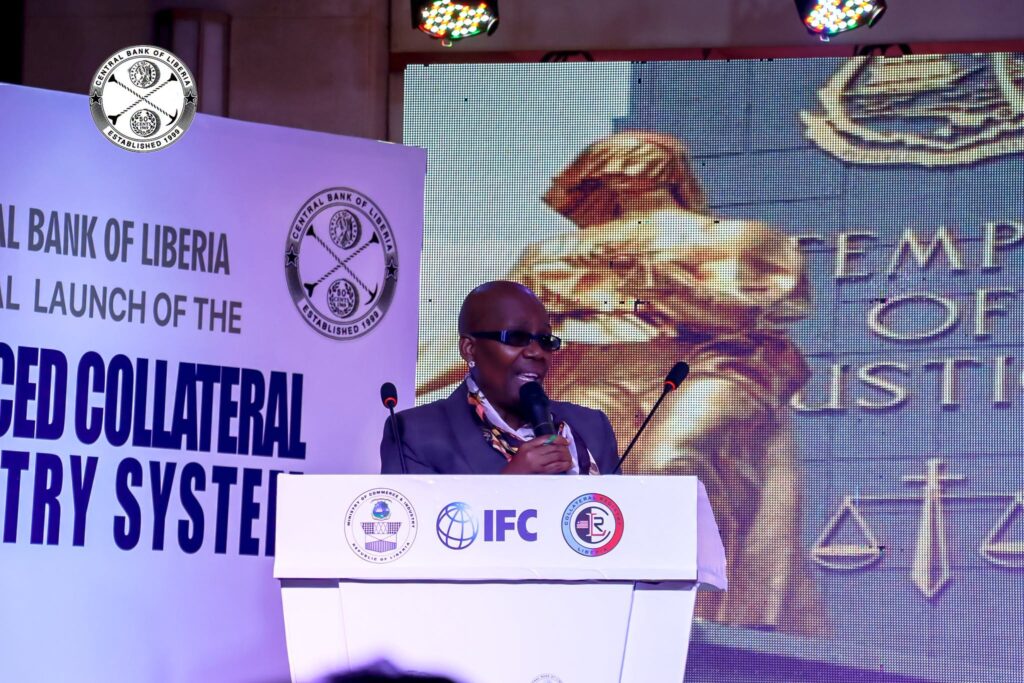
The judiciary also welcomed the reform, with Head Judge Eva Mappy Morgan of the Commercial Court highlighting the difficulties financial institutions have historically faced in enforcing judgments and recovering loans.
Morgan said Liberia’s enforcement process can take roughly 900 days from the start to completion, according to the statistics cited in her remarks.
She said one of the problems confronting courts is that collateral is sometimes poorly defined or difficult to locate, making enforcement of otherwise valid judgments more difficult.
With the enhanced registry, she said, banks should have greater certainty about the assets securing loans.
“With the enhanced collateral registry system, at least we will know, or banks will know” what collateral has already been encumbered.
Morgan said stronger cooperation between the banking sector and judiciary could increase confidence in lending and make it easier to recover non-performing loans.
She also highlighted ongoing digitization of the courts, saying improved judicial efficiency could strengthen investor confidence and potentially encourage greater foreign investment.
“Commerce drives civilization. The rule of law underpins everything.”

Commerce Ministry Links Registry to Broader Business Reforms
Representing the Minister of Commerce and Industry, Deputy Minister Wilmot A. Reeves said the registry forms part of a wider package of reforms being implemented through the Liberia Investment, Finance and Trade (LIFT) Project.
He said the enhanced registry should complement reforms in business registration, trade information, customs processes, digital financial services and access to finance.
The ministry is also advancing an online business-registration system, a trade-information portal and other digital trade reforms intended to reduce the time and cost of doing business.
Reeves said the broader objective is to create a system in which an entrepreneur can register a business online, obtain reliable trade information, complete trade procedures electronically, register eligible assets as collateral, establish a credit history and ultimately access financing to expand the business.
He said approximately 60 percent of beneficiaries of the LIFT-supported credit facility are women entrepreneurs, describing the figure as evidence of the government’s effort to make economic transformation more inclusive.
Land Authority, Business Registry to Play Critical Roles
Representatives of other institutions emphasized the importance of accurate public records to the success of the new system.
The Liberia Land Authority representative, Clarence Tokpah, stressed that the agency plays a critical role in authenticating property being presented as collateral, including determining whether property belongs to the purported owner, is disputed or has already been used as collateral.
The Liberia Business Registry, which was represented by its Deputy Registrar General, likewise urged banks and financial institutions to verify documents presented as collateral, warning that some documents circulating as supposedly registered business records have not been found in the Registry’s system.
The Registry said financial institutions should work closely with it to ensure that documents used in lending transactions are authentic and verifiable.
System Built for Greater Interoperability
The ECRS is designed to connect with other national databases and institutions, including the National Identification Registry, Liberia Land Authority, Liberia Business Registry and vehicle-registration systems.
That interoperability is expected to improve verification of ownership and identity and help lenders determine whether assets already carry security interests.
The CBL says the result should be reduced information asymmetry, greater transparency and lower transaction risk.
The system’s development also involved technical support from IFC and the World Bank Group. The implementation materials indicate that the upgraded platform was designed to improve data integrity, audit trails, system security, reporting, analytics and integration with relevant government databases.
LIFT Credit Facility Shows Potential
The launch comes against the backdrop of the LIFT Project’s existing efforts to address Liberia’s financing gap.
By the second quarter of 2026, the project’s US$6 million line of credit had been fully deployed through seven participating financial institutions, reaching 358 MSMEs, with some businesses receiving loans of up to US$100,000.
Women-owned businesses accounted for 64 percent of loan disbursements, while 130 beneficiary enterprises were located outside Montserrado County.
World Bank officials said the results demonstrate the potential for financial-sector reforms to translate into business growth and employment when entrepreneurs are given access to financing.
CBL: Adoption Will Determine Success
The Central Bank has emphasized that the launch itself is only the beginning.
Governor Saamoi called on financial institutions to use the platform responsibly and expand lending to productive sectors, while encouraging businesses to formalize and take advantage of the new opportunities.
“The real value of this platform will not be measured by the technology itself. Its true value will be measured by the businesses it helps grow, the investments it supports, the jobs it creates and the lives it transforms.”
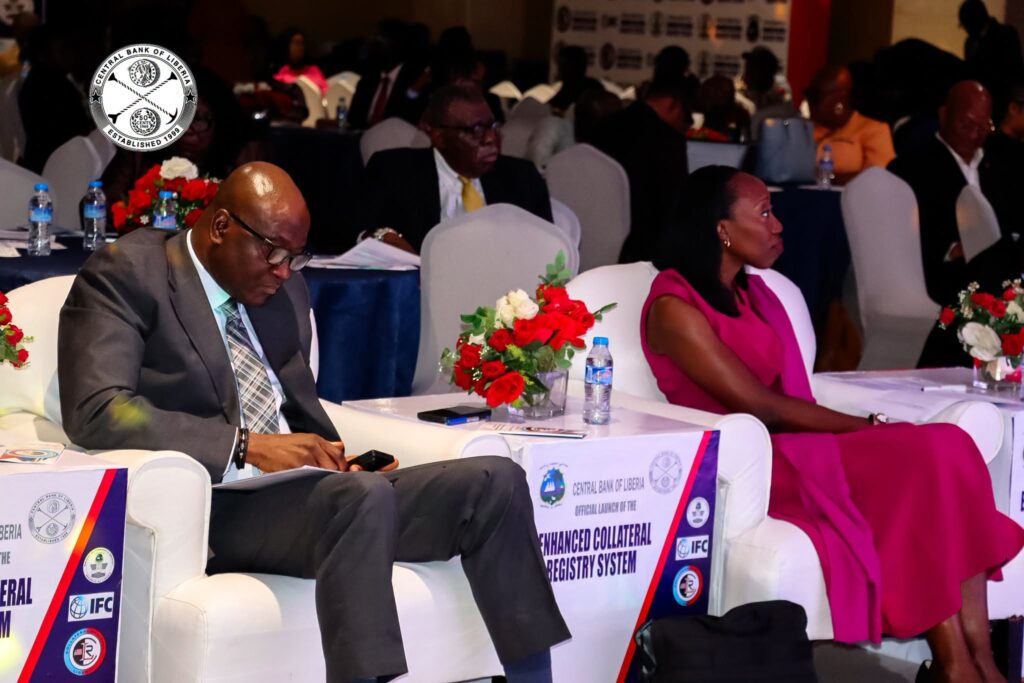
The CBL also said the enhanced registry will operate alongside modernization of Liberia’s Credit Reference System, which is expected to provide real-time credit information and strengthen lenders’ ability to assess borrowers.
The launch concluded with Saamoi formally declaring the Enhanced Collateral Registry System of the Republic of Liberia “officially launched and open for business” pursuant to CBL Regulation No. CBL/RSD/001/2026.
The CBL and its partners now face the more important task of ensuring that banks, businesses, courts, regulators and other stakeholders actually use the system effectively.
As Saamoi put it: “Today, we launch an enhanced system. Tomorrow, we unlock finance. Finance unlocks enterprise. Enterprise unlocks jobs. And jobs unlock hope.”
For breaking news, in-depth analysis, and exclusive reports from Liberia and around the world, follow The Liberian Post on Facebook (https://web.facebook.com/profile.php?id=61576017166570) and X, formerly twitter (https://x.com/LiberianPost).