-Finance Minister Says Domestic Revenue, Better Spending and Private Investment Are Critical as External Aid Shrinks
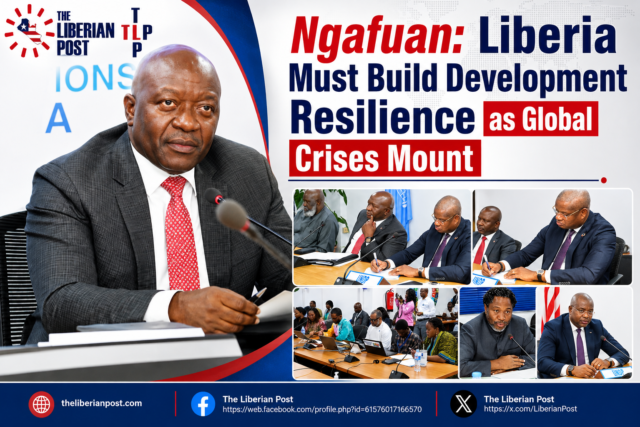
MONROVIA, Liberia — Finance and Development Planning Minister Augustine Kpehe Ngafuan has called for a fundamental shift in Liberia’s development strategy, urging the country to strengthen domestic financing, improve public spending and build institutions capable of withstanding global economic and environmental shocks.
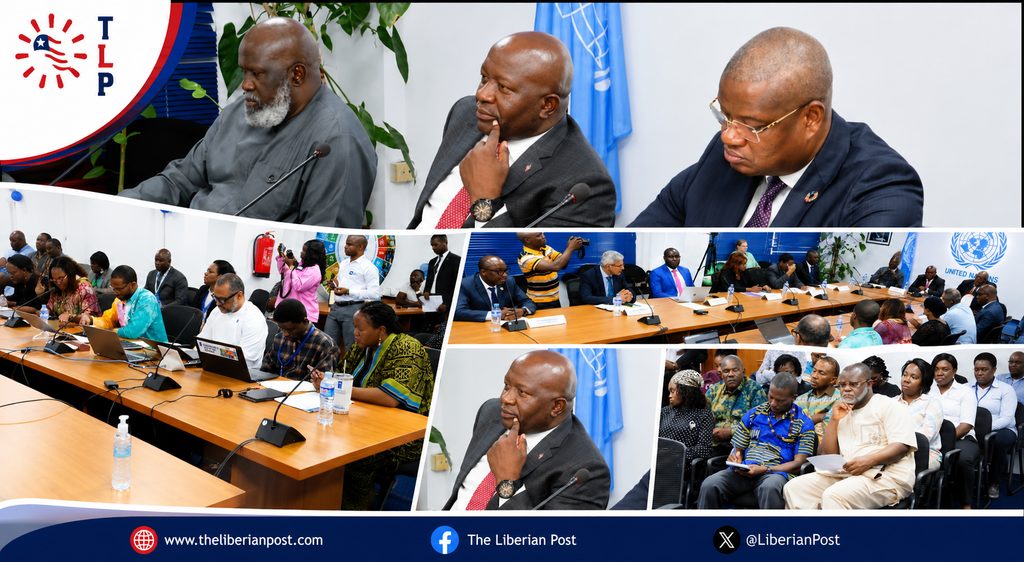
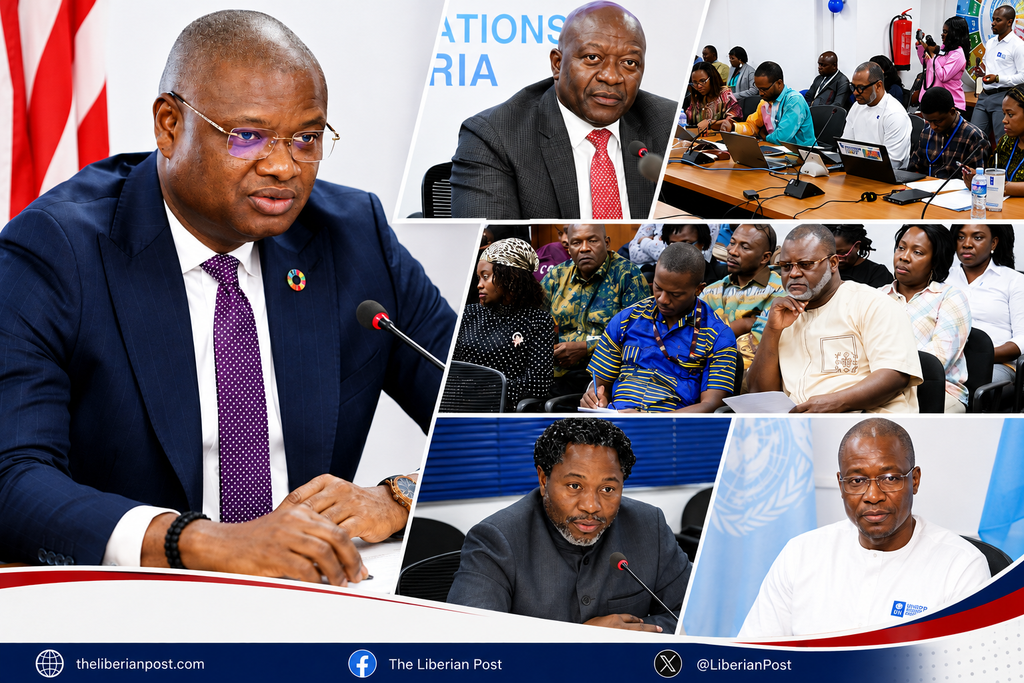
Speaking Thursday, September 3, at a UNDP High-Level Development Dialogue under the theme “Navigating Development in a World of Crises: Resilience, Equity, and Planetary Stewardship,” Ngafuan said Liberia could no longer afford to design its development plans on the assumption that external assistance would always be available.
He pointed to conflicts, economic uncertainty, climate shocks, disruptions in global supply chains, rising food and energy prices, and declining development assistance as evidence of an increasingly unpredictable global environment.
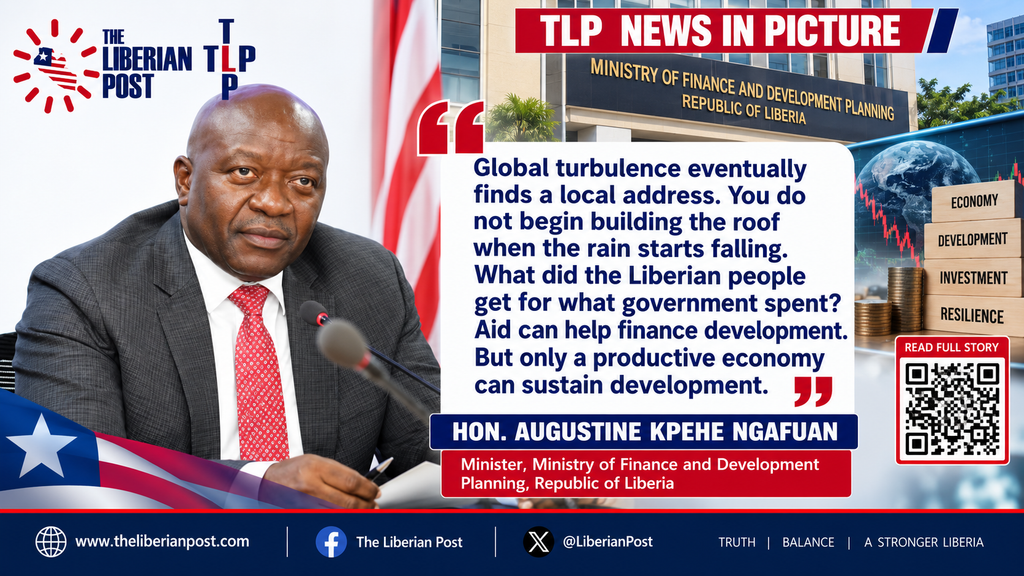
“Global turbulence eventually finds a local address,” Ngafuan warned, stressing that Liberia must prepare for crises before they reach its shores.
According to the Finance Minister, resilience cannot be improvised after a crisis has already begun. It must be built into the country’s institutions, infrastructure and economic systems during periods of relative stability.
“You do not begin building the roof when the rain starts falling,” he said, arguing for sustained investment in roads, electricity, agriculture, education, healthcare, public financial management and economic diversification.
Revenue Mobilization As Development Sovereignty
Ngafuan placed particular emphasis on domestic resource mobilization, describing it as a form of “development sovereignty” at a time when traditional sources of development financing are becoming increasingly constrained.
Liberia is on course to cross the historic US$1 billion domestic revenue mark in September, a milestone the minister said demonstrates the government’s growing capacity to finance national priorities from its own resources.
But he cautioned that increasing revenue collection cannot be treated as an end in itself.
The more important question, he said, is whether citizens can see tangible results from the resources government collects and spends.
“What did the Liberian people get for what government spent?” Ngafuan asked, framing public value, accountability and service delivery as central measures of development success.
He said Liberia must continue mobilizing domestic revenue while also attracting concessional financing, private capital and development resources from institutions such as the World Bank and African Development Bank.
“Aid can help finance development. But only a productive economy can sustain development,” he declared.
Development Must Reach Ordinary Liberians
Ngafuan also stressed that economic growth and development must translate into improved lives for ordinary citizens.
He warned that economic shocks disproportionately affect vulnerable households and said development policies must deliberately reach farmers, market women, fishermen, rubber farmers, young entrepreneurs and mothers.
“Development must have a human face,” he said.
The minister also highlighted Liberia’s youthful population, describing young people as either a potential source of frustration or a major demographic dividend, depending on whether the economy can provide meaningful opportunities.
Environment as an Economic Asset
Ngafuan further linked Liberia’s development ambitions to environmental sustainability, arguing that the country’s forests, minerals, coastline, cities and energy resources must be managed in ways that generate economic benefits without compromising the future.
“We are not owners of Liberia only for ourselves. We are trustees for Liberians yet unborn,” he said.
He said environmental stewardship should therefore be viewed not simply as a conservation obligation but as part of Liberia’s long-term economic strategy.
The Finance Minister also identified trust as a critical ingredient in development, pointing to transparency, accountability, procurement reform, sound public financial management and anti-corruption efforts as essential to building public confidence.
“Trust is also development capital,” Ngafuan said.
He concluded by urging Liberia not to lower its development ambitions because of the turbulence confronting the global economy.
“The turbulence around us should not cause Liberia to lower its development ambitions. It should cause us to strengthen the foundations beneath those ambitions.”
For breaking news, in-depth analysis, and exclusive reports from Liberia and around the world, follow The Liberian Post on Facebook (https://web.facebook.com/profile.php?id=61576017166570) and X, formerly Twitter (https://x.com/LiberianPost).