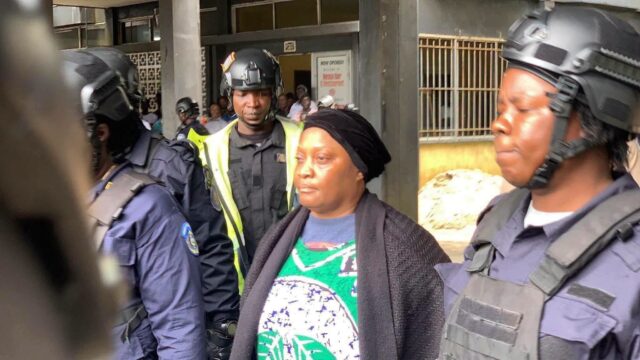
-Criminal Court “C” Orders Strict Home Detention, 24-Hour Security and Medical Monitoring While Her Criminal Case Continues
MONROVIA, Liberia — Criminal Court “C” at the Temple of Justice has granted a request for compassionate medical release filed on behalf of former Vice President Jewel Howard-Taylor, ordering that she be released from the Monrovia Central Prison and placed under strict home detention while her criminal proceedings continue.
The ruling was handed down Friday by Judge Ousman F. Feika, Assigned Circuit Judge of Criminal Court “C,” on medical grounds and pursuant to Chapter 34, Section 34.20 of Liberia’s Criminal Procedure Law.
The law provides for compassionate leave from prison in circumstances that strongly appeal to compassion, including where a prisoner needs to return home because of a serious illness.
Under Judge Feika’s order, however, Howard-Taylor’s release is far from unconditional.
She is to remain detained at her residence on Tubman Boulevard in Sinkor, Monrovia, pending the conclusion or termination of the criminal proceedings against her.

Strict Conditions Imposed
Immediately upon her release from the Monrovia Central Prison, Howard-Taylor must surrender all travel documents in her possession to the Sheriff of the Court.
The court has also ordered that one caregiver, preferably a close relative or family member, reside with her and provide daily care.
The caregiver arrangement cannot be changed at will. Any substitution or alternation of caregivers must first receive approval from the court.
The court has further imposed strict controls over access to the residence.
Howard-Taylor’s physician will be permitted to enter the residence for medical appointments, while other visitors will be permitted only under a visitation schedule to be developed and enforced by the Respondent.
According to the ruling, the visitation system should mirror, as far as practicable, the arrangement used by the Bureau of Corrections at the Monrovia Central Prison, with the objective of controlling visitors and maintaining security at the residence.
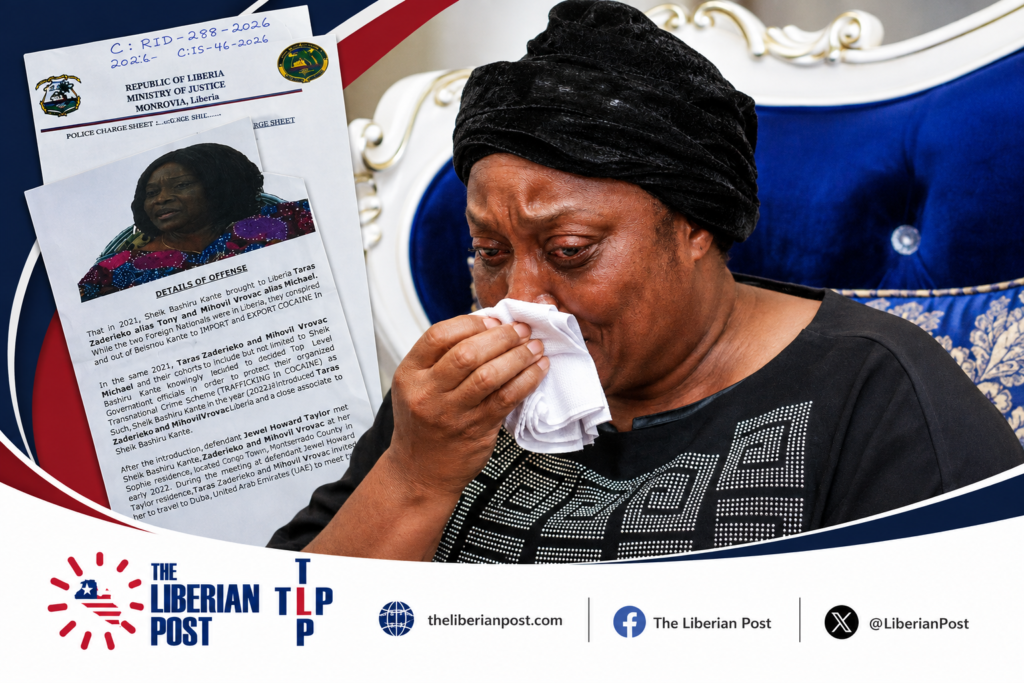
Movement Restricted
The former vice president will not have unrestricted freedom to leave her residence.
The order provides that she may leave the designated residence only pursuant to a court order or for a hospital appointment or other medical visit.
Any such movement must be communicated in a timely manner to the court and the Respondent and must receive the court’s approval.
The Respondent is also required to provide 24-hour security or police protection at the residence and maintain a complete record of all visitors, including their telephone numbers and addresses.
The court further ordered that Howard-Taylor be regularly assessed by her physician and/or physicians appointed by the court.
If the court determines that her medical condition has appreciably improved, the order allows for her return to the Monrovia Central Prison, where other persons similarly situated are detained.

Release Does Not End Criminal Case
Judge Feika made clear that the compassionate medical release is based strictly on medical considerations and does not resolve the criminal case against Howard-Taylor.
The order expressly states that the release does not constitute an acquittal, pardon, immunity or termination of the criminal proceedings.
The court also warned that violation of any of the conditions imposed could result in the revocation of the compassionate-release order in its entirety.
The order was signed and issued under the hand and seal of the court on September 4, 2026.

Decision Follows Earlier Detention Dispute
The ruling marks a significant development in Howard-Taylor’s detention battle.
On August 25, the Monrovia City Court rejected an earlier request by Howard-Taylor’s lawyers for compassionate detention at a medical facility and ordered her remanded at the Monrovia Central Prison. The Judiciary publicly reported that decision.
Her defense subsequently challenged the detention decision, while her health became an increasingly prominent issue in proceedings surrounding her case.
Earlier this week, her lawyers also sought access to her medical records and an independent medical evaluation, citing her health condition as they prepared for preliminary proceedings.
Howard-Taylor is facing multiple criminal allegations arising from the government’s ongoing narcotics investigation, including allegations involving drug trafficking, conspiracy, facilitation, solicitation and money laundering. She has denied the allegations, and they remain matters for determination through the judicial process.
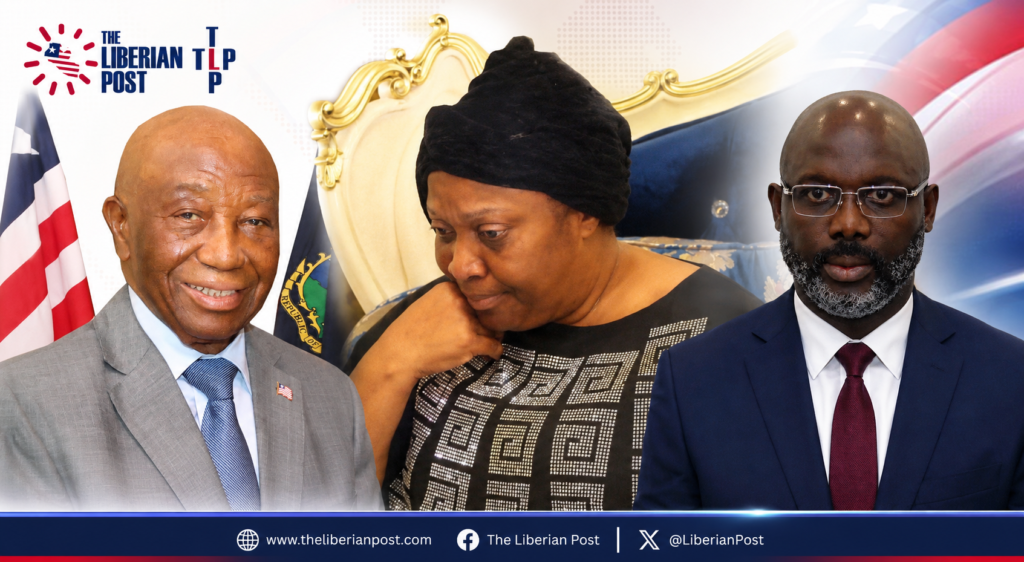
The case has attracted heightened national attention because of Howard-Taylor’s former position as Liberia’s vice president and the broader political debate surrounding the government’s campaign against alleged drug trafficking and financial crimes.
The latest ruling, however, does not determine her guilt or innocence.
Instead, it creates a tightly controlled alternative to incarceration while allowing the criminal proceedings against her to continue.
For the court, the message is clear: medical compassion does not amount to legal exoneration.
For Howard-Taylor, the ruling provides relief from prison confinement while subjecting her to strict judicial supervision, security controls and continuing medical evaluation.
The order therefore changes where Howard-Taylor will be detained—but not the legal status of the case against her.
For breaking news, in-depth analysis, and exclusive reports from Liberia and around the world, follow The Liberian Post on Facebook (https://web.facebook.com/profile.php?id=61576017166570) and X, formerly Twitter (https://x.com/LiberianPost).