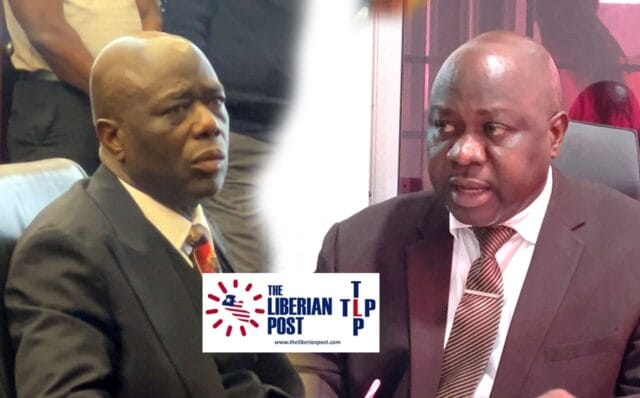
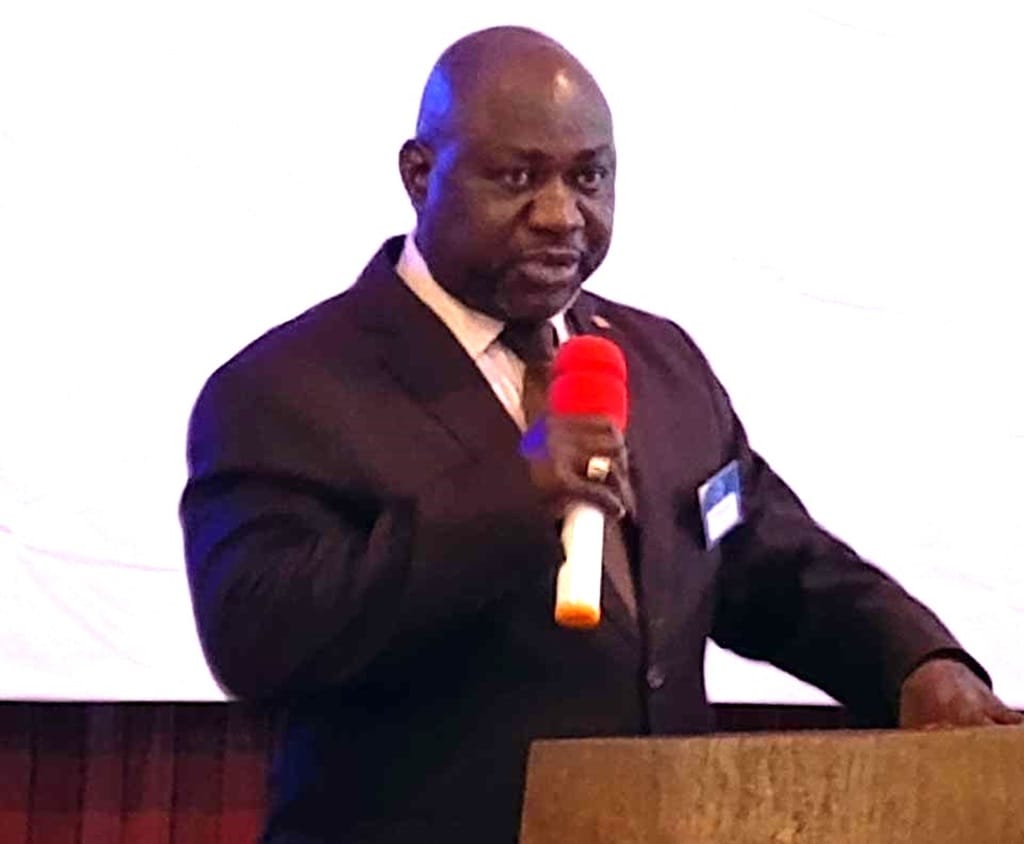
MONROVIA – The Chief Justice-designate of the Supreme Court of Liberia, Yamie Quiqui Gbeisay, has called for a review of the 1986 Liberia Constitution to suit current realities and happenings in the Republic of Liberia.
The Chief Justice-designate, who is presently one of the Associate Justices at the Supreme Court, was on June 30th, 2025 nominated to the position by President Joseph Nyuma Boakai.
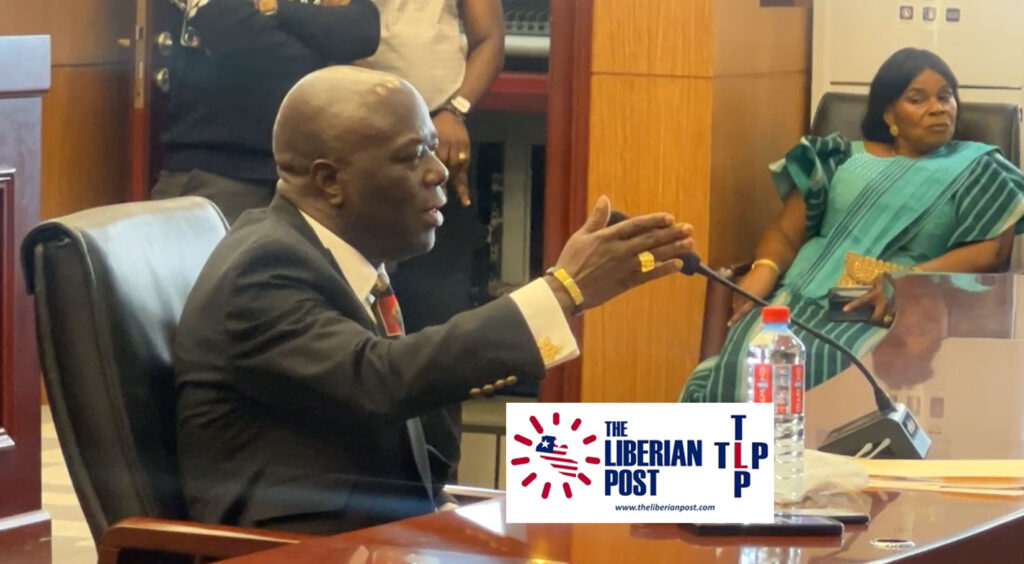
Speaking when he appeared for confirmation hearing before the Senate Committee on Judiciary, Human Rights, Claims and Petition on Monday, July 14, Associate Justice Gbeisay maintained that the Constitution must be reviewed to ensure that it is in conformity with present day realities.
He noted that delay over the revision of the Liberia Constitution now constrains the court to render its opinions in line with the intent of the framers of the 1986 Constitution.
He stated that no ruling from the court should go contrary to the intent of the framers of the constitution in the absence of it (constitution) review process.
Justice Gbeisay maintained that there is an “immediate need” for the revision of that sacred document.
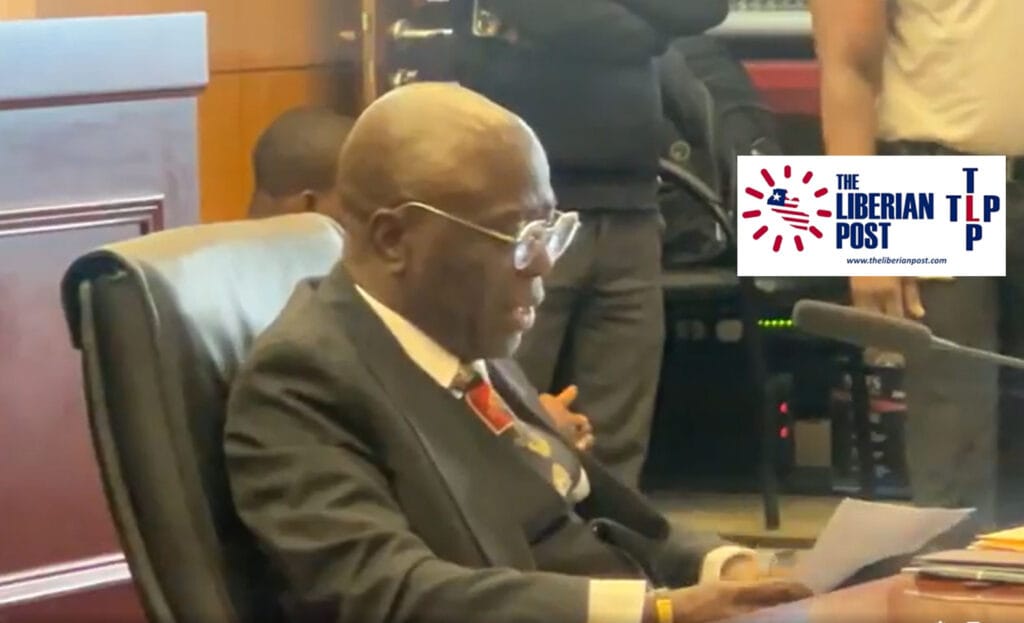
“We should go back to the constitution; identify those issues that are not in conformity with contemporary realities; find out those issues and address them.”
Law Reform Commission Chair Re-echoes Calls for Constitutional Reform
It can be recalled Cllr. Boakai N. Kanneh, the chairman of the Law Reform Commission, has been advocating for the rewriting of the 1986 Liberia Constitution, emphasizing the need for constitutional reform to promote reconciliation, political dialogue, and peace consolidation in Liberia.
His proposal, discussed in a radio program, entails creating Article 92(b) to facilitate the rewriting of the constitution, a process that would require a referendum if there is a political will to proceed.
“The writing of a new constitution will provide a unique opportunity to advance reconciliation, political dialogue, and peace consolidation,” Kanneh said in September 2024 during radio simulcast on Prime FM and OK FM, on a program of the Liberian Election Observer Network (LEON). “Article 92 (b) will only be rewriting of the constitution because in the constitution there is no framework for constitutional amendments which reference the rewriting of the constitution.”
If there is a political will, he noted, the process could be done through referendum.
Kanneh, who is the Chair of the Law Reform Commission, is also an Assistant Professor of Law at the Louis Arthur Grimes School of Law at the University of Liberia.
The call for constitutional reform stems from concerns about the continuous violation of Article 80 of the constitution, which addresses setting a population-based threshold, among other issues.
Setting a threshold for districts’ seats, he believes, should be based on population growth and movements, and this should be done through a national census instead of the use of a Legislative Joint Resolution.
The push for constitutional revision gained momentum since 2013, with support from various partners, including the UNDP, USAID (erstwhile), EU, and other international donors, following the country’s civil war.
The process of constitutional reform, led by the Constitutional Review Committee (CRC) and supported by the Governance Commission and the Law Reform Commission, started with the focus being on citizen engagement, knowledge building, and sensitization to ensure an inclusive and participatory approach to reforming the constitution.
The process started with the Constitutional Review Committee (CRC) during President Ellen Johnson Sirleaf Administration, where the erstwhile CRC organized and led discussions and debates on the 1986 Liberia Constitution geared toward deriving proposals for amendment, which were submitted to the National Legislature and subsequently presented to the voting population in a referendum for approval.
Accordingly, for over three years during former President Ellen’s administration, the CRC spearheaded the Constitutional Review Process and was assisted by the Governance Commission (GC) and the Law Reform Commission (LRC).
During the process, partners agreed on the need to maintain the momentum by deepening engagements, building knowledge, and sensitizing citizens on the importance of an inclusive and participatory constitutional reform process, recognizing that the constitutional reform process provides a unique opportunity to advance reconciliation, political dialogue, and peace consolidation efforts in Liberia.
This continued up to 2019, with more regional consultations. With the enormous investment made in the Election Law Reform, the process began to yield fruits, as the National Legislature approved some of the proposed amendments.
Proposed amendments included changes to election timings, terms of office for elected officials, and citizenship laws, among others. Some of the wildly supported proposed constitutional provisions were: elections to be conducted on the Second Tuesday in November instead of the Second Tuesday in October; reduction in the time allotted for the hearing of complaints coming from general elections from 30 days to 15; reduction in the tenure of the President from six years to five years; reduction in the term for senators from nine years to seven years; reduction in the term of Representatives from six to five years and at least one of whose parents was a citizen at the time of the person’s birth shall be a natural-born citizen of Liberia. Such person does not have to reach the age of maturity to decide his/her citizenship. Also, a natural-born citizen of Liberia may hold another citizenship, but shall not qualify for elected national or public service positions and appointed positions; among others.
These amendments were aimed to streamline electoral processes, reduce terms of political officeholders, and clarify citizenship requirements. The objective of this process was to strengthen governance, promote democratic principles, and foster peacebuilding efforts in Liberia.
Now that the Chief Justice-designate Yamie Quiqui Gbeisay has added his voice to review and subsequent rewriting of the 1986 Constitution, political pundits are of the view that the relevant authorities will begin to look into this direction for Liberia to move in the right direction as far as its constitution is concerned in conforming to present day realities.