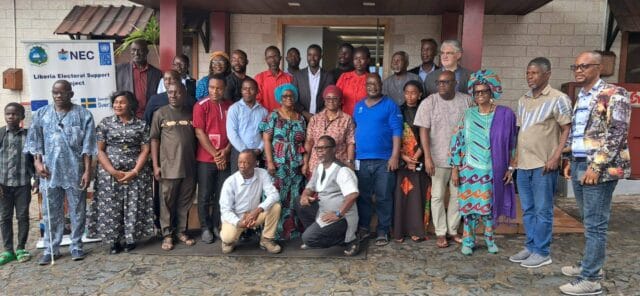
MONROVIA – The National Elections Commission (NEC) has successfully concluded a three-day Civil Society Workshop on electoral boundary delimitation, a key step toward Liberia’s long-anticipated review of legislative constituencies.
Held from October 1–3, 2025, the workshop brought together 22 representatives from civil society organizations, alongside experts in electoral systems, to discuss Liberia’s historical, legal, and data-driven frameworks for boundary adjustments. Participants also examined international best practices, with case studies from Papua New Guinea, Ghana, and Nigeria, highlighting how other nations ensure fair representation.
In her opening remarks, NEC Chairperson Davidetta Browne-Lansanah emphasized transparency, inclusiveness, and active civil society participation. “Boundary delimitation is often misunderstood, which can generate resistance,” she noted. “A transparent and inclusive process builds public trust and strengthens democratic governance.”
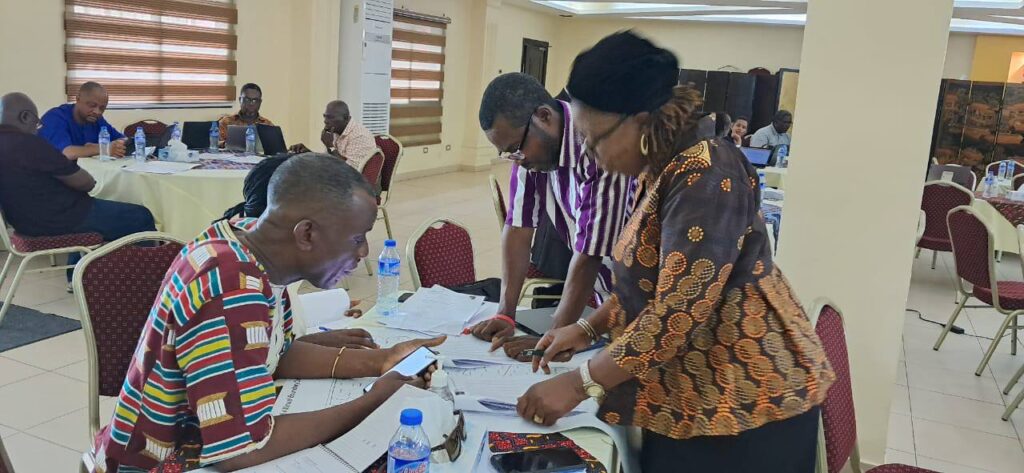
The workshop, supported by the UNDP Liberia Electoral Support Project with funding from the European Union, Irish Aid, and Sweden, featured technical sessions on delimitation principles, methodologies, and anticipated challenges. Participants engaged in simulations, group exercises, and dynamic discussions to identify Liberia-specific obstacles, including overlapping administrative boundaries and census inconsistencies.
Roosevelt Zayzay, Programme Officer for the UNDP Liberia Electoral Support Project, stressed the critical role of civil society and the media in promoting civic education, advocacy, and public awareness throughout the delimitation process.
The initiative builds on prior NEC technical sessions conducted from September 17–24, where over 25 NEC leaders reviewed historical apportionment and explored pathways for fair representation. Outcomes emphasized impartiality, robust stakeholder engagement, and stronger institutional coordination.
This workshop signals Liberia’s commitment to a credible, participatory, and transparent electoral boundary review, laying the groundwork for a more inclusive democratic process and ensuring that all citizens’ voices are accounted for in shaping legislative representation.