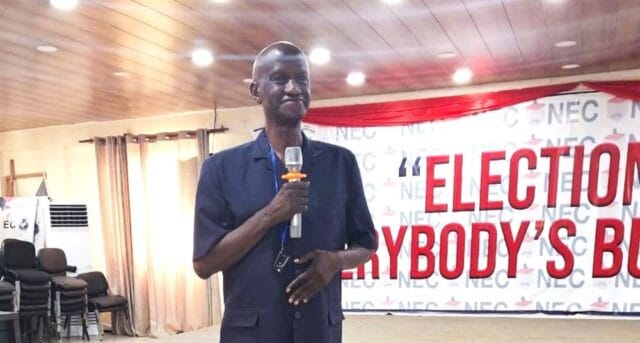
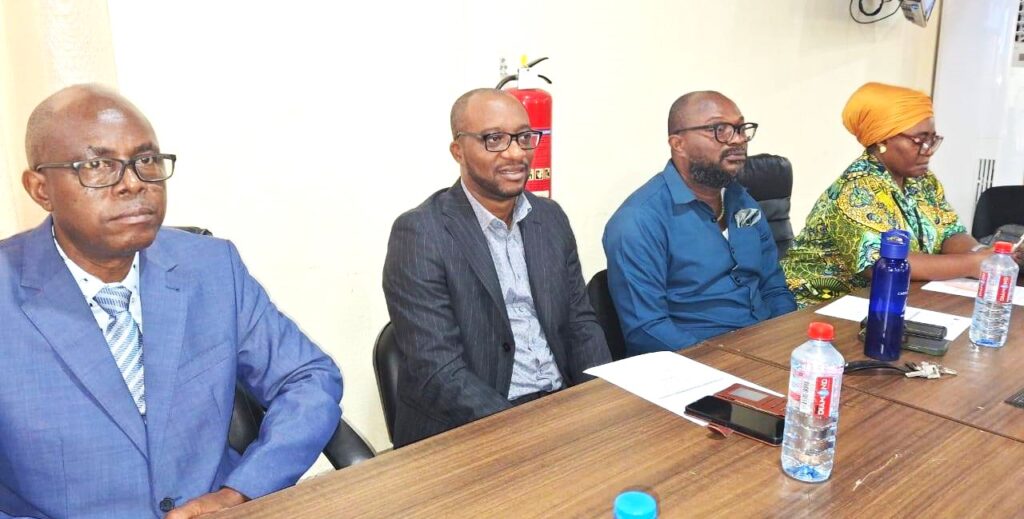
MONROVIA – In step with the digital transformation reshaping governance, NEC-Liberia has taken a bold step to integrate Artificial Intelligence (AI) into the country’s electoral process. To kickstart this initiative, the NEC Board of Commissioners (BOC) and senior managers began an AI Capacity-Building Workshop on Tuesday, October 7, 2025, at the Commission’s headquarters on 9th Street, Sinkor.
The session is led by an interdisciplinary team from the Data Center, Information Technology, Monitoring & Evaluation, and Communications Sections, in collaboration with the Administration Department.

Speaking at the opening, Commissioner Boakai A. Dukuly, on behalf of the BOC, welcomed the move to integrate AI into elections and urged NEC leaders to champion this innovation in electoral management.
What is Artificial Intelligence? Artificial Intelligence (AI) refers to computer systems capable of performing tasks that typically require human intelligence, including recognizing speech, making decisions, solving problems, and identifying patterns. AI encompasses technologies such as machine learning, deep learning, and natural language processing (NLP).
Key Principles of AI
- Machine Learning: training algorithms on data to create models that can make recommendations, identify patterns, and predict outcomes.
- Deep Learning: a subset of machine learning using neural networks with many layers.
- Natural Language Processing (NLP): enables machines to understand and respond to human language.
Types of AI
- Reactive Machines: the most basic type, able to react to current scenarios without memory of past events.
- Limited Memory Machines: can use past experiences to inform future decisions (e.g., some self-driving cars).
- Theory of Mind Machines: would understand emotions and social interactions (still largely theoretical).
- Self-Aware Machines: the most advanced form, possessing consciousness (still theoretical).
Applications of AI AI is already prevalent across industries, enhancing efficiency and enabling new capabilities.