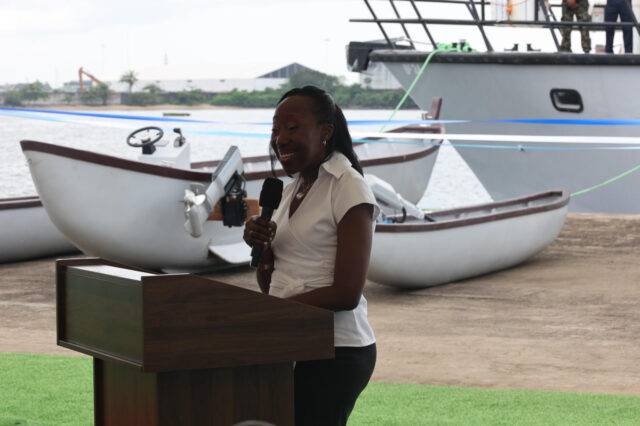
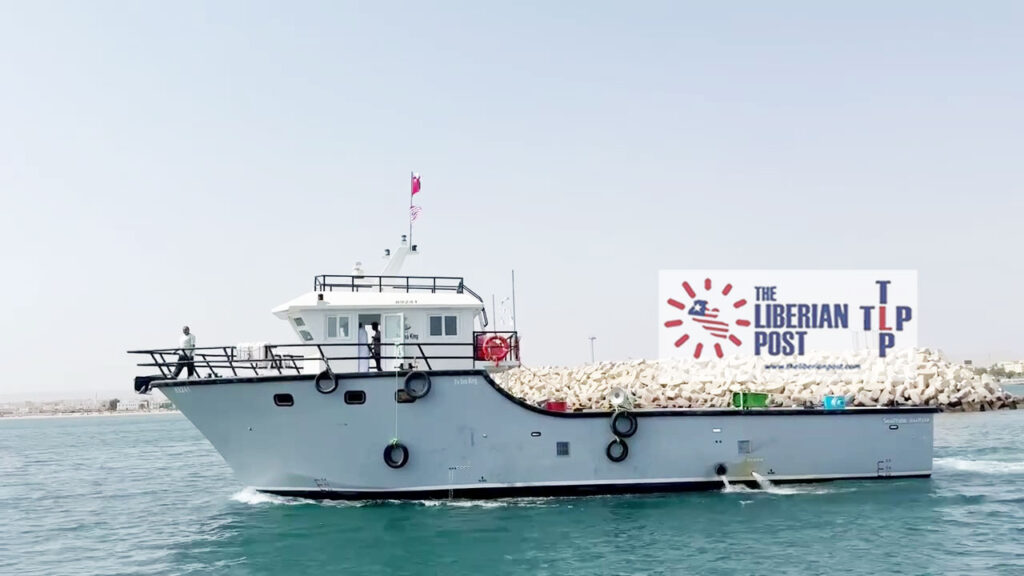
MONROVIA, Liberia – World Bank Liberia Country Manager Georgia Wallen says the commissioning of Liberia’s first semi‑industrial fiberglass fishing vessel, the Sea King, is “far more than the launch of a vessel,” describing it as a strategic step in the Boakai administration’s drive to transform the fisheries sector into a major source of jobs, food security, and private investment.
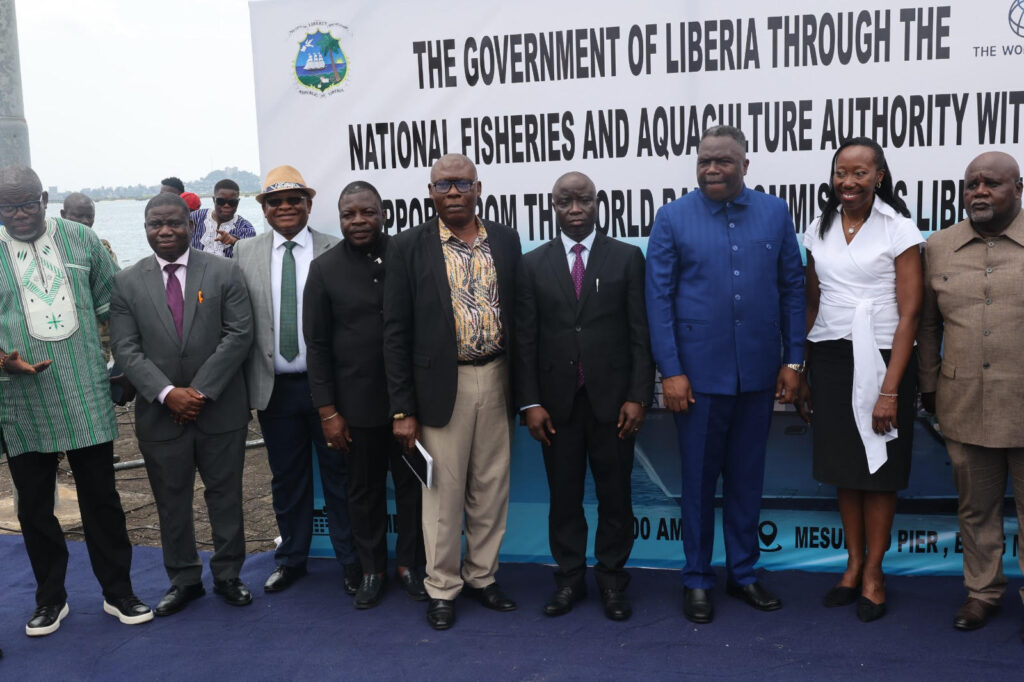
Speaking Monday at the Mesurado Pier on Bushrod Island, where Vice President Jeremiah Kpan Koung officially commissioned the Sea King, Wallen said the new vessel is directly aligned with the government’s ARREST Agenda for Inclusive Development (AAID).
“This is far more than the launch of a vessel. It signals a broader step in the economic transformation ambition that is at the heart of the ARREST Agenda,” she said. “Liberia aims to develop a thriving, investment‑ready fisheries sector that can deliver jobs, innovation, and partnerships with the private sector.”
“A National Asset of Liberia”
Wallen described the Sea King as a “national asset of Liberia” made possible through the strong partnership between the Government and the World Bank under the Sustainable Management of Fisheries Project.
“We are delighted that it has been made possible through the strong partnership between the Government of Liberia and the World Bank,” she noted. “It reflects our shared focus on building a modern, well‑regulated, and inclusive industry.”
She emphasized that the vessel builds on earlier World Bank–supported investments in artisanal fishing and in NAFAA’s institutional capacity, and now marks “an important step in developing Liberia’s semi‑industrial segment.”
Crucially, she cautioned, this growth must complement, not displace, small‑scale fishers.
“This progress must move in full harmony with artisanal fishers and coastal communities, which will always be the backbone of the coastal economy,” Wallen said.
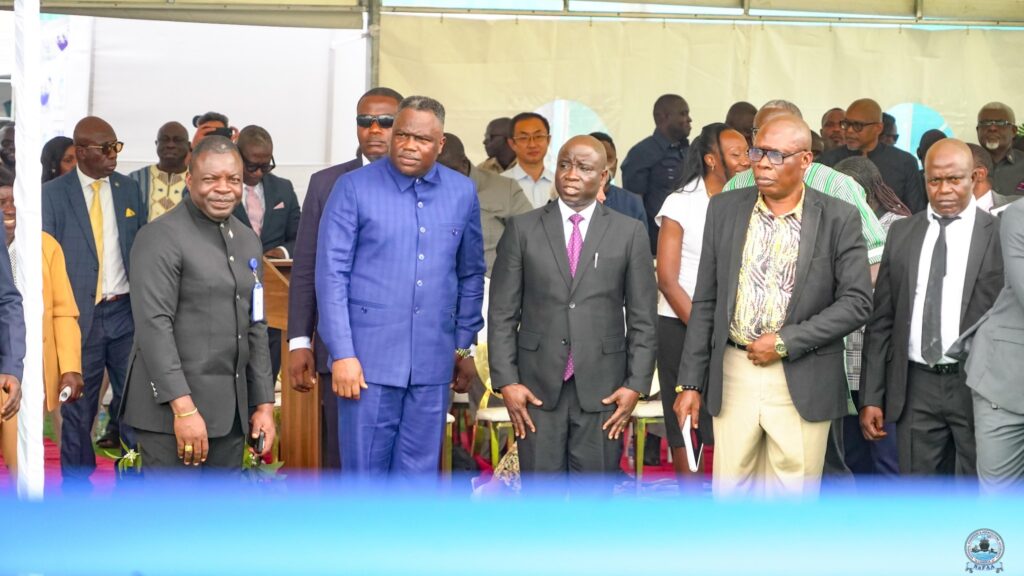
Vision: From Food Security to Regional Exports
Wallen framed the Sea King as part of a longer‑term vision for a “thriving fisheries sector” in which safe, profitable artisanal fishing is complemented by responsible semi‑industrial operations.
“Both have a role in helping Liberians to harness the country’s immense marine resources in a sustainable manner,” she said.
She argued that Liberia’s fisheries have “much more potential” to:
- Increase domestic food security, and
- Nurture an export industry “that can help feed the region, the Continent, and the world.”
Four Keys to Unlocking Liberia’s Fisheries Potential
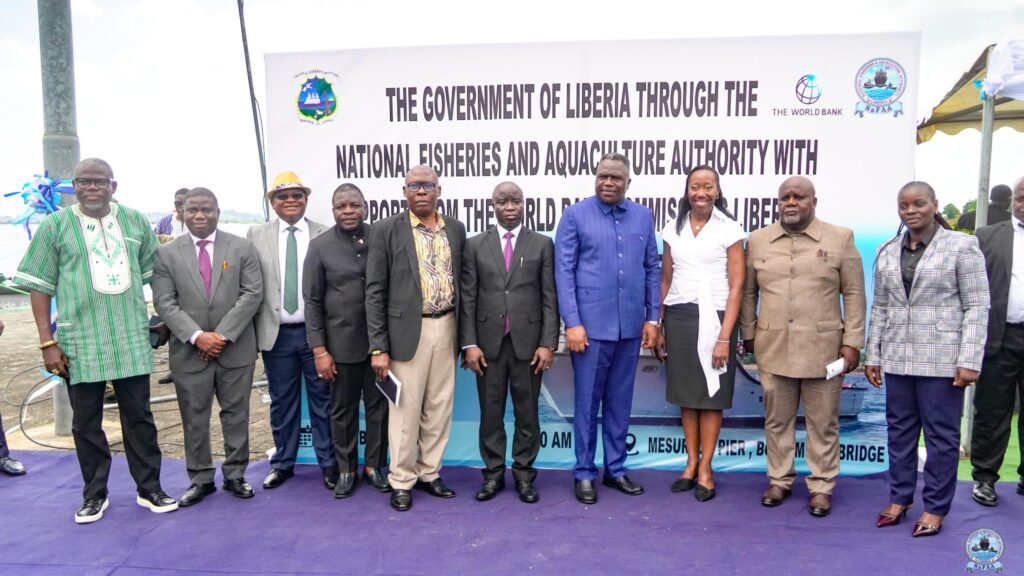
The World Bank Country Manager outlined four priority areas she believes are essential for Liberia to realize its ambitious fisheries vision:
- Sustained Investment in People and Infrastructure
- Continued investment in infrastructure, innovation and skills to empower fishers—“especially women and youth”—to benefit from job opportunities and fully participate in what she termed “Liberia’s Blue Transformation.”
- Strengthening NAFAA’s Institutional CapacityOngoing support to the National Fisheries and Aquaculture Authority (NAFAA) to ensure effective monitoring and surveillance, safety at sea for artisanal and industrial vessels, and data‑driven management.
- “The goal is to ensure accountability, data‑driven management, and responsible fisheries management through the enforcement of fair, even‑handed regulations,” she said.
- Inclusive Stakeholder EngagementA strong commitment to transparent and participatory decision‑making, bringing together government, artisanal fishers, the private sector, coastal communities and development partners.
- “This will bring together the Government, artisanal fishers, the private sector, coastal communities, and development partners for decision‑making that is transparent, participatory, and grounded in local realities,” Wallen noted.
- Partnerships Linking Artisanal and Commercial OperatorsPromoting partnerships that connect private commercial operators with artisanal fishers through shared infrastructure, value‑chain development and skills transfer.
- “NAFAA plays an essential role in ensuring that private investment can drive economic growth to create jobs, opportunity, and a path to shared prosperity,” she added.
Praise for NaFAA and Development Partners
Wallen used the occasion to commend NAFAA’s leadership and technical teams for their “longstanding dedication” and the concrete results already visible in the sector.
“Your efforts demonstrate what is possible when government, communities, and development partners come together around a shared vision,” she said.
She also thanked the World Bank’s own fisheries project team and Liberia’s broader development‑partner community “for their commitment to Liberia’s success in the fisheries sector.”
As Vice President Koung announced reductions in canoe license fees and appealed for further support to build a dedicated fishing port and modern landing sites, Wallen signaled that the World Bank sees the Sea King not as an end, but as a beginning.
“Hearty congratulations to the people of Liberia on this new national asset, the Sea King,” she concluded. “We join you in celebrating this important milestone.” With the Sea King now in operation and new policy measures announced, the Government of Liberia and the World Bank say they hope to turn Liberia’s long underused marine resources into a pillar of inclusive growth, anchored in coastal communities but reaching markets far beyond the country’s shores.