By Daniel Henry Smith, PhD
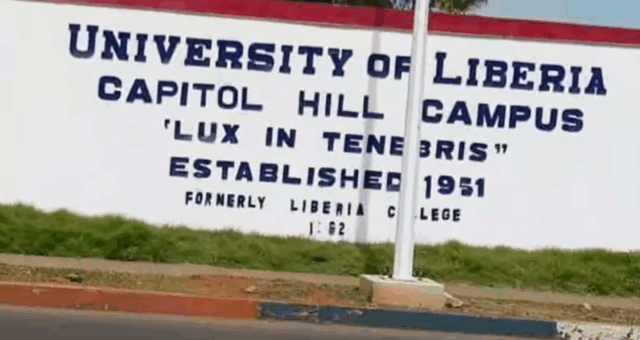
The University of Liberia (UL), affectionately known as “Lux in Tenebris” or “Light in Darkness,” stands as the nation’s oldest and most prestigious institution of higher learning. For generations, it has been the crucible where Liberia’s future leaders, thinkers, and innovators are forged. However, running parallel to its esteemed history is a persistent and corrosive narrative—a myth that has taken root in the corridors of the university and spread into the national discourse. This is the myth of the undermined president, a convenient cliché that suggests any leader facing challenges at the UL is a victim of a deep-seated institutional culture of sabotage, driven by prejudice against their political affiliation, religion, gender, or origin.
This narrative is not just a rumor; it has become a powerful political tool. When presidents of the UL begin to falter, when their policies fail to gain traction, and when their leadership is met with resistance, they often take cover under this very myth. They paint themselves as martyrs, beleaguered by forces beyond their control, rather than as executives accountable for their own administrative failures. The public, often lacking a nuanced, internal perspective, is led to believe that the university is inherently ungovernable and that its faculty, staff, and students are perpetually conspiring against progress. It is time to dissect and debunk this myth, for its perpetuation does a grave disservice to the UL community and obscures the real issues of leadership, vision, and governance that truly determine a president’s success or failure.
The genesis of this modern-day myth can be traced through several presidencies, each offering a case study in how personal identity has been weaponized to deflect from professional shortcomings. One of the most potent examples is the tenure of Dr. Ben Roberts, appointed during the presidency of Charles Taylor. When Dr. Roberts faced significant turmoil, the prevailing speculation, amplified on the national stage, was that he was being undermined because of his affiliation with Taylor’s rebel faction, the National Patriotic Front of Liberia (NPFL). He was cast as an outsider being rejected by an entrenched academic establishment.
However, this narrative conveniently ignored the prevailing circumstances at the university—many of which were the direct result of Dr. Roberts’ own decisions. Far from being a passive victim, Dr. Roberts actively yielded to the political pressures of the executive mansion. He implemented a directive from President Taylor to ban all student political activity on campus, a move that struck at the very heart of the university’s role as a center for free thought and critical debate. Under his watch, the campuses of the University of Liberia were subjected to consistent and intimidating surveillance by state security forces. The atmosphere of academic freedom was replaced by one of fear.
Campuses were effectively militarized, with the frequent and menacing presence of the Anti-Terrorist Unit (ATU), the Special Operations Division (SOD), and NPFL militias. These groups did not come to protect; they came to intimidate, threaten, and ultimately arrest student leaders who dared to challenge the status quo. This direct interference by state security, sanctioned by the university’s administration, led to the forced exile of numerous student leaders, including the chairman of the Student Unification Party (SUP), who were relentlessly hunted by security personnel. The “undermining” Dr. Roberts faced was not a conspiracy rooted in his political past; it was a direct and predictable reaction to policies that suffocated intellectual life and endangered students.
The legacy of Dr. Roberts’ tenure becomes even clearer when contrasted with that of a predecessor, the venerable Dr. Mary Antoinette Brown-Sherman. She, too, faced immense pressure from an autocratic head of state, President Samuel K. Doe, who desired to militarize the UL campus and suppress dissent. Yet, her response was starkly different. Dr. Brown Sherman staunchly rejected President Doe’s demands, fiercely advocating for the academic freedom and intellectual independence of the university. She understood that a university ceases to be a university if its students and faculty cannot debate national policies and critique government actions without fear of reprisal. Her principled stand solidified her place as a bastion of academic integrity.
Dr. Roberts, on the other hand, chose compliance over courage. His troubles were not born of prejudice but of policy. He chose to align the university’s administration with the state’s security apparatus, effectively transforming a sanctuary of learning into a frontier of political repression. The resistance he encountered was a consequence of his failure to protect the institution and its core values. To frame this as “being undermined” is to fundamentally misunderstand the nature of leadership and accountability. The UL community was not undermining a president; it was resisting an oppressive regime that had co-opted its leadership.
Years later, the myth of undermining would resurface, this time cloaked in the garb of religious intolerance, during the presidency of Dr. Al-Hassan Conteh. When Dr. Conteh’s administration began to face significant challenges, a new rumor circulated: he was being undermined because he was a Muslim president who had allowed Muslim students to pray openly in the university’s main square. This narrative was potent, tapping into delicate socio-religious sensitivities. Dr. Conteh himself took cover under this cliché, successfully convincing President Ellen Johnson Sirleaf’s administration that a powerful anti-Islamic sentiment at the UL was working against him.
Once again, the myth served as a smokescreen, obscuring the tangible, administrative failures that were the true source of his troubles. The core of the crisis facing the Conteh administration was the disastrous implementation of a new trimester academic system. A vision of this magnitude required immense planning, widespread consultation, and, crucially, significant funding. Dr. Conteh failed on all fronts. He was unable to rally the university community—from faculty to students—around his vision, leading to confusion and resistance. More critically, he failed to raise the necessary funds to support the ambitious program.
The result was a university in chaos. While Dr. Conteh assured President Sirleaf that a trimester system was running, the reality on the ground was that the UL was struggling to complete even a single semester per year. The promised academic acceleration was a fiction. Compounding this policy failure was a severe financial crisis, with faculty and staff salaries being paid erratically and often falling months in arrears. The persistent deception of the nation’s president about the state of the university, coupled with the functional collapse of his signature policy, was the cancerous nemesis of the Conteh regime. His troubles had absolutely nothing to do with his religious background or the sight of students praying. They had everything to do with failed policies, poor financial management, and a breakdown of trust with the very community he was meant to lead. The “undermining” was a fiction; the failure was a fact.
If the tenures of Dr. Roberts and Dr. Conteh demonstrate how the myth of undermining is used to excuse failure, the presidency of Dr. Emmet A. Dennis provides the perfect counter-narrative, proving that effective leadership can transcend identity-based prejudices. When Dr. Dennis was appointed, the rumor mill was already churning. The narrative was pre-written: as an alumnus of Cuttington University, a rival institution, he was an outsider who would inevitably be undermined by the fiercely loyal UL alumni and faculty. The stage was set for another chapter of the same old story.

But the myth never materialized. The predicted wave of undermining never crested. Why? The answer lies entirely in Dr. Dennis’s leadership style. He did not arrive with an autocratic agenda or a victim’s mindset. Instead, he immediately set about building bridges. He understood that leadership at a complex institution like the University of Liberia required collaboration, not command. His approach was marked by collective leadership and consultative decision-making. He actively sought out the opinions of faculty, engaged with student leaders, and worked to win over both friends and perceived foes.
Dr. Dennis demonstrated that respect is not a birthright of the office but is earned through action. By fostering an environment of inclusivity and shared governance, he disarmed the very premise of the undermining myth. There was no “us versus them” dichotomy for detractors to exploit, because he made a concerted effort to create a “we.” His success showed that the UL community is not inherently hostile to its leaders. Rather, it is responsive to the quality of that leadership. When presented with a president who was transparent, consultative, and genuinely invested in the collective good of the institution, the community responded with cooperation and support. His tenure serves as the ultimate debunking of the myth; it proves that when a leader governs effectively, the excuse of being undermined becomes unnecessary and irrelevant. The focus shifts from the president’s identity to the institution’s progress.
This brings us to the present day and the deeply concerning reemergence of this tired myth under the university’s current leadership. Once again, a poisonous speculation is being propagated: that the current president is being undermined, this time because of a combination of patriarchy and her foreign origin. The public is being fed a narrative that she is the best thing that has ever happened to the UL and that any criticism or resistance is rooted in bigotry. This is a dangerous and cynical manipulation of legitimate social issues to shield a leader from accountability.
This contemporary replay of the myth is particularly insidious because it co-opts the language of social justice to stifle legitimate critique. To question the president’s vision is to be labeled a misogynist. To ask for transparency is to be branded a xenophobe. This tactic not only insults the intelligence of the UL community but also trivializes the real struggles against patriarchy and xenophobia. The core question, which the myth is designed to evade, remains: What is the administration’s vision for the University of Liberia?
A university presidency is not a ceremonial role. It requires a clear, strategic vision for academic development, faculty empowerment, infrastructural growth, and financial sustainability. Leadership is demonstrated through coherent policy, successful fundraising, and the ability to inspire a community toward a common goal.
To date, the current leadership has not articulated such a vision. Instead of tangible plans and measurable progress, the public is offered a narrative of victimhood. This is not leadership; it is a public relations strategy designed to preempt scrutiny. The UL community, and the nation at large, should be wary of falling for this old trick. The health of the University of Liberia is too important to be sacrificed at the altar of a convenient myth.
The pattern is undeniable. The narrative of “undermining” is not an objective diagnosis of a problem at the University of Liberia; it is a symptom of failing leadership. It is the last refuge of a president who cannot build consensus, who fails to implement policies effectively, or who lacks a compelling vision for the future. It is a smokescreen designed to obscure a vacuum of competence.
The legacies of Dr. Roberts, Dr. Conteh, and Dr. Dennis, when viewed critically, tell a consistent story. The University of Liberia community—its students, faculty, and staff—is not a monolithic block of saboteurs lying in wait to destroy its leaders. It is a dynamic, intelligent, and often critical body of stakeholders who respond in kind to the leadership they are given. They resisted Dr. Roberts’ militarization of their campus. They grew frustrated with Dr. Conteh’s failed policies and lack of transparency. They collaborated with Dr. Dennis’s consultative and inclusive administration. In each case, the community was not reacting to the identity of the person, but to the actions of the president.
To truly honor the motto “Lux in Tenebris,” we must shine a light on this myth and see it for what it is: a calculated distraction. The future of the University of Liberia depends not on shielding its leaders from criticism by crying “undermined,” but on demanding from them the highest standards of integrity, vision, and performance. The conversation must shift from the president’s personal attributes to their professional accomplishments. Is there a clear academic plan? Are funds being raised and managed responsibly? Is faculty morale high? Are students being prepared for the challenges of the 21st century?
These are the questions that matter. The moment we allow the myth of undermining to dominate the discourse, we lose sight of them. We substitute accountability with sympathy and allow mediocrity to persist. The University of Liberia deserves better. It deserves leaders who are strong enough to stand on their records, not hide behind a shield of imagined persecution. It is time to retire the myth and embrace a new culture of radical transparency and unwavering accountability. Only then can the Light in Darkness truly shine its brightest.