In the fragile tapestry of a post-conflict nation, the words of our leaders—be they political, traditional, or religious—carry immense weight. They have the power to heal divisions and strengthen the rule of law, or to pick at old wounds and unravel the very threads that hold our society together. It is with a profound sense of civic duty and alarm that I must address the recent statement by Chief Imam Ali Kryee regarding the arrest of a Fulani lady accused of power theft. While ostensibly a call for calm, the Imam’s message dangerously frames a standard law enforcement procedure as a flashpoint for religious and ethnic conflict, setting a precedent that threatens the survival of our republic.
The incident in question involves the Liberia Electricity Corporation (LEC), in collaboration with the Liberia National Police (LNP), attempting to arrest an individual for alleged power theft. The suspect, a woman of the Fulani ethnic group and a practicing Muslim, reportedly resisted arrest, leading to a physical altercation that was captured on video. The public discourse that followed has been intense. However, the Chief Imam’s intervention, rather than focusing on the universally applicable principles of law and order, chose to highlight the religious and ethnic identities of those involved and their supporters.
He writes, “Why is it that the overwhelming majority of those who support the lady are Muslims, especially Fulanis, while the vast majority of those who support the police officer are non-Muslims… Isn’t that revealing and troubling?”
Yes, it is deeply troubling. But what is most troubling is not the public’s reaction, which can often be swayed by emotion and incomplete information. What is truly troubling is that a leader of his stature would legitimize and amplify these divisions instead of unequivocally condemning the act of tribalizing crime. His statement suggests that the arrest was not about the alleged crime of power theft, but about the suspect’s identity. This insinuation, however veiled, is a venomous proposition. It fosters an “us versus them” mentality that corrodes public trust in our institutions and paves the way for anarchy. This article serves as a firm rebuttal to this dangerous line of reasoning and as a clarion call to all Liberians to reject the politicization of justice and uphold the principle that the law must remain blind.
The Law is Blind: A Principle We Cannot Afford to Lose
The bedrock of any stable and just society is the principle of equality before the law. This principle dictates that justice is meted out based on the facts of a case and the statutes of the state, not on the identity of the accused or the arresting officer. A crime is a crime, whether committed by a Christian, a Muslim, a Kpelle, a Bassa, a Fulani, or a Grebo. Theft is theft. Resisting arrest is resisting arrest. These are not religious or ethnic acts; they are violations of the civic contract that binds all of us as citizens of Liberia.
The Chief Imam’s statement regrettably departs from this foundational principle. By focusing on the religious demographics of the supporters and detractors, he shifts the entire conversation from a question of law to a matter of sectarian loyalty. He invites us to view the incident not through the lens of the Liberian penal code, but through the distorted prism of religious and ethnic identity. This is a catastrophic error in leadership.
Leaders in our communities have a sacred responsibility to support the efforts of law enforcement and to educate their constituents about the laws of the state. They should be reminding their communities that the law, in its ideal form, does not discriminate. Instead of fostering a sentiment that suggests a mentality of “They are targeting us,” the message should be, “If one of us breaks the law, they must answer to the law, just like anyone else.”
We need only look at recent history to see the folly in this path. The Christian community is the largest religious group in Liberia. Just recently, we witnessed the arrest of a woman named Quitta, accused of large-scale drug smuggling. It is reported that she is a devout Christian who serves as an usher at the Dominion Christian Fellowship Center. Was there a mass protest from the Christian Council or the Pentecostal Union demanding her release because of her faith? No. There are countless other Christians who have been arrested for crimes ranging from petty theft to murder. A prominent example is Cllr. Gloria Musu Scott, a distinguished lawyer and a Christian, who was arrested, tried, and jailed in connection with a murder that occurred at her home.
What if the Christian majority began to protest the arrest of every member of their community accused of a crime? What if every pastor, bishop, and reverend issued statements questioning the motives of the police whenever a Christian was apprehended? Would we have a country governed by law, or a chaotic landscape of competing loyalties where justice is held hostage by the largest mob? The answer is obvious. The state would be paralyzed, and the government’s efforts to serve and protect us would collapse. The Chief Imam’s statement, perhaps unintentionally, encourages a dynamic that would lead us directly to this disastrous outcome. We must stop stoking religious, political, and tribal sentiments in issues of law enforcement. It is a fire that, once lit, may consume all of us.
Resisting Arrest is Not a Right; It is a Crime
A critical element of this entire situation, which has been dangerously obscured by the focus on identity, is the suspect’s alleged actions during the arrest. Having watched the available video footage multiple times, it is clear that the situation escalated because the suspect did not comply with a lawful arrest. Evading or attempting to evade a lawful arrest is, in itself, a criminal act.
Furthermore, reports indicate that the suspect attacked the arresting officers, allegedly with boiled water. An attack on a uniformed officer of the law is an attack on the state itself. Using a substance like boiled water as a weapon constitutes an assault with a deadly object, as it is capable of causing grievous bodily harm. In such circumstances, law enforcement officers are justified in using the necessary force to subdue a violent suspect, protect themselves, and effect the arrest.
The woman is fortunate to be in a country like Liberia, where law enforcement is often, and sometimes to its detriment, influenced by public, tribal, or political considerations. Had this incident occurred in a country with more rigid and less forgiving policing protocols, such as the United States, we might be offering condolences to her family today. Attacking a police officer with a deadly weapon is an action that, in many parts of the world, would be met with deadly force in response. This is not a defense of police brutality, but a statement of fact regarding the grave risks involved in violently resisting a lawful arrest.
Our leaders should be unambiguous on this point. The message to the community should not be to rally around a suspect who resists arrest, but to advise all citizens to comply with the police. If an arrest is unjust, the place to fight it is in a court of law, with legal representation, not in the street with violence. By sympathizing with the suspect without condemning her alleged resistance, we send a message that it is acceptable to defy the LNP. This endangers the lives of the brave men and women of our police force, who are already working in difficult and under-resourced conditions to maintain order.
Criminal suspects must be compelled to comply with the law. Individuals suspected of committing crimes in Liberia should be arrested without attempting to hide behind gender, religious garments, or marital status. Lawlessness should never be tolerated, and it is a grave mistake for community leaders to align themselves with public sentiment against the police’s efforts to curb crime.
The Peril of a “Time Bomb” Narrative
In his statement, the Chief Imam warns, “From what I have heard and read so far, I’m afraid we may be sitting on a time bomb.” He later adds that he will address the situation by “taking into consideration the historical, social, religious and other contexts within which such unfortunate incidents take place.”
This language, while sounding thoughtful and cautious, is precisely what makes his intervention so perilous. By framing a simple case of alleged theft and resisting arrest as a “time bomb” rooted in deep “historical, social, and religious contexts,” he elevates a common crime into an existential threat. This is not de-escalation; it is narrative-setting. It primes his followers and the wider public to interpret the final outcome of the police investigation not on its merits, but as another chapter in a long story of perceived persecution.
If the police investigation concludes that the officers acted appropriately and the suspect is guilty, will it be accepted as a simple matter of law? Or will it be framed as the “time bomb” detonating, confirming the narrative that the system is rigged against Muslims and Fulanis? The Imam’s statement makes the latter more likely. He is, in effect, pre-emptively poisoning the well of public opinion.
Real leadership in this moment would involve a different approach. It would involve stating clearly:
1. Power theft is a crime that affects the entire nation and our economy. It is not a “Fulani crime” or a “Muslim crime.”
2. Resisting arrest is a crime. All citizens have a duty to comply with law enforcement. Grievances should be addressed through legal channels.
3. We trust our institutions to conduct a fair and thorough investigation into both the alleged theft and the conduct of the officers during the arrest.
4. We will judge the outcome based on evidence and law, not on the identities of those involved.
5. Our unity as Liberians is paramount. We will not allow criminals or isolated incidents to divide us along religious or ethnic lines.
This is the sort of message that builds a nation. The message of “time bombs” and deep-seated historical grievances applied to routine police work is the message that tears a nation apart. It creates a self-fulfilling prophecy where every interaction between different groups is seen as a potential conflict, paralyzing our society with fear and suspicion.
A Call for Principled Leadership for the unity of our country
No one disputes the Chief Imam’s right, or indeed his duty, to speak on matters of national importance and to care for the welfare of his community. His call for calm is, on its surface, commendable. However, the substance of his statement achieves the opposite. By framing the public reaction to a law enforcement action in starkly religious and ethnic terms, he validates and entrenches the very divisions he claims to be troubled by.
This is not a matter of Muslim versus Christian or Fulani versus the state. This is a matter of law versus lawlessness. It is a test of whether we are a nation of laws or a nation of tribes and sects. It is a test of whether our leaders will guide us toward civic responsibility or shepherd us into camps of mutual suspicion.
I call on Chief Imam Ali Kryee to reconsider the implications of his words. I urge him to use his powerful voice not to analyze the religious affiliations of commentators on social media, but to champion the unassailable principle of equality before the law. I urge him to join other leaders in educating all Liberians that compliance with law enforcement is a duty, and that the courts, not the streets, are the arbiters of justice.
The path he has chosen is dangerous. It weakens the LNP, emboldens those who would resist the law, and sows the seeds of discord where unity is desperately needed. We must collectively reject this narrative. The arrest of one person for one alleged crime should not be allowed to become a referendum on our national identity.
Let the police investigate. Let the courts adjudicate. And let our leaders—all of our leaders—speak with one voice in defense of the law. For if we allow the law to be tribalized, politicized, or religionized, we will have no law at all. And a nation with no law is a nation with no future.
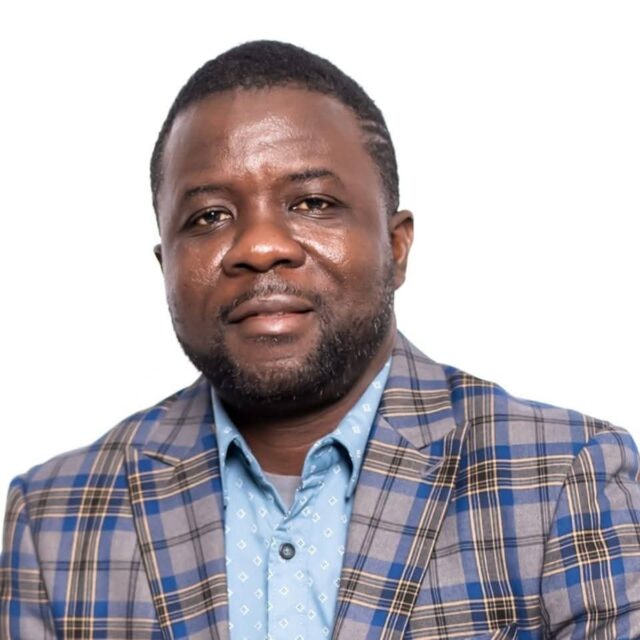
Daniel Henry Smith, PhD
Class of 2024: Rutgers, The State University of New Jersey
Class of 2014: Edward J. Bloustein School of Planning and Public Policy
Class of 2010: University of Liberia