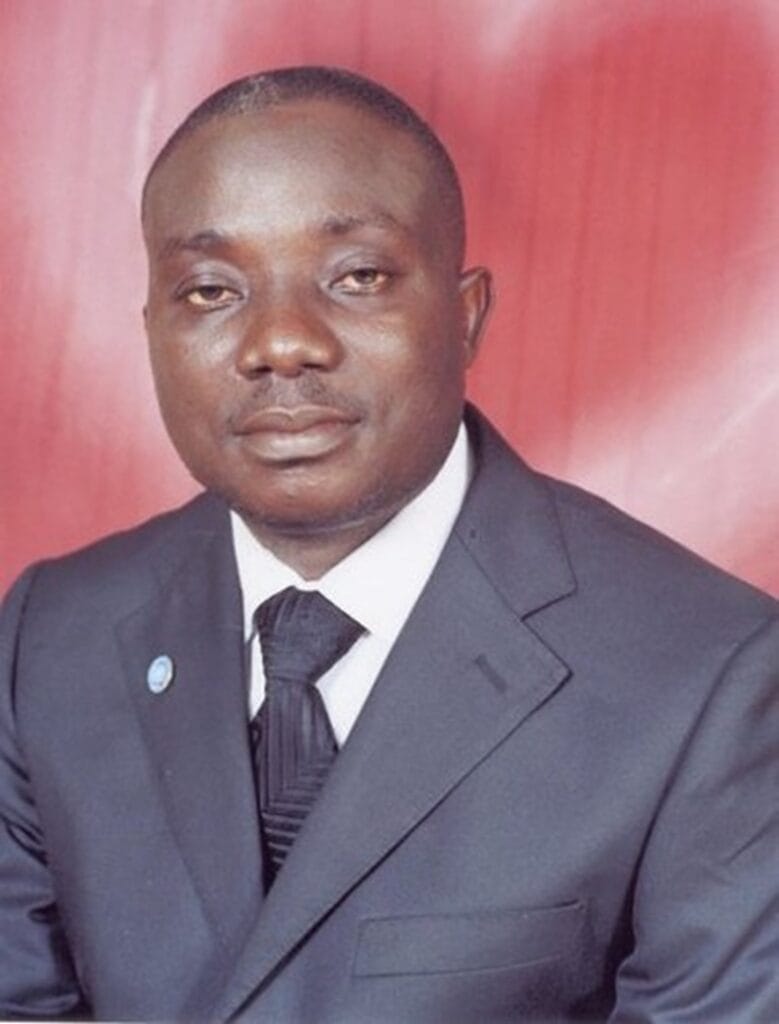
By Moses Zangar, Jr.
Africa is a continent of contrasts. It boasts the youngest population in the world, with over 60% of its people under the age of 25, yet it is governed by some of the oldest leaders globally, many of whom have clung to power for decades. This generational disconnect is fueling frustration, protests, and demands for change across the continent, as young Africans increasingly challenge entrenched political systems that fail to reflect their aspirations. From Cameroon to Côte d’Ivoire to Equatorial Guinea and Uganda to Zimbabwe, the phenomenon of aging strongmen holding onto power has profound implications for democracy, governance, and the future of Africa.
The Generational Divide: Africa’s Youth vs. Aging Leaders
Africa’s demographic profile is unique. With a median age of just 19.7 years, the continent is brimming with youthful energy, creativity, and ambition. Yet, many of its leaders are decades older, often governing policies and priorities that fail to address the needs of their youthful populations. This disconnect is starkly evident in countries like Cameroon, Côte d’Ivoire, Equatorial Guinea and Uganda, where aging leaders have entrenched themselves in power, often through constitutional amendments, electoral manipulation, and suppression of dissent.
Cameroon: Paul Biya’s Four-Decade Rule
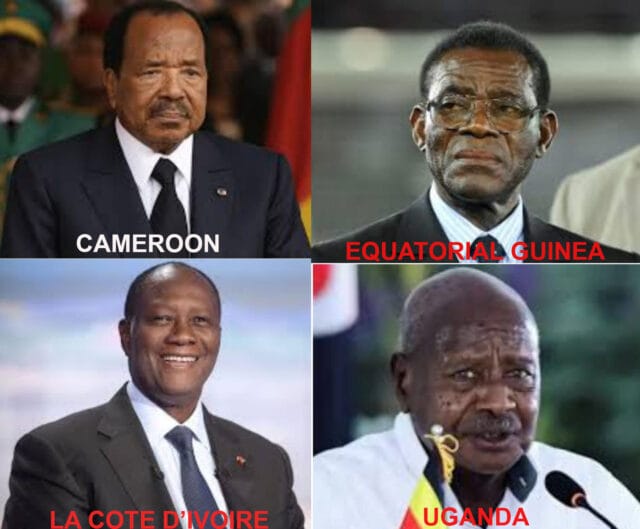
Paul Biya, Cameroon’s 92-year-old president, is the world’s oldest sitting leader. First assuming office in 1982, Biya has ruled for over 43 years, a period longer than most Cameroonians have been alive. His tenure has been marked by constitutional amendments that removed term limits, enabling him to secure an eighth consecutive term in office. With over 70% of Cameroon’s nearly 30 million citizens under the age of 35, Biya’s leadership represents a stark generational divide. Protests against his rule have intensified in recent years, driven by young activists demanding democratic reforms, economic opportunities, and an end to decades of stagnation.
Côte d’Ivoire: Alassane Ouattara’s Controversial Third Term
In Côte d’Ivoire, 83-year-old President Alassane Ouattara was recently declared the winner of an election boycotted by the opposition and marred by low voter turnout. Ouattara’s victory, with an overwhelming 89.77% of the vote, has raised questions about the legitimacy of the process and the broader implications for democracy in the country. For many young Ivorians, the election symbolizes a political system that prioritizes the preservation of power over genuine representation and reform. The opposition’s boycott and the low voter turnout reflect widespread disillusionment with a system that seems increasingly disconnected from the realities of the country’s youthful population.
Uganda: Yoweri Museveni’s Grip on Power
Uganda’s President Yoweri Museveni, who has ruled since 1986, is another example of Africa’s aging strongmen. Museveni’s grip on power has been maintained through constitutional changes, crackdowns on dissent, and a political system that stifles opposition. Despite his claims of stability and development, Uganda’s youth – who make up the majority of the population – have increasingly voiced their dissatisfaction through protests and activism, demanding a leadership that reflects their needs and ambitions. Museveni’s rule, like Biya’s, underscores the generational disconnect between Africa’s leaders and its people.
Zimbabwe: The Legacy of Robert Mugabe
Although Robert Mugabe is no longer in power, his legacy continues to shape Zimbabwe’s political landscape. Mugabe ruled Zimbabwe for 37 years, from 1980 to 2017, before being ousted in a military coup. His tenure was marked by economic collapse, political repression, and widespread corruption. Like Biya and Museveni, Mugabe’s rule was sustained by constitutional amendments and electoral manipulation, allowing him to remain in power despite growing discontent among Zimbabwe’s youth. Today, Zimbabwe’s political system remains deeply influenced by Mugabe’s legacy, with many young Zimbabweans still struggling to find opportunities and representation.
Equatorial Guinea: Teodoro Obiang’s Record-Breaking Rule
Teodoro Obiang Nguema Mbasogo, the president of Equatorial Guinea, holds the record as the world’s longest-serving head of state. Obiang has been in power since 1979, ruling for over 44 years. His tenure has been marked by allegations of corruption, human rights abuses, and suppression of dissent. Despite the country’s vast oil wealth, Equatorial Guinea remains one of the most unequal nations in the world, with much of its population living in poverty. Obiang’s rule exemplifies the challenges of entrenched leadership in Africa, where aging strongmen often prioritize personal power over national development.
The Ripple Effect: Protests and the Power of Youth
The frustration with entrenched leadership is not confined to Africa. Globally, young people are increasingly demanding accountability and change from their governments. In Nepal, Gen-Z protesters have taken to the streets, challenging their leaders to address issues of corruption, inequality, and climate change. This global wave of youth-led activism underscores a shared desire for leaders who prioritize the future over personal power.
In Africa, similar movements are gaining momentum. In Cameroon, protests against Biya’s rule have intensified, with young activists calling for democratic reforms and an end to decades of stagnation. Côte d’Ivoire has also seen growing discontent, as the country’s youth question the legitimacy of a political system that seems increasingly disconnected from their realities. In Uganda, Zimbabwe, and Equatorial Guinea, young people are leveraging social media, grassroots organizing, and international attention to challenge the status quo.
The Consequences of Entrenched Power
The repercussions of aging leaders clinging to power are profound. Economically, many African nations struggle to create opportunities for their youthful populations, leading to high unemployment rates and widespread poverty. Politically, the lack of generational representation fosters disillusionment and disengagement, as young people feel excluded from decision-making processes. Socially, the disconnect between leaders and citizens exacerbates tensions, fueling protests and, in some cases, violence.
Comparisons Across the Continent
While the examples of Biya, Ouattara, Museveni, Mugabe, and Obiang highlight the challenges of entrenched leadership, they are not unique. Across Africa, aging leaders have clung to power through constitutional amendments, electoral manipulation, and suppression of dissent. In Angola, José Eduardo dos Santos ruled for 38 years before stepping down in 2017. In Sudan, Omar al-Bashir governed for 30 years before being ousted in a popular uprising in 2019. These examples reflect a broader trend of aging strongmen prioritizing personal power over national development.
The Path Forward: Bridging the Gap
Africa’s youth represent its greatest asset and its most powerful force for change. To bridge the generational divide, leaders must prioritize policies that empower young people, create opportunities, and foster inclusive governance. This requires not only economic investment but also political reforms that ensure representation and accountability.
The protests in Cameroon, Côte d’Ivoire, and beyond are a wake-up call for Africa’s aging leaders. The continent’s youth are demanding a seat at the table, and their voices can no longer be ignored. As the youngest population in the world, Africa’s future depends on its ability to harness the energy, creativity, and ambition of its youth. The question is whether its leaders are willing to step aside and make room for the next generation – or whether they will continue to cling to power, risking further unrest and stagnation.
Conclusion: A Turning Point for Africa
The generational disconnect between Africa’s youngest population and its oldest leaders is unsustainable. As protests and demands for change grow louder, the continent stands at a crossroads. Will its leaders embrace the future and empower the next generation, or will they continue to resist, deepening the divide and jeopardizing progress? The answer will shape Africa’s trajectory for decades to come.
About the Author
Moses Zangar, Jr. is a Liberian journalist and Communication for Development (C4D) specialist, bringing years of expertise from the frontlines of media and global organizations like the United Nations.