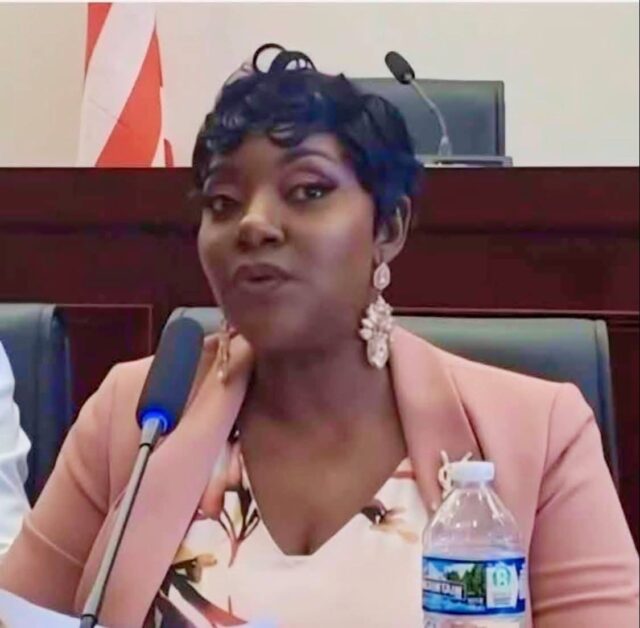
MONROVIA, Liberia – Newly confirmed presidential nominee Fatima Bintu Sirleaf has issued a public apology following widespread backlash over a video that surfaced on social media shortly after the Liberian Senate confirmed her appointment.
In a statement posted to Facebook, Sirleaf acknowledged that her conduct in the video was “unbecoming” of a public servant and fell short of the standards expected of her office and of President Joseph Boakai’s administration.
“I must admit that, even before you reached out, it did not take very long for me to acknowledge that my actions in the video reflected poor decision making at the time,” she wrote.
“I take full responsibility for my expressions in the moment.”
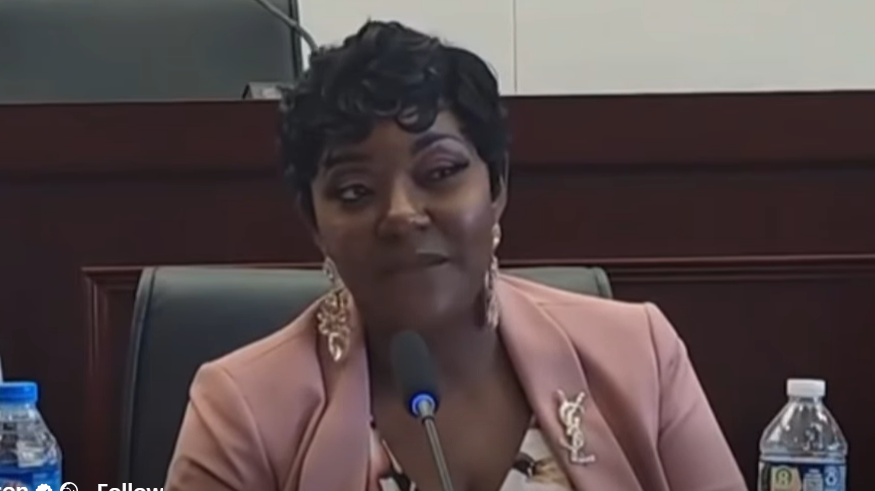
The short clip, which has gone viral in hours, drew sharp criticism from members of the public and commentators who argued that her remarks and tone were inappropriate for a senior government official—especially one just emerging from a high‑stakes confirmation process.
Sirleaf, who described the last several weeks as emotionally taxing, said the video captured her at a moment when relief and frustration collided.
“They reflected a mix of emotions ranging from joy at the good news and relief that the wait was over and finally, anger at some of the stressful interactions that had come along with this process,” she explained.
“Those Remarks Do Not Reflect My Core Values”
In her apology, Sirleaf distanced herself from the sentiments and language expressed in the video, stressing that they are not representative of who she is or how she intends to serve.
“I truly acknowledge that those remarks should not and do not reflect my core values, the standards of our President, or my respect for women in various capacities,” she said.
“Regardless of any disagreement or tension, I know that it is wrong of me for my language or actions to demean another person and for this I am sorry.”
She went on to offer what she called a “sincere and unconditional” apology to anyone affected.
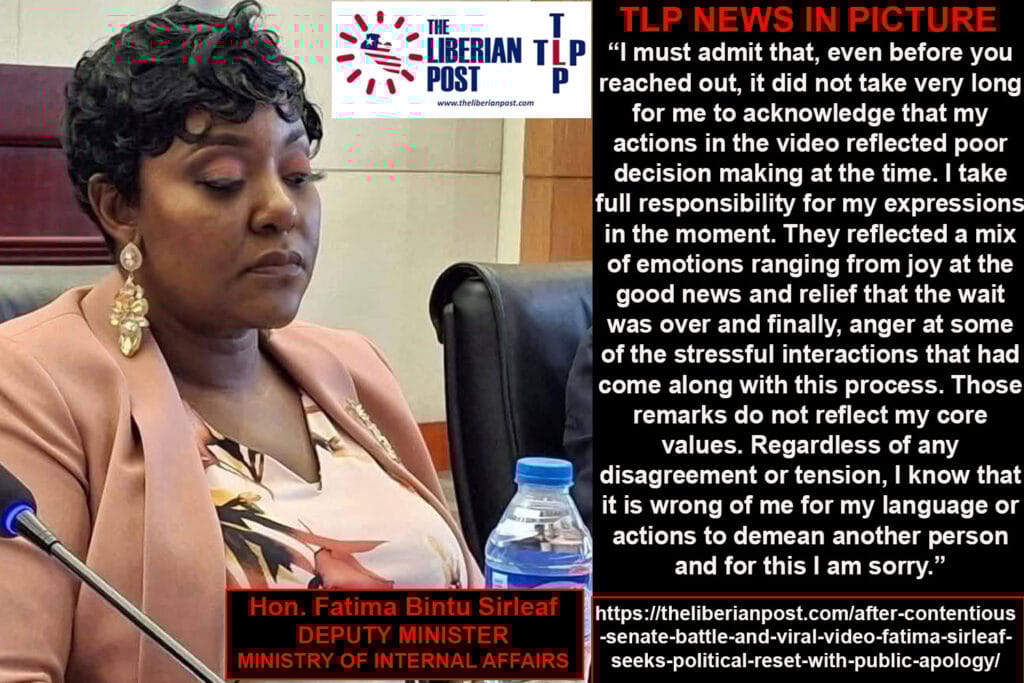
“I offer my sincere and unconditional apology to anyone I offended by my words or actions. I regret any discomfort or harm caused, and I remain committed to professionalism, mutual respect, and constructive engagement in all future public and private interactions.”
Her comments appear aimed not only at those directly referenced or implied in the video, but also at a broader audience of Liberians who have been debating the tone and decorum of recent Senate hearings and confirmation battles.
Confirmation Process Under Public Microscope
Sirleaf’s confirmation, like several others in the Boakai administration, unfolded under intense public scrutiny. Her hearings in the Liberian Senate drew significant attention on radio, television, and social media, with segments of the proceedings widely shared and dissected online.
The process, at times, exposed sharp tensions between senators and nominees, as questions of competence, political loyalty, integrity, and independence dominated the national conversation. Commentators noted that Sirleaf, in particular, became a lightning rod for partisan debate, with her supporters defending her qualifications while critics questioned aspects of her temperament and judgment.
The viral post‑confirmation video added fuel to that already charged environment, prompting renewed criticism from some who argued that her demeanor confirmed their earlier reservations.
Against that backdrop, her public apology is likely an effort both to repair her image and to reassure the public that she understands the weight of the office she now occupies.
Pledging Professionalism and Service
Looking ahead, Sirleaf sought to shift focus from the controversy to her stated priorities as a public servant.
“In my role as a public servant my focus will remain on serving the Liberian people, strengthening our governance processes, and ensuring that our public discourse reflects the principles of respect and collaboration that are essential to national progress,” she said.
She also committed herself to higher standards in her official and personal engagements.
“I remain committed to professionalism, mutual respect, and constructive engagement in all future public and private interactions,” her statement emphasized.
The apology comes at a time when many Liberians are demanding greater accountability, civility, and ethical conduct from public officials. While reactions to Sirleaf’s statement were still unfolding at press time, some commentators on social media welcomed the apology as a necessary step, while others argued that her future behavior in office will ultimately determine whether the public accepts her contrition. For now, with the Senate’s confirmation secured and her apology on record, the focus is expected to shift to how she performs in her new role—and whether she can translate this early controversy into a lesson in restraint, leadership, and public accountability.