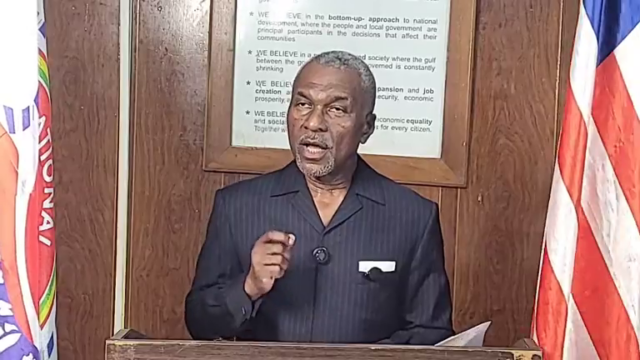
MONROVIA, Liberia — The Alternative National Congress (ANC) has issued a pointed response to President Joseph Nyuma Boakai’s 2026 State of the Nation Address, questioning whether the administration’s reported economic gains are translating into tangible improvements in the daily lives of ordinary Liberians.
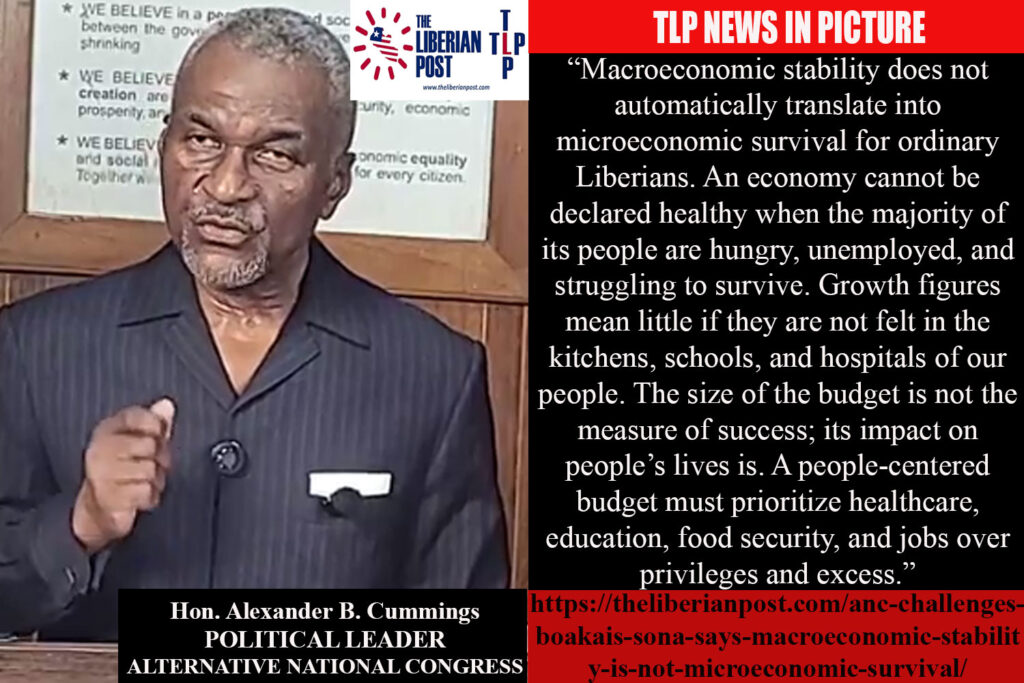
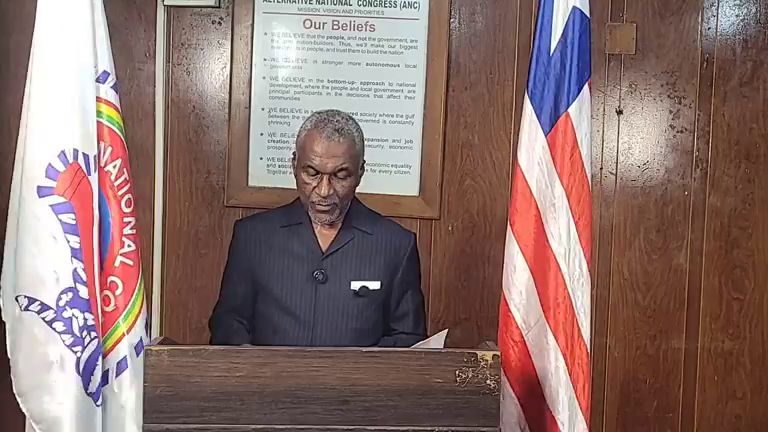
The response was delivered at a press conference by Alexander Benedict Cummings, political leader of the Alternative National Congress, who was among a small number of opposition figures in attendance when President Joseph Nyuma Boakai presented his third Annual Message to the Legislature on Monday.
Respectful Tone, Firm Critique
Cummings opened by acknowledging the President’s leadership and intentions, noting that Boakai “loves Liberia” and genuinely believes the country is making progress. However, he argued that official statistics cited in the SONA do not reflect the lived realities of millions of Liberians struggling with poverty, unemployment, and food insecurity.
While the President highlighted economic growth, reduced inflation, and fiscal stabilization as signs of recovery, the ANC leader cautioned that macroeconomic indicators alone cannot define national progress.
Cummings cited data from the Global Hunger Index, which places Liberia near the bottom globally, and warned that economic recovery narratives risk overlooking the harsh conditions faced by households across the country’s 15 counties.
Budget Priorities Under Scrutiny
President Boakai, in his SONA, announced a US$1.2 billion national budget—the largest in Liberia’s history—framing it as a tool for accelerating development under the ARREST Agenda for Inclusive Development. The budget emphasizes infrastructure, agriculture, education, and governance reforms.
However, the ANC challenged the moral and social implications of the budget’s allocation. Cummings questioned whether increased spending on the Legislature and security agencies aligns with the pressing needs of public hospitals, schools, and rural communities.
He argued that a national budget should be judged not by its size, but by its impact on living standards, insisting that public spending must visibly improve access to healthcare, education, food security, and dignified employment.
Agriculture, Women, and Youth at the Center
While President Boakai described agriculture as the “heart” of the ARREST Agenda, Cummings argued that funding levels do not match that ambition. He called for Liberia to meet international commitments by allocating at least 10 percent of the national budget to agriculture, with an emphasis on value addition, agro-processing, and farm-to-market roads.
The ANC response also highlighted challenges faced by women entrepreneurs, who dominate the informal economy but lack access to credit and legal protection. Cummings proposed a national micro-loan and credit guarantee scheme specifically tailored for market women and small Liberian-owned businesses.
On youth employment, he argued that temporary jobs are insufficient and proposed a national youth service program to place young Liberians in education, health, and public service roles while expanding technical and vocational training nationwide.
Governance, Energy, and Anti-Corruption
Addressing governance, Cummings acknowledged President Boakai’s references to indictments and anti-corruption efforts but argued that convictions and asset recovery remain limited. He called for specialized anti-corruption courts and stronger institutional independence to ensure accountability.
On infrastructure and energy—key pillars of the President’s SONA—the ANC leader urged faster deployment of solar mini-grids and off-grid solutions, particularly for rural clinics, schools, and agro-processing centers, rather than reliance on long-term grid expansion alone.
Competing Visions Ahead
President Boakai concluded his SONA by emphasizing that leadership is service and reaffirming his administration’s commitment to reform, infrastructure development, and international credibility. The ANC response, while acknowledging these goals, framed the national debate around delivery, equity, and measurable outcomes.
As Liberia enters another legislative year, the exchange underscores a widening policy conversation: whether economic stabilization and reform efforts are sufficiently people-centered, and how national priorities should be recalibrated to ensure that growth is felt at the household level.
Follow The Liberian Post on Facebook and X (formerly twitter)