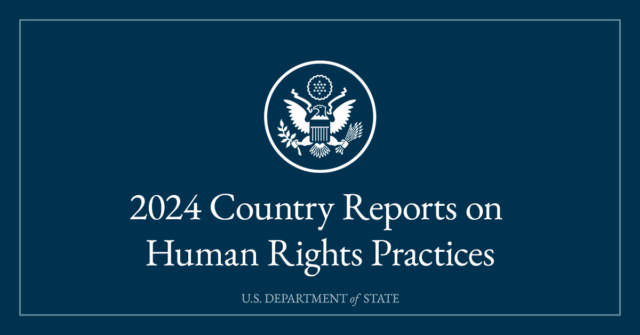
MONROVIA – The United States Government 2024 Human Rights Report released recently does not seem to be pleasing in the eye as previous mishaps reportedly carried on by past administrations remain prevalent in the current administration headed by President Joseph Boakai.
There were no significant changes in the human rights situation in Liberia during the year, the Reports says. Significant human rights issues included credible reports of: arbitrary or unlawful killings; torture or cruel, inhuman, or degrading treatment or punishment; arbitrary arrest or detention; serious restrictions on freedom of expression and media freedom, including violence or threats of violence against journalists and censorship; trafficking in persons; and systematic restrictions on workers’ freedom of association.
However, the government took steps to identify and punish officials who committed human rights abuses, including abuses committed during the country’s civil war.
Touching on Freedom of the Press, the Report reminded that the Liberia constitution provides for freedom of expression, including for members of the press and other media, and the government generally respected these rights, although with some unofficial limits.
The Reports notes that individuals were generally free to criticize the government publicly or privately, but government officials sometimes used dismissal or threat of dismissal from employment to place limits on freedom of expression for public servants. In August, the Monrovia City Corporation dismissed nine city employees following allegations they used social media to criticize government officials and the President.
The Report also says Physical Attacks, Imprisonment, and Pressure as was reported by press associations saw government officials occasionally harassed newspaper and radio station owners, as well as individual journalists, because of their political opinions and reporting.
On June 26, the Association of Liberia Community Radios demanded the reinstatement of Radio Kakata Station Manager Jerry Quoi, who was suspended by Margibi County Superintendent Victoria Duncan for alleged financial malfeasance. The association warned against political interference in the operations of community radios across the country, asserting such actions amounted to media censorship.
Censorship by Governments, Military, Intelligence, or Police Forces, Criminal Groups, or Armed Extremist or Rebel Groups
Although generally able to express a wide variety of views, some journalists practiced self-censorship to avoid harassment. Some media outlets avoided criticizing government officials due to fear of legal sanctions and potential loss of government advertising, a large source of media revenue.
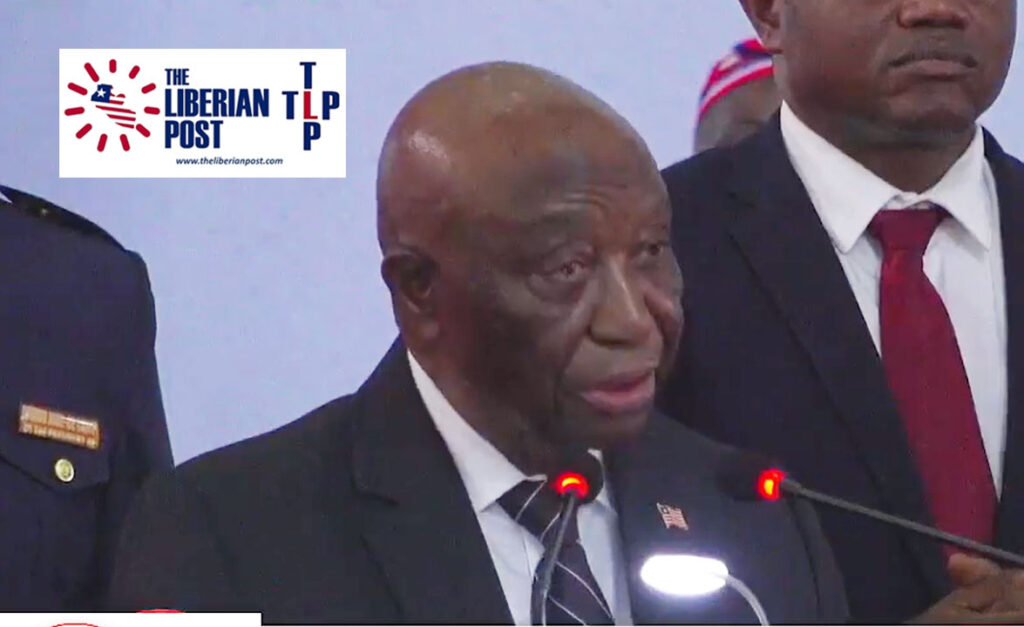
A June 20 meeting between Presidential Press Secretary Kula Fofana and media executives turned contentious, leading several editors to walk out. The incident arose concerning new accreditation requirements for journalists covering the Executive Mansion, including police clearances and institutional tax clearance certificates. These policies, along with demands by the government for free website advertising, which impacted newspaper revenues, sparked concerns regarding media freedom and independence.
On the overall, the US Human Rights 2024 Reports says Liberia’s justice system is failing to uphold the rule of law, with a significant number of detainees held for months without trial due to systemic failures. The report highlights widespread abuse of power, a corrupt bail system, and a severe lack of resources that undermine the constitutional rights of citizens.
The U.S Government’s annual document revealed that approximately 60 percent of pretrial detainees, particularly those facing felony charges, are held for more than 180 days – exceeding the legal limit of two court terms without a hearing. While the law mandates the dismissal of cases that are not tried within this timeframe, the report states that cases of Arrests, are “rarely dismissed,” making this one of the most frequent abuses of the law.
The problem stems from multiple fronts. Police often make arrests without judicial authorization, and even when warrants are issued, they sometimes lack sufficient evidence. Although the law requires detainees to be arraigned within 48 hours, this timeline is frequently ignored.
The bail system, intended to regulate court appearances, has become a source of corruption. Civil rights observers and the National Commission on Human Rights of Liberia (INCHRL) report that judges misuse the system, viewing it as a punitive measure rather than a legal right. Some judges have reportedly used the possibility of bail to solicit bribes from detainees and their families.
The justice system is further hobbled by a severe lack of resources. The national public defender’s office is understaffed and struggles to reach rural courts. In some areas, courts lack both a prosecutor and a public defender, with magistrate judges proceeding without them. The INCHRL also noted that some magistrates solicit money from complainants to cover transportation costs for the accused, a practice that further compromises the integrity of the process.
The report cites a specific high-profile case to illustrate the systemic failures. In November, a Monrovia criminal court judge publicly criticized Ministry of Justice prosecutors for their handling of a case involving Ibrahim Kalil Cherif, a Guinean national accused of plotting a coup. Cherif was held by National Security Agency officials without charges for several days before being transferred to prison. He was later removed from prison without a court order and turned over to Guinean authorities at their request, a move the government defended as a national security measure. The judge threatened the Justice Ministry with contempt charges, criticizing the government’s actions before the case was ultimately closed.
This case, along with the widespread issue of prolonged detention, points to a justice system in crisis. The report concludes that poor court record-keeping, a non-functioning bail system, ineffective defense counsel, and a lack of resources for all parties involved are collectively contributing to a profound human rights issue that undermines the rule of law in Liberia.
Titled, “Liberia 2024 Human Rights Report,” the report covered extrajudicial Killings, Coercion in Population Control, War Crimes, Crimes against Humanity, Evidence of Acts that May Constitute Genocide, or Conflict-Related Abuses, and Freedom of the Press.
It also covered Physical Attacks, Imprisonment, and Pressure, Censorship by Governments, Military, Intelligence, or Police Forces, Criminal Groups, or Armed Extremist or Rebel Groups, Freedom of Association and Collective Bargaining, Forced or Compulsory Labor, Wage and Hour Laws, Occupational Safety and Health, Wage, Hour, and OSH Enforcement, Disappearance, Prolonged Detention without Charges, and Violations in Religious Freedom.
The US Human Rights Report titled: “Liberia 2024 Human Rights Report,” presents a troubling picture for the tiny West African nation which is regarded as a traditional ally of the United States of America, having been established by freed slaves brought out of the Americas following the emancipation of slavery by President Abraham Lincoln.
Past governments had always fallen prey to indiscretions and imprudence during their time of governance of Liberia as their mishaps were always highlighted by the US government through various human rights reports. But it seems succeeding governments have not heeded mistakes of the past but continues to dwell on these same mishaps of governance to the detriment of the Liberian people. Will President Joseph Nyuma Boakai set a new direction to at least rid the government of these human rights abuses that have continue to impede the lives of Liberians and the country at large.