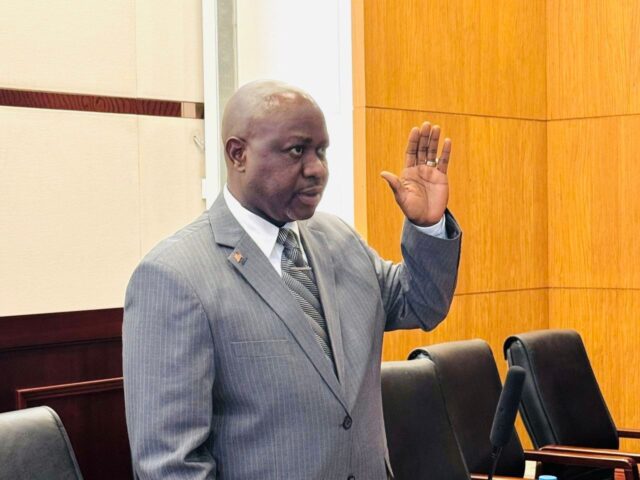
MONROVIA – Appearing before the Senate Committee on Judiciary, Petition and Claim for his confirmation hearing as Associate Justice-designate of the Supreme Court of Liberia, Cllr. Boakai N. Kanneh when quizzed what reforms would he love to see at the Judiciary, the erudite jurist responded saying the Service Delivery Charter mechanism instituted by the Executive branch of Government should be replicated by the Judiciary to enhance maximum performance and dispensation of justice without fear or favor.
It can be recalled on Wednesday, October 30, 2024, President Joseph Nyuma Boakai launched the Performance Management and Compliance System (PMCS) at the EJS Ministerial Complex in Congo Town.
The event, attended by high-ranking government officials, development partners, and stakeholders, marked an important step in Liberia’s commitment to fostering a transparent and efficient government.
In his launching address, President Boakai emphasized that the PMCS embodies Liberia’s dedication to responsible and accountable governance.
“The launch of the PMCS signifies not just the introduction of a new system but the strengthening of a major commitment: our dedication to delivering effective and accountable government for every Liberian citizen.” President Boakai said.
The PMCS is central to the Administration’s ARREST agenda, focusing on accountability, responsiveness, and responsible governance. The system sets clear performance standards for ministries, agencies, and commissions, enabling real-time monitoring and accountability. “We want our citizens to see a government that listens, responds, and delivers,” President Boakai said, reinforcing the Administration’s resolve to enhance public trust and service delivery.
One year later, in order to institutionalize results-driven governance, President Boakai led the formal signing of the 2025 Performance Management and Compliance System (PMCS) Presidential Contracts. The signing ceremony, held at the EJS Ministerial Complex in Congo Town, marked an important step in the Government’s effort to strengthen transparency, service delivery, and institutional accountability across all sectors.
Under the theme “Driving Accountability and Results Across Government,” President Boakai described the PMCS as a national turning point—from “promises to performance, inputs to impact, and excuses to excellence.”
“For the first time in our nation’s history,” President Boakai stated, noting, “we have completed a full national performance management cycle across our public sector. This is not only a milestone but a message: the era of business-as-usual governance is over.”
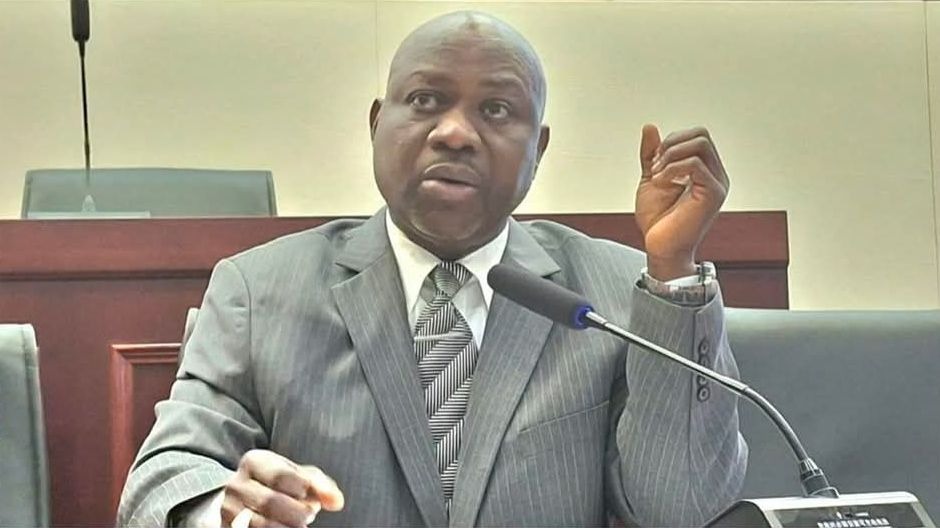
And so, when the Associate Justice-designate, Cllr. Boakai N. Kanneh was quizzed what major reforms he would love to see in the Judiciary, he called on the Judiciary to replicate the Executive branch’s Service Delivery Charter under the Performance Management and Compliance System (PMCS), because this system sets the tone for high performance and delivery of what each government entity can offer and how long it will take to deliver those services to the populace.
“If the Judiciary can replicate this Service Delivery Charter (SDC) under the Performance Management and Compliance System (PMCS) mechanism being instituted by the Executive to heighten commitment with the objective of fostering a transparent and efficient government, as well as the embodiment of dedication for responsible and accountable governance, I will be glad to see that in the Judiciary, Associate Justice-designate Kanneh told the Senators.
The legal luminary further went on to state that if the Service Delivery Charter system is replicated in the Judiciary, all courts, judges and magistrates and judicial workers will be required to tell and show to the populace how cases are heard, what constitutes the different types of bonds, how long it will take to adjudicate cases based on the merits and demerits, as this will strengthen commitment, dedication to deliver effectively and be accountable in the Judiciary to the benefit of the people.
Cllr. Kanneh also noted that justice should be dispensed without fear or favor, adding if that fails in the judiciary, public confidence erodes, investors shy away to invest in the country and it destabilizes the political governance of the country.
He frowned against the Judiciary being undermined or politicized. “If for example the Legislature or Executive fails to allot monies intended for a functioning judiciary is under-allotted in the national budget that is complete undermining the judiciary. How can you expect the Judiciary to performance when it is under-funded? I am hoping that this does not happen if I’m confirmed as an Associate Justice of the Supreme Court of Liberia.”
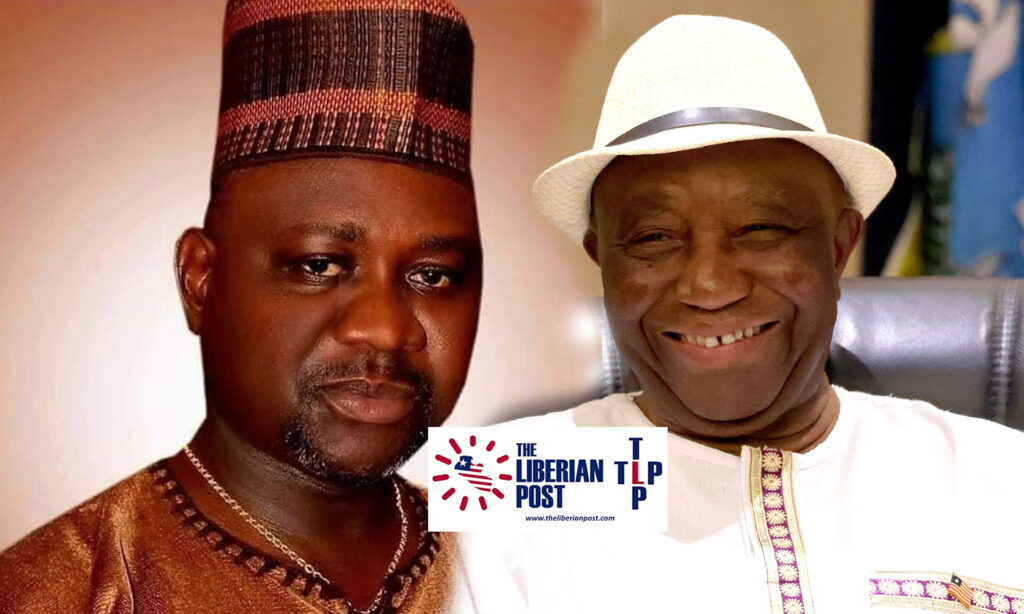
Quizzed on whether he will feel disadvantaged for the younger lawyer nominated by President Boakai to serve as an Associate Justice-designate of the Supreme Court, Cllr. Kanneh responded in the negative. “I don’t and won’t feel disadvantaged because age does not necessarily make you an experienced person but what you have done and achieved during that time makes you an experienced person. If I am confirmed as an Associate Justice of the Supreme Court, I am going to work along with the justices of the High Court on matters that come before the court. But as someone who taught law for over 17 years, work in other top level government institutions as a lawyer, including the Ministry of Foreign Affairs where I served as Deputy Minister for Legal Affairs, as well as Chairman of the Law Reform Commission, I am of the conviction that I am up to the task to serve on the bench of the Supreme Court of Liberia without any fear, intimidation of being disadvantaged because of my younger age.”
The Associate Justice-designate further assured members of the Senate that, if confirmed, he would perform his duties on the Supreme Court bench with the highest level of impartiality, professionalism, and fidelity to the law. He said his judicial philosophy centers on fairness, constitutionalism, and justice for all.
Reiterate His Call for Liberia’s Constitution to Be Rewritten
Meanwhile, Associate Justice-designate Kanneh has made a bold call for a complete rewrite of Liberia’s 1986 Constitution, stating that the document has become outdated and inadequate in addressing the nation’s current governance realities.
Appearing Tuesday before the Liberian Senate Committee on Judiciary, Petition and Claims for his confirmation hearing, Kanneh argued that the Constitution, though once a guiding framework for democratic order, now contains several obsolete provisions that hinder the country’s progress. He said Liberia’s evolving political and legal landscape demands a modern constitutional document.
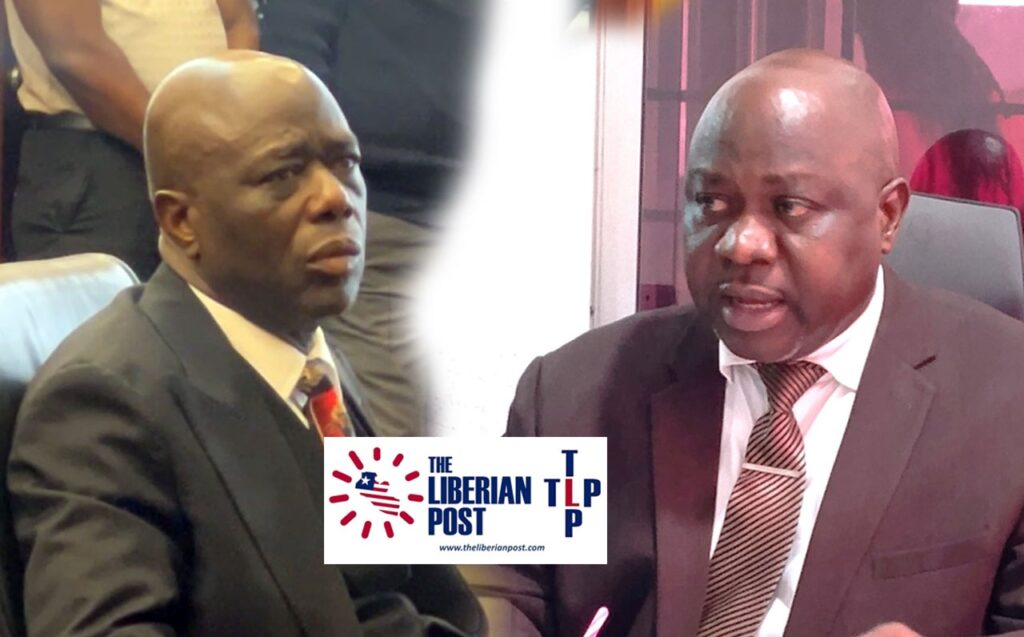
“There are provisions in the Constitution that are no longer applicable or relevant to today’s Liberia,” Kanneh said. “A total rewrite is necessary to ensure that the Constitution meets the current governance demands of the country.”
He emphasized that such a reform would not disrupt the structure of government but rather enhance democratic institutions and bring national laws in line with present-day realities. According to Kanneh, Liberia must embrace reform if it is to solidify the rule of law and ensure a justice system that reflects contemporary values.
Kanneh’s call for constitutional reform comes amid ongoing national debates about governance, decentralization, and legal reforms. His statement is likely to spark discussions among lawmakers, civil society actors, and the wider public on the future of Liberia’s supreme law.
Who is Cllr. Boakai N. Kanneh?
Cllr. Boakai N. Kanneh is the current Chairperson of the Law Reform Commission (LRC), Republic of Liberia. Prior to his appointment at the LRC, he served in several positions in Government and the private sector. Cllr. Kanneh served as the Deputy Minister for Legal Affairs, Ministry of Foreign Affairs, Deputy Commissioner for Naturalization, Bureau of Immigration and Naturalization, a Public Defender with the Judiciary; Special Assistant to the Minister of Agriculture and a Field Service Officer with the Special Emergency Life Food Program (SELF).
Cllr. Kanneh is also Assistant Professor of Law, Louis Arthur Grimes School of Law, University of Liberia teaching Criminal Law, Criminal Procedure, Torts and Legislative Drafting. Cllr. Kanneh is also a lecturer at the Gabriel L. Dennis Foreign Service Institute and the IBB Graduate School of International Studies, University of Liberia.
In the private legal sector, Cllr, Kanneh once served as Assistant Counsel, Sherman & Sherman, Inc. and the Verdier and Associate law firm.
Cllr. Boakai N. Kanneh holds an LLM(T) Degree from the Maurer School of Law, Indiana University, USA with emphasis in Criminal Law, Criminal Procedure and Constitutional law. He also holds a Bachelor of Arts in Political Science and Bachelor of Law Degrees respectively from Liberia College and the Louis Arthur Grimes School of Law, University of Liberia.
Further to his educational background, Cllr. Kanneh has been involved in several research works which include:
Sino- Liberia Relationship: An analysis of Liberia’s Foreign Policy Orientation Towards the Chinese community (Bachelor thesis); Liberia: The Impact of Executive Influence on the Judiciary (Master’s thesis); Criminal Law: A Course book in the Louis Arthur Grimes School of Law Educational Series intended to domesticate the teaching of law.
Cllr. Kanneh holds membership in the Liberian National Bar Association, the Supreme Court Bar, the African Bar Association and the Center for the promotion of Intellectual Development amongst others.
Cllr Kanneh’s Legacy at Law Reform Commission (LRC)
A major feature of Cllr. Kanneh’s public career has been his advocacy for constitutional reform. As head of the LRC, he led efforts to advance rewriting the 1986 Liberia Constitution to strengthen reconciliation, governance, and peacebuilding in Liberia. He has proposed the introduction of a new constitutional provision, Article 92(b), to facilitate the rewriting process, arguing that Liberia’s current constitution lacks a framework for comprehensive revision. Kanneh has insisted that a referendum, backed by political will, is necessary to legitimize the process.
“The writing of a new constitution will provide a unique opportunity to advance reconciliation, political dialogue, and peace consolidation,” Kanneh said during a recent radio simulcast. He has also criticized the Legislature’s reliance on joint resolutions to determine electoral district thresholds, urging that population-based decisions be informed by national census data, in accordance with Article 80.
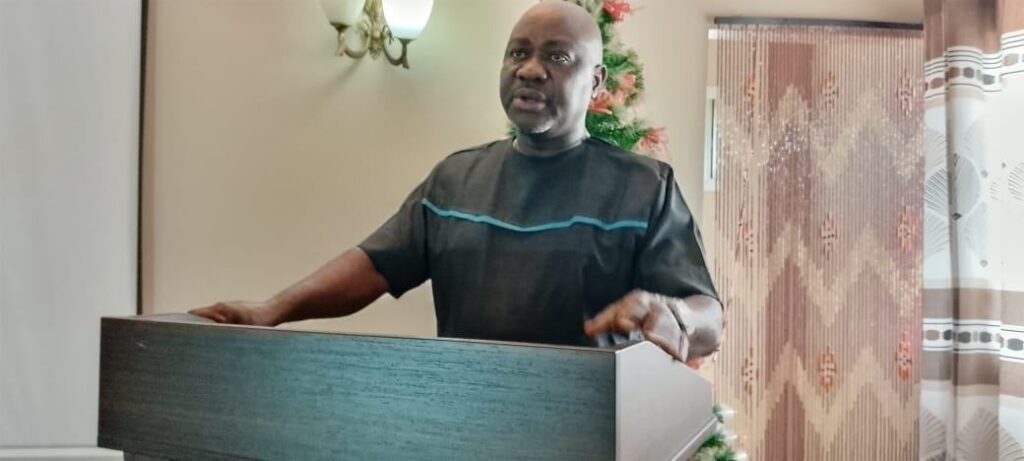
Cllr. Kanneh’s leadership of the LRC has been instrumental in reviving momentum around constitutional review—a process that began in 2013 through the Constitutional Review Committee (CRC) and has been supported by institutions such as the Governance Commission, UNDP, USAID, and the European Union. The CRC conducted extensive citizen consultations, leading to a number of proposed amendments, including shifting election dates, reducing term limits for elected officials, and redefining citizenship rules to clarify the status of dual nationals.
Many of these proposals remain under legislative consideration, but Cllr. Kanneh has remained an outspoken champion of their passage, describing constitutional reform as central to Liberia’s democratic consolidation.
As recently as June 2025, Cllr. Kanneh and his team at the Law Reform Commission and in collaboration with local and international stakeholders validated Four anti-corruption laws that include:
1. An Act to Amend Title 26, Penal Law, Liberian Codes of Law Revised to Provide for Illicit Enrichment and Corruption
2. An Act to Amend Title 2: Criminal Procedure Law, Liberian Codes of Law Revised to Redefined the Burden of Proof and Statute of Limitation for Corruption, Acts of Corruption and Illicit Enrichment.
3. An Act to Amend the Act Establishing the Anti-Corruption Commission
4. An Act to Amend Part V, Part XII and to Provide Additional Definitions of an Act of the Legislature Prescribing a National Code of Conduct for all Public Officials and Employees of the Government.
His nomination to the Supreme Court now places him in a critical position to shape how these issues may ultimately be interpreted by the country’s highest judicial body.
If confirmed, Cllr. Boakai N. Kanneh will become the latest President Boakai’s appointee to join the reshaped Supreme Court bench, further signaling the President’s intent to leave a lasting institutional imprint on Liberia’s judiciary.