



– House Firebrand Demands Senate Halt Hearings; Senator Calls Argument “Legally Lazy”
CAPITOL HILL, Monrovia – A fresh constitutional tussle has erupted at the National Legislature over which chamber has the right to take the lead on the US$1.211 billion FY2026 Draft National Budget, with Representative Musa Hassan Bility insisting the Senate must halt its ongoing budget hearings and Senator Abraham Darius Dillon dismissing the argument as “legally lazy” and driven by a desire for attention.
The dispute underscores simmering tensions between the two Houses as they begin scrutiny of President Joseph Boakai’s first full‑year spending plan.
Bility: Senate Hearings “Unconstitutional, Disruptive”
In a strongly worded December 1 letter to House Speaker Richard Nagbe Koon, Bility (Nimba District #7) warned that the Liberian Senate’s decision to conduct separate budget hearings before the House has acted is a “grave constitutional impropriety.”
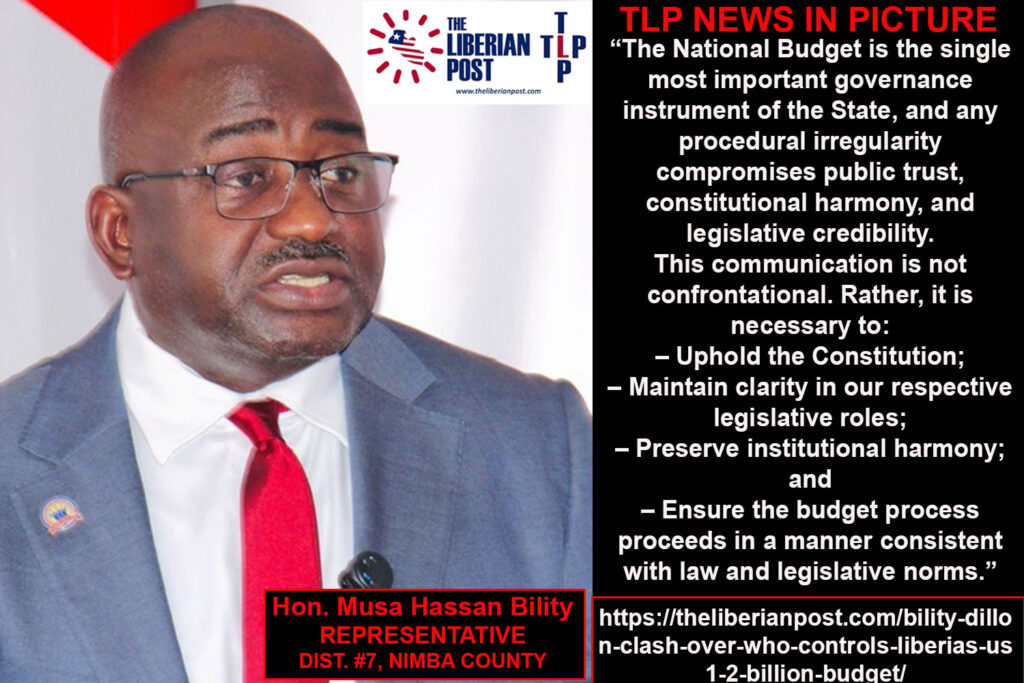
The letter, which has circulated widely on social media, is titled:
“Request for the House to Formally Communicate with the Senate to Halt Its Ongoing Budget Hearings in Order to Preserve Constitutional Order.”
Bility argues that the Constitution vests “exclusive origination authority” over national revenue measures in the House of Representatives and that the Senate’s current course risks “institutional conflict, legislative disorder, and constitutional uncertainty” in Liberia’s bicameral system.
He cites Article 34(d), which states that “all revenue bills, whether subsidies, charges, imports, duties, or taxes, and other financial bills shall originate in the House of Representatives.”
According to Bility, this means:
- The House must hold all budget hearings first,
- Pass its version of the draft budget, and only then
- Transmit it to the Senate for concurrence or necessary amendments.

Any attempt by the Senate to conduct its own hearings in parallel, he contends, “undermines the House’s exclusive constitutional prerogative” and risks procedural irregularities that could compromise public trust.
“The National Budget is the single most important governance instrument of the State, and any procedural irregularity compromises public trust, constitutional harmony, and legislative credibility,” Bility wrote.
He urged plenary to mandate Speaker Koon to formally ask the Senate to suspend its hearings until the House has completed its own review and adoption of the budget.
“This communication is not confrontational. Rather, it is necessary to:
– Uphold the Constitution;
– Maintain clarity in our respective legislative roles;
– Preserve institutional harmony; and
– Ensure the budget process proceeds in a manner consistent with law and legislative norms,”
Bility concluded, adding that the matter carries “national importance.”
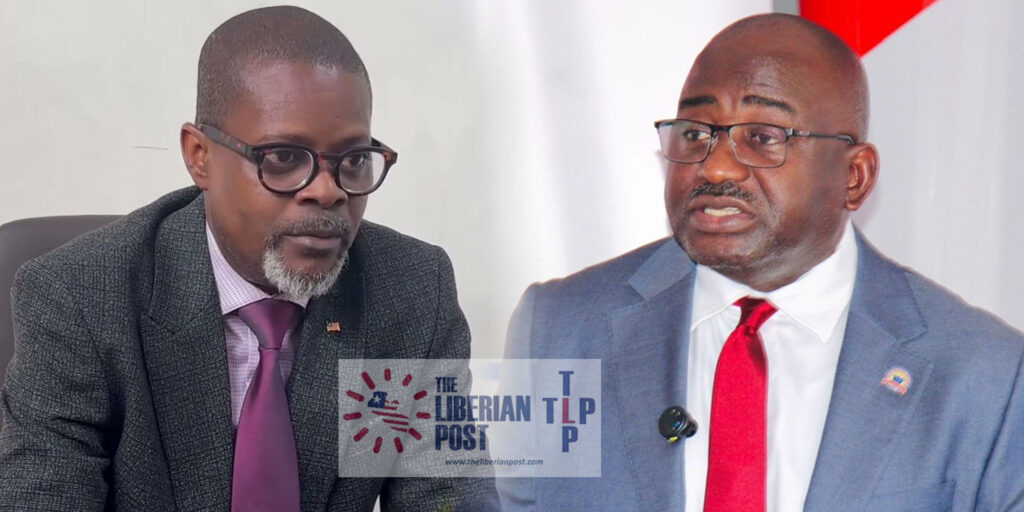
Dillon: Senate Has Full Right to Hold Hearings
Montserrado County Senator Abraham Darius Dillon fired back on the same Monday, accusing Bility of misreading the Constitution and seeking media attention.
“Your ‘argument’ that the Senate is in ‘constitutional error’ on holding separate budget hearings from the House is not simply legally lazy, it is only intended for you to be in the news as usual … but for the wrong reason!” Dillon wrote in a public response.
The opposition senator agreed that revenue bills must originate from the House, but stressed that the Senate has full concurrence authority, including the power to amend what the House passes.
“Let me educate you here and now that the House of Representatives DOES NOT have SOLE/EXCLUSIVE authority to review and appropriate the National Budget as in the case of the Senate’s SOLE authority when it comes to confirmation of public officials,” he said.
Quoting the same Article 34(d), Dillon argued that:
- While the budget “originates” in the House,
- The Senate “may concur” or decide to make “amendments (input) before concurring,” and
- Nothing in the Constitution prohibits the Senate from holding hearings before the House acts—only from passing the budget into law before the House has done so.
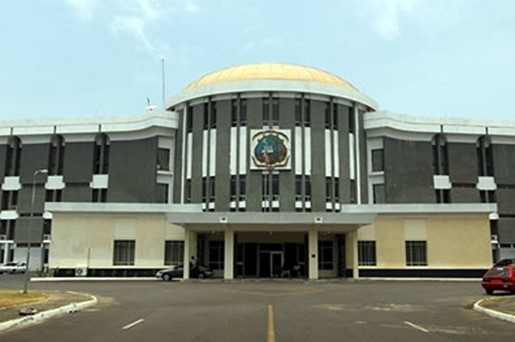
“Because the passage ‘originates’ in the House does not preclude or prohibit the Senate from holding hearings before the House acts. No!” Dillon wrote. “What the Senate is prohibited from doing is voting to pass the Budget ahead of the House.”
He emphasized that no budget can become law without Senate concurrence, and that it is up to the Senate to decide whether to “simply concur” with the House’s version or to introduce changes.
“And, when the Senate makes material proposals (input) different from what the House passed, BOTH Chambers would meet on a legislative ‘Conference Committee’ to harmonize the material differences and finally pass ONE version of the Budget,” he explained.
Dillon framed the Senate’s approach as responsible.
“Hearings on the Budget will proceed at the Senate,” he declared. “When the House passes it, the Senate would already be prepared to concur or make necessary amendments as contemplated by Article 34(d) of the Constitution. This is being elderly, wise and proactive!”
A Constitutional Debate With Political Undertones
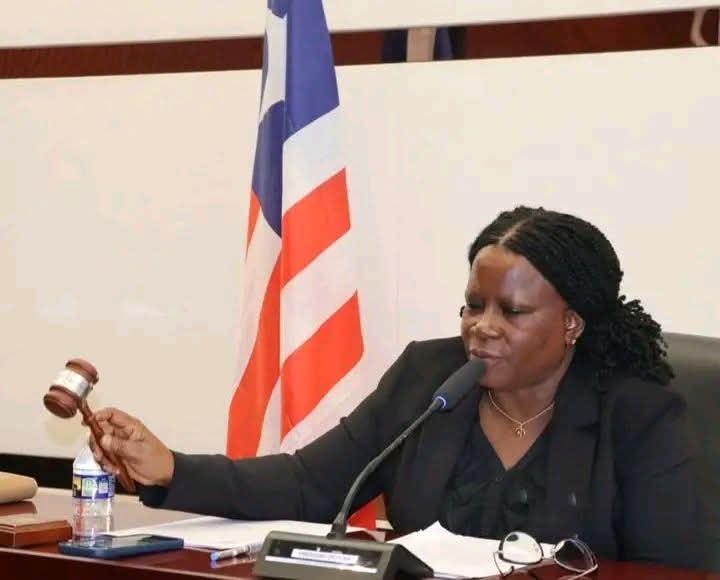
The clash highlights a recurring ambiguity in Liberia’s constitutional practice. While Article 34(d) clearly states that revenue and financial bills must originate in the House, it does not spell out procedural details about hearings or timelines, leaving room for institutional interpretation.
Traditionally, the House of Representatives takes the first formal vote on the national budget, which is then transmitted to the Senate. Both chambers often hold their own hearings—sometimes in parallel, sometimes sequentially—before heading to a conference committee to reconcile differences.
Bility’s letter seeks to tighten that practice in favor of the House, effectively insisting that the Senate’s role should be reactive and deliberative, not parallel or pre‑emptive.
Dillon, by contrast, argues that the Senate is fully within its rights to prepare in advance so long as it does not legislate ahead of the House.
Behind the legal arguments lie political calculations:
- Bility, a first‑term representative and leader of the opposition Citizens Movement for Change (CMC), has positioned himself as a vocal critic of aspects of the Boakai government’s fiscal policy and the projected US$1.211 billion envelope.
- Dillon, though historically an opposition figure, has taken a more issue‑by‑issue stance toward the new administration and is a key player in Senate budget oversight.
What Happens Next?
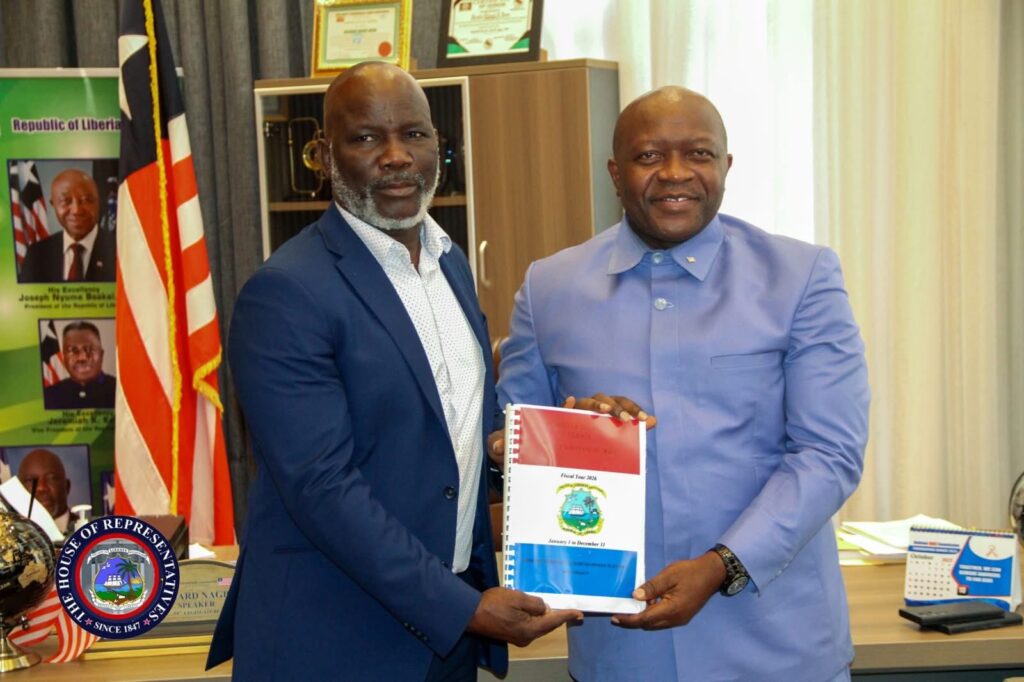
Speaker Richard Koon and Senate Pro‑Tempore Nyonblee Karnga‑Lawrence have not yet issued public statements in response to the competing interpretations.
In practice, it is unlikely that the Senate will halt its hearings, especially given the tight constitutional deadline for passing the budget before the new fiscal year.
If both chambers proceed on their current paths:
- The House will hold its own hearings and pass a version of the FY2026 budget;
- The Senate will use its hearings to shape possible amendments;
- A conference committee will reconcile any differences before the budget is enrolled and sent to the President for signing.
But the sharp exchanges between Bility and Dillon have already exposed fault lines over institutional pride and procedural control that could resurface in future legislative battles. For now, one thing is clear: as Liberia debates the spending of US$1.2 billion in the coming year, the fight over who gets to shape that debate—and when—has become almost as intense as the fight over the numbers themselves.






Mamdani’s ability to win in a diverse district proves the potential for cross-racial appeal of his message. — New York City
Comments are closed.