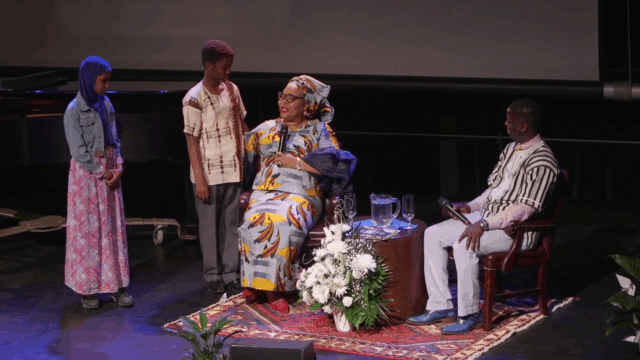
MONROVIA – When a teenager named Lemuel asked Nobel Peace Prize Laureate Leymah Gbowee how it feels to be famous, she answered with a story that sounded less like celebrity and more like a whirlwind.
She was flying overnight from San Francisco, she recalled, after a book event hosted by then–Facebook executive Sheryl Sandberg. “Tomorrow is the Nobel announcement,” Sandberg had told her. “I voted for you, Leymah.” Gbowee brushed it off. “I’ve never done anything for accolades,” she told Lemuel. On the plane she slept, “hair let loose,” next to a businessman she never spoke to.
Landing in New York, her phone exploded. “Voicemail full, text messages full,” she said. One read simply: “Nobel, Nobel, Nobel.” She turned to the stranger beside her: “Sir, I think I just won the Nobel Peace Prize.” The man ahead quickly Googled a photo, glanced back and said, “Yep, you sure did.” Within hours, a half‑empty speaking venue was standing‑room only; TV crews waited with lights and microphones. “I was like, what the hell just happened to my life?” she said, laughing.
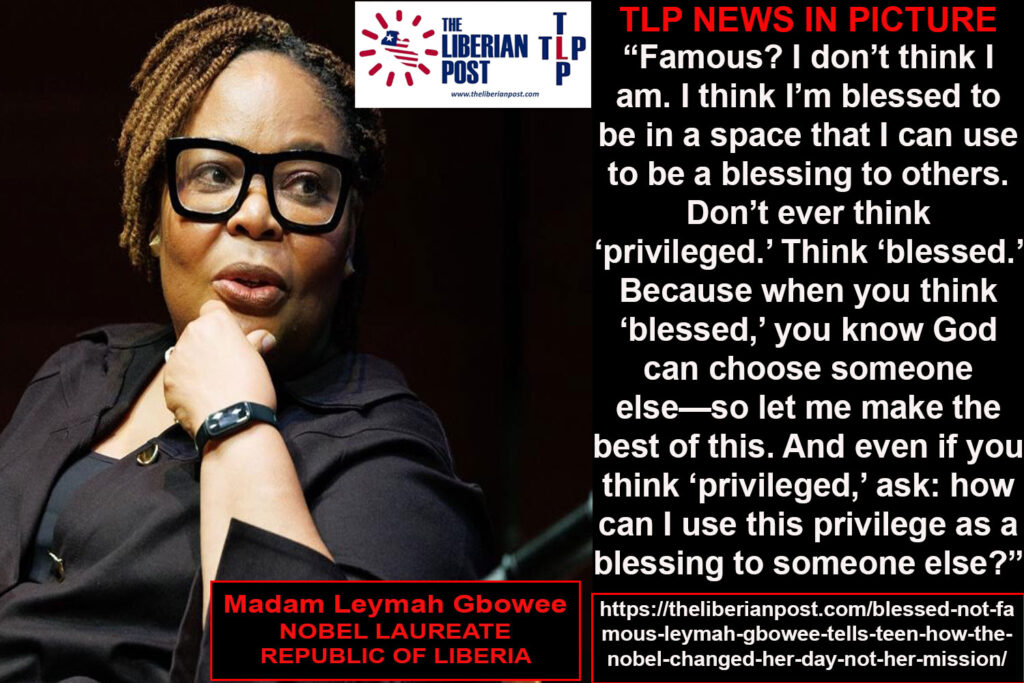
Then she pivoted to the heart of her message. “Famous? I don’t think I am. I think I’m blessed to be in a space that I can use to be a blessing to others,” Gbowee told the teen audience. “Don’t ever think ‘privileged.’ Think ‘blessed.’ Because when you think ‘blessed,’ you know God can choose someone else—so let me make the best of this. And even if you think ‘privileged,’ ask: how can I use this privilege as a blessing to someone else?”
Gbowee’s unvarnished counsel is shaped by hard‑won experience. A social worker and trauma counselor by training, she rose to global prominence as a leader of the nonviolent Women of Liberia Mass Action for Peace. At the height of Liberia’s civil war, she mobilized thousands of women—Christian and Muslim, market traders and professionals—to stage daily sit‑ins, pray in public, and demand peace. Their movement helped pressure Liberian warring factions to negotiate, contributing to the 2003 Accra peace accord. In 2011, she shared the Nobel Peace Prize with President Ellen Johnson Sirleaf and Yemeni activist Tawakkol Karman “for their non‑violent struggle for the safety of women and for women’s rights to full participation in peace‑building.” She later founded the Gbowee Peace Foundation Africa, which supports girls’ education and leadership.
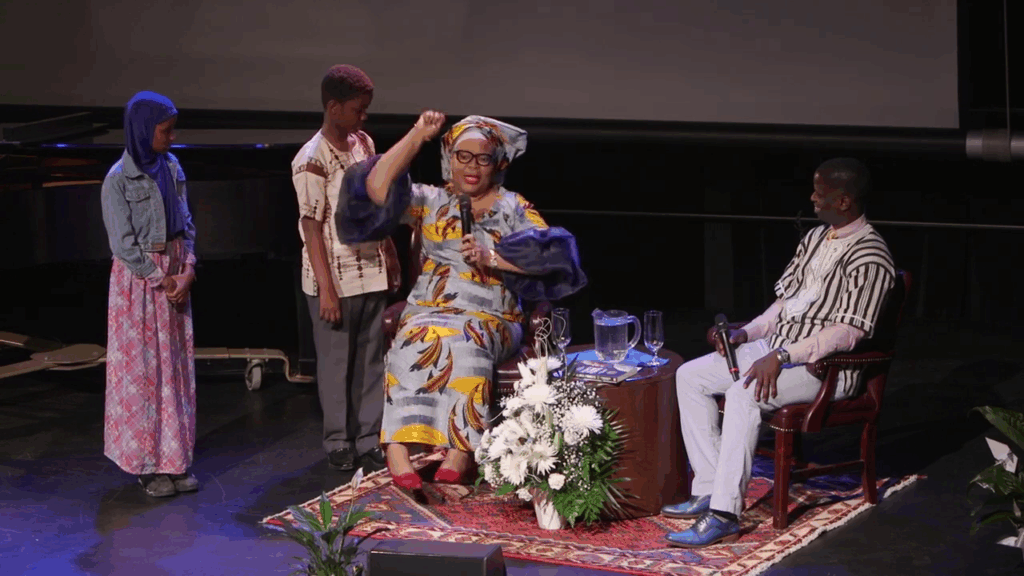
Yet the laureate told Lemuel she still acts on instinct when confronted with everyday injustice. In a second story, she described inching through Monrovia traffic when she saw a woman slap a three‑year‑old boy who fell to the ground. “I rolled down the glass and said, ‘Why did you do that?’” she recounted. When the woman snapped back, Gbowee said she flung open her door—barefoot—and the woman bolted. “No shoes. A Nobel laureate. Throwing stones after an unknown mother,” she said, half‑amused, half‑exasperated at herself. She calmed the child, scolded the mother—“Don’t do that again”—and pressed money into the woman’s hand for the boy. Then came the punchline: “No famous person acts that way.”
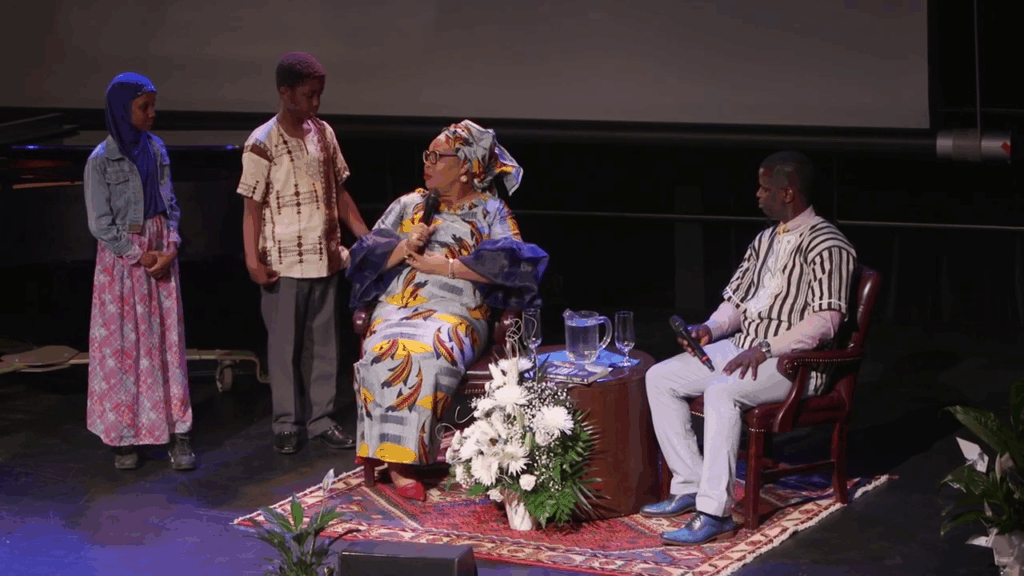
If the exchange drew laughs, the lesson was serious. Fame, she suggested, is a distraction if it dulls urgency or distances a person from the people they claim to serve. “I don’t know how to do the ‘famous’ thing,” she told the teen. What she does know is to intervene, to mentor, to use whatever platform she has to nudge the world toward kindness and justice.
Gbowee’s career has been built on that ethic. Her memoir, Mighty Be Our Powers, chronicles how she went from a young mother during the war to a grassroots organizer who helped bring fighters to the negotiating table. Through her foundation, she has championed scholarships and leadership programs for young women across West Africa, arguing that peace is sustained not just by cease-fires but by education, livelihoods and the daily dignity of families.
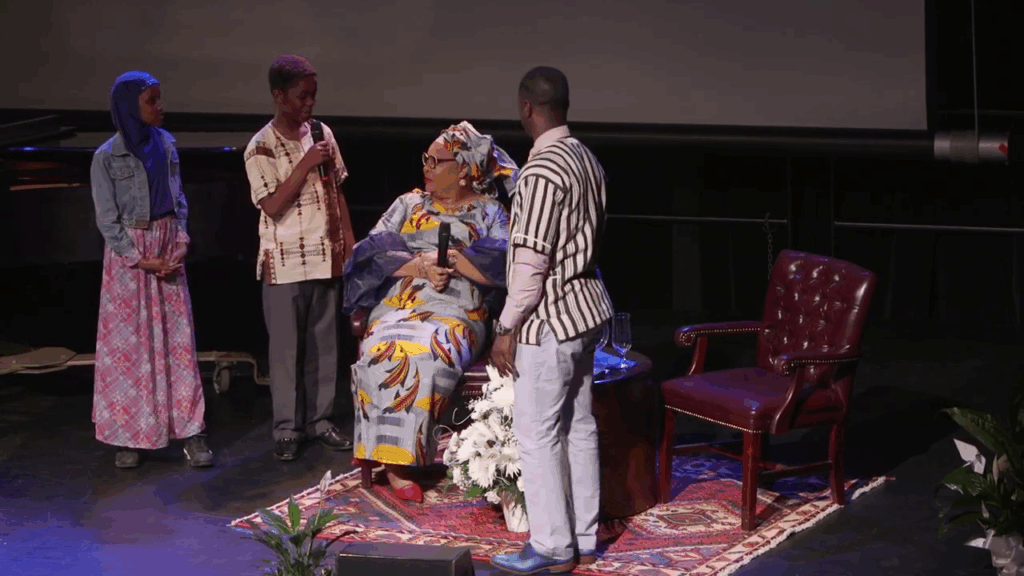
That’s why her advice to Lemuel was as much a challenge as a comfort: take whatever attention, access or advantage you receive and turn it outward. Be the person who asks a hard question in a room full of suits. Be the neighbor who steps in when a child is hurt. Be the student who builds, not your brand, but your community.
The Nobel changed the pace of her day, Gbowee suggested—the calls, the cameras, the crowded rooms. But it did not change her mission. “I’m blessed to be in a space that I can use to be a blessing,” she said. The rest—labels, headlines, even fame—can wait.