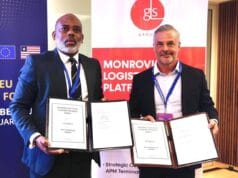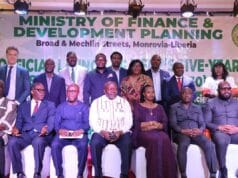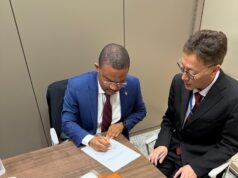
MONROVIA — President Joseph Nyuma Boakai has submitted to the House of Representatives a landmark Concession and Access Agreement (CAA) between the Government of Liberia and Ivanhoe Liberia Ltd., marking a major step toward revitalizing the nation’s rail and port infrastructure.
Signed on July 5, 2025, the agreement sets the stage for a 25-year partnership aimed at modernizing Liberia’s transport corridors and expanding the country’s role in regional mineral exports. It also aligns with President Boakai’s ARREST Agenda for Inclusive Development (AAID), which prioritizes infrastructure, economic diversification, and sustainable growth.
According to the President’s communication, the CAA establishes a framework allowing Guinean iron ore to be transported through Liberia’s rail and port facilities, pending necessary bilateral arrangements between the two neighboring countries.
“This agreement is poised to unlock Liberia’s infrastructure for shared, multi-industry use — creating pathways for inclusive growth and expanded national revenue,” President Boakai wrote in his submission.
Key Provisions of the Agreement
The Ivanhoe Concession Agreement is structured in two main phases:
- Phase I (Access Phase): Ivanhoe Liberia Ltd. will be granted access under existing ArcelorMittal Liberia infrastructure to transport up to five million metric tonnes per annum (5 MTPA) of iron ore.
- Phase II (Expansion Phase): The company will construct and expand new rail and port infrastructure to handle up to thirty million metric tonnes per annum (30 MTPA), subject to regulatory approvals and feasibility studies.
Financial and Community Impact
The agreement carries significant financial benefits for Liberia. Ivanhoe Liberia Ltd. has already paid US$37 million to the previous administration as part of the initial development rights consideration.
Upon ratification, an additional US$10 million will be paid to the government, followed by another US$15 million upon granting physical access during the first phase.
To ensure communities directly benefit from the project, the CAA mandates contributions to a Community Development Fund (CDF). The fund will finance local infrastructure, education, and health projects in host communities — a key element of the Boakai administration’s commitment to equitable growth.
Employment and Economic Prospects
The Ivanhoe agreement is projected to generate over 500 direct jobs during its construction phase and an estimated 3,000 indirect jobs through local suppliers and service providers.
Government officials believe the deal could also stimulate growth in Liberia’s logistics, transport, and manufacturing sectors — further boosting the domestic economy.
Legislative Review Underway
Following its submission, the House of Representatives has forwarded the agreement to its Committees on Investment and Concessions, Transport, and Judiciary for detailed review. The committees are expected to report back to plenary within two weeks.
If ratified, the agreement is anticipated to usher in a new era of infrastructure modernization and regional economic integration, positioning Liberia as a key transport hub for West Africa’s mineral exports.