-Opens Judicial Dialogue on Bench‑to‑Bench Cooperation
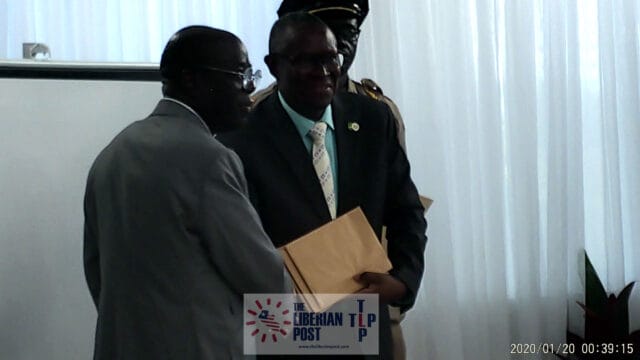
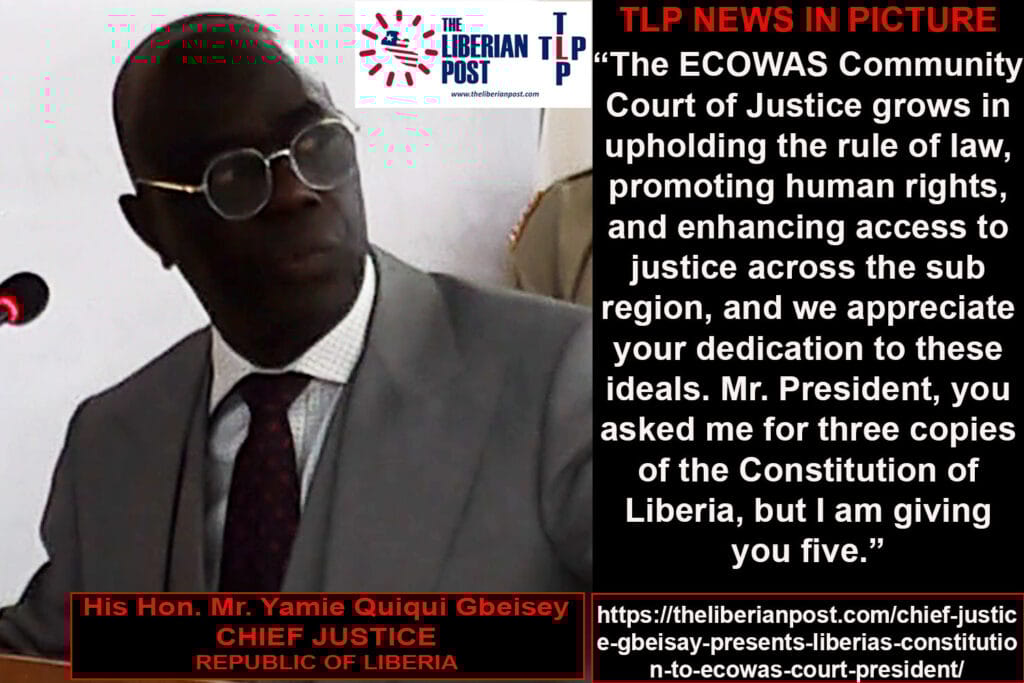
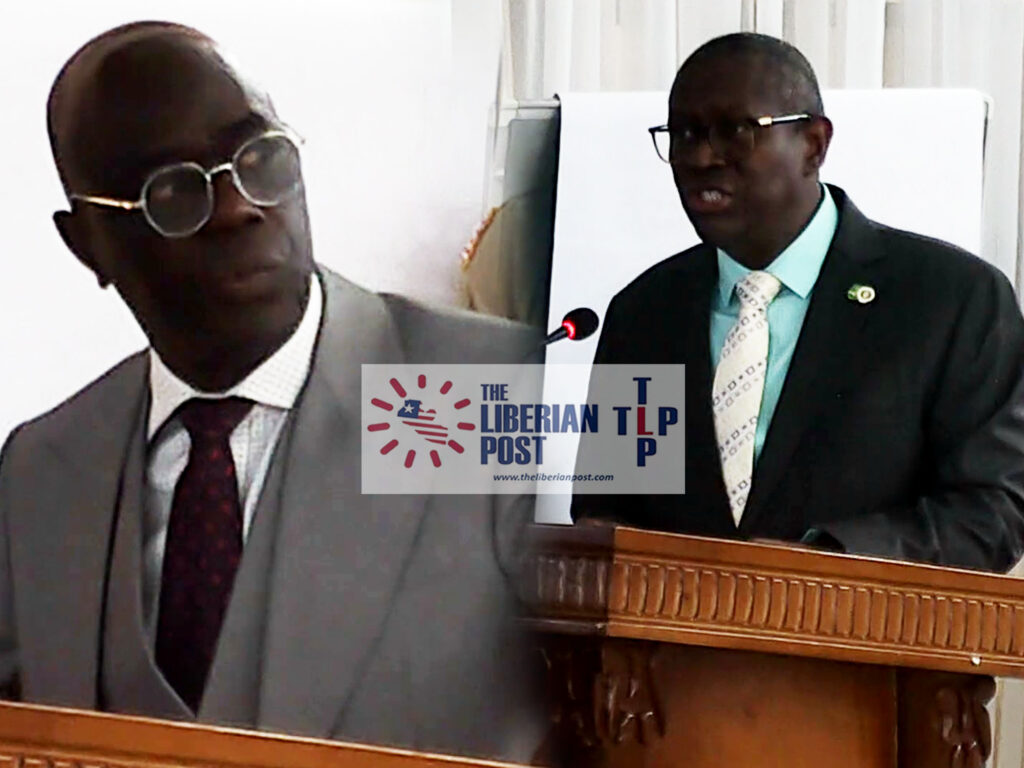
MONROVIA, Liberia — Chief Justice Yamie Quiqui Gbeisay on Friday, November 14, presented five copies of Liberia’s Constitution to the President of the ECOWAS Community Court of Justice, Hon. Justice Ricardo Cláudio Monteiro Gonçalves, as Liberia’s highest court hosted a judicial dialogue aimed at tightening collaboration between regional and national courts.
Welcoming the ECOWAS Court delegation to the Temple of Justice for the forum on “Strengthening Collaboration between Regional and National Courts,” Chief Justice Gbeisay framed the engagement as a practical step toward deepening access to justice across West Africa.
“The ECOWAS Community Court of Justice grows in upholding the rule of law, promoting human rights, and enhancing access to justice across the sub‑region, and we appreciate your dedication to these ideals,” he said. Declaring the conference open, he added a symbolic flourish: “Mr. President, you asked me for three copies of the Constitution of Liberia, but I am giving you five.”
The exchange punctuated the ECOWAS Court’s first‑ever outreach in Liberia, a weeklong program (November 10–16) featuring courtesy calls on national authorities, public sensitization, and technical sessions for judges, magistrates, lawyers, and students.
Partners in Justice, not Rivals
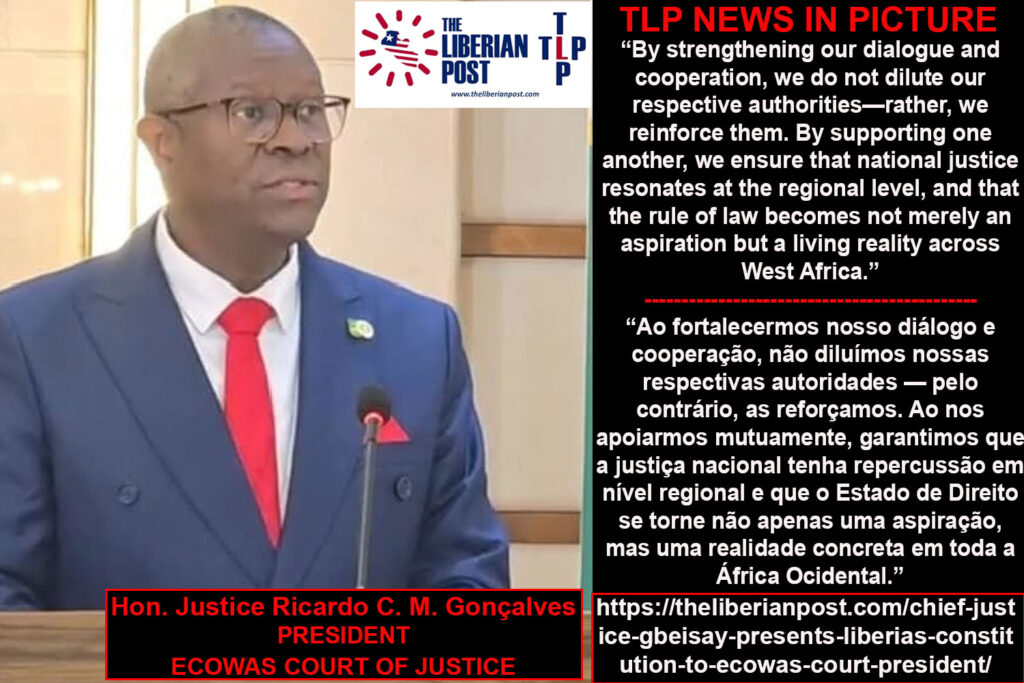
In his address, delivered at the Supreme Court, Justice Gonçalves stressed that national judiciaries and the ECOWAS Court are “partners in justice,” not competitors. “Together we form two complementary levels of a single legal order whose legitimacy derives from the will of our Member States and the confidence of our citizens,” he said.
He emphasized that national courts are the “first line of defense” for human rights and the rule of law, with the regional court intervening only when a violation engages the international responsibility of a member state. “From the perspective of national courts, the existence of the ECOWAS Court should not be seen as a challenge but as a reinforcement of national judicial mandates,” he said. When domestic courts grant effective remedies, he noted, they not only deliver justice but also “protect the State from potential international litigation.”
Judicial Dialogue as “Oxygen” of the Rule of Law
Calling the day’s engagement “a necessity, not a courtesy,” Justice Gonçalves said the complexity of human‑rights protection and Community law requires constant bench‑to‑bench coordination to ensure coherence, avoid conflicts of jurisdiction, and promote predictable outcomes. “Judicial dialogue is not a luxury; it is the oxygen of the rule of law within an integrated legal space,” he said.
The ECOWAS Court president outlined practical avenues to consolidate cooperation:
- Regular judicial dialogues and conferences to exchange jurisprudence and develop coherent regional standards;
- Joint training to strengthen competence on regional human‑rights law, case management, and enforcement;
- Shared research and databases to facilitate cross‑referencing of national and ECOWAS case law;
- Clear national mechanisms for recognizing and enforcing ECOWAS Court judgments; and
- Short‑term institutional exchanges for mutual learning and best‑practice sharing.
“Without [national courts’] cooperation, decisions of the ECOWAS Court—no matter how fair or well‑reasoned—risk remaining purely theoretical,” he warned.
Liberia’s Bench Signals Welcome—and Work Ahead
Chief Justice Gbeisay told the ECOWAS delegation he expects the dialogue to “trigger further collaboration and enhance the collective capacity to address the different challenges in the sub‑region.” He urged full engagement by Liberia’s legal community—judges, magistrates, lawyers, and stakeholders—throughout the outreach.
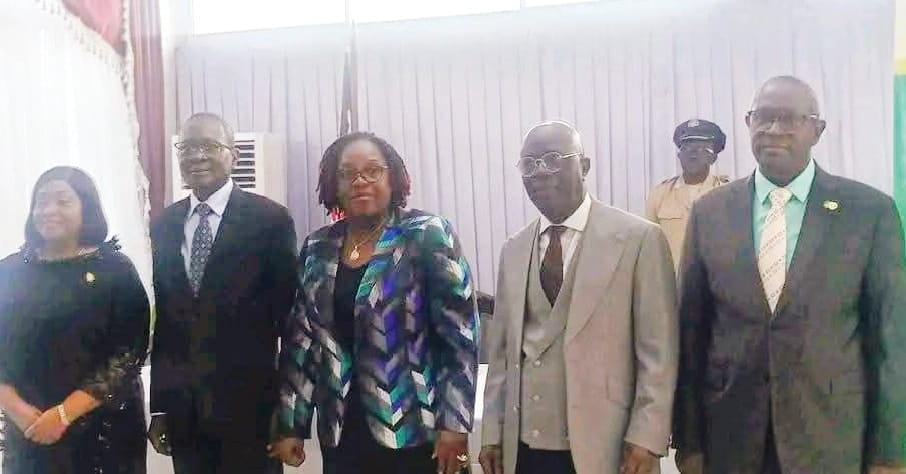
The ceremony drew Associate Justice Jamesetta Howard‑Wolokolie, former Vice President Jewel Howard‑Taylor, leaders of the Liberia National Bar Association, and the ECOWAS Court’s Vice‑President Hon. Justice Sengu Mohamed Koroma, among others.
Context: Outreach and enforcement
The ECOWAS Court’s outreach in Liberia has highlighted both access and enforcement. Earlier in the week, ECOWAS officials previewed an Electronic Case Management System to enable 24/7 e‑filing and hybrid hearings, and promoted a regional moot competition to build a pipeline of ECOWAS‑ready advocates. Liberian legal leaders—including the LNBA president—have pressed for consistent compliance with the Court’s binding judgments across the region to ensure the Court’s authority translates into real‑world impact.
A Shared Mission
“By strengthening our dialogue and cooperation, we do not dilute our respective authorities—rather, we reinforce them,” Justice Gonçalves concluded. “By supporting one another, we ensure that national justice resonates at the regional level, and that the rule of law becomes not merely an aspiration but a living reality across West Africa.” Chief Justice Gbeisay’s gesture—handing over not three but five copies of Liberia’s Constitution—captured the day’s message: regional justice is built on strong national foundations, and the work of making the law live in the lives of citizens depends on courts that speak, and act, together.