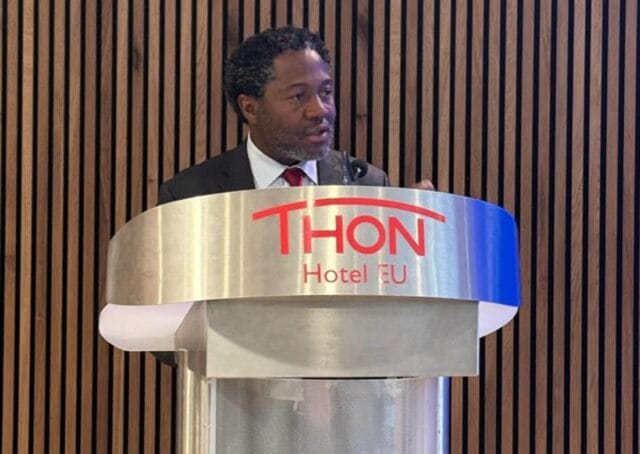
BRUSSELS, Belgium – At the close of the Liberia–European Union Partnership Dialogue in Brussels, Deputy Minister for International Cooperation and Economic Integration, Ibrahim al-Bakri Nyei, delivered a powerful message to Liberians living across Europe: you are more than remittance senders—you are Liberia’s “16th county.”
Speaking during a cocktail engagement with members of the Liberian diaspora community, Nyei described Liberians abroad as an integral extension of the nation, whose value transcends financial contributions.
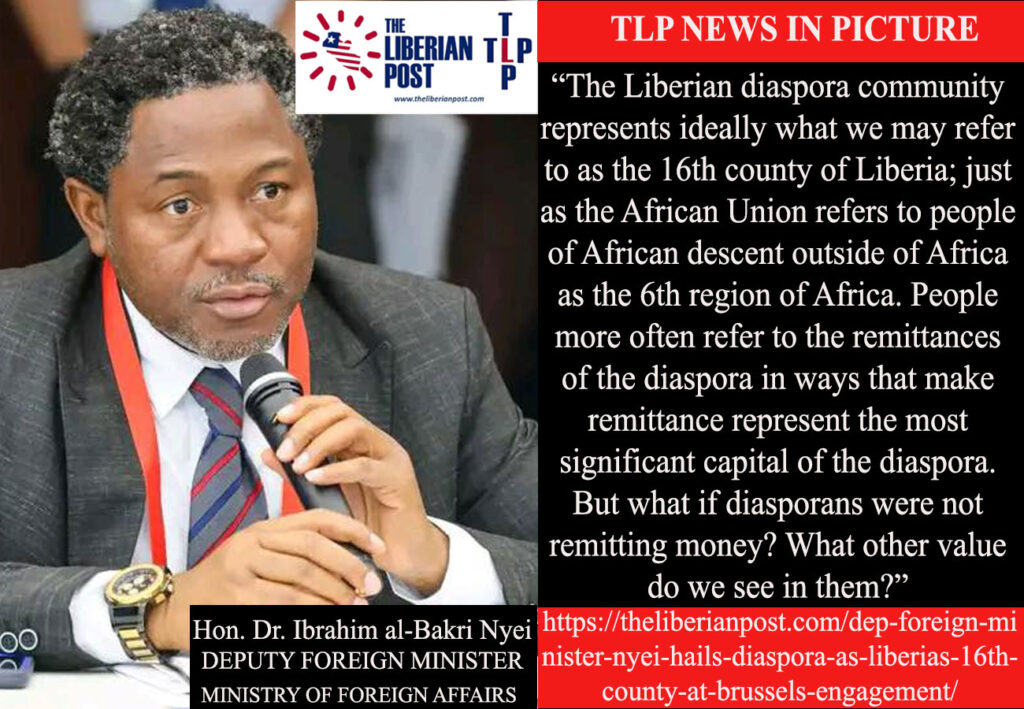
“The Liberian diaspora community represents ideally what we may refer to as the 16th county of Liberia; just as the African Union refers to people of African descent outside of Africa as the 6th region of Africa,” Nyei declared to applause.
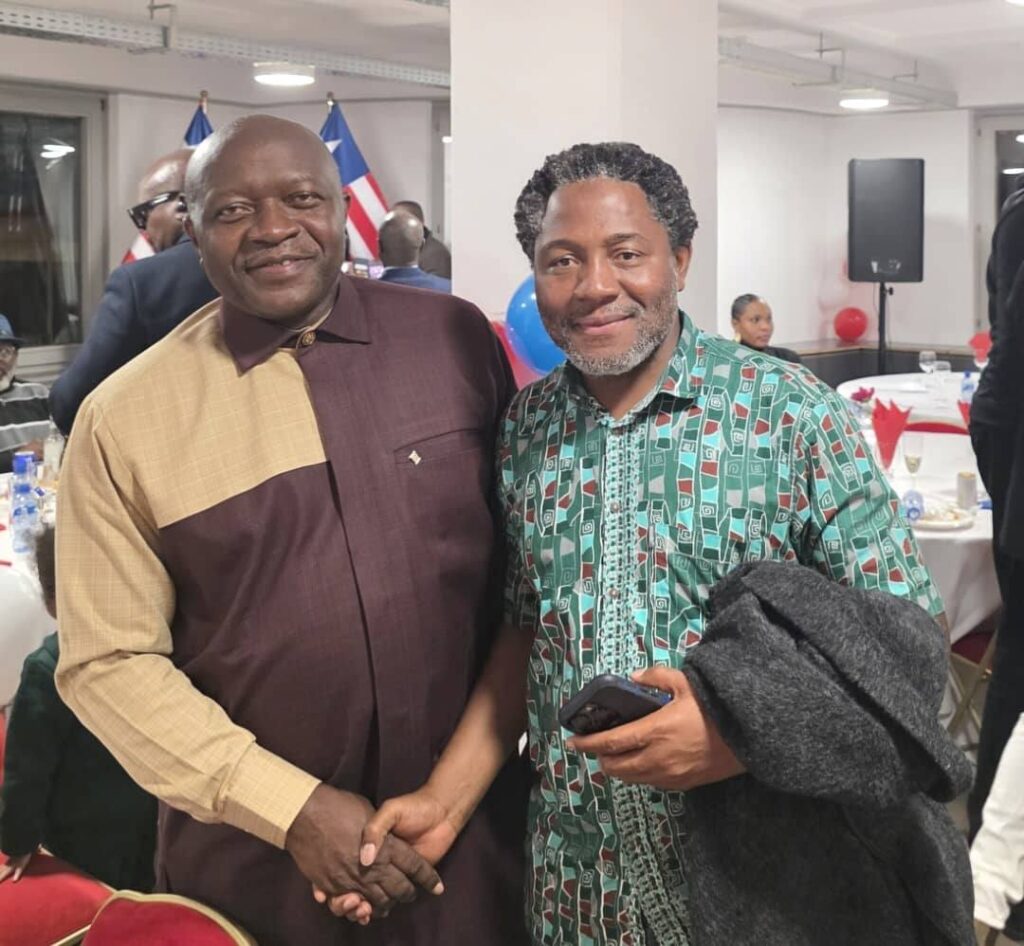
The gathering, held on the margins of the Liberia–EU Business Forum, blended policy reflections with candid dialogue between government officials and Liberians residing in Europe.
Beyond Remittances
Liberia’s diaspora has long been recognized as a major source of remittances, contributing significantly to household incomes and national economic stability. But Nyei challenged what he described as a narrow framing of the diaspora’s worth.
“People more often refer to the remittances of the diaspora in ways that make remittance represent the most significant capital of the diaspora,” he noted. “But what if diasporans were not remitting money? What other value do we see in them?”
He argued that Liberia must adopt a broader, more inclusive understanding of diaspora engagement—one rooted in belonging, citizenship, advocacy, and national participation.
“I think we must now look at this community beyond remittances. We must foreground their belonging to the homeland and their interactive citizenship,” he said. “Their continuous advocacy for the betterment of the homeland and their deep interest in its politics and public life are the most significant symbols of their love and belonging.”
The remarks signaled a shift in tone from traditional diaspora engagement models focused primarily on financial flows to a more holistic approach centered on identity, rights, and national partnership.
“We Have Heard You”
Nyei assured attendees that the concerns and demands of Liberians abroad have not gone unnoticed by the current administration.
“The demands of the diaspora have been heard in many forums,” he stated. “And President Joseph Nyuma Boakai is determined to respond to those demands.”
He pointed to ongoing reforms spearheaded by Foreign Minister Sara Beysolow Nyanti, particularly in the areas of passport processing and consular services—longstanding issues frequently raised by Liberians abroad.
“Foreign Minister Nyanti is implementing critical reforms to improve passport delivery and other consular services to Liberians abroad,” Nyei said, adding that such reforms are designed to restore confidence and strengthen the connection between the state and its citizens overseas.
Economic Diplomacy With a Diaspora Focus
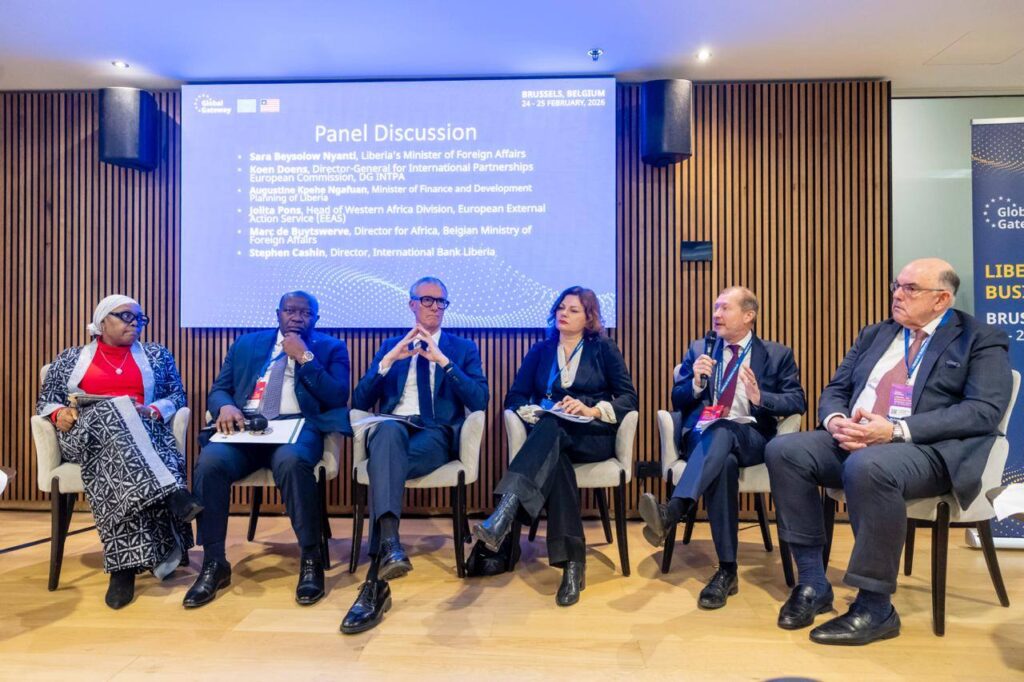
Nyei also linked diaspora engagement to Liberia’s evolving economic diplomacy strategy, which was a central theme of the Liberia–EU Partnership Dialogue and Business Forum.
“Minister Nyanti’s economic diplomacy agenda is not only about attracting foreign investors,” he explained. “It’s also about mobilizing Liberian capital abroad for investment at home.”
This broader strategy envisions diaspora professionals, entrepreneurs, and investors as active participants in Liberia’s development trajectory—partners in job creation, innovation, and national transformation.
Officials at the Brussels forum emphasized that private sector-led growth, trade partnerships, and investment mobilization are at the heart of Liberia’s engagement with the European Union. Nyei’s remarks underscored that Liberians in Europe are expected to play a pivotal role in that agenda.
A Symbolic Closing to the Dialogue
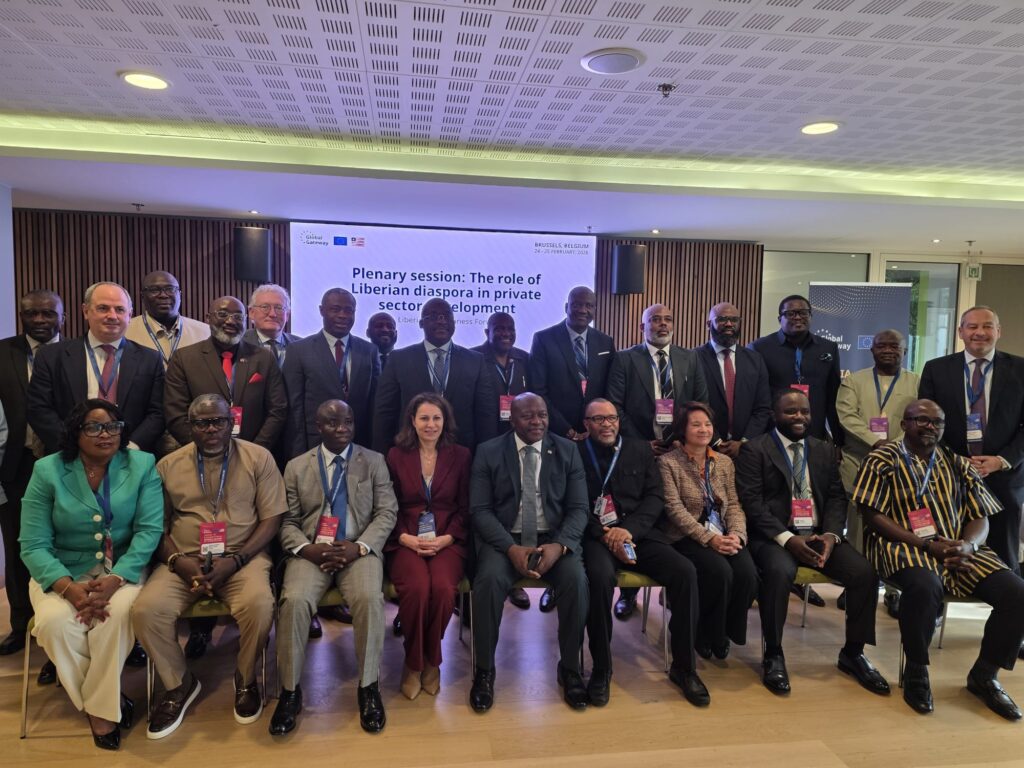
The diaspora engagement served as one of the concluding highlights of the multi-day Liberia–EU dialogue, which brought together government officials, European partners, and business leaders around major investment and development initiatives.
While the formal sessions focused on infrastructure, energy, agriculture, and private sector growth, the cocktail event offered a more intimate setting—allowing government officials to listen directly to Liberians living abroad.
By framing the diaspora as the “16th county,” Nyei elevated the symbolic and political significance of Liberians overseas, positioning them not as distant observers but as embedded stakeholders in the nation’s future.
As Liberia seeks to deepen its partnership with the European Union and accelerate economic reforms, the message from Brussels was clear: the road to national transformation will not only pass through foreign capitals and boardrooms—but also through the hearts and hands of Liberians across the globe.
Follow The Liberian Post on Facebook and X (formerly twitter)