Overview
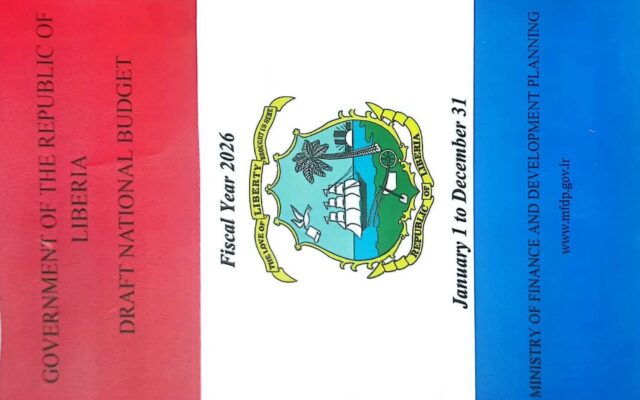
Liberia’s Draft FY2026 National Budget, at US$1.211 billion, is the first to cross the one‑billion mark. It signals ambition—tripling the public investment envelope and claiming 94% domestic financing—but also exposes priorities that critics say tilt toward political elites while bread‑and‑butter services lag.
What’s New and ambitious
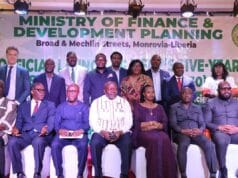
- Bigger size, higher self‑reliance: Finance Minister Augustine Kpehe Ngafuan says US$1.211 billion in total revenue is projected—US$1.13 billion (94%) domestic and US$72 million (6%) external—and the full draft is online for public scrutiny.
- Capital push: The Public Sector Investment Program (PSIP) rises to US$281.5 million, including a conditional US$200 million ArcelorMittal signature bonus. The government touts a US$100 million boost equally split between roads and energy.
- Security upgrades: Allocations rise for the Liberia National Police (US$21.5m → US$25.7m), Liberia Immigration Service (US$7.4m → US$10.7m), and Liberia Drug Enforcement Agency (US$3.1m → US$7.6m).
Where Inequality Concerns Arise
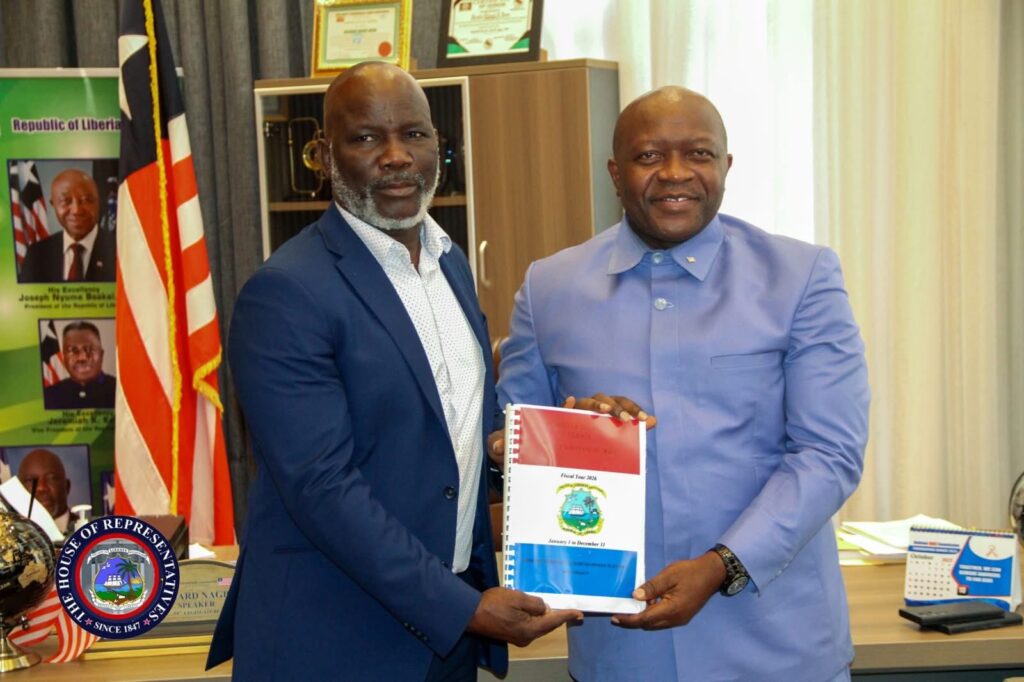
- Legislature surge: The Legislature’s total climbs from US$41.3 million (2024/2025) to US$51.7 million (2026). Within that:
- House of Representatives: US$31,046,749
- Senate: US$16,440,876
- Speaker’s Office: US$1,848,000
- Deputy Speaker: US$1,415,839
- Pro Tempore: US$958,926
- Travel and perks: The Legislature’s travel/goods/services lines increase from US$11.3 million to US$14.6 million (+29%), funding foreign trips, vehicle maintenance, and administrative costs—while many hospitals lack medicines, schools are dilapidated, and communities face basic service gaps.
- Capitol Building works: US$3.6 million under the PSIP is slated for Capitol renovations, reportedly financed from the US$200 million signature bonus—funds originally presented as broadly for infrastructure and public development.
Revenue Realism—Risks Under the Hood
- One‑off windfall: The US$200 million Mittal bonus is non‑recurring and contingent on legislative ratification. It should be ring‑fenced for capital projects; using it to inflate recurrent costs would create a 2027 cliff.
- Collection headwinds: By September 2025, Liberia reportedly collected US$252 million in income and profits taxes—short of a US$306 million target. The FY2026 projection of US$365 million for that line looks optimistic to skeptics. Other lines (GST, property tax, import duties) also face drag. Conservative estimates suggest potential shortfalls of US$120–135 million if execution lags.
- Recurrent gravity: Recurrent spending is projected at US$929.6 million (wage bill, goods and services), while PSIP stands at US$281.5 million. Public concern remains that non‑essential recurrent items can crowd out core services unless tightly policed.
Winners and Laggards
- Security agencies: Notable increases for LNP, LIS, and LDEA—aligned with rising crime, migration control, and narcotics enforcement priorities.
- National Fire Service: Static at US$2.9 million, despite growing urban risk and frequent structural fires.
- Social sectors: The draft’s narrative stresses roads and power; the public will look for visible gains in clinics, school rehab, teacher support, and local water systems to feel the impact.
Public reactions and accountability pressure Civil society activist Martin K. N. Kollie criticized the Legislature’s increase: “US$41.3 million was spent on the Legislature in 2025. You have increased it to US$51.7 million in 2026… We won’t celebrate a 1.2 billion budget when almost all the money will be consumed again by a few greedy and corrupt politicians.” Others applaud the ambition but question whether projected revenues and project pipelines can deliver without slippage.
What Should the Legislature and MFDP Tighten Before Passage
- Ring‑fence the Mittal bonus: Statutory language should bind the US$200 million strictly to capital projects, with project lists and timelines.
- Publish a PSIP pipeline: Designs, procurement plans, and implementation teams for each flagship corridor and energy intervention must be ready; unprepared projects should not clog the PSIP.
- Guard recurrent growth: Cap non‑essential administrative spending (including travel) and redirect savings to primary services and local infrastructure.
- Oversight resourcing: Fund GAC, LACC, IAA, PPCC, LEITI, and the Judiciary adequately to protect a larger envelope from leakage.
- Quarterly dashboards: Mandate public reporting on budget execution and outputs (km of road maintained/built, hours of power supplied, school/clinic upgrades) so citizens can track delivery.
- SOE transparency: Require all SOEs to submit and publish financial plans per the PFM law; enforce compliance.
Bottom Line
The FY2026 draft blends big ambition with uneven priorities. Tripling public investment and pushing 94% domestic financing can be transformative—if revenue targets are realistic, one‑off funds are protected, and spending turns into visible roads, power reliability, and frontline services. But the sharp uptick for the Legislature and perks, alongside static funding for critical responders like the Fire Service, reinforces perceptions of inequality.
For ordinary Liberians to feel a “year of the billion,” the budget must be tightened to favor clinics, classrooms, feeder roads, lights on, and clean water—backed by quarterly proof. Ambition is welcome. Now the math and the message need to align with everyday needs.