-Praises Liberia’s Treaty Leadership and Pushes Access, Awareness, and Enforcement
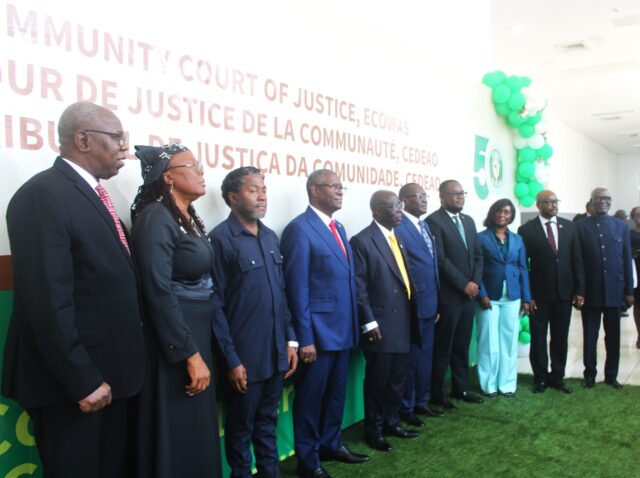
MONROVIA, Liberia — The ECOWAS Community Court of Justice on Wednesday, November 12, formally opened a four‑day outreach and legal clinic in Monrovia—its first in Liberia—aimed at closing the public awareness gap on the Court’s mandate, jurisdiction, and procedures and bringing regional justice closer to citizens.
At the opening ceremony at the Ellen Johnson Sirleaf Ministerial Complex in Congo Town, the Court hailed Liberia as the only member state to have ratified all key protocols establishing and expanding the Court’s authority, even as national and regional stakeholders pressed for stronger collaboration and enforcement of judgments across West Africa.
“Liberia deserves recognition and commendation for its leadership,” said the Court’s President, Justice Ricardo Cláudio Monteiro Gonçalves, in remarks delivered on his behalf. “Your country’s ratification of all the protocols governing this Court demonstrates a firm commitment to the rule of law, regional justice, and cooperation.” He called for deeper cooperation between national institutions and the ECOWAS Court to make justice accessible and meaningful across the sub‑region.
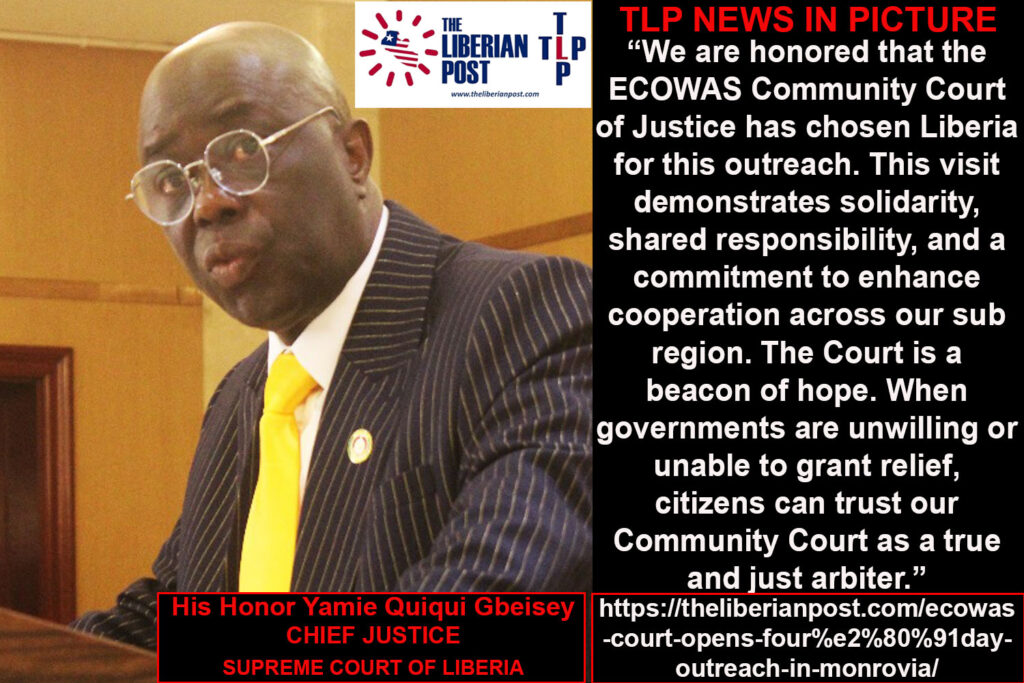
The event drew Chief Justice His Honor Yamie Quiqui Gbeisay, Associate Justices of the Supreme Court, senior government officials, the diplomatic corps, civil society leaders, legal practitioners, and ECOWAS officials.
Court Underscores Human‑Rights Role, Direct Access For Citizens
Chief Registrar Yaouza Ouro Sama said the outreach reflects ECOWAS’s shift from an “ECOWAS of States” to an “ECOWAS of Peoples,” stressing that the Court belongs to the region’s citizens. “Although the Court has existed since 2001, many community citizens are unaware of its existence or mandate,” he said. Under the 2005 Supplementary Protocol, individuals can file human‑rights cases directly against member states; most of the Court’s docket now involves alleged rights violations. He emphasized the Court is not an appellate body over national courts but a court of first and last instance, whose judgments are final and binding.
Chief Justice: A Beacon for Ordinary Citizens
Chief Justice Gbeisay welcomed the sensitization effort as a “vital step” toward deepening regional integration and access to justice. “We are honored that the ECOWAS Community Court of Justice has chosen Liberia for this outreach,” he said. “This visit demonstrates solidarity, shared responsibility, and a commitment to enhance cooperation across our sub‑region.” The Court, he added, is “a beacon of hope” when national remedies fail: “When governments are unwilling or unable to grant relief, citizens can trust our Community Court as a true and just arbiter.” He urged citizens, civil society, and public institutions to engage actively through workshops and town halls.
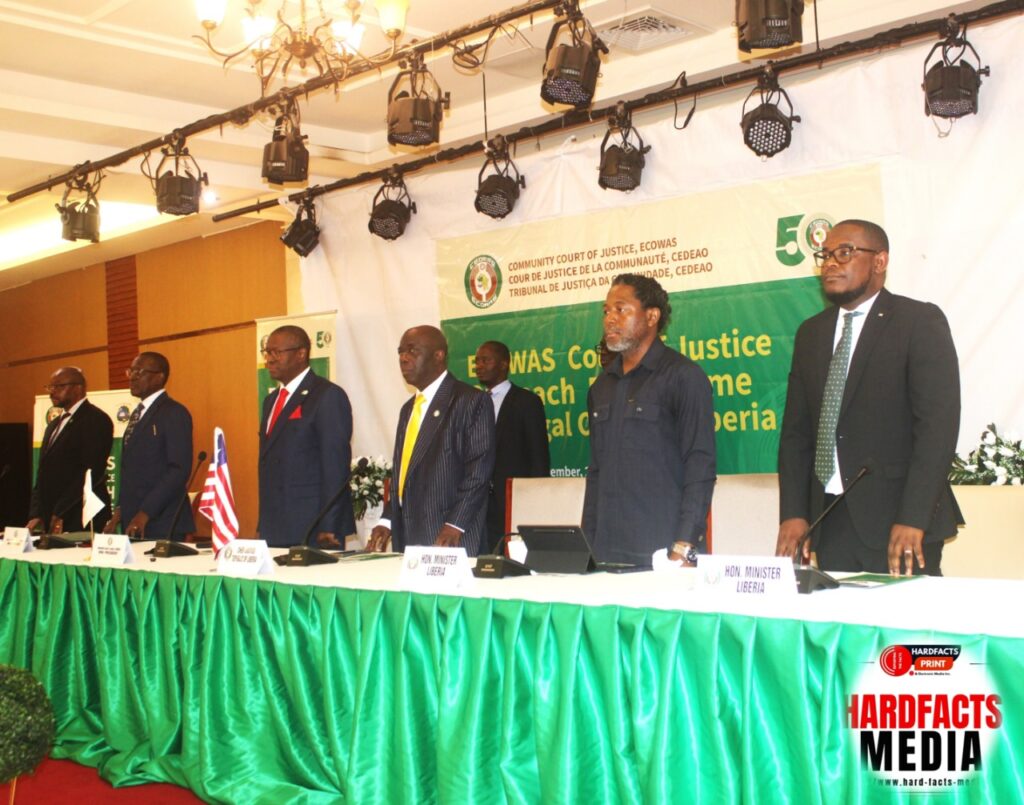
Foreign Affairs, Finance Reaffirm Liberia’s Commitment
Deputy Minister for International Cooperation and Economic Integration, Dr. Ibrahim Nyei, speaking for Foreign Minister Sara Beysolow‑Nyanti, reaffirmed Liberia’s commitment to justice, the rule of law, and regional cooperation. “Your presence is a testament to your unwavering commitment to justice, the rule of law, and the advancement of regional integration in West Africa,” he said, pledging full cooperation in implementing the Court’s programs and decisions.
Deputy Finance Minister for Administration Bill McGill Jones said Liberia is current on its 2024 and 2025 ECOWAS community levy payments and has prioritized arrears in the 2025/2026 budget. “Except for arrears owed over many years… Liberia is now in full compliance with the 2024 and 2025 community levy payments,” he said, calling the outreach a demonstration of Liberia’s commitment to justice, human rights, and the rule of law within regional integration.
ECOWAS Commission: Awareness And Enforcement Are Key
Representing ECOWAS Resident Representative Josephine Nkrumah, Dr. Nat B. Walker, Political Advisor at the ECOWAS Office in Liberia, said the outreach marks the bloc’s 50th anniversary under the theme of deepening integration and access to justice. “Many citizens remain unaware of the Court’s functions or how to access it,” he warned. The program will “educate, guide, empower, and engage” citizens and stakeholders, he said, arguing that an informed public strengthens enforcement and impact.
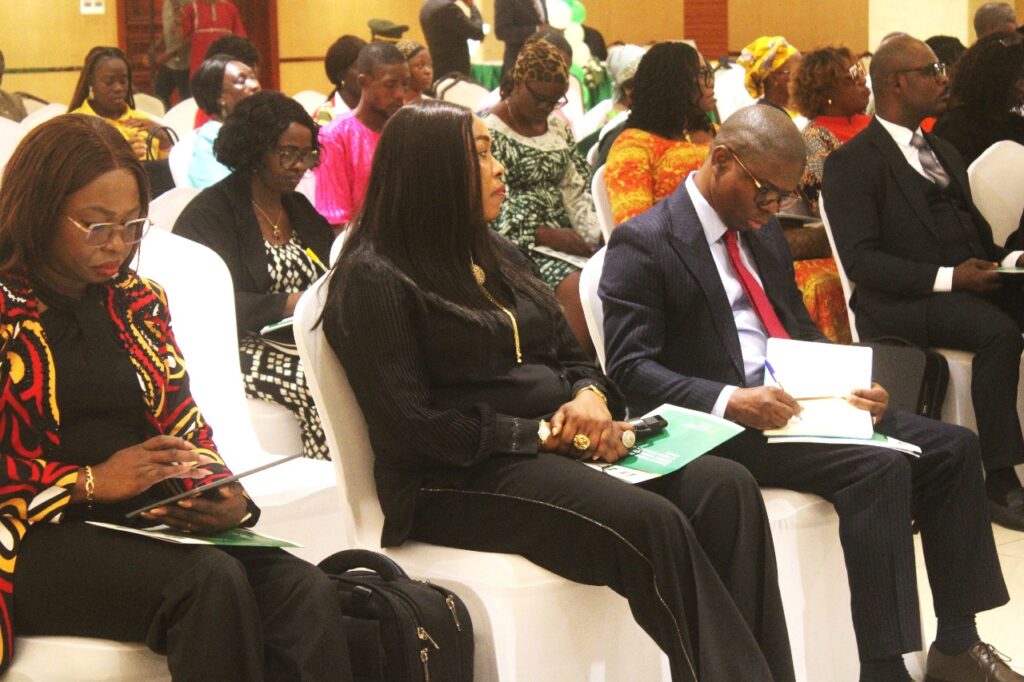
Bar Association: Enforce Judgments or Undermine the Court
At a technical workshop for lawyers and law students at the University of Liberia, Liberia National Bar Association (LNBA) President Cllr. Bornor M. Varmah pressed the region’s political leadership to respect the Court’s binding decisions. “There is no way to give meaning and effect to the ECOWAS Community Court of Justice if the political leadership in the ECOWAS sub‑region will not support the Court by enforcing judgments,” he said. He urged President Joseph Nyuma Boakai to encourage regional counterparts to back compliance and cited outstanding judgments involving Liberia, pledging the Bar’s collaboration with the Court.
What The Court Does—And Why It Matters Created under Articles 6 and 15 of the Revised ECOWAS Treaty, with its first judges sworn in 2001, the Court has four distinct mandates:
- Interpreting and applying the ECOWAS Revised Treaty and Community texts;
- Serving as an administrative tribunal for ECOWAS officials;
- Acting as an arbitration tribunal; and
- Adjudicating human‑rights cases brought directly by individuals against member states.

Through the 2005 Supplementary Protocol, the Court’s human‑rights jurisdiction has become the centerpiece of its work, offering citizens a regional forum when domestic remedies are exhausted or unreasonably delayed. Officials say the Monrovia outreach and legal clinic are designed to explain how to access the Court, how to file properly, and how to ensure judgments are implemented at home.
Next Steps
The outreach runs through November 16 with public legal clinics, technical sessions, and courtesy calls on national authorities. ECOWAS officials also previewed ongoing digital reforms, including an Electronic Case Management System for e‑filing and hybrid hearings, and promoted a regional moot court to build a pipeline of ECOWAS‑ready advocates.
“The Court is here to serve the peoples of West Africa,” Chief Registrar Ouro‑Sama said. “This program embodies our belief that an informed citizenry is an empowered citizenry—and that access to justice is the heart of regional integration.”