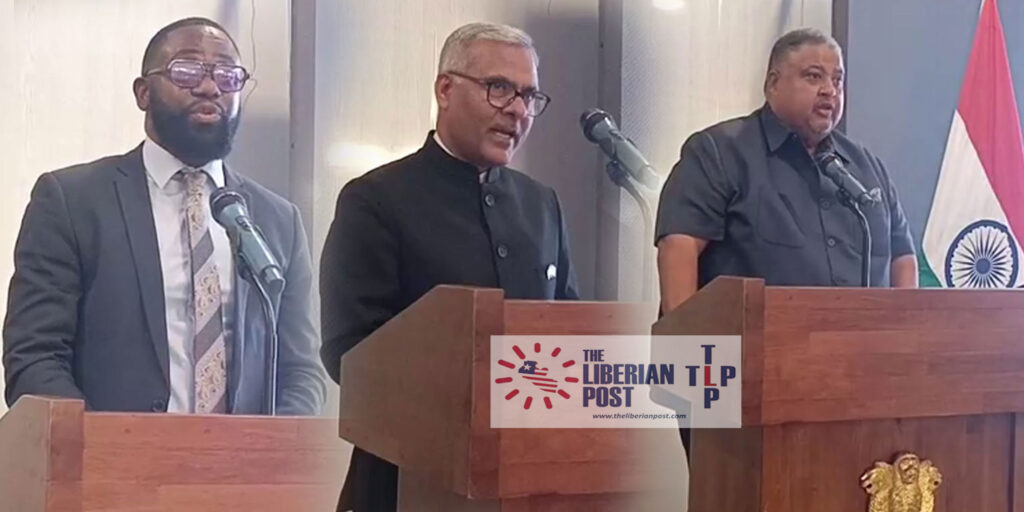
The inaugural seminar on “India–Liberia: Diaspora’s Role in Trade, Investment and Development” marks not just a diplomatic milestone, but the beginning of a new chapter in Liberia’s pursuit of sustainable growth through strategic global partnerships. The gathering, graced by India’s Ambassador to Liberia, H.E. Manoj Bihari Verma; former Commerce Minister Amin Modad; and Acting Information Minister Johnny S. Tarkpah, was more than ceremonial — it was a call to action grounded in mutual respect, shared values, and economic vision.
For more than half a century, India and Liberia have nurtured ties built on trust and cooperation. The Indian diaspora in Liberia — now several decades strong — has woven itself into the nation’s economic and social fabric, contributing across sectors from commerce to healthcare, construction to education. As Ambassador Verma rightly noted, this diaspora is not just a community of traders; it is a “living bridge” connecting two nations whose destinies are intertwined by enterprise and empathy.
What stands out in this new discourse, however, is the deliberate shift from sentiment to structure — from nostalgia to strategy. Former Minister Modad’s call for a “strategic economic partnership” echoes what Liberia’s current development trajectory demands. His appeal for joint ventures in agro-processing, ICT, pharmaceuticals, and renewable energy speaks to the heart of the ARREST Agenda for Inclusive Development, which prioritizes private-sector-led transformation and value addition.
He was right to challenge both nations to think beyond traditional trade flows. Liberia must stop exporting only raw materials and begin processing them locally — with Indian expertise, technology, and investment as key enablers. Such cooperation is not charity; it is smart economics.
Acting Minister Tarkpah’s remarks underscored this urgency. His reminder that global aid fatigue is real — and that inter-country trade and investment remain the true engines of development — was both candid and timely. His call to transform this seminar into a standing India–Liberia Trade and Development Forum reflects the government’s intent to make dialogue a permanent instrument for progress.
The trade statistics he cited — a jump from US$243 million in 2023–2024 to US$397 million in 2024–2025 — confirm the promise of this partnership. But they also reveal potential far beyond the numbers. India’s decision to grant Liberia duty-free access to its market, coupled with the 4,000 Liberians studying in Indian universities, underscores a relationship that is already fertile with opportunity. What remains is to organize, institutionalize, and scale it.
This is where the Indian diaspora becomes indispensable. As Ambassador Verma envisioned, this community is not merely an observer but a catalyst — equipped with the understanding, networks, and trust to bridge investment gaps. If empowered and engaged through structured platforms such as business councils or joint chambers, the diaspora could help unlock trade corridors that benefit both nations.
Liberia’s leadership must therefore seize this moment. Turning rhetoric into results will require reforms that ensure transparency, regulatory consistency, and ease of doing business. Likewise, Indian investors must look beyond short-term gains and commit to long-term partnerships that build local capacity, create jobs, and transfer knowledge.
This week’s seminar has rekindled the spirit of cooperation that first united our two nations. The challenge now is to make it count — by translating goodwill into growth, and dialogue into durable development.
In the words of Ambassador Verma, “Let us honor the legacy of the past 50 years and work towards the next 50 years of even deeper friendship, partnership, and prosperity.” That vision should be our shared compass — a golden bridge between India’s innovation and Liberia’s aspiration.