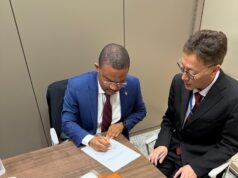
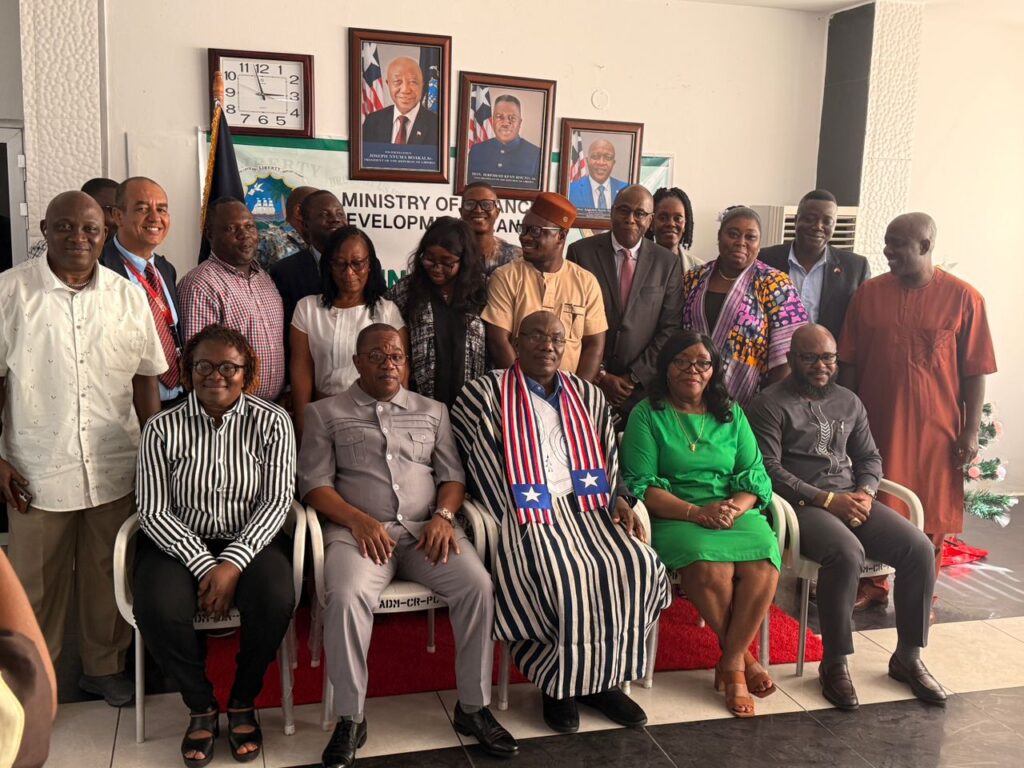
Liberia has a long tradition of celebrating political victories, new projects, and big announcements. We are less consistent at recognizing something equally important: the quiet, practical work of people who help the country move forward without cameras, slogans, or personal gain. That is why the Ministry of Finance and Development Planning’s decision to honor Prof. Ayodeji Samson Olatunji Ogunjuyigbe, Provost of the Postgraduate College at the University of Ibadan, deserves more than a passing headline. It deserves applause—and imitation.
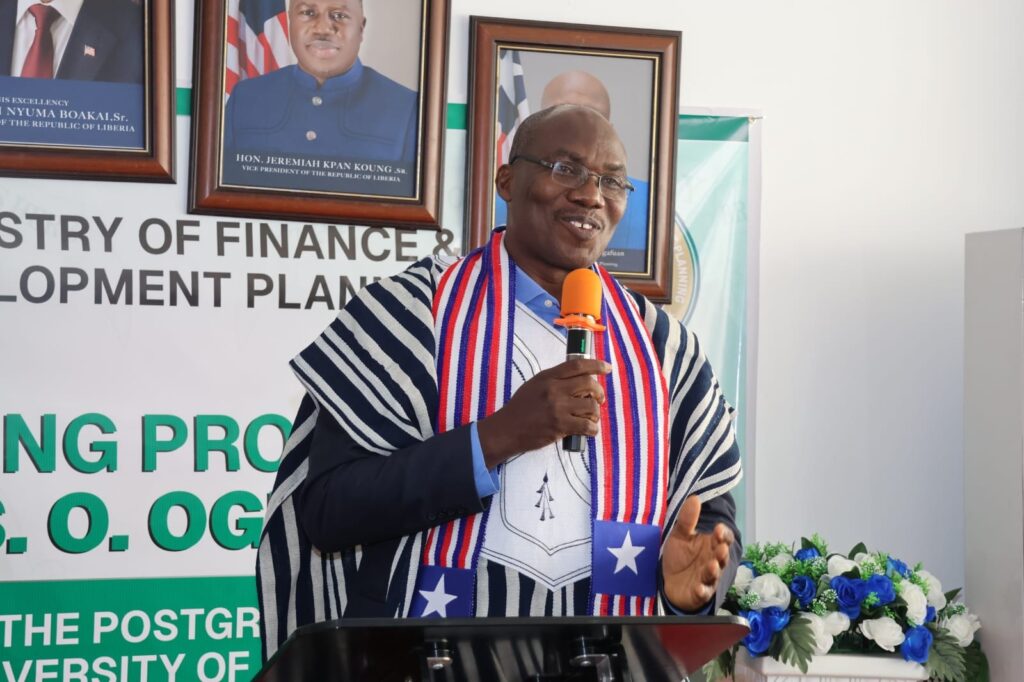
At the honoring ceremony, Deputy Finance Minister for Fiscal Affairs Anthony Myers did more than deliver courtesy remarks. He pointed to a reality that often gets ignored in public discourse: reform is not built only by laws and policies; it is built by people—trained people—who know what to do, how to do it, and why it matters. The partnership that trained Liberian officials in fiscal decentralization and local government financial management is already bearing fruit, including a push to update Liberia’s fiscal decentralization manual and expand county treasury services so counties can process transactions without always running to Monrovia. That is not theory. That is governance becoming real.
But the editorial point is this: giving flowers is not weakness—it is wisdom.
Giving Flowers Builds the Culture We Say We Want
When government officials publicly thank a partner who delivered value, they send a message to everyone watching: competence is noticed; service is valued; integrity matters. In today’s world where too many people feel unseen and unappreciated—especially public servants who work with limited resources—recognition becomes a form of national investment.
The speakers at the ceremony did not pretend that the partnership was perfect or easy. Myers recalled how the Provost, in his words, took a remarkable level of responsibility for the Liberian delegation, even taking financial risk to ensure the program ran smoothly. Comptroller and Accountant General Elwood Nettey also spoke to practical challenges that arose and the support that helped stabilize the situation. Those details matter. They tell us that this honor was not ceremonial; it was earned.
And importantly, it reminds us that excellence and goodwill exist—sometimes in places our stereotypes try to hide. Myers’ comments about professional encounters with Nigerians were not simply flattery. They were a corrective to lazy narratives. Liberia benefits when we approach partnerships with clear eyes: appreciative of help, but also committed to mutual respect and mutual standards.
No Good Is Ever Lost
There is an old moral truth that societies forget at their own peril: no good is ever lost. Every genuine act of support—every mentor who goes beyond duty, every institution that opens its doors, every professional who chooses to carry someone else’s burden for a moment—creates ripples.
In this case, the ripples are already visible. Dr. Romeo Gbatea described the training as effective and timely; Tenneh Brunson emphasized the technical confidence participants brought home; David Kemah highlighted renewed vigor; the Liberia Revenue Authority’s representative, James Jallah, spoke about practical learning and collaboration.

And the Provost himself made a powerful point: Liberia’s participation did not only take value from the University of Ibadan; it also added value. He said the Liberian delegation changed dynamics within the university and spurred interest from other groups. That is what good does—it multiplies.
When good multiplies, the next sensible step is to institutionalize it. In that regard, Myers’ emphasis on discussions with the Finance Minister and the Provost deserves serious public attention. The proposal to reverse the training model—bringing facilitators to Liberia instead of constantly sending small groups abroad—could be one of the smartest capacity-building decisions Liberia makes this year. It expands access, reduces cost, and allows cross-sector participation. It also supports the very spirit the Provost articulated: Africans collaborating to solve African problems, using African institutions, with African context and priorities.
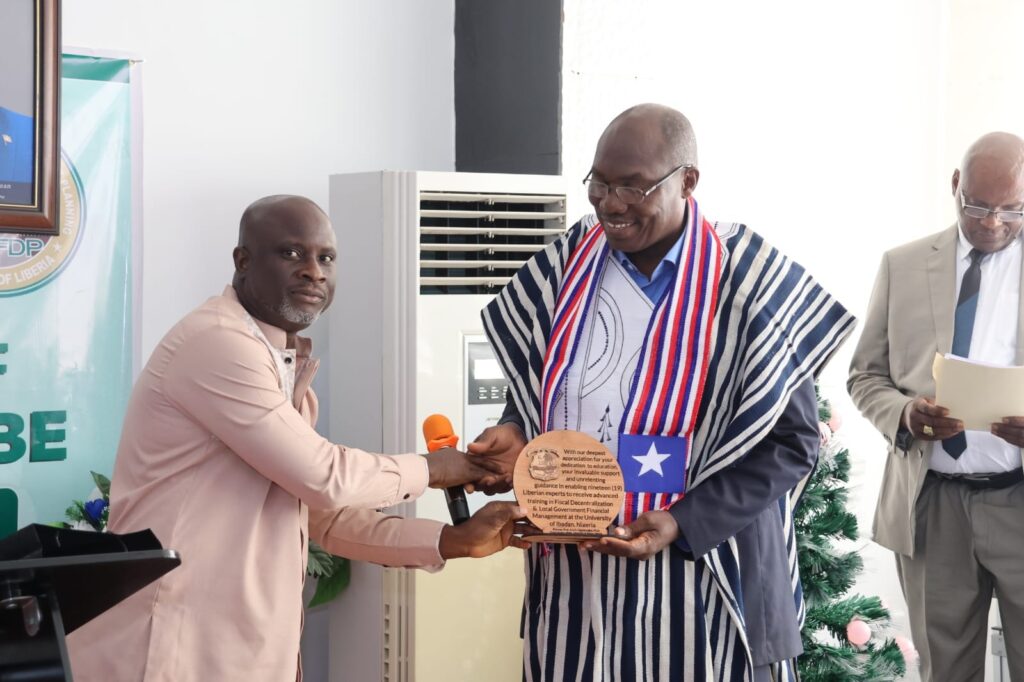
“Flowers” are also accountability
Some will say honoring a partner is nice but not essential. That misses the point. Public recognition is not only gratitude—it is also accountability. When an institution is honored for results, it ties future cooperation to performance. It sets expectations. It tells the public, “This is what we value. This is the standard.”
And if future partnerships do not deliver, they should not be honored. That is how a culture of excellence is built: reward what works; reform what doesn’t; and stop pretending all efforts deserve the same applause.
Our Recommendation: Let This Not Be A One-off
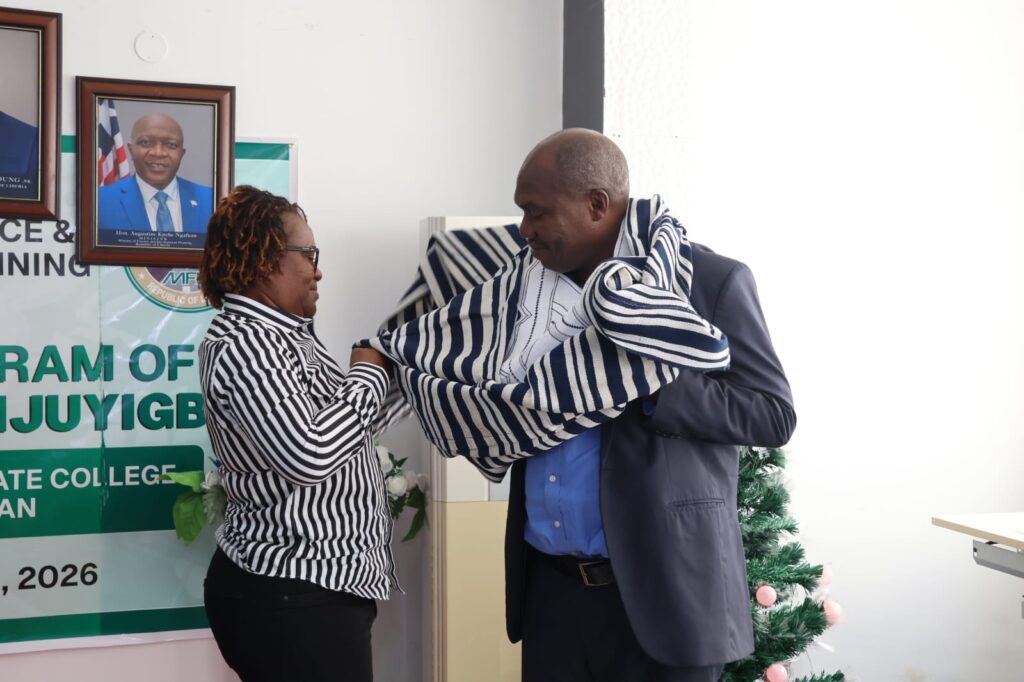
Liberia should make a habit of recognizing those who contribute meaningfully to national development—local and international, public and private—especially when the contribution is measurable and impacts institutions.
But recognition must go hand-in-hand with implementation. The best way to “give flowers” is to ensure the seeds of the partnership are planted deeper: finalize the expanded cooperation framework, broaden training to county and sector specialists, and track outcomes transparently. If counties truly begin processing transactions independently, if manuals and systems are updated to reflect new laws, if public financial management becomes more efficient and less centralized, then the honor given today will look less like ceremony and more like history.
In the end, the lesson is simple: give people their flowers while they can smell them. It strengthens relationships, motivates service, and elevates national standards. And it reminds us of a truth we must not forget—especially in a world that rewards cynicism: no good is ever lost.