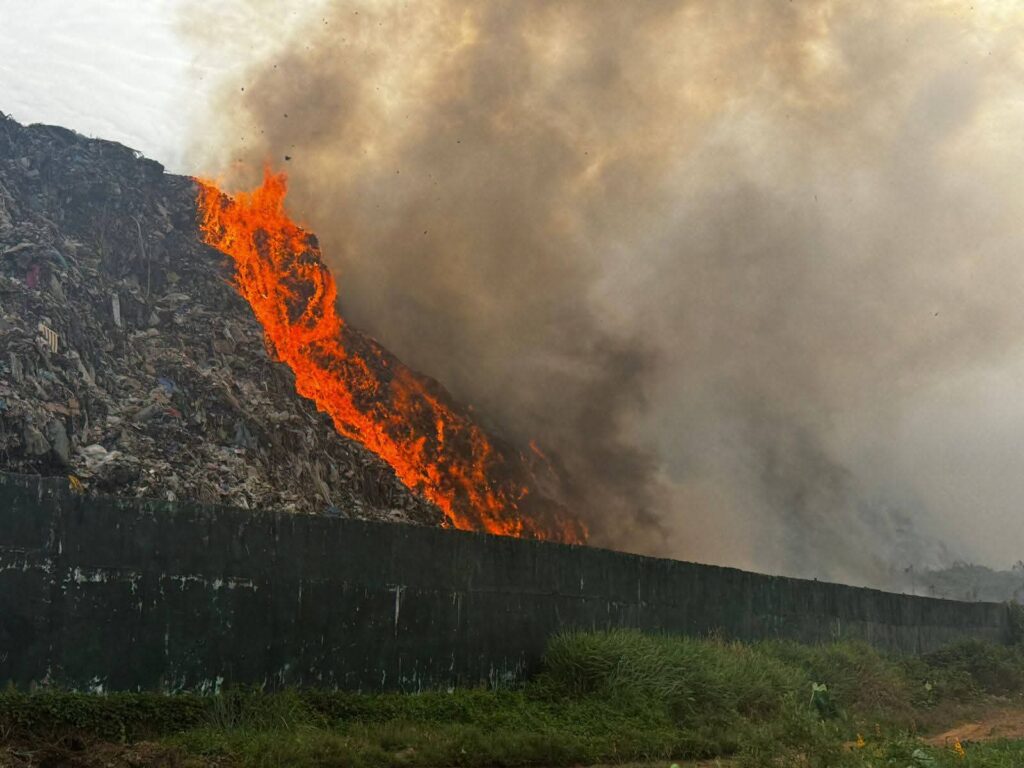
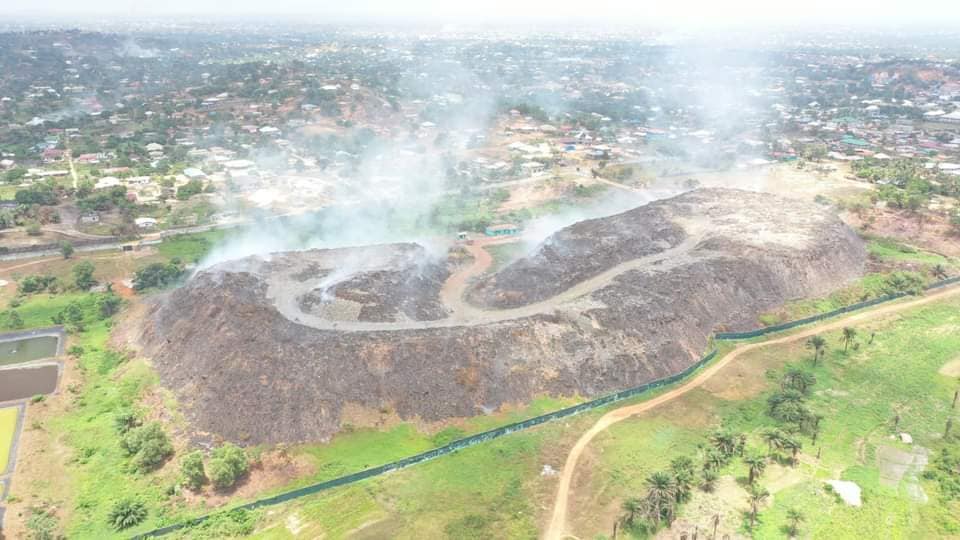
The raging fire at the Whein Town Landfill is not merely a municipal emergency. It is a national warning.
For years, the landfill—originally established in 2011 with a projected five-year lifespan—has operated far beyond its intended capacity. That reality was known. The risks were known. The environmental strain was known. What we are witnessing today is the inevitable consequence of long-term neglect meeting combustible waste in a densely populated urban corridor.
The smoke rising from Whein Town is more than an environmental hazard. It is a public health crisis unfolding in real time.
A Threat to Lives, Not Just Garbage
Landfill fires are not ordinary fires. They are chemical events.

When mixed waste burns—plastics, medical refuse, electronic components, industrial scraps—it releases toxic pollutants: dioxins, furans, particulate matter, carbon monoxide, heavy metals. These are not abstract scientific terms. They are poisons.
Children breathing this smoke face heightened risks of asthma and long-term lung damage. Pregnant women are exposed to compounds linked to developmental disorders. Elderly residents and those with pre-existing respiratory conditions are at immediate risk. Over time, sustained exposure to such pollution increases the probability of cancer, cardiovascular disease, and neurological complications.
Homes near the landfill are not just inconvenienced by smoke; they are endangered.
This is why the situation demands urgency—not routine bureaucratic language.
The Real Crisis: A System That Ran Out of Time

The fire exposes a deeper structural problem: Liberia’s waste management system has not evolved at the pace of its urban growth.
Greater Monrovia has expanded significantly over the past decade. Consumption patterns have changed. Plastic waste has multiplied. Yet disposal infrastructure has remained stagnant. Whein Town, designed for a much smaller waste stream, has been forced to absorb the city’s growing burden without commensurate investment in modern containment systems, methane capture, or engineered landfill layers.
When a landfill exceeds its design capacity, spontaneous combustion becomes a recurring risk. Methane gas builds. Waste decomposes unevenly. Fires ignite beneath the surface, often burning for days or weeks.
This is not a surprise event. It is a predictable one.
Emergency Response Is Not Enough
The Monrovia City Corporation has rightly called for support from the Liberia National Fire Service, the National Disaster Management Agency, and international partners. That assistance is necessary. Specialized intervention is essential to extinguish the blaze safely and prevent groundwater contamination.
But extinguishing the fire cannot be the end of the story.
The real question is this: What happens the day after the flames go out?
If operations resume under the same conditions, another fire is not a matter of “if.” It is a matter of “when.”
We Need Structural Reform — Now
This moment must catalyze decisive action in four key areas:
- Immediate Health Monitoring:
Residents of Whein Town and surrounding communities should receive free respiratory screening and health assessments. Mobile clinics must be deployed. Long-term epidemiological tracking should follow. - Transparent Environmental Assessment:
Independent environmental experts should conduct soil, air, and groundwater testing. The public deserves to know what toxins were released and what mitigation measures are required. - Modern Waste Strategy:
Liberia must transition from reactive dumping to engineered waste management—segregation at source, recycling incentives, composting of organic waste, methane capture, and development of an alternative sanitary landfill site. - Clear Timeline for Relocation or Upgrade:
A landfill operating beyond its lifespan cannot remain the capital’s primary disposal site indefinitely. Government must present a public roadmap for either constructing a new facility or comprehensively redesigning the existing one.
A Governance Test
Leadership is tested not in calm seasons, but in crisis.
With the Mayor currently abroad on official duties and national authorities engaged internationally, coordination must still be swift and visible. Environmental disasters do not pause for diplomatic schedules.
This is also a moment for the national government to step forward decisively. Waste management in the capital affects the entire country—economically, environmentally, and reputationally.
The Cost of Inaction
If this fire is treated as just another unfortunate event, Liberia risks normalizing environmental degradation.
We cannot allow that.

The long-term cost of polluted air, contaminated soil, and chronic illness will far exceed the cost of investing in modern waste infrastructure today. Businesses suffer when cities are perceived as unhealthy. Tourism suffers. Property values decline. Healthcare burdens increase.
Development cannot coexist with environmental complacency.
A Turning Point — If We Choose It
The Whein Town landfill fire is tragic. It is dangerous. But it can also be transformative—if we allow it to become the catalyst for systemic change.
Liberia stands at a crossroads. We can extinguish the flames and move on, waiting for the next crisis. Or we can treat this moment as the wake-up call it truly is.
The smoke over Whein Town should not become just another image we scroll past.
It should mark the day we finally decided that public health, environmental safety, and urban planning are not optional—they are foundational to national progress.
Follow The Liberian Post on Facebook and X (formerly twitter)