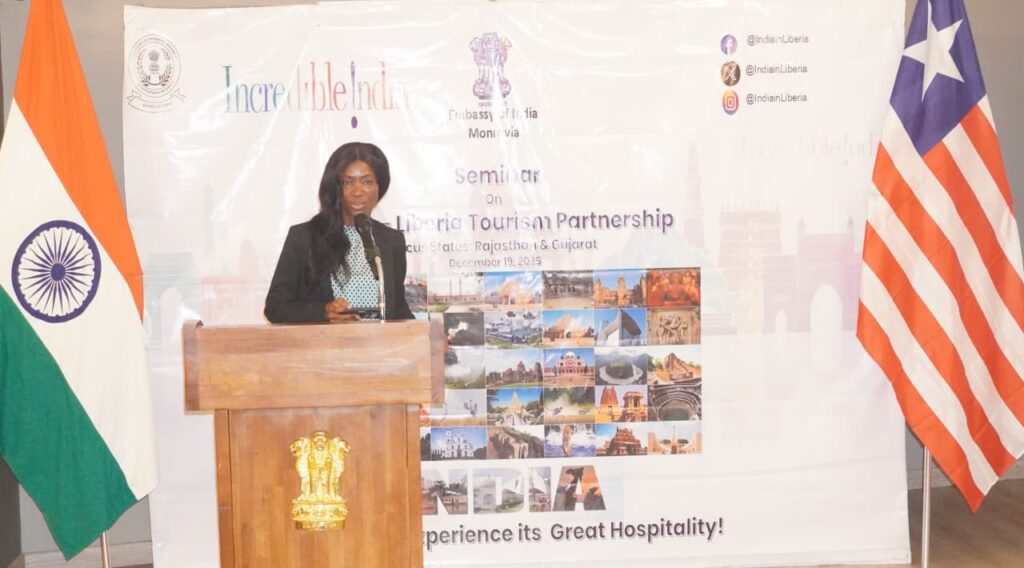
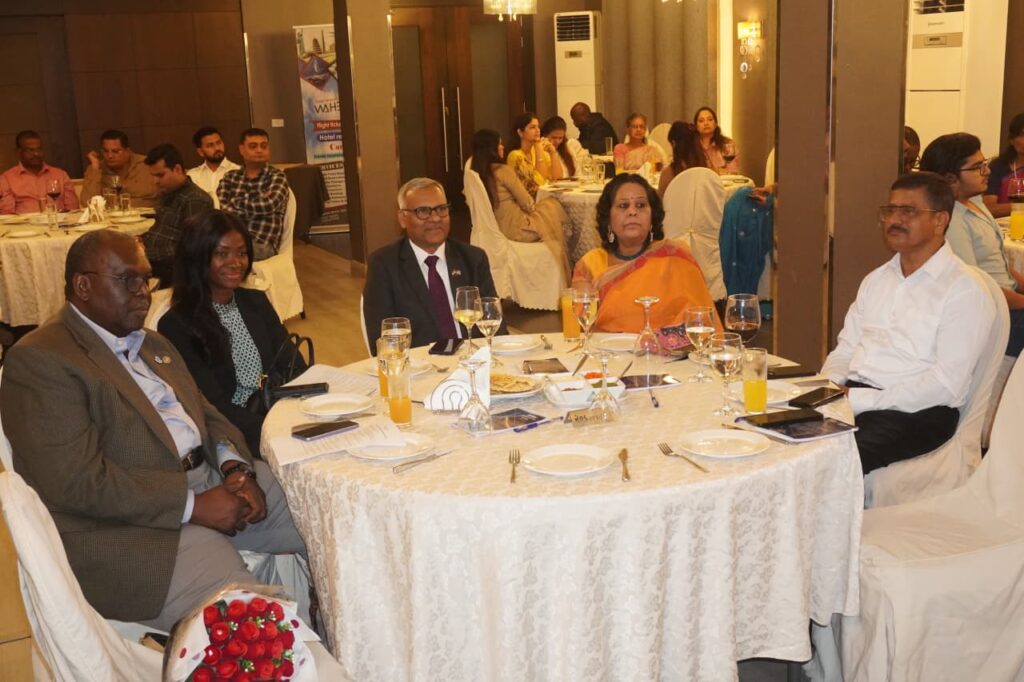
The recent India–Liberia Tourism Partnership Seminar in Monrovia was more than a diplomatic gathering or a cultural exchange. It was a timely reminder that tourism remains one of Liberia’s most underdeveloped yet promising economic frontiers—a sleeping giant that, if properly awakened, could transform livelihoods, diversify the economy, and reshape the country’s global image.
For decades, Liberia has relied heavily on extractive industries—mining, logging, and rubber—sectors that generate significant export revenue but employ relatively few Liberians and expose the economy to global commodity shocks. Tourism, by contrast, is labor-intensive, community-driven, and locally anchored. Every tourist dollar spent on accommodation, food, transport, crafts, and experiences circulates within communities, creating jobs that cannot be outsourced.

Liberia has what many countries spend billions trying to create: pristine beaches, rainforests, wildlife reserves, rich history, and authentic cultural heritage. From the biodiversity of Sapo National Park and Mount Nimba to Providence Island and the Atlantic coastline, the raw materials for a competitive tourism sector already exist. What has been missing is strategic coordination, sustained investment, and political prioritization.
The seminar’s emphasis on partnership—particularly with India—points to a practical way forward. India’s experience in developing medical tourism, cultural tourism, and affordable hospitality infrastructure offers Liberia valuable lessons. Cooperation in training, visa facilitation, air connectivity, and private-sector investment could help Liberia leapfrog years of trial and error.
However, seminars and goodwill alone will not build a tourism industry. Liberia must confront hard realities. Poor road networks, limited air access, inconsistent power supply, and weak destination marketing continue to undermine growth. Just as importantly, tourism policy must be insulated from politics and short-termism. Investors—local and foreign—require predictability, clear land-use frameworks, and strong institutional coordination.
The government’s role is therefore pivotal. Tourism cannot remain a peripheral sector buried within broader ministries. It must be treated as a strategic pillar of economic diversification, aligned with infrastructure planning, education, security, and environmental protection. Community involvement must also be central; tourism that excludes local people is neither sustainable nor just.
Equally critical is perception. Liberia still struggles with outdated international narratives shaped by war and crisis. Tourism offers a powerful counter-narrative—one that tells stories of resilience, beauty, creativity, and hospitality. But that story must be deliberately told, consistently promoted, and backed by real visitor experiences.
The India–Liberia engagement shows that partners are willing. The private sector is interested. The natural assets are undeniable. What remains is leadership, coordination, and resolve.
If Liberia is serious about inclusive growth, job creation, and economic resilience, tourism must move from the margins to the center of national development planning. The sleeping giant is stirring. The question now is whether Liberia will rise to meet the moment—or allow yet another opportunity to pass quietly by.