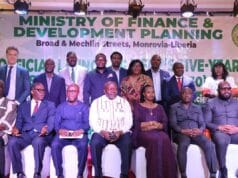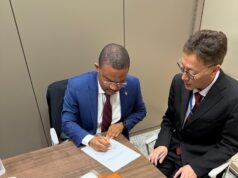
The administration’s joint briefing by Finance Minister Augustine Kpehe Ngafuan and LRA Commissioner General James Dorbor Jallah marks a watershed: Liberia’s first-ever US$1.2 billion draft national budget, with 94 percent to be financed at home. The numbers are bold. The rhetoric is confident. Now comes the hard part—turning a historic envelope into historic results without breaking fiscal discipline or public trust.
What the Budget Gets Right
- Own-source ambition. A 94 percent domestically financed budget signals confidence and rising capacity. If the Liberia Revenue Authority delivers the projected US$1.13 billion, it will be the most consequential “do-it-ourselves” budget in decades.
- Capital push where it counts. Tripling the Public Sector Investment Program (PSIP) to US$281 million and earmarking US$50 million each for roads and energy is the right call. Cheaper, safer transport and more reliable electricity cut household costs and unlock private-sector growth.
- Transparency posture. Publishing the full draft online and committing to open media engagement invites scrutiny. This is good governance—and necessary when asking citizens to believe big promises.
The Fine Print—and Real Risks
- One-off money, permanent needs. The PSIP surge leans on a conditional US$200 million ArcelorMittal signature bonus. That is not a permanent revenue stream. Every cent must be ring-fenced for capital and never used to inflate the wage bill or other recurrent costs. If the Legislature delays or rejects the concession, what is Plan B?
- Execution, not just allocation. US$50 million for roads and US$50 million for energy will mean little if project pipelines are thin, procurement is slow, or implementation stalls. LEC’s technical and commercial capacity—and a ruthless focus on losses and metering—will make or break the energy line.
- Debt service pressures. Debt service rising from roughly US$150 million to about US$230 million is a red flag for fiscal space. Use borrowing only for high-return investments; service obligations must be met on time to protect Liberia’s credit.
- Revenue realism. A 47 percent jump in domestic revenue over FY2025 is ambitious. Expanding the tax base, modernizing customs, enforcing compliance, and cutting leakages must be matched by policies that do not choke investment or job creation.
What Ordinary Liberians Should See—This Year
- Kilometers, not concepts. Publish and deliver a quarterly target for road maintenance, feeder links, and bridges. Every county should know what is being built or fixed and by when.
- Hours, not hopes. Set county-level power targets: hours of supply, losses cut, and connections made. Publish LEC’s loss-reduction and metering milestones.
- Seats and services. In education and health, show the basics: schools rehabilitated, teachers trained and paid on time, clinics stocked, diagnostics restored. The announced US$15 million education add-on and court digitization are useful; convert them into visible, counted outputs.
- Fares and frequency. Urban transport is a cost-of-living issue. If NTA is resourced, move quickly on high-demand routes with clear service standards (frequency, hours, fares). Publish them and meet them.
Guardrails the Legislature Should Insist on
- Ring-fence the bonus. Legally bind the US$200 million signature bonus to capital projects only. No exceptions.
- Project readiness test. Before appropriation, ministries must show designs, costings, procurement plans, and implementation teams. Unready projects should not clog the PSIP.
- Quarterly dashboards. Require public dashboards for top-spending entities: budget execution, procurement cycle times, outputs delivered, and site photos. If citizens cannot see it, it did not happen.
- Oversight resourced. Fund GAC, LACC, IAA, PPCC, LEITI, and the Judiciary adequately. A bigger budget without empowered watchdogs is an invitation to leakage.
- Tax expenditures on record. Publish a full list of exemptions and incentives, with costs and timelines. Hidden tax breaks quietly drain the “year of the billion.”
How the LRA can hit—and hold—the line
- Broaden, don’t just squeeze. Expand registries, formalize segments of the economy, and go after the large non-compliant—not just easy targets. Customs modernization must be relentless: valuation integrity, risk management, and post-clearance audits.
- Service and compliance. Make it easier to comply than to evade. E-filing, predictable payment schedules, and fair dispute resolution will keep businesses investing and hiring.
- Protect growth. Avoid abrupt policy moves that shock sectors; consult and phase changes. The goal is a larger, healthier tax base—not a scared, shrinking one.
A Promise That Must Be Kept
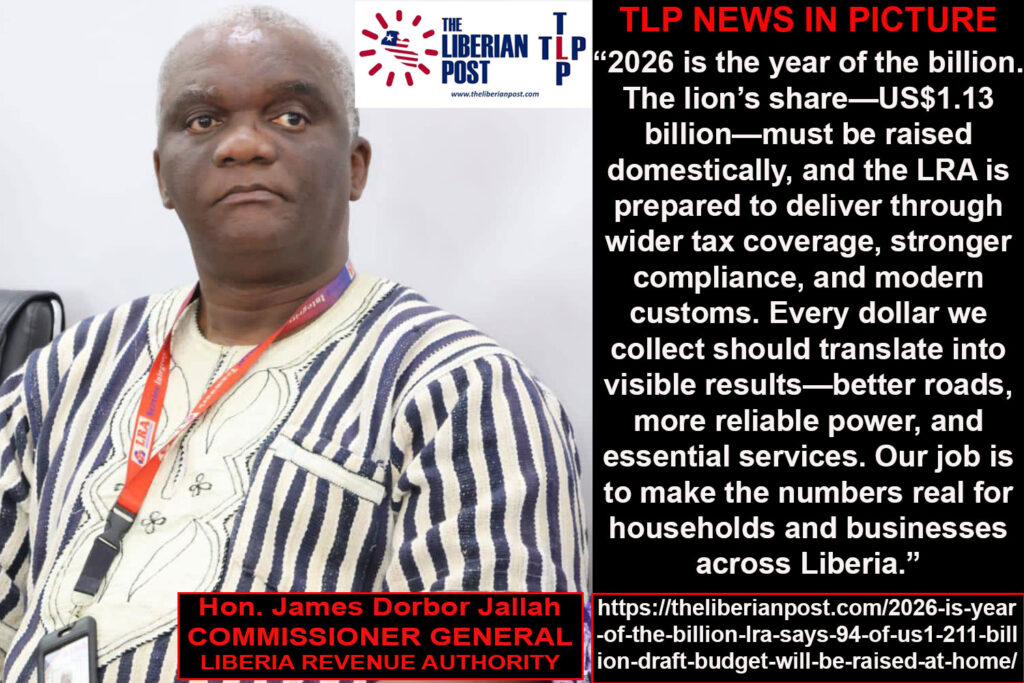
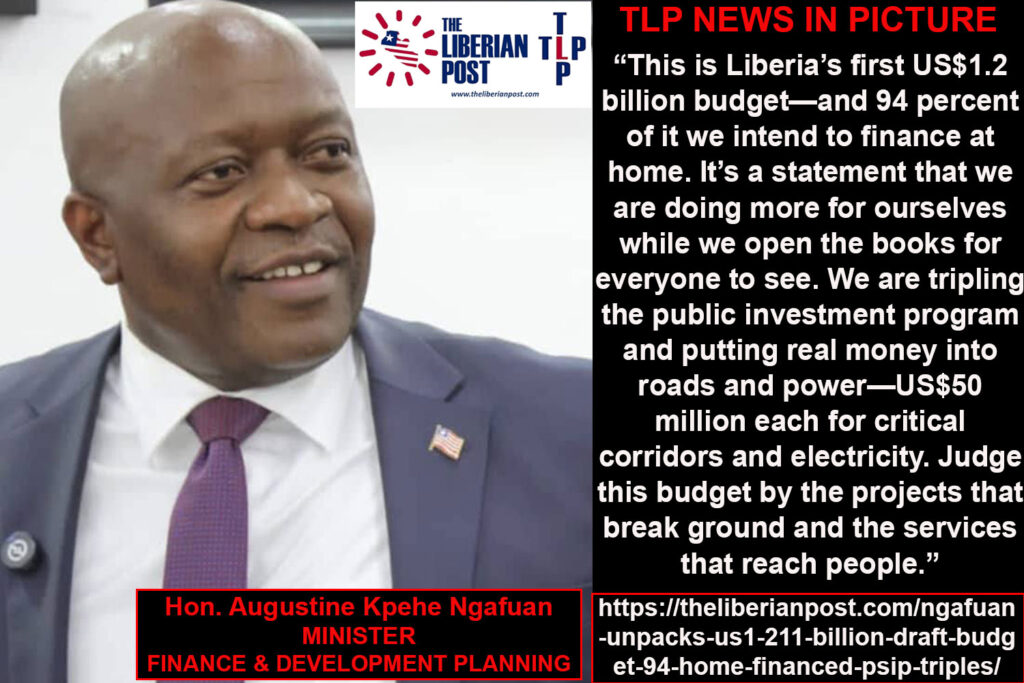
“This is Liberia’s first US$1.2 billion budget—and 94 percent of it we intend to finance at home,” Minister Ngafuan said. “2026 is the year of the billion,” Commissioner Jallah added. Those are powerful lines. They will be judged not by applause, but by asphalt laid, meters installed, clinics stocked, classrooms functioning, and case backlogs cleared.
The administration deserves credit for aiming high and throwing open the books. The Legislature must sharpen the pencil and keep the guardrails strong. The LRA must collect fairly, cleanly, and without stifling enterprise. And citizens must monitor, demand, and—when delivery happens—acknowledge it.
If the numbers are made real—if projects break ground, lights stay on longer, travel gets cheaper, and schools and clinics work better—2026 won’t just be the year of the billion. It will be the year Liberians felt their government move from plans to proof. That is the only victory that counts.