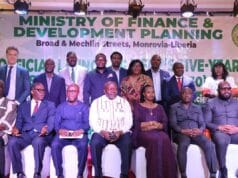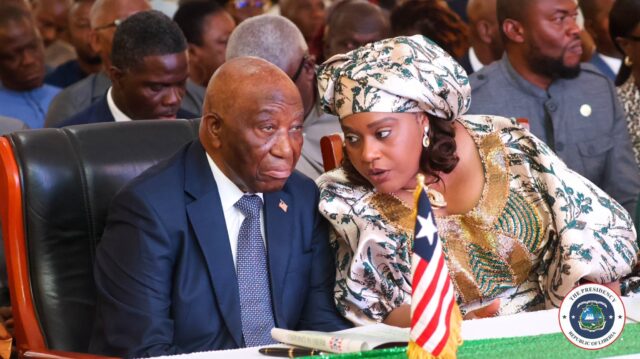
MONROVIA, Liberia — Education Minister Dr. Jarso Miley Jallah has declared that Liberia is entering a new phase of education reform focused not merely on getting children into classrooms, but on ensuring they actually learn once they are there, as the government officially launched the Excellence in Learning in Liberia (EXCEL) Project.
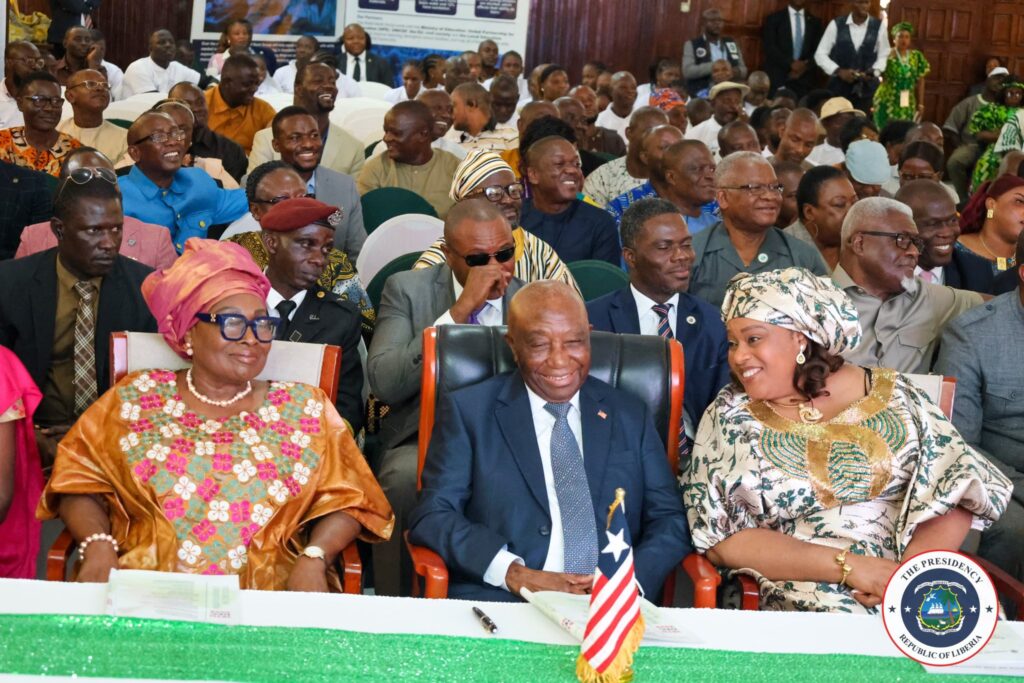
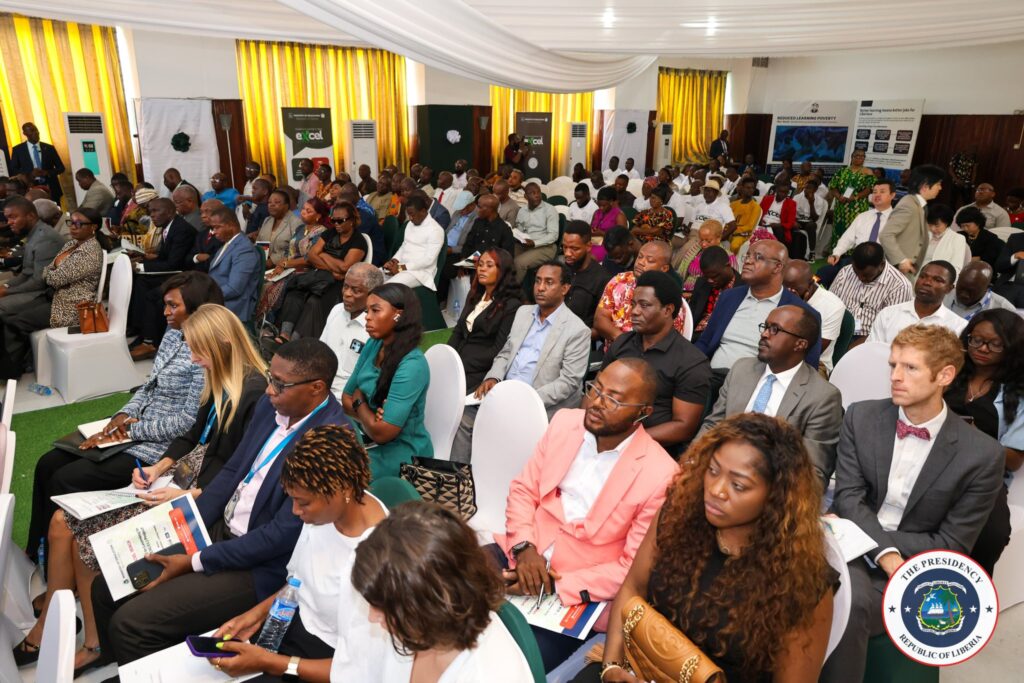
Speaking at the launch ceremony held at the Monrovia City Hall, Dr. Jallah described EXCEL as a system-wide reform designed to confront Liberia’s long-standing learning crisis, particularly in early grades where many children advance without basic literacy and numeracy skills.
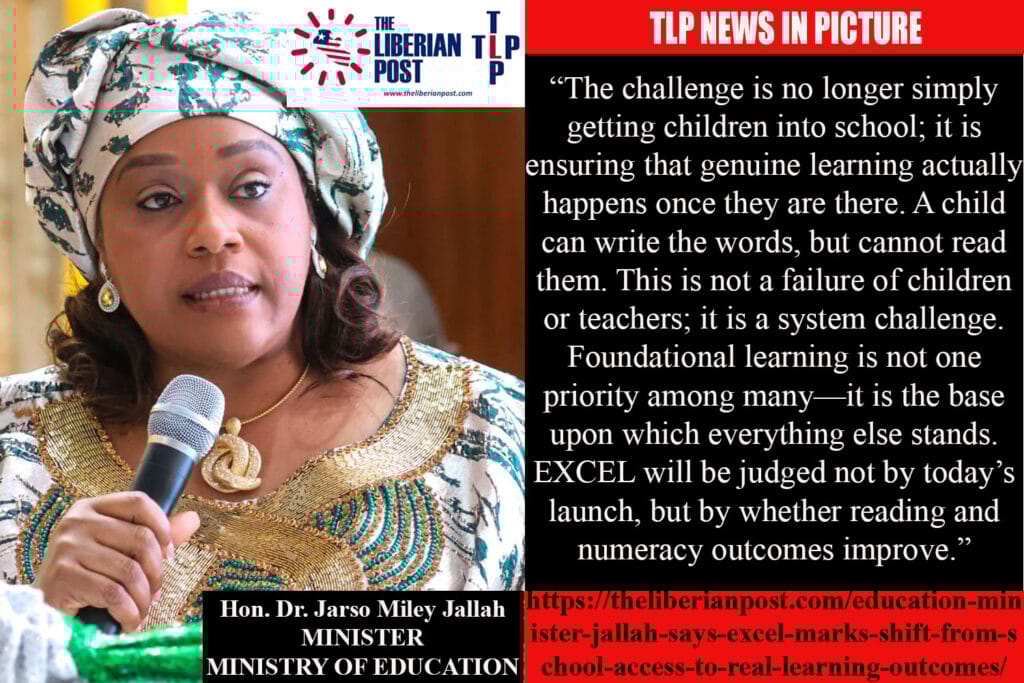
“The challenge is no longer simply getting children into school,” Dr. Jallah said. “It is about ensuring that genuine learning actually happens once they are there.”
A Classroom Reality That Defines the Crisis
In one of the most striking moments of her address, the Education Minister painted a vivid picture of Liberia’s learning gap.
“A child sits upright at her desk. Her notebook is full. Her handwriting is neat,” she said. “But if you ask her to read those words aloud, she hesitates. She can write the words, but she cannot read them.”
Dr. Jallah said that quiet but widespread reality captures the essence of Liberia’s education challenge—access has expanded faster than mastery, leaving too many students without the foundational skills needed for further education or productive employment.
“This is not a failure of children,” she emphasized. “It is not a lack of effort by our dedicated teachers. It is a system challenge.”
Why Foundational Learning Matters

According to the Education Minister, EXCEL deliberately targets foundational literacy and numeracy from early childhood education through Grade Six because weaknesses at that level undermine all future learning.
“Foundational learning is not one priority among many,” she said. “It is the absolute base. When the foundation is weak, everything built on it is unstable.”
She warned that secondary education, skills training, STEM development, and even economic productivity depend on the strength of early learning outcomes.
A Five-Year National Reform
Dr. Jallah described EXCEL as a five-year national reform program, jointly financed by the Government of Liberia, the World Bank, and the Global Partnership for Education (GPE), and fully aligned with the ARREST Agenda for Inclusive Development and Liberia’s Education Sector Plan.
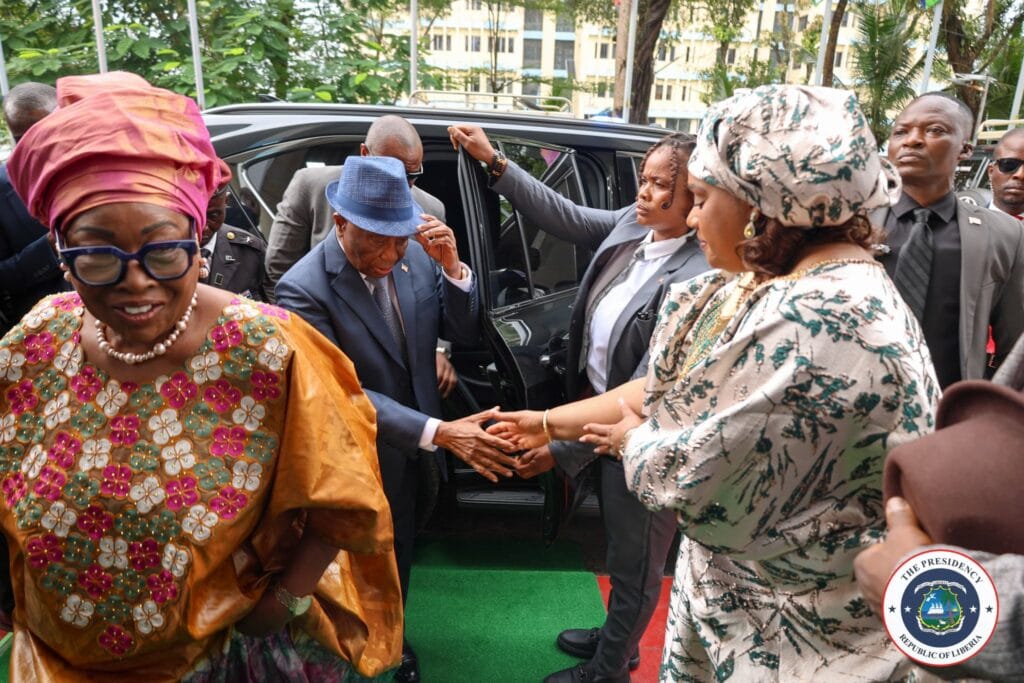
Unlike past initiatives, she said, EXCEL emphasizes disciplined delivery, coherence, and accountability.
“Financing alone does not produce learning,” she noted. “Disciplined systems do.”
The project will invest in:
- Structured instructional support for teachers;
- Aligned teaching and learning materials;
- Stronger school leadership and supervision;
- Improved learning data and accountability systems; and
- Expanded access through school construction, renovation, and capitation grants.
Accountability at the Center
Dr. Jallah made clear that the success of EXCEL will be measured not by the scale of its launch, but by measurable improvements in learning outcomes.

“EXCEL will be judged not by how compelling its launch is today,” she said, “but whether reading outcomes improve, numeracy strengthens, and disparities between counties begin to narrow.”
She told the audience that 2026 will be a year of accountability for the education sector.
“This is not a promise of instant transformation,” she cautioned. “It is a commitment to evidence-driven, disciplined reform.”
Nationwide Reach
Project officials disclosed that EXCEL will impact all 15 counties, 73 political districts, and more than 2,000 public schools, with an estimated investment of about US$500,000 per district for teacher training, school leadership development, classroom construction, renovation, and grants.
The initiative is expected to benefit more than 375,000 learners, as well as thousands of teachers, principals, and education administrators nationwide.
Call to Teachers, Parents, and Communities
Dr. Jallah emphasized that reform cannot succeed without ownership beyond Monrovia, calling on county education officers, local leaders, teachers, parents, and communities to actively engage.
“To our teachers, this project is intended to support your vital work, not complicate it,” she said. “To parents and communities, this is about your children’s right to learn.”
A National Commitment
In closing, the Education Minister returned to the image of the child in the classroom, stressing that Liberia’s future depends on what happens there.
“The future of Liberia’s economy, its peace, and its democracy will be shaped by whether our children not only copy words, but understand them,” Dr. Jallah said.
She described EXCEL as a commitment by President Joseph Nyuma Boakai to ensure that the foundations of learning are built “carefully, deliberately, and at scale.” “That work begins now,” she said.