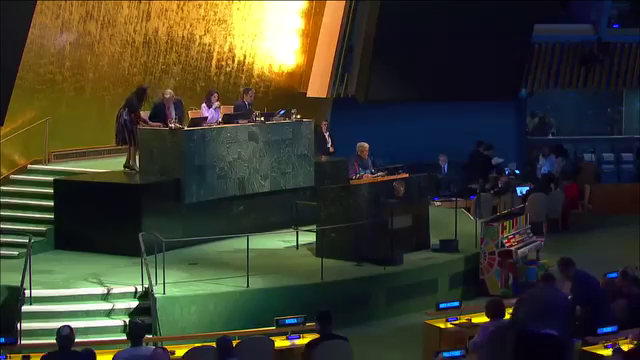
UN HQs, NEW YORK – Former Liberian President and Nobel Peace Laureate Ellen Johnson Sirleaf delivered a stirring call for urgent reforms in the global peace and security architecture as the United Nations marked its 80th anniversary on Tuesday, September 23rd. Speaking at the UN General Assembly high-level meeting, Sirleaf warned that the multilateral system is faltering in the face of deepening conflicts, inequality, and technological disruption, urging world leaders to match words with concrete actions.
“Commemoration without candor is unaffordable,” Sirleaf declared. “The world asks whether this house will protect civilians and uphold international humanitarian law. These are not words of despair. They are summons to repair.”
Drawing on Liberia’s postwar transition as an example of what global solidarity can achieve, Sirleaf praised the United Nations’ role in ending her country’s brutal civil war, recalling how the world body deployed its largest peacekeeping force alongside African troops to disarm fighters, reform security institutions, and nurture democratic governance.
“Liberia’s story illustrates UN-led progress and success,” she said. “India’s all-female police unit strengthened protection and public trust. The mission ended with Liberia standing on its own feet, out of war into a fragile peace.”
Yet Sirleaf cautioned that such gains are at risk without a renewed commitment to prevention, inclusion, and accountability. “Prevention costs less than reconstruction,” she noted, stressing that peace agreements must be followed swiftly by “skills training, jobs, justice, and dignity.”
In a speech that blended urgency with vision, Africa’s first elected female head of state called for bold reforms to make the UN “better together” with regional bodies, governments, and civil society. She urged financing for conflict prevention, guaranteed budgets for women’s participation in peace talks, and protection against the weaponization of digital information.
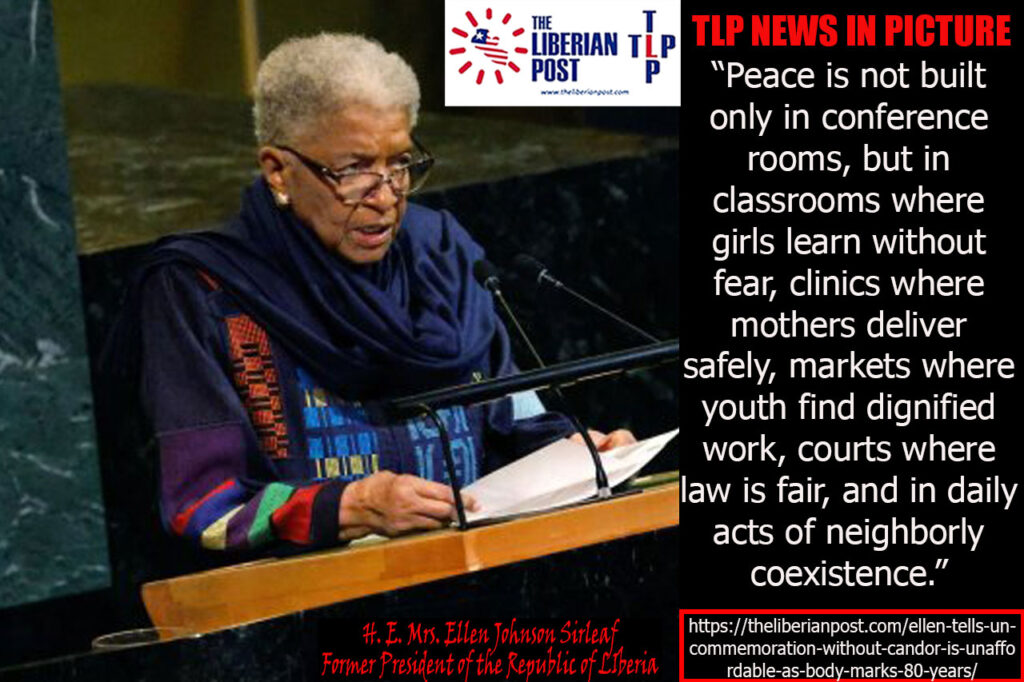
“Peace is not built only in conference rooms, but in classrooms where girls learn without fear, clinics where mothers deliver safely, markets where youth find dignified work, courts where law is fair, and in daily acts of neighborly coexistence,” Sirleaf told delegates.
She concluded with a challenge to world leaders to honor the founding generation’s vision of peace. “Our answer must be yes. Not because the world is less dangerous, but because our determination is stronger. Better together.”