


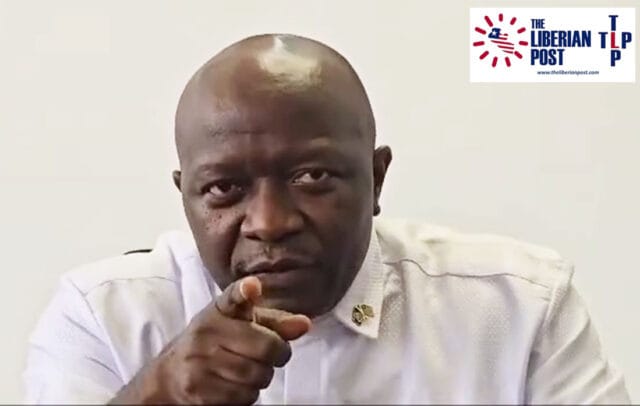
MONROVIA — Liberia’s Minister of Finance and Development Planning, Augustine Kpehe Ngafuan, says the government is making tangible strides in addressing the daily economic concerns of ordinary Liberians—what he calls the “bread and butter” issues—through infrastructure development, improved energy access, and timely salary payments.
Speaking Wednesday, August 28, at a press briefing in Monrovia, Minister Ngafuan defended the Joseph Nyuma Boakai administration’s efforts to stabilize and grow the economy amid persistent challenges, citing specific gains in rural road connectivity, electricity distribution, and civil servant welfare.
“You cannot rest. Even when you’re making progress, you must keep working,” Ngafuan said, describing the government’s push to overcome the major constraints to economic growth and job creation—particularly in the areas of energy and infrastructure.
Roads and Power: “Bread and Butter” Economics
The Finance and Development Planning Minister pointed to significant improvements in rural road networks, noting that travel times to hard-to-reach regions such as Zwedru and Voinjama have been dramatically reduced. “People are now getting to Zwedru in seven hours—before it used to take days or even a week,” he said. “That’s more money in people’s pockets. That’s bread and butter.”
Ngafuan highlighted how the increased availability of National Transport Authority (NTA) buses and other affordable transport options has led to reduced travel costs, making goods more accessible and boosting rural commerce.
On energy, he credited the leadership of the Liberia Electricity Corporation (LEC) under new Managing Director Mohammed M. Sheriff and praised increased electricity coverage, especially during the past Dry Season. “New communities are getting light, and nightlife is returning to Monrovia,” he said. “When businesses can operate at night, that’s job creation. That’s income. That’s bread and butter.”
He noted that reliable electricity has enabled more economic activity and lowered operational costs for small and medium businesses across Monrovia and beyond.
Salaries, Welfare, and Civil Service Support
Minister Ngafuan also emphasized the importance of consistent and timely salary payments for civil servants, saying delays amount to an “informal tax” on workers who are forced to take loans at high interest rates to cover basic needs.
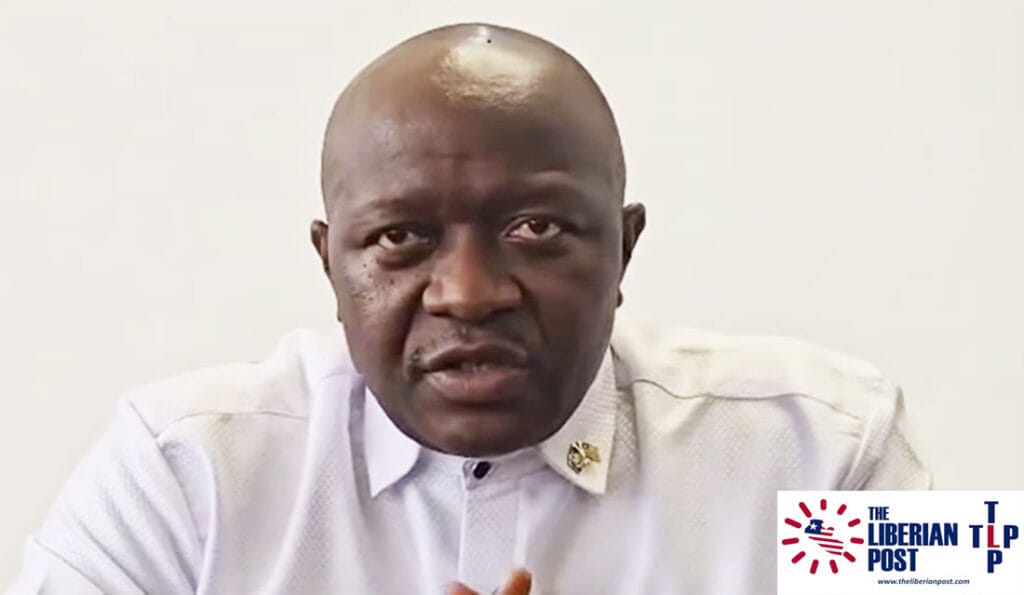
“We’ve ensured that this informal tax is lifted by paying salaries largely on time,” he stated. “In July, we began salary payments before the 15th. That’s progress.”
He further disclosed that his ministry has reintroduced transportation support for civil servants—dedicating five buses to reduce their commuting costs, with plans to procure two more. “They never had buses for more than seven years. Now the money saved from transport can go to bread and butter.”
He also mentioned the reintroduction of insurance benefits for government workers.
Progress, Not Perfection
While acknowledging that Liberia is “not out of the woods,” Ngafuan said the narrative that the country is sliding backward is not supported by the facts. “There’s negativity out there,” he said, “but we are not in the business of fancy talks. We spend our time working and sweating.”
He recalled that, in late 2023, the government, under the stewardship of former President George Manneh Weah, was forced to take credit to pay civil servants—something that has not been necessary in 2025. “If someone says crediting salaries was progress and paying them on time is not, then the definition of progress is upside down,” he said.
Background: A Technocrat’s Second Tour
Ngafuan, who previously served as Liberia’s Finance Minister under the Ellen Johnson Sirleaf administration, returned to the ministry under President Joseph Boakai in August of 2024 with a mandate to stabilize the economy and restore public confidence. His reappointment was widely viewed as a move toward technocratic governance.
Since taking office, Ngafuan has focused on improving macroeconomic stability, reducing unnecessary borrowing, clearing government arrears, and restoring discipline in public finance management. His ministry has also been praised for working closely with international development partners to secure budget support and infrastructure funding.
However, Liberia’s economy still faces significant constraints, including high youth unemployment, dependence on imported goods, sluggish private sector investment, and revenue generation challenges. Inflation remains a concern for low-income households, particularly in urban centers.
Looking Ahead
As the government continues to push for economic reform, Ngafuan said communication with the public will also improve. “Maybe we need to spend more time talking, not just working,” he quipped. “But if we spend more time talking, we’ll be talking nonsense if we don’t have results to show.”



Pretty section of content. I just stumbled upon your blog and in accession capital to assert that I acquire actually enjoyed account your blog posts. Anyway I will be subscribing to your augment and even I achievement you access consistently fast.
Comments are closed.