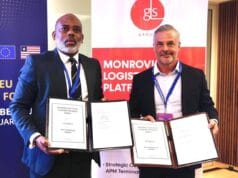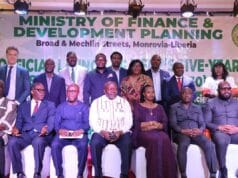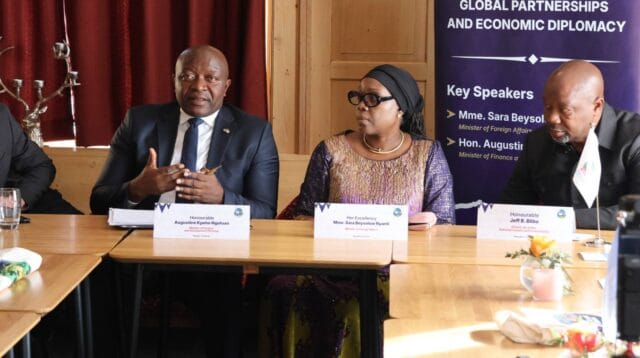
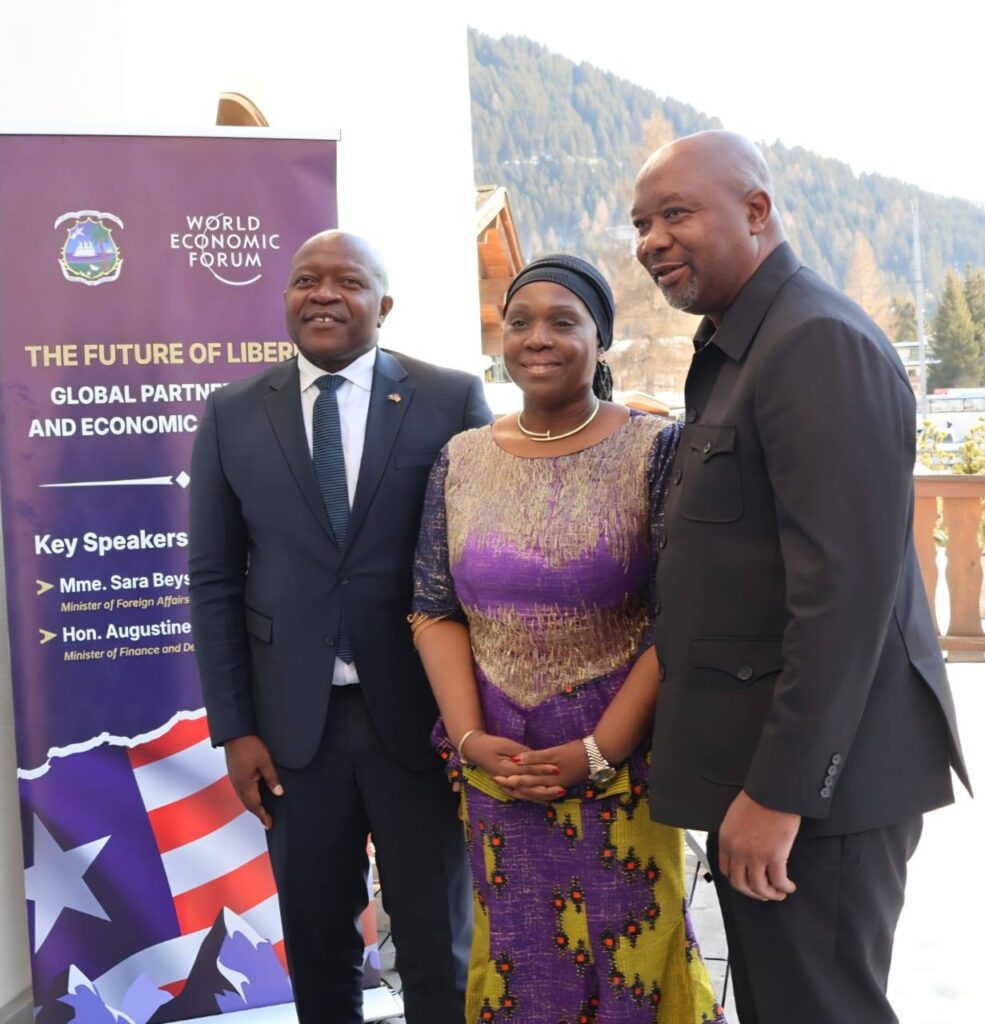
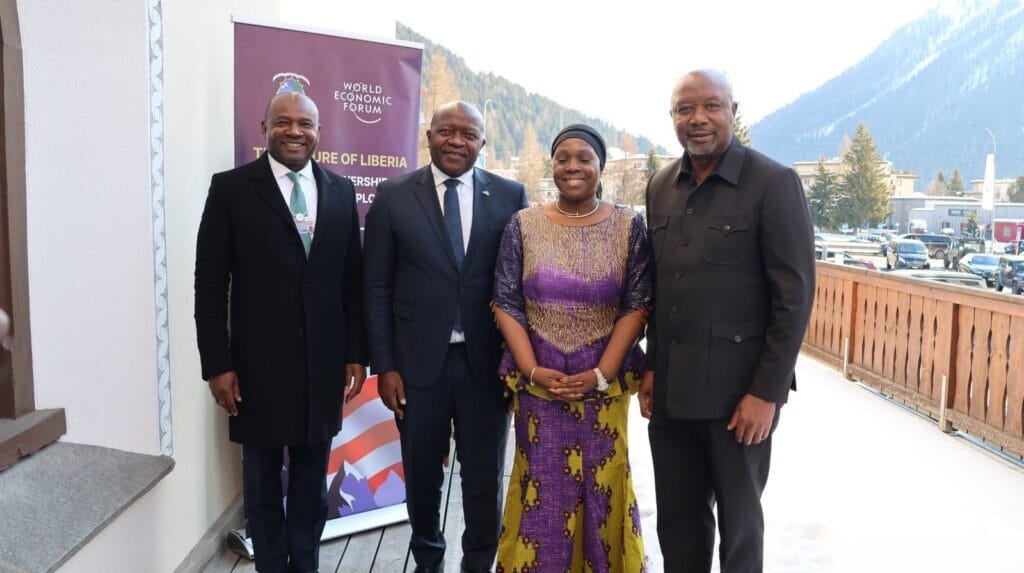
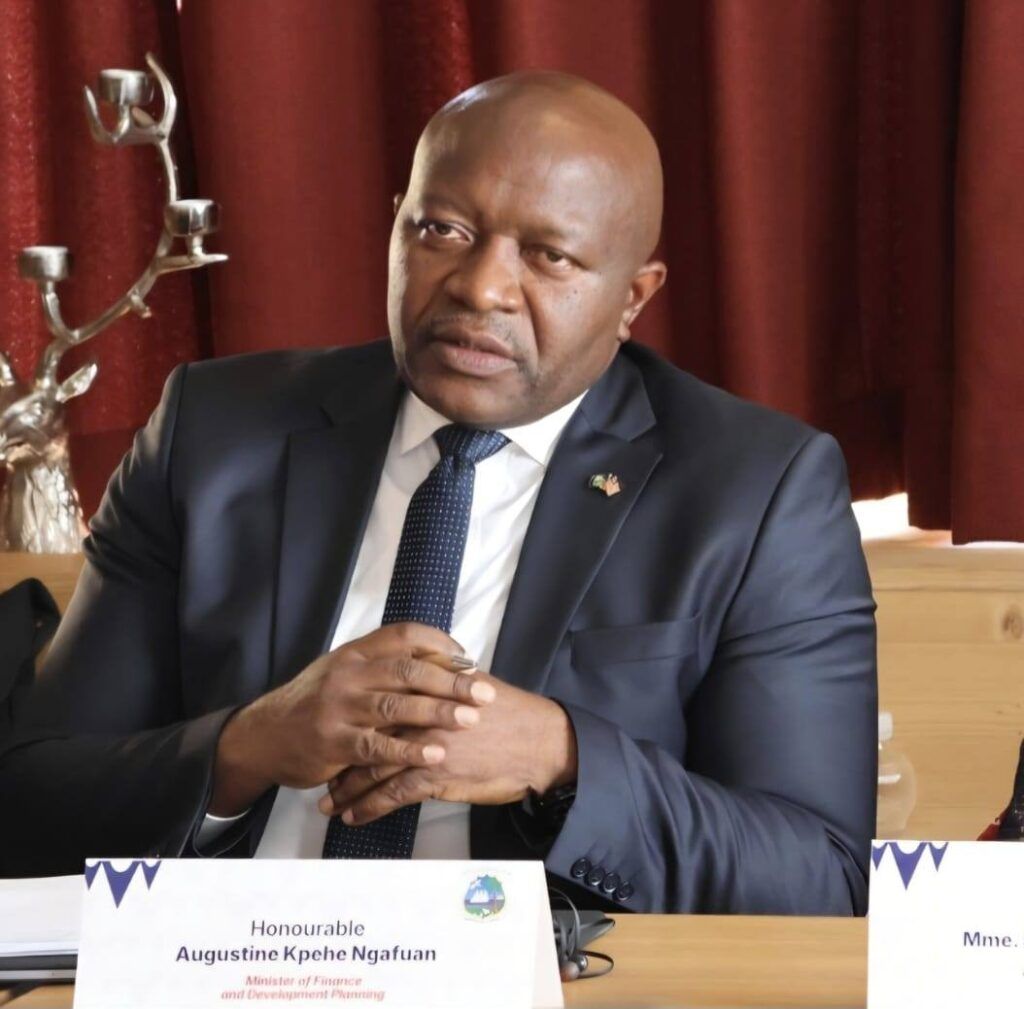
DAVOS, Switzerland — Liberia’s Minister of Finance and Development Planning, Augustine Kpehe Ngafuan, has reaffirmed the country’s readiness for investment and deeper global partnerships during high-level engagements on the sidelines of the World Economic Forum (WEF) in Davos, Switzerland.
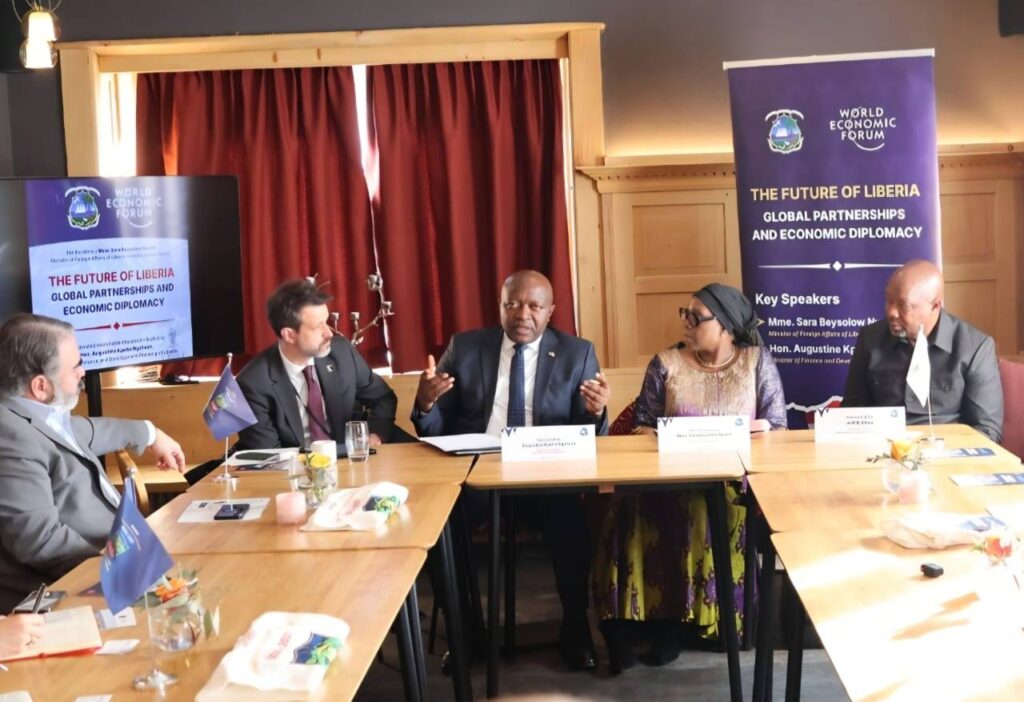
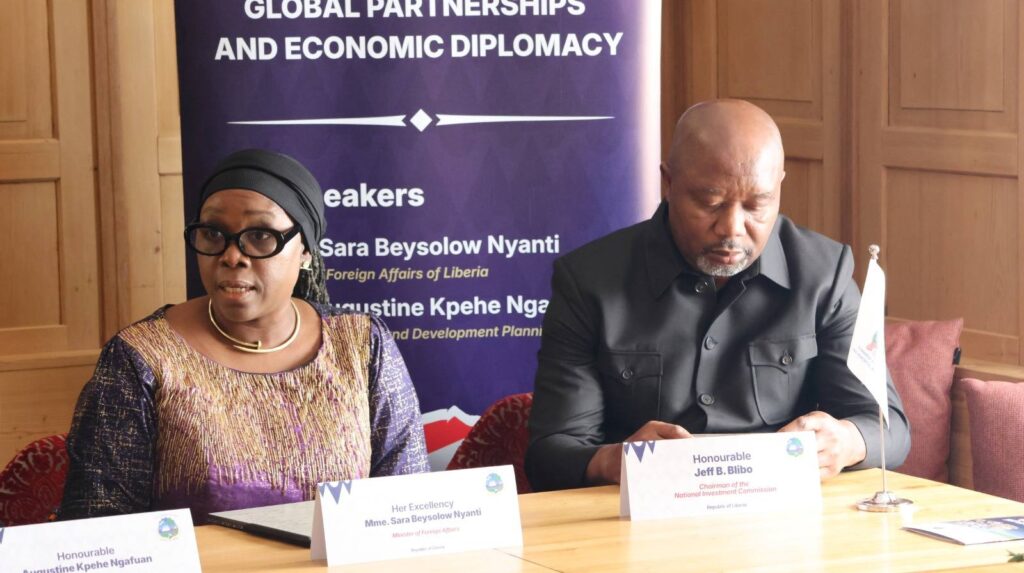
Delivering the keynote address at a senior roundtable titled “The Future of Liberia: Global Partnership and Economic Diplomacy,” attended by global investors, development finance institutions, and international partners, Minister Ngafuan said Liberia’s participation at WEF Davos marks a new phase of engagement with the international investment community—one grounded in macroeconomic stabilization, institutional reform, and a growing pipeline of bankable projects.
“Liberia comes to Davos with a clear, evidence-based message: we are implementing reforms, stabilizing our economy, and opening credible pathways for investment and financing,” the minister emphasized.
Minister Ngafuan highlighted strengthening macroeconomic fundamentals as central to renewed investor confidence. Liberia’s economy grew by 4.0 percent in 2024 and is projected to expand by 5.6 percent in 2025 and 5.8 percent in 2026. Inflation, he noted, declined sharply to 4 percent by the end of December 2025.
Fiscal performance has also improved markedly. The government recorded a primary surplus of 1.3 percent of GDP in 2024, reversing a deficit of 4.2 percent in 2023. Domestic revenue reached a historic high of US$836 million in 2025, driven by tax compliance reforms and the rollout of digital revenue systems. Confidence in the banking sector has strengthened as well, with substantial growth in net deposits.
The minister pointed to strong external anchors supporting these gains, including Liberia’s IMF Extended Credit Facility, which reinforces fiscal discipline and enables access to the Resilience and Sustainability Facility. He also cited Liberia’s reaffirmation for a second Millennium Challenge Corporation (MCC) Compact after surpassing the required performance indicators, including key anti-corruption benchmarks.
“These validations reduce policy uncertainty and demonstrate international confidence in the development pathway Liberia is pursuing,” Minister Ngafuan said.
He outlined concrete governance reforms undertaken by the government, including the completion of an IMF Governance Diagnostic in 2025; expanded investigative powers for the Liberia Anti-Corruption Commission; strengthened internal audit systems; verification of asset declarations; and more transparent public procurement through competitive bidding and e-procurement. The Central Bank of Liberia, he added, is modernizing the national payments system and enhancing prudential oversight.
According to the finance minister, these reforms are translating into tangible improvements across the country. Major road corridors are being upgraded, new schools are under construction, hospitals are receiving more reliable supplies of essential medicines, and business processes are increasingly digitized. He also stressed progress toward launching a National Payment Switch by the end of 2026, which will enable interoperability across banks, fintech firms, and mobile money platforms.
“These investments strengthen human capital and reduce social and operational risks for long-term projects,” he said.
Minister Ngafuan further noted that Liberia has improved its project preparation capacity, standardized its public-private partnership framework, and aligned national priorities under the ARREST Agenda for Inclusive Development. As a result, investor-ready pipelines are emerging in energy, transport, agriculture, digital infrastructure, and mining.
He outlined four priority investment themes—energy; transport and logistics; agriculture and agro-processing; and the digital economy—aimed at expanding electricity access, improving trade efficiency, adding value to agricultural commodities, and unlocking scalable digital opportunities driven by Liberia’s young and increasingly connected population.
The minister underscored Liberia’s liberal investment regime, citing its dual-currency system, full repatriation of profits and capital, an open capital account, and progress toward establishing Special Economic Zones. He also noted that Liberia’s assumption of a non-permanent seat on the United Nations Security Council has strengthened its standing as a credible and reliable global partner.
“We do not claim to be out of the woods,” he said, “but Liberia is materially better today than before President Joseph Nyuma Boakai assumed office. Today is better than yesterday, and tomorrow will be better than today.”
Concluding his remarks, Minister Ngafuan called on multilateral institutions to scale up blended finance, guarantees, and technical assistance, while encouraging private investors to engage directly with Liberian ministries to co-develop projects that deliver both commercial returns and development impact.
“The fundamentals are strengthening. The reforms are real. The opportunities are investable,” he said. “We invite the world to join us on this journey of transformation and win-win partnerships.”
Also addressing the roundtable was Sara Beysolow Nyanti, who underscored Liberia’s shift toward economic diplomacy and reaffirmed that the country is open for business. National Investment Commission Chairman Jeff Blibo highlighted additional opportunities in mining, tourism, and technology, noting ongoing efforts to enhance Liberia’s competitiveness as an investment destination.
Founded in 1971, the World Economic Forum has evolved from a meeting of business executives into a premier global platform bringing together leaders from government, business, and civil society to address pressing challenges, including economic growth, climate change, technological transformation, and international cooperation.